
Please Choose Your Language
Views: 0 Author: Site Editor Publish Time: 2026-11-27 Origin: Site


Modern industrial production lines demand high-speed, scalable manufacturing processes to remain competitive. Consumer expectations are rapidly shifting toward bespoke products. Consequently, large-format customization is transitioning from a niche service to a non-negotiable standard across multiple manufacturing sectors. Traditional processing methods like continuous inkjet printing, mechanical stamping, or conventional small-format engraving systems frequently buckle under this production pressure. These conventional techniques encounter severe bottlenecks regarding operational efficiency, edge precision, and material compatibility when forced to scale across massive industrial surface areas.
The definitive engineering solution to these manufacturing hurdles is the industrial large area CO2 laser marking machine. By seamlessly integrating advanced 3D dynamic focusing technology, these robust systems empower factories to execute flawless marking over expansive surfaces. They achieve this without sacrificing a fraction of a millimeter of precision at the outer edges. This technical guide walks operations managers and facility decision-makers through the essential commercial and operational aspects of deploying this equipment. From understanding organic substrate compatibility to contrasting gas-based systems with solid-state fiber alternatives, this comprehensive breakdown provides the objective data required to evaluate the true return on investment for your facility.
In a heavy-duty industrial context, this apparatus functions as a highly precise, non-contact manufacturing tool. It operates by electrically stimulating a sealed gas mixture consisting primarily of carbon dioxide, nitrogen, and helium. This stimulation generates an intense, concentrated beam of infrared light. Operating at a strict wavelength of 10.6 micrometers, this specific infrared spectrum is perfectly calibrated for absorption by organic and synthetic non-metallic materials. The machinery creates permanent, high-contrast marks, executes deep engravings, or delivers surgical cuts without inducing unintended thermal damage to the surrounding substrate.
Standard 2D galvanometer scanners perform admirably for small-scale operations, but they hit a physical wall when applied to large formats. When a standard 2D laser beam attempts to reach the far corners of a 600x600mm wooden board, the physical distance from the lens to the material naturally increases. This optical shift causes the beam to lose its tight focus. The inevitable result is distorted, blurred, or shallow marks at the perimeter of the workpiece.
3D dynamic focus technology engineers a brilliant solution to this optical limitation. It introduces a motorized third axis into the optical path. As the beam sweeps across the X and Y axes, the dynamic module physically shifts the Z-axis focal lens back and forth in milliseconds. This continuous, real-time micro-adjustment ensures the focal length remains perfectly calibrated regardless of the beam's position. The output is a uniform spot size, consistent engraving depth, and razor-sharp edges across massive flat areas. This completely eliminates the need for slow, mechanical X-Y gantry tables to physically drag heavy materials into position.
The relentless reliability of an industrial-grade system relies heavily on its internal architecture. Radio frequency metal laser tubes act as the beating heart of these machines. Unlike fragile, traditional direct-current glass tubes, radio frequency metal tubes provide exceptional beam stability, lightning-fast pulse rates, and a significantly longer operational lifespan. Furthermore, these units utilize high-speed galvanometer scanners that direct the beam with microsecond precision. They are paired with specialized industrial water chillers that maintain optimal thermal conditions, entirely preventing power drift during grueling continuous production runs.
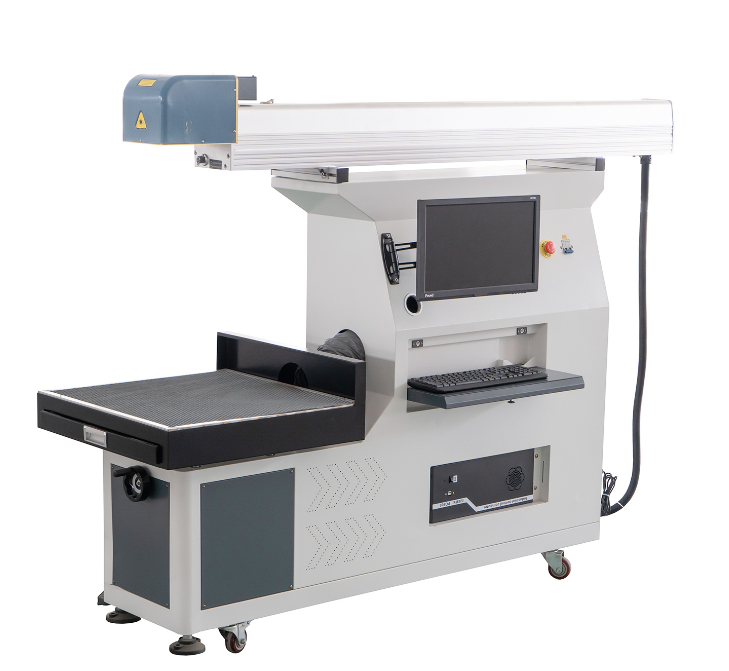
The defining factor that makes these machines indispensable is their 10.6 micrometer wavelength. Because metals naturally reflect this specific infrared spectrum, the technology is explicitly engineered to process organic compounds. It is widely recognized as the definitive solution for nonmetal laser marking across a diverse array of manufacturing sectors.
The demand for high-speed wood leather laser marking has surged exponentially in the furniture, apparel, and automotive upholstery industries.
When processing wood, the intense thermal energy instantly vaporizes the lignin and cellulose. This creates deep, high-contrast engravings and exceptionally clean cuts. It is the preferred method for manufacturing intricate architectural models, customized cabinetry components, and premium home decor. For the footwear and automotive sectors, the technology provides the unique ability to burnish, engrave, and cut genuine or synthetic hides simultaneously. Specifically, the thermal energy cauterizes the leather edge in milliseconds as it cuts. This completely prevents the mechanical fraying that plagues traditional die-cut fabrics, ensuring a pristine, luxury finish right off the production line.
The global packaging industry leans heavily on this technology for both functional coding and aesthetic design. Integrated into high-speed packaging lines, these machines instantly mark permanent expiration dates, batch numbers, and scannable QR codes onto corrugated cardboard boxes and pharmaceutical cartons. Beyond simple coding, the equipment is highly sought after for paper converting. It cuts intricate, lace-like patterns into greeting cards, luxury product packaging, and event invitations without tearing or burning the delicate paper fibers.
Beyond wood and paper, large-format systems excel across a spectrum of other critical substrates. In the architectural signage industry, they act as the standard tool for cutting thick acrylic sheets, leaving behind perfectly flame-polished edges requiring no secondary finishing. For glassware and cosmetics packaging, the beam creates controlled micro-fractures on the surface of the glass, resulting in an elegant, frosted appearance. In the textile and denim industry, large-format systems rapidly score and distress fabrics. This replaces harsh, water-intensive chemical bleaching processes with a clean, highly repeatable digital alternative.
As global manufacturing evolves toward smarter facility ecosystems, optical marking technology is advancing rapidly to meet rigorous new demands. Industry analysts note a sharp year-over-year increase in the adoption of non-contact marking systems across the packaging and consumer goods sectors. This shift is driven heavily by global regulatory mandates to phase out volatile organic compound inks. This regulatory pressure forces manufacturers to rethink their coding and branding strategies entirely.
Simultaneously, the integration of smart vision systems is fundamentally transforming how these machines operate on the factory floor. Modern systems frequently pair with high-definition CCD cameras and machine vision algorithms. These vision systems automatically recognize the shape, orientation, and exact placement of a product on the working bed. The software then dynamically adjusts the marking path in a fraction of a second. This completely eliminates the need for rigid physical positioning jigs and drastically reduces setup times for mixed-batch production runs.
One of the most common dilemmas facility engineers face is choosing between gas-based and solid-state fiber technology. Understanding the fundamental physics separating these two systems is critical to making a sound capital investment and avoiding costly procurement errors.
The golden rule for equipment selection depends entirely on the material running on your production line. If your facility handles organics and non-metals, the CO2 system is the mandatory choice. Conversely, fiber lasers are explicitly designed for marking bare metals like carbon steel, aluminum, brass, and titanium, alongside hard engineering plastics.
This stark difference in material compatibility boils down to the physics of light wavelength. Metals highly absorb the shorter 1.064 micrometer wavelength of a fiber laser, allowing it to engrave steel efficiently. If you attempt to use a fiber laser on clear acrylic or wood, the beam will simply pass through like light through a window, or cause uncontrolled burning. Similarly, a 10.6 micrometer beam will harmlessly bounce off a sheet of bare aluminum.
| Technical Specification | 3D CO2 Laser System | Solid-State Fiber Laser |
|---|---|---|
| Operating Wavelength | 10.6 micrometers | 1.064 micrometers |
| Primary Target Materials | Wood, leather, paper, acrylic, glass, textiles | Bare metals, carbon steel, aluminum, hard plastics |
| Consumables Required | None. Operates purely on electrical power | None. Operates purely on electrical power |
| Edge Quality on Organics | Clean, flame-polished, securely cauterized edges | Severe burning, melting, or beam passes through entirely |
When evaluating equipment for industrial procurement, specific technical benchmarks dictate the machine's performance, longevity, and integration capabilities within your existing workflow. Do not rely on generic specifications; align the hardware directly with your production volume.
The power output of the radio frequency tube, measured in watts, directly correlates to the machine's processing speed and cutting depth. While 30W or 50W systems suffice for light surface marking on thin paper, industrial large-format applications demand significantly higher power. Investing in a 100W, 150W, or even 250W system provides the optimal balance of speed and thermal power. Higher wattage allows the optical beam to move exponentially faster across large areas without losing engraving depth. This makes high-power models ideal for deep engraving on dense hardwoods or rapidly slicing through thick leather hides on a continuous conveyor.
Matching the machine's working area to your maximum product size is crucial for maintaining throughput. Standard 2D systems are often limited to 110x110mm or 300x300mm fields. Industrial 3D large working area systems, however, offer expansive fields starting at 400x400mm, scaling up to 600x600mm, and reaching 800x800mm. Selecting the correct dimension ensures operators do not have to index or manually shift large products during the marking cycle. This preserves the speed and efficiency of the automated production line.
Industrial hardware is only as effective as the digital architecture controlling it. Modern systems must utilize advanced, user-friendly control software like EZCAD3 that supports true 3D surface mapping. This allows the beam to project designs onto curved, sloped, or multi-level surfaces without mechanical focal adjustments. Furthermore, the software must feature robust communication protocols including TCP/IP or RS232. These protocols facilitate seamless integration with factory automation systems, enabling synchronized conveyor belt fly-marking and robotic arm part loading.
The final step in deploying this technology is selecting a reliable manufacturing partner. The build quality of the machine and the engineering support behind it will dictate your long-term operational success and total cost of ownership.
Not all assembly factories possess the sophisticated engineering capabilities required to produce stable 3D dynamic focusing systems. The optical physics involved in moving the Z-axis lens at high speeds requires extreme precision engineering and rigorous software calibration. Decision-makers must prioritize specialized manufacturers with documented expertise in large-format, dynamic focus technology. Avoid generalist suppliers who primarily build small desktop hobby units.
Heavy industrial equipment requires robust, responsive after-sales support to prevent costly production downtime. Evaluate manufacturers based on their global support network and technical response times. Ensure they offer comprehensive warranties on critical, high-value components, especially the radio frequency metal tube and the 3D dynamic galvo head. Verify that the supplier provides extensive operator and maintenance training to ensure your engineering team can fully leverage the machine's advanced capabilities safely.
For large-scale, high-speed processing of organic materials, a 3D large area CO2 laser marking machine stands as an unparalleled industrial asset. It successfully bridges the gap between massive production volume and intricate, microscopic precision. By eliminating consumables and drastically reducing cycle times, these systems offer a highly compelling return on investment for any modern facility. Whether your plant executes deep wood engraving, precision leather cutting, or high-speed packaging coding, upgrading your production lines with this technology will fundamentally reduce operational costs and elevate product quality. To revolutionize your manufacturing process with reliable, future-proof technology, explore the high-performance 100W 3D models and automated solutions available at EasyCNCLaser today.
Typically, the working area for industrial 3D systems ranges from 400x400mm up to 800x800mm, or even 1200x1200mm in highly specialized setups. This maximum dimension depends entirely on the specific optical field lens, the wattage of the laser tube, and the capabilities of the dynamic focus system installed on the equipment.
Generally, no. These systems are designed specifically for processing non-metals and organic compounds. However, they can mark painted, coated, or anodized metals by safely burning away the top coating to reveal the contrasting bare metal underneath. For direct, deep engraving into bare metal, a solid-state fiber system is strictly required.
Industrial-grade machines utilize metal radio frequency tubes rather than fragile, water-cooled glass tubes. These high-quality tubes are incredibly durable and can operate anywhere from 20,000 to 40,000 hours before they require a factory gas refill. This offers exceptional longevity and stable power output for continuous, multi-shift production.
Absolutely. Marking organic materials like wood, leather, and synthetic textiles produces varying amounts of smoke, fine particulate dust, and fumes. An industrial-grade fume extractor is highly recommended, and often legally required, to maintain a safe working environment, comply with occupational health regulations, and protect the machine's sensitive optical lenses from debris buildup.
Standard 2D marking is limited to small, flat areas because the focal length of the lens is entirely fixed. If the beam travels too far from the center, it loses focus. 3D dynamic focusing solves this by physically shifting the focal lens back and forth at lightning speed as the beam moves across the X and Y axes. This keeps the spot perfectly in focus over a massive flat area, or allows the machine to mark seamlessly on curved, sloped, or multi-level surfaces.
Pricing varies significantly based on power output and working area. Entry-level 30W to 50W systems for lighter applications may start around a few thousand dollars. However, true industrial 3D dynamic focus systems equipped with 100W to 250W radio frequency metal tubes and expansive 800x800mm working areas typically range from $15,000 to over $40,000, depending on the integration of automated vision systems and conveyor accessories.
One of the primary advantages of this technology is its low maintenance profile. Daily maintenance generally involves simply wiping down the exterior and ensuring the industrial fume extractor is functioning properly to prevent smoke buildup. On a weekly basis, operators should inspect and gently clean the primary optical field lens with specialized lens wipes to ensure maximum beam transmission and prevent thermal damage to the optics.


