
Please Choose Your Language
Views: 0 Author: Site Editor Publish Time: 2026-11-12 Origin: Site


Are old pipe cutting methods slowing you down? Picture a bustling shop floor. Workers manually haul heavy carbon steel pipes onto a band saw. They spend hours grinding down rough burrs while sparks fly. Production bottlenecks multiply quickly. Conventional methods bring slow output, inconsistent edge quality, and skyrocketing labor costs. Upgrading your production line solves these inherent problems. In this guide, we explore real-world capabilities, efficiency upgrades, and essential integration tips to modernize your fabrication workflow.
This equipment represents a massive leap for industrial shop floors. It uses solid-state fiber laser sources to generate an intense, highly focused beam of light. This beam travels through a fiber optic cable directly to the cutting head, focusing thermal energy onto the metal surface. The intense heat melts and vaporizes the metal instantly. Meanwhile, a high-pressure stream of assist gas blows away the molten material to create a clean kerf. Unlike traditional mechanical saws that rely on physical friction, the laser operates entirely without contact. This ensures the structural integrity of delicate or thin-walled tubing remains uncompromised.
While flatbed machines process standard two-dimensional sheet metal, pipe fabrication demands a dynamic three-dimensional approach. The primary differentiator is the rotary axis, commonly known as a chuck system. This heavy-duty component grips and rotates the tube a full 360 degrees. Simultaneously, the cutting head moves longitudinally along the pipe. This synchronized multi-axis movement enables the processing of complex tubular structures that a standard flatbed system simply cannot handle without constant manual repositioning.
Recent market data shows a definitive shift in the fabrication sector. The automotive, aerospace, and construction industries increasingly demand high-strength, lightweight structural frames. Consequently, legacy cutting methods fail to meet the required tight tolerances and processing speeds. Analysts note a rapid transition toward fully automated, lights-out manufacturing environments. By upgrading to optical cutting solutions, shops drastically reduce downstream welding and assembly time. Engaging in modern metal tube fabrication is no longer just a luxury. It has become a fundamental necessity to maintain competitiveness and secure high-volume supply chain contracts.
Industrial fabrication requires adaptability across various metallurgical profiles. High-quality equipment is engineered to process a broad spectrum of metals effortlessly. Operators easily cut carbon steel using oxygen assist gas. This creates an exothermic reaction that speeds up the penetration of thicker walls. Stainless steel, prized for its corrosion resistance, requires high-pressure nitrogen. This inert gas prevents unsightly oxidation, leaving a bright edge. Furthermore, fiber technology efficiently handles highly reflective materials like aluminum, brass, and copper. These metals were traditionally notorious for causing beam reflection damage in older CO2 systems.
A common misconception among facility managers is that this equipment is strictly limited to cylindrical objects. In reality, modern systems are incredibly versatile. Advanced clamping mechanisms and intelligent CNC algorithms allow the machine to seamlessly process standard round pipes, alongside square, rectangular, and flat-oval tubes. Beyond closed profiles, many systems easily handle open structural shapes like U-channels and L-shaped angle irons. This flexibility ensures a single machine can serve multiple distinct product lines within a busy shop, eliminating the need to invest in separate dedicated workstations.
Traditional fabrication struggles immensely with complex intersections. When two pipes need to be welded at a specific angle, fabricators historically relied on manual grinding to create a fitting joint. This process is highly prone to human error. Laser technology revolutionizes this step by executing intricate patterns, slots, and interlocking joints with mathematical precision. Specifically, features like fish-mouth cuts, tab-and-slot designs, and angled bevels can be programmed directly into the CAD interface. Because the tolerances are incredibly tight, downstream welding becomes significantly faster and structurally sound.
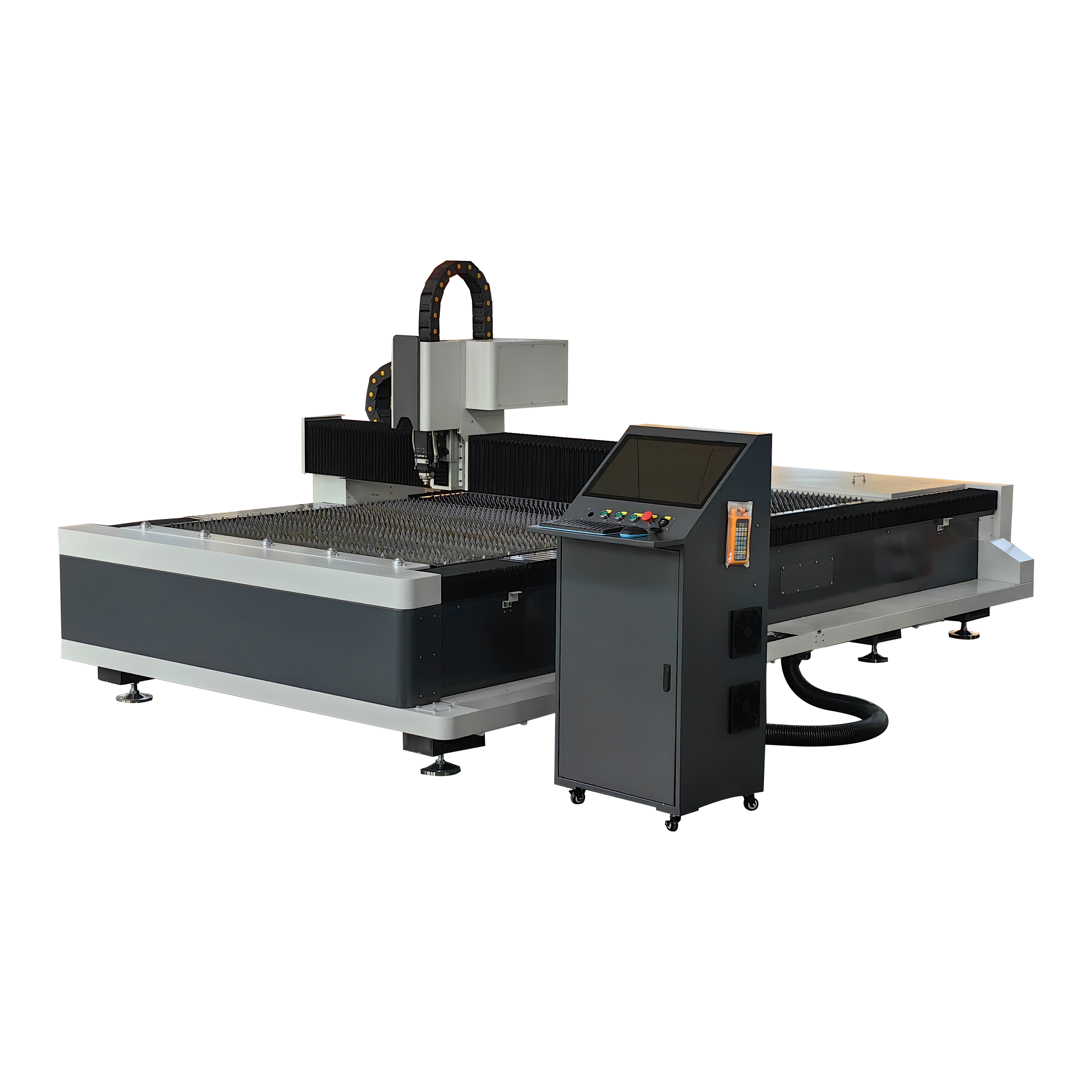
Standard workflows force workers to move parts across multiple stations. A worker measures and saws the pipe, moves it to a drill press to create necessary holes, and finally grinds away the rough edges. A modern pipe laser cutter condenses this exhausting multi-step process into one clean, continuous pass. The beam cuts the exact length, pierces the holes, and leaves a smooth, dross-free edge that is immediately ready for the welding bay. This consolidation drastically reduces part-handling time and minimizes cluttered work-in-progress inventory.
Labor shortages and manual handling bottlenecks are persistent challenges in modern manufacturing. To combat physical strain, advanced systems integrate automated bundle loaders and specialized unloading mechanisms. An automatic bundle loader holds several tons of raw pipe at once. It intelligently separates, measures, and feeds individual tubes into the cutting chuck without operator intervention. In addition, this level of automation prevents accidental material damage and reduces workplace injuries associated with heavy lifting. It allows the machine to run continuously, often enabling unmanned operation during off-shift hours.
Material utilization remains a critical factor in overall profitability. Specialized CAD and CAM nesting software acts as the strategic brain behind the machine. Before a single spark flies, the software analyzes the required parts and optimizes their layout along the length of the raw tube. It calculates the most efficient cutting paths and groups similar parts to utilize common-line cutting. By accounting for the exact width of the laser kerf, it minimizes scrap metal generation and maximizes the usable yield from every purchased length of raw material.
The power output of the fiber source is the primary determinant of cutting speed and maximum material thickness. Selecting the appropriate wattage dictates edge quality. For example, a 1500W to 2000W system efficiently processes thin-to-medium walls without introducing excessive heat that warps the metal. In contrast, heavy-duty industrial applications demand much more thermal energy. Thick-walled structural pipes require high power to penetrate the material effectively without leaving heavy striations or jagged dross on the bottom edge.
The choice of assist gas directly impacts the chemical and physical characteristics of the cut edge. Operators typically use oxygen for carbon steel. It adds heat to the cutting zone, allowing for faster processing of thicker plates at lower power levels. However, it leaves a thin oxide layer on the edge that may require removal before painting. Nitrogen acts as an inert shielding gas, used primarily for stainless steel and aluminum. It forcefully blows away molten material without reacting with the metal. This results in a clean, bright, oxide-free edge that requires absolutely zero secondary finishing.
The mechanical integrity of the chuck system is just as important as the beam itself. Pneumatic or electric chucks must hold the pipe securely to prevent slipping during rapid rotational movements. Furthermore, they must apply a perfectly calibrated clamping force to avoid crushing or deforming thin-walled tubes. High-end systems utilize self-centering, intelligent chucks that automatically adjust their grip based on the specific profile and wall thickness. This ensures absolute dimensional accuracy from the first cut to the last.
When evaluating equipment upgrades, shop managers must objectively compare their existing processes against modern alternatives. Traditional fabrication heavily relies on mechanical saws, abrasive tools, and manual plasma torches. While functional for decades, these methods present measurable limitations in operational efficiency, precision, and ongoing expenses. Transitioning to optical technology introduces a fundamental shift in how materials are processed.
Mechanical methods are inherently limited by physical friction and blade rotational speed. A band saw must physically grind through the material, taking considerable time on thick carbon steel. Traditional plasma is faster but lacks the precision required for complex joints. In stark contrast, a fiber laser head travels at rapid speeds, utilizing focused light to melt metal instantly. One of the most substantial hidden costs in traditional fabrication is tool wear. Saw blades dull quickly, break under stress, and require constant replacement. Because optical cutting is a non-contact process, there is no physical blade to degrade. This leads to vastly lower consumable expenses over the machine's lifespan.
| Operational Metric | Traditional Methods (Saws, Milling, Plasma) | Modern Optical Cutting Machine |
|---|---|---|
| Cutting Speed | Low to moderate, limited by physical friction | Exceptionally high, driven by optical power |
| Tool Wear | High (blades, drill bits, and plasma tips) | Minimal (non-contact process) |
| Setup Time | Lengthy (requires physical jigs and fixtures) | Rapid (digital file upload via CAD software) |
| Edge Quality | Often rough, requiring secondary deburring | Clean, smooth, and immediately weld-ready |
| Precision | Moderate, prone to human error and vibration | Extremely high, achieving sub-millimeter accuracy |
Investing in advanced machinery is only the first step. Maximizing its potential requires a skilled workforce. The true efficiency of modern fabrication lies in the software. Operators must be adequately trained to generate optimized cutting paths, manage common-line cutting, and ensure the laser head moves efficiently. Proficiency in utilizing micro-joints ensures that parts do not fall out prematurely and cause costly machine collisions. Continuous software training directly correlates with higher material yield and lower machine downtime.
While fiber systems require significantly less maintenance than older CO2 models, strict adherence to a preventive schedule maintains peak performance. Operators must inspect the protective lenses inside the cutting head daily. Cleaning them with specialized optical wipes prevents dust or spatter from absorbing energy and shattering the lens. Additionally, the industrial water chiller regulates the temperature of the core source. Technicians must regularly check water levels, use distilled water to prevent scaling, and routinely clean the condenser fins to avoid thermal shutdowns.
Assist gas dynamics are highly sensitive and require constant attention on the shop floor. Operators can often hear the distinct hiss of high-pressure nitrogen, but they must consistently monitor actual gas pressure gauges. If the pressure drops too low, the gas fails to evacuate the molten metal, resulting in stubborn slag buildup on the bottom of the cut. Conversely, if the pressure is too high, it wastes expensive gas and causes turbulent airflow that degrades edge smoothness. Establishing precise baseline pressure parameters for different material types is a critical daily skill.
The scale of your operations dictates the necessary level of automation. For job shops handling low-volume, high-mix custom orders, a standalone machine with manual loading capabilities often offers the best balance of cost and flexibility. However, for continuous production environments like automotive parts manufacturing or large-scale furniture assembly, investing in a fully automated system with bundle loaders and offloading conveyors is essential. This prevents the machine from sitting idle while waiting for manual material handling.
Matching the wattage to your specific material thickness requirements prevents both underperformance and unnecessary capital expenditure. For exhaust pipe manufacturers or furniture makers processing walls under 6mm, a compact 1500W to 2000W setup is ideal. It balances cutting speed with low power consumption. On the other hand, heavy agricultural machinery and structural frameworks require serious penetration power. A tube laser cutting machine equipped with a 6000W source easily slices through thick carbon steel rapidly. This prevents the frustrating dross buildup typical of underpowered equipment struggling to pierce thick walls.
While the initial capital expenditure for optical technology is undeniably higher than traditional saws, the return on investment is typically realized within a remarkably short period. This rapid recoupment is driven by a drastic reduction in direct labor costs. Shops can completely eliminate dedicated deburring and drilling operators. Furthermore, the decrease in material scrap due to efficient software nesting, combined with significantly faster turnaround times, allows a shop to take on a higher volume of lucrative contracts throughout the fiscal year.
Integrating modern optical cutting equipment fundamentally transforms fabrication workflows. It delivers unmatched speed and highly precise results consistently, eliminating the headaches of manual grinding and slow mechanical saws. This technology reduces long-term operational costs very effectively while opening the door to complex structural designs that were previously impossible. Evaluate your current bottlenecks and production needs today. By matching your material thickness and volume to the right power output and automation level, you can future-proof your manufacturing business. Browse the high-quality product catalogs at EasyCNC to find the exact specifications your shop needs, and take the first step toward a highly profitable, automated shop floor.
These machines are highly versatile and process a wide variety of industrial metals. The most commonly cut materials include carbon steel, stainless steel, and aluminum. Additionally, advanced fiber sources effectively cut highly reflective metals like brass, copper, and galvanized steel. Specific capabilities and speeds will vary depending on the material's density, reflectivity, and the machine's wattage.
Yes, absolutely. Modern machines are not limited to standard round pipes. They are equipped with advanced pneumatic or electric rotary chucks and sophisticated CNC software that easily handles square, rectangular, flat-oval, and custom-profile tubes like U-shaped or L-shaped structural channels. The software automatically calculates the necessary focal adjustments as the non-circular tube rotates.
The maximum cutting thickness depends entirely on the power output and the type of metal being processed. For example, a 1500W to 2000W machine typically cuts up to 6mm to 8mm of carbon steel efficiently. Conversely, a high-power 6000W machine is designed for heavy-duty applications and cleanly cuts through carbon steel walls that are 16mm thick or more, maintaining excellent edge quality.
In the vast majority of applications, yes. The process utilizes high-pressure assist gases, such as oxygen or nitrogen, to blow away molten material instantly. This results in a clean, smooth, and dross-free edge. Because the cut is so precise, the pipes are immediately ready for downstream processes like welding or mechanical assembly, effectively bypassing traditional, labor-intensive deburring.
While the underlying physics are highly complex, the user interfaces are designed to be intuitive. Modern CNC control panels feature touchscreen interfaces and user-friendly nesting software. Operators do not need to manually calculate complex laser dynamics. They primarily manage digital CAD files and monitor machine parameters. With proper foundational training, operators quickly learn to run the machine safely and efficiently.
Most standard industrial machines accommodate raw pipe lengths of 6 meters or 20 feet. However, heavy-duty automated systems can be custom-configured to process 8-meter or even 12-meter lengths. This largely depends on the specific bundle loader integrated into the system and the available footprint on your factory floor.
Operating costs are surprisingly low compared to legacy mechanical methods. The primary expenses include electricity, assist gas consumption, and minor consumables like protective lenses and copper nozzles. Because fiber technology is highly energy-efficient and entirely eliminates physical saw blade replacements, fabrication shops typically see a drastic reduction in the overall cost per part produced.


