
Please Choose Your Language
Views: 0 Author: Site Editor Publish Time: 2026-11-10 Origin: Site


Are slow cutting speeds and recurring maintenance bottlenecks eating into your shop's profit margins? I see this happen constantly on the shop floor. Speed, precision, and cost control are absolute necessities for survival today. Many fabrication shops still rely on outdated tools. These legacy machines consume massive amounts of power and require constant babysitting. Upgrading to a solid-state laser solution solves these operational headaches at the root. By streamlining workflows and slashing consumable costs, this technology transforms a sluggish floor into a high-output production powerhouse.
To truly understand how production efficiency improves, we must examine the underlying architecture. A reliable metal fiber laser cutter utilizes a solid-state gain medium. This is typically an optical fiber doped with rare-earth elements like erbium or ytterbium. The design fundamentally differs from older gas-based lasers, which rely on a volatile gas mixture and a complex series of fragile mirrors to generate and deliver the beam.
The solid-state nature of fiber technology provides a distinct mechanical advantage. The beam generates within the fiber and travels through a flexible optical cable. There is no need for delicate mirror alignments or continuous gas replacement. This streamlined architecture drastically reduces mechanical failure points and routine maintenance downtime. The electrical-to-optical conversion efficiency is also vastly superior. While traditional gas lasers generally achieve only 10 to 15 percent efficiency, modern solid-state systems typically convert around 30 to 40 percent of their electrical input into usable cutting power.
| Feature | Fiber Laser | CO2 Laser | Plasma Cutter |
|---|---|---|---|
| Beam Generation | Solid-state Doped Fiber | Gas Mixture CO2, Nitrogen, Helium | Ionized Gas Plasma |
| Wall-Plug Efficiency | 30% - 40% | 10% - 15% | Moderate |
| Maintenance Needs | Very Low, no mirrors or gas | High, mirror alignment and gas | High, consumable wear |
| Best Application | Thin to medium metals, reflective metals | Non-metals, very thick steel | Very thick, heavy plates |
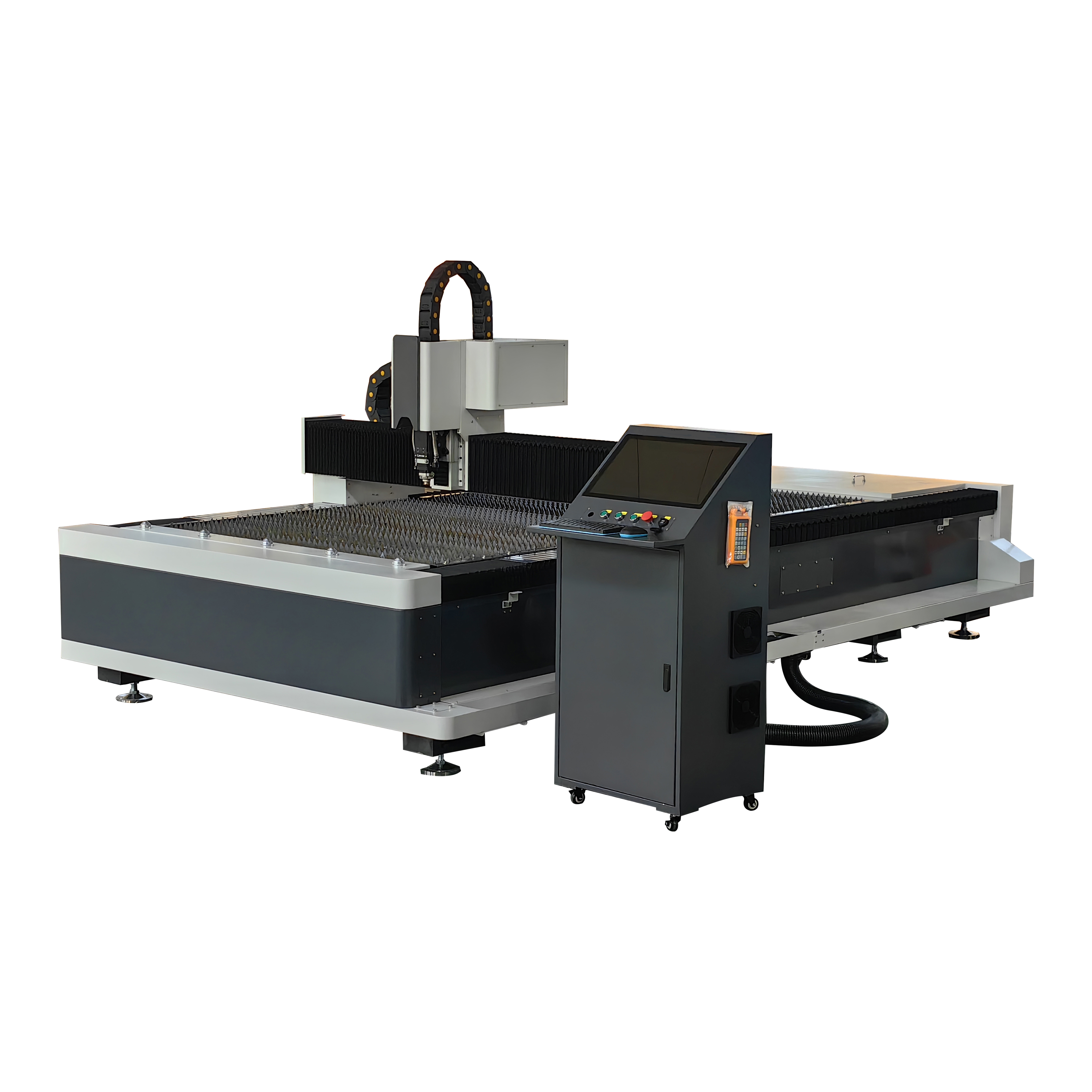
One of the most direct ways to elevate daily output is by increasing the physical speed at which parts are processed. Solid-state lasers excel here, particularly when handling thin to medium-gauge sheet metal. The physics behind this speed advantage lies in the wavelength of the emitted light. Operating at approximately 1.064 micrometers, the beam is highly absorbed by most industrial metals. This allows the material to melt and vaporize much faster than it would under older technologies.
The intense energy density at the focal point allows the CNC controller to push the cutting head at exceptionally high feed rates. When a facility invests in high-power sources for industrial fiber laser cutting, such as a robust 6000W system, the impact on production volume becomes undeniable. Operators can swiftly slice through thick carbon steel plates or rapidly profile thin aluminum enclosures that traditionally choked sluggish plasma systems. By reducing the cycle time required for each individual part, manufacturers comfortably process larger batches within a single shift. Strict customer deadlines are consistently met.
Efficiency is not solely measured by how fast a machine moves across a sheet. It is equally dependent on how many supplementary steps are required to finalize a component. In traditional workflows, parts cut by plasma often suffer from heavy dross—melted metal clinging to the bottom edge. They also experience a large heat-affected zone that warps the material. Correcting these defects creates a notorious bottleneck. It demands hours of manual deburring, grinding, or sanding.
Adopting high precision metal cutting fundamentally alters this fabrication pipeline. The highly focused beam produces an incredibly narrow kerf width. It melts a microscopic area while high-pressure assist gases immediately evacuate the molten material. Imagine an operator pulling a freshly cut stainless steel bracket off the shuttle table. The edges are smooth, completely dross-free, and cool to the touch. Thermal distortion is negligible. Intricate geometries and tight tolerances are achieved consistently, allowing parts to move straight to the press brake or welding station without any secondary finishing.
Looking at the broader manufacturing landscape, we observe a massive shift in fabrication paradigms. The aggressive global push towards electric vehicles and renewable energy infrastructure is dramatically accelerating the adoption of advanced metal processing technologies. Manufacturers are no longer just looking for raw cutting power. They demand intelligent systems capable of seamless integration into smart factory ecosystems.
This trend underscores a transition where true efficiency is measured by more than just feed rates. It involves data-driven predictive maintenance, automated material handling, and minimized carbon footprints. Shops that fail to digitize and automate their cutting processes will soon find themselves unable to compete on price or lead times in these booming high-tech sectors.
When evaluating shop floor upgrades, financial metrics are just as critical as mechanical performance. The Total Cost of Ownership encompasses the initial purchase price, ongoing energy consumption, maintenance expenses, and consumable costs over the equipment's lifespan. The energy efficiency of solid-state technology is exceptional. By drawing significantly less power from the grid to achieve superior cutting results, facilities notice an immediate and drastic reduction in their monthly utility bills.
Maintenance costs represent another major area of savings. Traditional systems rely on a complex delivery network of mirrors and lenses that must be meticulously cleaned, aligned, and periodically replaced. Modern fiber systems eliminate these requirements entirely. The core laser diode modules boast an exceptionally long service life, often rated for up to 100,000 hours of operation. When a machine spends more time actively cutting and less time waiting for a technician to perform routine alignments, the cost-per-part drops dramatically.
A highly efficient production floor must remain adaptable to fluctuating client demands and diverse material specifications. Historically, laser cutting faced a massive limitation when dealing with highly reflective materials like copper, brass, and certain grades of aluminum. The beam would often reflect off the surface and travel back up the optics, causing catastrophic damage to the oscillator.
Modern engineering has elegantly solved this reflectivity challenge. Advanced systems are now equipped with built-in optical isolators that safely absorb back-reflected light. This innovation allows operators to process a diverse portfolio of jobs on a single machine. Whether a facility is cutting thin galvanized steel for HVAC ductwork or thick copper busbars for electrical switchgear, the equipment adjusts instantly. The machine remains a highly utilized asset regardless of shifting market trends.
As production volumes grow, the physical cutting speed of the laser eventually ceases to be the primary bottleneck. The limitation shifts to material handling. Specifically, the time it takes an operator to manually remove finished parts and load a heavy sheet of raw material slows down the entire operation. To achieve true maximum efficiency, industrial cutting systems must pair with automation.
Automated pallet changers, or shuttle tables, are the most impactful upgrade. While the laser actively cuts a sheet inside the safety enclosure, the operator safely unloads finished parts and stages a fresh sheet on the exterior bed. Once the cycle completes, the tables swap positions in mere seconds. Advanced nesting software uses complex algorithms to arrange parts in the most space-efficient manner possible. This minimizes scrap and maximizes material yield. Together, these automated features transform a standard workshop into a continuous production hub.
While the efficiency gains are undeniable, integrating this technology requires practical, strategic planning. Decision-makers must assess their specific operational needs to select a system that aligns with business goals without overextending capital. The foundational step is documenting your maximum material thickness and the most frequently processed metal types.
Choosing the right format and power wattage is critical. For shops dealing with small, intricate parts and limited floor space, a compact 60x60cm machine equipped with a 1500W to 2000W source is highly efficient and cost-effective. Conversely, scaling into heavy-duty industrial plate processing requires a higher wattage investment. A robust 6000W system prevents future bottlenecks when tackling thick carbon steel. By carefully mapping out these considerations, manufacturers ensure their investment directly translates into measurable improvements.
Investing in advanced laser technology is more than just a hardware upgrade. It is a definitive commitment to operational excellence. By leveraging superior speeds, unmatched precision, and drastically lower maintenance costs, manufacturers significantly reduce their cost-per-part while increasing overall throughput. Whether you operate a nimble custom job shop or a large-scale manufacturing plant, adopting the right cutting technology provides the agility needed to stay ahead of the competition. Assess your current bottlenecks, optimize your material workflows, and explore the tailored solutions at EasyCNC Laser to find the exact equipment that matches your production goals.
These machines utilize a solid-state beam delivery system that is highly focused and intense. This concentrated energy allows the laser to melt through metal much faster than older technologies, especially in thin and medium-gauge materials. This significantly reduces the cycle time required per part.
Yes. Unlike legacy laser systems that struggled with beam reflection damaging internal components, modern solid-state lasers feature optical isolators. This design safely processes highly reflective materials, making them an excellent choice for diverse metal fabrication shops.
Solid-state lasers require significantly less maintenance. They do not rely on complex gas mixtures to generate the beam, nor do they require periodic and delicate mirror alignments. This streamlined design drastically reduces unexpected downtime and ongoing service costs.
The cutting capacity depends entirely on the wattage of the power source. A 1500W to 2000W system is perfect for thin to medium sheets up to 16mm in carbon steel. High-power industrial systems, such as 6000W models, can cleanly slice through carbon steel plates up to 25mm thick.
The core diode modules in modern solid-state lasers are incredibly durable. Under proper operating conditions, a high-quality laser source has an expected service life of up to 100,000 hours before requiring major component replacement, ensuring a long-term return on investment.
Absolutely. The technology offers extremely small kerf widths and high positional accuracy. This makes it ideal for cutting intricate designs and parts with tight tolerances, producing clean edges that require little to no secondary post-processing.
These systems are renowned for their high electrical-to-optical conversion efficiency, often converting 30 to 40 percent of input power into cutting energy. Consequently, they consume significantly less electricity than traditional methods, leading to lower monthly utility bills and a more sustainable production process.


