
Please Choose Your Language
Views: 0 Author: Site Editor Publish Time: 2026-09-10 Origin: Site


Manufacturers face escalating regulatory and operational pressures today. You must implement flawless, lifecycle-durable traceability across all production lines. Standards like UDI for medical devices demand absolute perfection. Aerospace UID mandates require marks that survive extreme conditions. Degrading marks create severe compliance risks and financial liabilities. Legacy systems rely heavily on expensive, messy consumables. Inkjet printers often cause unacceptable bottlenecks in high-speed production environments. You need a reliable solution to protect brand integrity globally. The Fiber Laser Marking Machine stands as the definitive industrial standard. It provides reliable permanent product identification without ongoing consumable dependencies. The conversation has shifted across the manufacturing sector. You no longer ask whether to adopt this solid-state technology. You must now determine how to specify and integrate the right system. We will explore how to match these machines to specific substrates. You will learn to evaluate form factors and throughput requirements effectively.
The generation process begins with powerful diode lasers. These diodes pump intense light into a specialized fiber optic cable. This cable is doped with a rare-earth metal element. Ytterbium serves as the most common doping agent in industrial systems. The doped fiber amplifies the light significantly as it travels. It creates a highly focused, precise beam of infrared light. This beam exits the focal lens to strike the target material. The solid-state generation process ensures exceptional beam quality and stability. You achieve a microscopic spot size for incredibly detailed work.
Understanding the beam delivery sequence helps operators troubleshoot marking issues on the floor. The process follows a strict optical path:
Older laser technologies rely heavily on fragile glass tubes. They use complex mirrors and moving parts for beam delivery. Solid-state design eliminates these vulnerable optical components entirely. This architectural shift directly contributes to massive reliability gains. Manufacturers consistently claim a 100,000-hour Mean Time Between Failures (MTBF). You experience virtually zero routine maintenance requirements over the machine lifespan. Production lines run continuously without unexpected optical realignments or calibrations. The robust nature of the fiber source withstands harsh factory vibrations.
Machine-vision readability requires strict adherence to baseline standards. You must achieve high contrast for automated barcode scanners. Grading standards like AIM DPM (Direct Part Mark) dictate the acceptable quality of 2D data matrices. QR codes need sharp, defined edges to pass rigorous automated inspections. Poor contrast inevitably leads to rejected parts and rework. You must optimize laser parameters to maximize the dark-to-light ratio. Lighting angles during inspection, such as low-angle or axial lighting, will expose any inconsistencies in the mark depth.
Industrial marks must survive rigorous post-processing environments. Passivation and chemical sterilization test the limits of surface marks. If a mark breaks the protective chromium oxide layer on stainless steel without proper parameter control, the part will rust in the passivation bath. Aggressive shot peening can obliterate shallow engravings instantly. The identification must withstand harsh environmental exposure throughout its lifecycle. Salt spray, intense UV light, and chemical solvents are common threats. A proper laser mark alters the material structure to resist these forces.
Visual appeal matters heavily for consumer-facing components. High-resolution logo reproduction builds immediate brand trust and recognition. Crisp typography enhances the perceived overall value of the product. You must achieve consistent surface finishing across large production batches. The marking process cannot cause unintended thermal damage. Warping ruins thin or sensitive parts, leading to costly scrap. Operators must balance power and frequency to keep the heat-affected zone (HAZ) as small as possible.
Production speed dictates your equipment selection and integration strategy. You must calculate the required marking speed accurately before purchasing. The laser station cannot become a production bottleneck under any circumstances. High-volume lines demand rapid beam deflection and processing. Galvo scanner speeds directly impact your overall daily throughput. You must balance mark depth with the available cycle time. A deep engraving takes significantly longer than a superficial surface stain.
Surgical instruments require strict Unique Device Identification (UDI) compliance. Orthopedic implants must carry permanent, readable codes for their entire lifespan. The FDA mandates flawless traceability to ensure patient safety and recall capability. Fiber lasers perform a specialized metallurgical process called annealing on 17-4 PH and 304 stainless steel. Annealing creates a dark, high-contrast mark without disrupting the surface layer. It pulls carbon to the surface through controlled heating. This smooth finish prevents bacteria from harboring in microscopic crevices. The annealed mark survives repeated harsh autoclave sterilization cycles easily.
Automotive production relies heavily on deep, permanent engraving. Vehicle Identification Numbers (VINs) must remain tamper-proof and highly visible. High-stress engine components require robust serialization for warranty tracking. Aerospace applications demand incredibly precise heat management during the marking phase. You cannot alter the metallurgical properties of flight-critical parts. Titanium and aluminum aircraft components are highly sensitive to heat-affected zones. Micro-cracking caused by excessive laser heat can lead to catastrophic part failure in flight. Proper parameter control ensures the structural integrity remains completely intact.
Modern packaging lines move at incredible, relentless speeds. You need on-the-fly serialization to keep pace with production targets. Continuous motion marking requires advanced encoder synchronization. The laser controller reads the conveyor speed and adjusts the beam trajectory in real-time to prevent stretched or distorted text. Electronics manufacturing demands extreme precision on a microscopic scale. Printed circuit boards (PCBs) require tiny micro-marking capabilities for component tracking. Semiconductors need microscopic data matrices etched onto fragile surfaces. Consumer devices rely on aesthetic branding to stand out. You see high-contrast logos on anodized aluminum laptops daily. Smartphones feature crisp, elegant serial numbers that resist daily wear.
Global supply chains face massive, sophisticated counterfeiting threats today. You must verify product authenticity reliably across international borders. Proprietary 2D codes lock down product origins and distribution channels. Hidden micro-text provides covert security layers visible only under magnification. Complex vector graphics are incredibly difficult for counterfeiters to replicate accurately. You can embed cryptographic hashes directly into the data matrix. These integrated measures prevent gray-market diversion effectively. A dedicated marking system executes these intricate security features flawlessly.
The process of metal laser marking represents the primary, most dominant application for this technology. The 1064nm wavelength is highly absorptive in almost all industrial metals. Stainless steel yields excellent dark, annealed marks or bright white surface marks depending on the focal point. Bare aluminum engraves cleanly and quickly with minimal parameter adjustment. Anodized aluminum produces striking, high-contrast white marks by ablating the colored dye layer without damaging the aluminum underneath. Titanium allows for beautiful, vibrant color marking capabilities through controlled oxidation. Brass and copper require more peak power due to their high thermal conductivity and reflectivity. However, they still process exceptionally well with the correct focal lens and hatch spacing.
Certain engineered polymers react very well to the 1064nm wavelength. ABS plastics yield crisp, dark marks suitable for automotive interiors. PEEK provides excellent contrast for medical and aerospace applications. Polycarbonate responds through a distinct thermochemical color change. Sometimes the plastic material undergoes a controlled foaming process. The laser heat traps gas bubbles under the surface. This creates a raised, tactile mark that you can feel. These chemical reactions improve both traceability and product aesthetics simultaneously.
You must clearly understand what these systems cannot process effectively. Wood simply burns, chars, or catches fire inconsistently under the beam. Glass allows the 1064nm wavelength to pass right through without marking, much like visible light passing through a window. Clear polymers do not absorb the infrared beam energy at all. Leather scorches and melts rather than marking cleanly and precisely. The physics dictate that the beam requires specific absorption characteristics. If the material does not absorb 1064nm light, it will not mark.
Choosing the right power output dictates your production efficiency. A 20W or 30W source handles standard surface marking perfectly. These wattages are ideal for basic labels, hand tools, and small batches. A 50W system provides much faster cycle times for demanding environments. It suits medium-volume production lines where seconds matter. Systems with 100W or more tackle deep metal engraving efficiently. They are absolutely essential for high-speed inline integration and heavy material removal. Higher wattage delivers more energy per pulse, allowing you to increase the galvo jump speed without losing mark depth.
Q-Switched lasers represent the reliable, cost-effective standard for the industry. They deliver fixed pulse durations that handle general metal marking tasks efficiently. MOPA (Master Oscillator Power Amplifier) architecture offers variable, adjustable pulse widths. You can tune the pulse from 2 nanoseconds up to 500 nanoseconds. This flexibility provides a massive advantage for processing sensitive or complex materials. You can achieve flawless, damage-free black marking on anodized aluminum. MOPA also enables vibrant, repeatable color marking on stainless steel surfaces by precisely controlling the heat input.
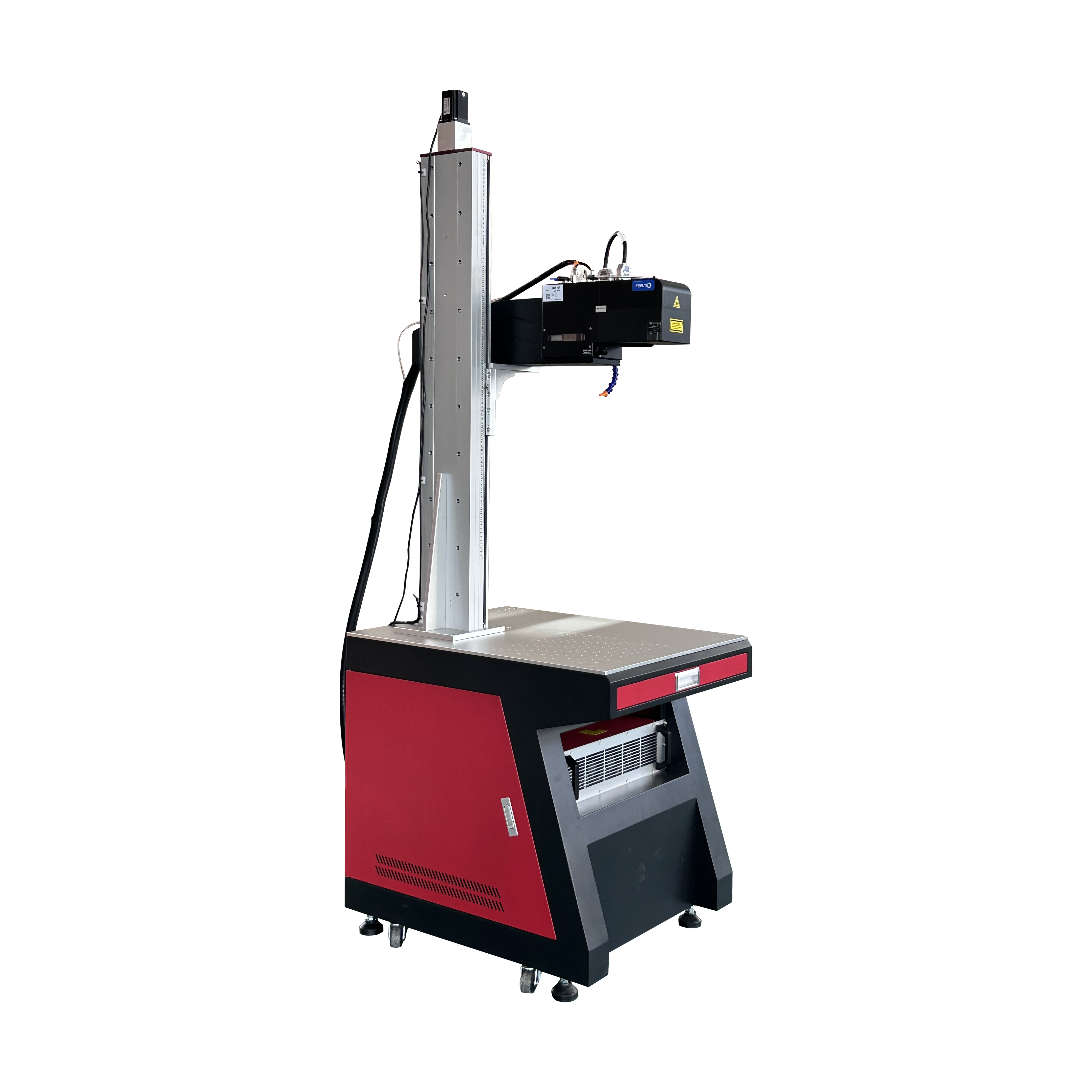
Desktop workstations are fully enclosed, standalone units designed for safety. They are perfect for batch processing, small parts, and dedicated operator stations. Job shops rely heavily on these versatile, plug-and-play machines. Handheld or portable units offer mobile, tethered laser heads. You use them for marking oversized, heavy machinery directly on the floor. Large pipes and structural steel cannot fit inside a traditional enclosure. Inline integration utilizes compact, integration-ready laser heads. They fit directly into continuous, automated manufacturing lines above conveyor belts.
Modern factories require uninterrupted data exchange across all machines. Communication protocols are necessary for automated, high-volume environments. TCP/IP allows direct network connections to your central database. The PLC sends a text string to the laser controller, which updates the marking file instantly. PROFINET integrates smoothly with Siemens PLCs for precise timing control. EtherNet/IP connects easily with Allen-Bradley systems on the floor. These protocols enable automated ERP and MES handshakes for dynamic serialization. Automated part-handling systems rely entirely on this real-time data flow to trigger the laser exactly when the part is in position.
Wavelength absorption dictates the right tool for every specific job. Fiber lasers operate at 1064nm, placing them in the near-infrared spectrum. This wavelength beats CO2 lasers comprehensively for processing metals. CO2 beams operate at 10.6 µm. They simply reflect off bare metal surfaces, causing potential optic damage and failing to mark the part. UV lasers operate at 355nm, offering a much smaller spot size. They perform cold marking by breaking molecular bonds (photochemical ablation) rather than melting the material. UV is reserved for highly sensitive, thin, or transparent materials. Fiber remains the undisputed, heavy-duty champion for industrial metals.
Mechanical dot peen systems create significant physical stress on the part. They displace material violently and generate excessive, disruptive noise. They create stress risers that can lead to part failure in high-fatigue environments. The non-contact precision of fiber eliminates these mechanical issues entirely. Continuous Inkjet (CIJ) relies on messy fluids, MEK solvents, and complex pumps. You face ongoing consumable dependencies and frequent, frustrating maintenance stops due to clogged nozzles. Inkjet marks are not permanent and degrade over time from friction. Fiber technology offers a clean, permanent alternative.
| Technology | Wavelength / Method | Best For | Primary Disadvantage |
|---|---|---|---|
| Fiber Laser | 1064nm | Metals, engineered plastics | Cannot mark wood or glass |
| CO2 Laser | 10.6 µm | Wood, acrylic, organic materials | Reflects off bare metals |
| UV Laser | 355nm | Glass, sensitive plastics, cold marking | Lower power, slower on metals |
| Dot Peen | Mechanical Impact | Deep structural marking | Loud, induces mechanical stress |
| Continuous Inkjet | Ink Deposition | Cardboard, basic packaging | Not permanent, requires consumables |
Laser processing inherently generates hazardous airborne byproducts. You must manage laser fumes effectively to protect your workforce. Plastics release volatile organic compounds when vaporized by the beam. Metals generate fine, hazardous dust particles that linger in the air. Marking stainless steel can release hexavalent chromium, a known carcinogen. OSHA compliance requires proper, dedicated air filtration at the source. You must specify industrial HEPA and Carbon filtration systems. These systems maintain worker safety on the shop floor. They also protect the sensitive machine optics from debris contamination.
Regulatory differences impact your floor layout and safety protocols. Class 1 systems are fully enclosed in a light-tight cabinet. They are completely safe for open shop floors and general use. Operators do not need special protective gear to run them. Class 4 systems feature an open, exposed laser beam. They require strict safety protocols and dedicated environments. Operators must wear certified safety glasses with the correct Optical Density (OD) rating tuned to 1064nm. You must establish restricted access zones around Class 4 equipment to prevent accidental exposure.
Software controls the entire marking process from start to finish. Operators face a distinct learning curve with laser control software. Programs like EZCAD and LightBurn are established industry standards. Training ensures operators can import vector files correctly without scaling issues. They must learn to adjust hatch patterns (like cross-hatch or serpentine), speed, and power settings. Proper training prevents expensive scrap and maximizes your machine utilization. Operators must understand how to optimize cycle times through software tweaks, such as adjusting jump delays and polygon limits.
Implementing the right marking system transforms your production traceability and compliance posture. Take the following steps to ensure a successful deployment:
A: Yes. By using a MOPA architecture, you can adjust the pulse duration and frequency. This precise heat control creates a controlled oxidation layer on the stainless steel surface, producing various colors without adding inks or dyes.
A: No. Solid-state technology utilizes a monolithic design without traditional flashlamps. The pump diodes have an estimated lifespan of up to 100,000 hours, meaning the light source typically outlasts the mechanical chassis of the workstation.
A: Clear acrylic does not absorb the 1064nm wavelength. The infrared light passes through the transparent material much like visible light through a window. You need a CO2 or UV system to process clear polymers effectively.
A: Handheld units are classified as Class 4 devices. You must establish a controlled perimeter, use proper safety interlocks, and ensure all personnel in the area wear appropriate laser safety glasses tuned to the 1064nm wavelength.
A: A 50W system can achieve deep engraving exceeding 0.5mm by running multiple passes. The exact depth depends on the focal lens used, the specific aluminum alloy, and the time allocated for the cycle.
A: Modifying a desktop unit for inline use is difficult and often voids safety certifications. If you plan to automate, you should purchase an integration-ready laser head designed specifically for PLC communication and continuous motion.


