
Please Choose Your Language
Views: 0 Author: Site Editor Publish Time: 2026-10-12 Origin: Site


In modern manufacturing, a fraction of a millimeter determines whether a part fits perfectly or ends up in the scrap bin. Does a tiny variance ruin your metal assemblies? For most fabrication shops, the answer is a resounding yes. The modern fiber laser system sits at the heart of this exactness. The laser source provides concentrated thermal energy to melt thick metals. However, the Computer Numerical Control system acts as the true digital brain. It guides that immense power with microscopic precision. This article explores how these controllers elevate dimensional fidelity. They transform raw photons into a highly reliable fabrication tool. Whether you are upgrading an existing shop floor or investing in your first machine, understanding this control architecture helps you make profitable decisions.
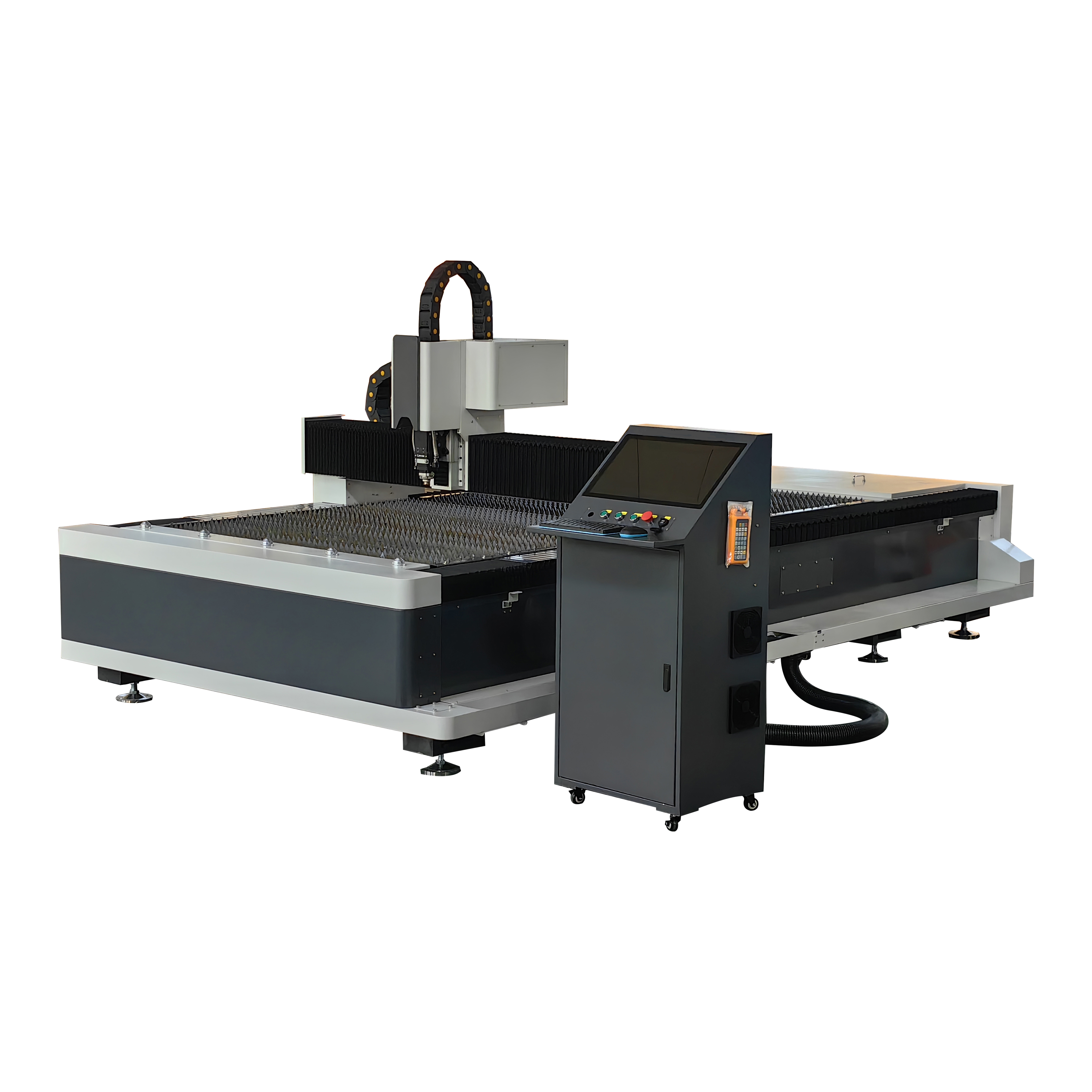
Computer Numerical Control forms the fundamental architecture of modern industrial machinery. It replaces manual operator intervention with automated, code-driven commands. Industrial software generates specific programming languages, primarily G-code and M-code. The controller translates these codes into precise electrical signals. These signals dictate the physical movements of the machine axes. G-code handles geometric positioning and movement trajectories. Meanwhile, M-code manages hardware functions like triggering the laser beam, switching assist gases, and activating exhaust systems. Relying on deterministic digital instructions removes the variability of human hands. This establishes a strict baseline for manufacturing tolerances.
Picture a busy shop cutting 20mm carbon steel. A high-wattage fiber laser generates enough heat to vaporize that metal in milliseconds. Without a sophisticated control system, this raw power simply creates a puddle of molten slag. The true capability lies in the seamless synergy between photonics and digital commands. The CNC dictates cutting speed, wattage output, and spatial positioning simultaneously. Moving too slowly without reducing power warps the plate. Moving too quickly causes the beam to fail to penetrate, ruining the workpiece. The controller ensures kinetic movement perfectly matches thermal output at any given microsecond.
The journey to an accurate metal part begins long before the arc strikes. Engineers draft complex vector graphics in CAD software. The CNC interface functions as CAM software, reading these digital files and converting them into optimized toolpaths. This translation goes beyond tracing lines. The software actively analyzes geometry to determine the most efficient sequence of cuts. It calculates travel distances between components to minimize idle movement. It also structures the cutting order to prevent localized thermal buildup that warps the metal sheet.
Thermal cutting processes melt and blow away a small amount of material. This creates a trench known as the kerf. Depending on material thickness and focal length, this width typically ranges from 0.1mm to 0.3mm. Cutting directly on the drawn CAD line results in a physical part slightly smaller than intended. To achieve true precision CNC laser cutting, the software utilizes automatic kerf compensation. For instance, highly efficient compact models like a 60x60cm 1500W or 2000W system rely heavily on this feature for intricate small-batch metal parts. Mathematical algorithms calculate the exact beam width. They automatically offset the cutting path to the outside of the part line for external boundaries. For internal holes, the offset goes to the inside. This microscopic adjustment guarantees final physical dimensions match the digital blueprint perfectly.
Piercing a solid sheet requires a high burst of energy. This initial blast creates a localized crater, slag accumulation, and a wider heat-affected zone. Piercing directly on the boundary line leaves a visible defect. CNC software manages this physical reality by programming lead-in and lead-out lines. The controller directs the cutting head to pierce the material a few millimeters away in the scrap area. Once the beam penetrates and gas flow stabilizes, the machine sweeps into the intended cutting path. A lead-out path moves the beam away before shutting off, ensuring continuous edges without burn marks.
Transitioning from a digital design to a physical part requires orchestrating moving components. Physical accuracy relies heavily on high-torque servo motors and linear guide rails. The CNC controller acts as central command. It sends rapid microsecond-level pulse signals to the axis drives. Modern controllers utilize advanced fieldbus protocols to ensure zero latency. This tight synchronization is absolutely critical for automated metal cutting at high speeds. Take a high-power 6000W machine, for example. The gantry moves at blistering speeds to keep up with the melting rate. Without precise synchronization, the machine suffers mechanical lag. This results in corner rounding and jagged edges during rapid directional changes.
Cutting complex geometries requires constant acceleration and deceleration. Approaching a sharp 90-degree corner on a 10mm aluminum plate forces the heavy gantry to slow down. If laser power remains at maximum while velocity drops, concentrated heat melts the corner into a deformed blob. Advanced controllers combat this using real-time power modulation. Linking motor encoder feedback directly to the laser source allows the system to scale wattage down automatically. As the machine accelerates out of the corner, power increases proportionally. This ensures a perfectly sharp angle.
Industrial fabrication environments are rarely perfect. Metal sheets feature microscopic warps, waves, or thermal deformations. Fiber lasers rely on a highly specific focal point. Even a slight distance change between the cutting nozzle and the material blurs the focus. This results in incomplete cuts or heavy dross. Modern systems solve this using capacitive height sensing. A sensor ring within the cutting head continuously measures electrical capacitance. As the sheet warps, the controller processes feedback in milliseconds. It automatically adjusts the Z-axis motor to maintain an absolute focal distance regardless of surface irregularities.
Beyond height tracking, the digital brain constantly monitors mechanical health. Industrial environments introduce vibration, mechanical wear, and occasional collisions. High-end systems employ closed-loop feedback mechanisms. Absolute encoders attached to servo motors report exact rotational positions. Detecting a micro-deviation triggers instant corrective torque. This realigns the cutting head before errors manifest in the metal. If a severe anomaly occurs, such as a nozzle colliding with a tipped-up part, the system detects the torque spike and halts operations to prevent hardware damage.
Cutting a single accurate part is only half the battle. The true challenge lies in cutting ten thousand identical parts over multiple shifts. Digital control fundamentally outperforms manual methods here. A reliable CNC fiber laser cutter removes human fatigue and measurement variability entirely. Once a program is verified, the controller executes the exact same sequence with absolute consistency. The thousandth part features the exact same kerf compensation and edge quality as the first. This high repeatability minimizes quality control rejections.
Material costs represent a massive ongoing expense. CNC systems work in tandem with advanced nesting algorithms to mitigate waste aggressively. Nesting arranges multiple digital parts onto a single representation of the raw metal sheet. The software acts like a geometric puzzle solver. It rotates and interlocks complex shapes to utilize every square inch. Advanced features include common line cutting, where adjacent parts share a single cut line. This technique reduces total cutting time and minimizes thermal distortion by reducing overall heat input.
Looking at the current trajectory of industrial fabrication, integrating IoT into CNC architecture is rapidly redefining baseline accuracy. Recent industry analyses highlight a massive shift toward AI-assisted predictive control. Modern controllers no longer just react to sensor feedback. They utilize machine learning algorithms to predict thermal deformation based on material grade and thickness before the laser even fires. Cloud-connected CAM software now optimizes cutting sequences based on global material databases. This evolution allows local fabrication shops to achieve aerospace-level tolerances without requiring specialized engineering teams on staff. The software actively learns and compensates for environmental variables in real-time.
When evaluating equipment, the controller architecture is a critical indicator of long-term reliability. Selecting the correct system requires evaluating technical parameters based on your actual production needs. You must look beyond basic wattage and examine the brain of the machine.
To make this easier, here is a breakdown of how control features impact your daily operations:
CNC Feature | Technical Function | Direct Benefit for Fabrication Shops |
|---|---|---|
Look-Ahead Processing | Reads thousands of G-code lines in advance | Ensures smooth acceleration on complex arcs without jitter |
Dynamic Power Modulation | Adjusts laser wattage based on cutting head speed | Prevents burned or melted corners on thick metal plates |
Capacitive Height Tracking | Maintains exact Z-axis distance over uneven sheets | Eliminates dross and incomplete cuts on warped materials |
Advanced Nesting Algorithms | Optimizes part placement and common line cutting | Maximizes material yield and drastically reduces scrap rates |
First, consider processing speed. The controller must feature a high look-ahead block capacity to calculate smooth acceleration curves. Second, evaluate the user interface. Operators need intuitive touchscreen displays with clear visual simulations to troubleshoot errors efficiently. Finally, ensure software compatibility. The system must seamlessly import standard CAD file formats and interface with your existing manufacturing execution systems.
Ultimately, technical specifications are only as valuable as the financial return they generate. High precision directly correlates to a massive reduction in scrap material. When a machine reliably holds tight tolerances, parts fit together perfectly during downstream assembly processes like welding or bending. This dimensional fidelity eliminates expensive rework. It prevents costly raw material waste and ensures your investments translate directly into sellable goods.
Traditional manual cutting or older plasma technologies frequently leave parts with heavy dross, jagged edges, or heat-warped boundaries. These defects require secondary processing like manual grinding or edge polishing. This secondary labor is notoriously time-consuming and expensive. Precise control over speed, power, and gas flow ensures parts emerge from the machine table with clean edges. Bypassing the grinding station entirely allows shops to route parts directly to final assembly, significantly reducing labor costs.
CNC control systems are the true brains behind modern fabrication. They translate digital designs into precise physical cuts reliably. By seamlessly synchronizing power with mechanical movement, this technology lowers operating costs. Investing in quality controllers ensures your shop remains competitive. If you are ready to upgrade your production capabilities, explore the high-performance solutions at Easy CNC Laser. Whether you need a compact highly efficient cutter or a heavy-duty 6000W industrial powerhouse, matching the right machine to your production needs is the first step toward unmatched operational profitability.
High-quality machines equipped with advanced controls typically offer cutting accuracies of ±0.01mm to ±0.03mm. The exact tolerance depends on material thickness, machine frame rigidity, and the specific hardware setup like servo motors and linear guide rails.
Yes. Modern systems use capacitive height tracking to sense the exact distance to the metal surface. The controller processes this data in milliseconds, moving the Z-axis to keep the laser precisely focused. This prevents cut failure even on severely warped materials.
Most industrial cutters come with integrated software specifically designed for laser operations included in the purchase. You will typically need separate CAD software for the initial engineering phase before importing files into the machine.
The controller uses dynamic power modulation. As the cutting head mechanically slows down to navigate a sharp corner, the system automatically reduces laser power output. This real-time adjustment prevents excessive heat accumulation.
While it requires foundational training, modern interfaces are highly intuitive. They feature touchscreen controls, pre-programmed cutting parameter libraries, and visual path simulations. This makes daily operation and troubleshooting much simpler than older generations of machinery.
Extreme temperature fluctuations cause slight thermal expansion or contraction in the machine mechanical components, such as the guide rails and gantry. However, high-end CNC controllers often incorporate thermal compensation algorithms. By monitoring ambient conditions, the digital brain applies micro-adjustments to the toolpath, ensuring the cutting tolerance remains strictly within the acceptable range regardless of shop floor climate.
Unlike the mechanical parts of the machine, the digital controller requires minimal physical maintenance. The primary focus should be on keeping the control cabinet clean and well-ventilated to prevent dust accumulation on circuit boards. Additionally, operators should regularly back up cutting parameters and install software updates provided by the manufacturer to ensure the system runs the latest optimization algorithms and security patches.


