
Please Choose Your Language
Views: 0 Author: Site Editor Publish Time: 2026-10-09 Origin: Site


Walk onto any busy fabrication floor today, and you will likely see operators grinding away slag left by outdated plasma torches. Thermal distortion and excessive burrs eat up hundreds of man-hours weekly. A modern solid-state laser system eliminates this exact bottleneck. It offers unmatched speed and accuracy, transforming raw sheets into complex, ready-to-assemble parts in seconds. However, transitioning to this technology requires a clear understanding of its capabilities. Buyers often wonder what exactly these machines can cut, and more importantly, what they cannot. In this comprehensive guide, we will explore the specific materials suitable for processing, the relationship between wattage and thickness, and how to optimize your production line.
Dedicated metal specialists: These systems are specifically engineered for high-speed, high-precision metal processing. They excel with both common ferrous metals and complex non-ferrous alloys.
Top compatible materials: Carbon steel, stainless steel, aluminum, brass, copper, and aerospace-grade titanium.
Power dictates thickness: The maximum thickness a machine can effectively pierce depends entirely on its output wattage. A 1500W source is optimal for thinner sheets, while a 6000W source slices effortlessly through heavy structural plates.
Strictly not for non-metals: Fiber optics are fundamentally unsuitable for materials like wood, acrylic, glass, or PVC. Attempting to process these creates severe fire risks and lethal safety hazards.
Recent market data highlights a massive shift toward lightweighting and automated production. As the electric vehicle and aerospace sectors demand higher strength-to-weight ratios, fabricators are processing unprecedented volumes of aluminum and advanced high-strength steels. Legacy cutting methods simply cannot handle the thermal dynamics of these highly reflective alloys without causing severe warping. Consequently, forward-looking shop floors are rapidly adopting solid-state laser technology. This shift allows facilities to maintain microscopic tolerances while meeting aggressive Just-In-Time production schedules. Furthermore, the integration of smart nesting software is driving down raw material waste to historic lows.
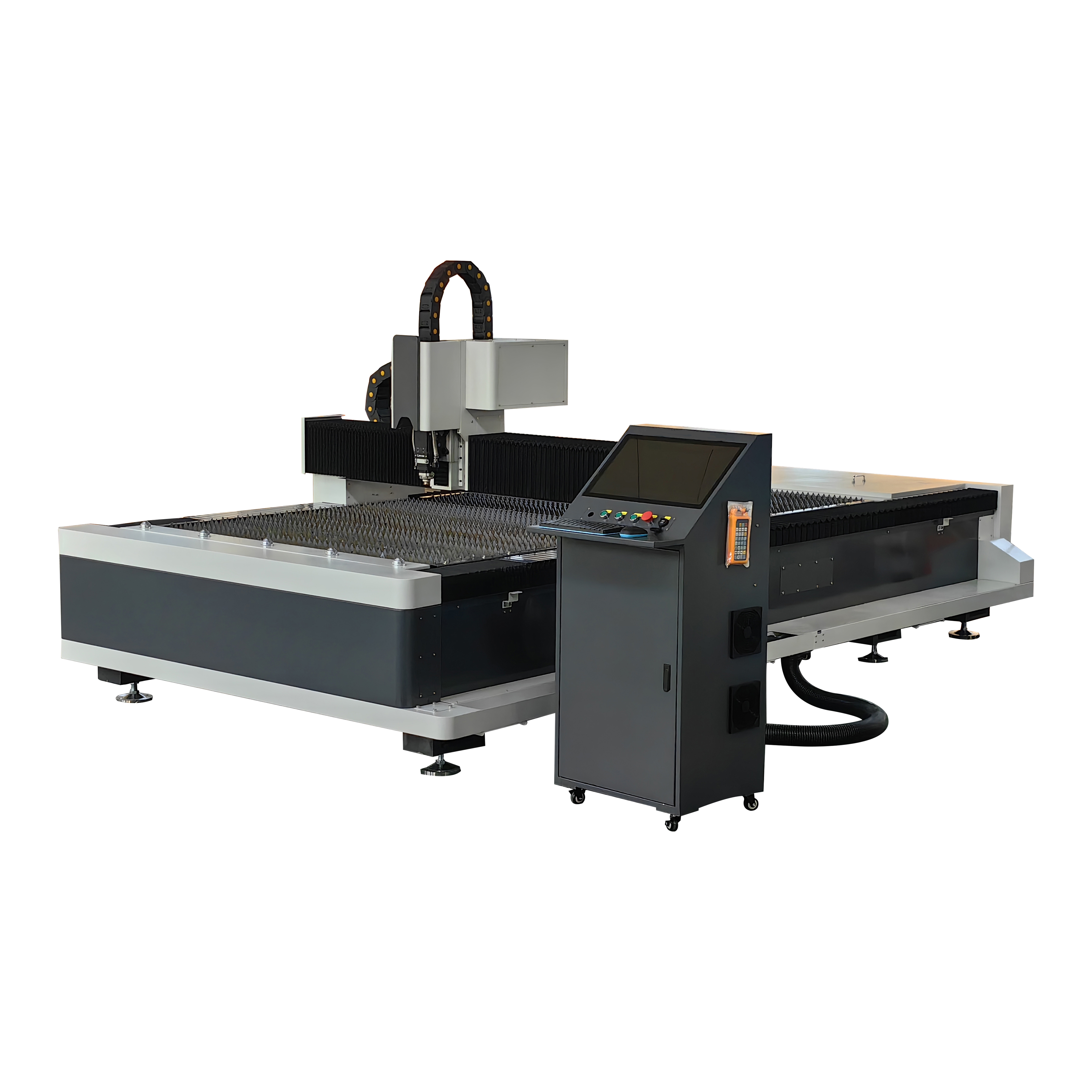
To understand why this equipment slices through certain materials effortlessly while ignoring others, it is essential to look at the underlying physics. The science is complex in design but highly reliable on the shop floor.
At its core, the system generates a highly concentrated beam of light using active optical fibers doped with rare-earth elements. The most common element utilized in industrial manufacturing is ytterbium. When pump diodes emit light into this doped fiber, the rare-earth elements become excited. This amplifies the light into a powerful, coherent laser beam. The energy is then delivered through a flexible, heavy-duty optic cable directly to the cutting head. Inside the head, a series of precision lenses focuses the beam into a microscopic point of intense heat. This focal point easily reaches temperatures that vaporize steel instantly.
The defining characteristic of this technology is its emission wavelength, which sits precisely at 1.064 micrometers. This exact frequency is the primary reason why industrial fiber laser cutting is so revolutionary for metal fabrication. Metals highly absorb light at this specific wavelength due to their molecular structure. When the beam hits the metal surface, the energy is instantly absorbed, melting the kerf in a fraction of a second.
In contrast, non-metals like wood, plastic, and glass allow this specific wavelength to pass right through them or reflect it poorly. Attempting to process these organics leads to inefficient heating and aggressive burning rather than a clean slice. This distinct scientific principle dictates the strict operational boundaries of the machinery.
The true value of a metal fiber laser cutter lies in its versatility across different metal types. Operators can switch between distinct alloys simply by adjusting the focal length and swapping the assist gas. Below is a detailed breakdown of how the beam interacts with various industrial metals.
Carbon steel is arguably the most common material processed in global manufacturing. The equipment cuts mild steel with exceptional efficiency, leaving smooth, perpendicular edges that require zero post-processing. The success of this operation heavily relies on the choice of assist gases. For thicker plates, operators introduce Oxygen gas. This creates a controlled exothermic reaction, essentially burning the material away to assist the laser. Nitrogen gas is utilized for thinner sheets when a pristine, paint-ready edge is required. The high-pressure Nitrogen blows away molten slag without causing edge oxidation.
Stainless steel is highly sought after in industries requiring sterile, corrosion-resistant components. When processing this alloy, high-pressure Nitrogen is the absolute standard. Because stainless steel contains chromium, using oxygen would burn the chromium away. This leads to blackened, oxidized edges susceptible to rust. Nitrogen acts as an inert shield, ensuring the cut remains shiny, clean, and structurally sound.
Historically, aluminum presented a significant challenge for older CO2 technologies. Aluminum possesses high thermal conductivity, meaning it dissipates heat rapidly. It also acts like a mirror to certain light frequencies. Modern optics easily overcome aluminum's reflectivity. The intense, concentrated energy melts the aluminum before it has a chance to reflect the beam. This results in a clean, dross-free finish vital for automotive and aerospace components.
Brass and copper are notoriously difficult in the fabrication world. They possess even higher thermal conductivity and reflectivity than aluminum. In the past, attempting to process these metals risked catastrophic damage. The beam could reflect off the surface and travel back up the optic cable, destroying the core diodes. Today, high-quality systems are equipped with advanced back-reflection isolators. These safety mechanisms protect the internal components by absorbing any stray light, making this the only reliable technology for electrical component manufacturing.
Titanium is prized for its extreme strength-to-weight ratio. However, it is highly reactive to heat and prone to warping. The laser excels here because it produces a microscopic Heat-Affected Zone. The beam moves so quickly that the surrounding material does not have time to heat up and distort. Depending on the exact alloy, Argon is frequently used as an assist gas to prevent atmospheric contamination during the cutting process.
Material Type | Recommended Assist Gas | 2000W Max Thickness | 6000W Max Thickness |
|---|---|---|---|
Carbon Steel | Oxygen or Nitrogen | Up to 16mm | Up to 25mm |
Stainless Steel | Nitrogen | Up to 6mm | Up to 16mm |
Aluminum | Nitrogen | Up to 6mm | Up to 16mm |
Brass / Copper | Nitrogen or Oxygen | Up to 4mm | Up to 10mm |
A critical factor in decision-making for facility managers is understanding the direct relationship between laser wattage and material thickness. Higher wattage means the laser generates more thermal energy. This allows it to melt through thicker metals and process thinner sheets at exponentially faster speeds.
Machines in the 1000W to 3000W range are the absolute workhorses of lightweight fabrication. They are exceptionally efficient for HVAC ductwork, architectural signage, and automotive body panel prototyping. For example, a reliable 2000W source can comfortably slice carbon steel up to 16mm thick. If your production primarily involves standard thin sheet metals or intricate small parts, investing in a compact 60x60cm format provides an optimal balance of precision and rapid capital return. These smaller footprint machines drastically reduce floor space requirements while maintaining industrial-grade accuracy.
When manufacturing demands shift to heavy equipment, shipbuilding, or structural steel components, high-power lasers become non-negotiable. Stepping up to a 6000W machine significantly increases both the maximum thickness threshold and the initial piercing speed. Beyond just thickness, high-power systems drastically reduce processing time. The time it takes to pierce a 15mm steel plate drops to fractions of a second. For heavy-duty applications requiring maximum daily throughput, deploying a 6000W system ensures uninterrupted, high-volume production without bottlenecking your assembly line.
While this equipment represents the pinnacle of metal fabrication, it is not a universal tool. Attempting to process non-metals is highly inefficient. More importantly, it poses lethal risks to operators and causes catastrophic damage to the machinery.
Wood, MDF, and Plywood: Organic materials do not absorb the specific wavelength properly. Instead of a clean slice, the intense heat will scorch the wood, cause excessive charring, and likely ignite a severe fire inside the exhaust bed.
Plastics and Acrylics: Similar to wood, plastics react poorly to this frequency. The beam causes the plastic to melt uncontrollably. This leaves deformed, bubbling edges and a ruined workpiece.
PVC Polyvinyl Chloride: This is a critical safety hazard. Cutting PVC with any thermal process emits toxic chlorine gas. This gas is lethal if inhaled. Furthermore, it mixes with ambient moisture to form hydrochloric acid, which will rapidly corrode the expensive optics and linear guides of the machine.
Glass and Fiberglass: The intense, localized heat causes severe thermal shock in glass. This leads it to shatter or splinter violently across the work area.
The ability to process diverse alloys with microscopic accuracy has led to the widespread adoption of this technology across multiple global industries. Different sectors leverage these systems to meet strict regulatory standards and maintain tight schedules.
In the automotive industry, high-speed production is paramount. Facilities utilize this equipment to fabricate complex chassis components, hydroformed parts, and lightweight aluminum doors. The automation capabilities ensure high repeatability for mass production.
Similarly, in aerospace and aviation, component failure is simply not an option. The demand for microscopic tolerances when shaping titanium brackets and aluminum fuselage panels makes this the only viable choice. The lack of material warping ensures structural integrity remains completely uncompromised.
Furthermore, the electronics sector relies on the miniaturization of components. Manufacturers require precise cutting of thin copper busbars and aluminum heat sinks. Advanced back-reflection technology allows for the continuous, safe processing of these highly conductive materials without thermal distortion.
Transitioning from traditional mechanical methods to a modern optical system yields substantial, measurable business advantages. The core benefits of high precision metal cutting center around speed, operational costs, and product quality.
First and foremost is the unmatched production speed. When handling thin sheet metals under 6mm, these systems operate at blistering speeds. They are often up to five times faster than legacy CO2 lasers. This exponential increase directly translates to higher daily throughput.
In addition, operating costs are drastically lower. These systems boast a high wall-plug efficiency of around 30 to 40 percent, meaning they consume significantly less electricity. Because the beam is delivered via a solid-state cable, there are no complex gas mixtures to monitor. There are also no internal mirrors to constantly clean and align, resulting in near-zero maintenance costs for the source itself.
Finally, superior edge quality eliminates secondary labor. Traditional cutting often leaves rough edges that require manual grinding. By producing a finished, dross-free edge straight off the machine bed, manufacturers save countless hours of manual labor and accelerate delivery times to their clients.
Selecting the correct equipment is a critical engineering decision that dictates your production capabilities for years to come. Purchasing a machine with too little power will result in bottlenecks. Conversely, over-investing in unnecessary wattage ties up vital capital. Follow this systematic approach to evaluate your needs:
Step 1: Audit Your Primary Material Composition
Analyze the materials your facility processes most frequently. If your production consists entirely of mild carbon steel, a standard configuration will suffice. However, if your core business involves highly reflective metals like copper or brass, you must ensure the selected machine is equipped with advanced back-reflection protection modules.
Step 2: Determine Maximum Material Thickness
Evaluate not just what you cut occasionally, but what you process daily. For thin sheets from 1mm to 6mm, a 1500W or 2000W machine is highly cost-effective and efficient. For cutting thick plates up to 25mm, robust 6000W high-power systems are absolutely required to provide the necessary thermal energy without losing edge quality.
Step 3: Select the Appropriate Working Area
The physical dimensions of your raw materials dictate the required bed size. Choosing a machine bed that accommodates your standard sheet size, such as 5x10 feet, eliminates the need to pre-cut materials. This saves time and reduces scrap. For smaller precision parts, a compact 60x60cm bed might be perfect. Consider adding an exchange table to load new sheets while the machine is actively cutting.
A modern solid-state laser system handles a vast array of metals with absolute ease. Whether you are slicing through standard carbon steel or profiling highly reflective copper components, the technology delivers unparalleled accuracy. By carefully evaluating your daily material throughput and choosing the correct wattage and bed size, you can drastically improve your production efficiency.
Ready to upgrade your fabrication capabilities? Whether you need a compact system for intricate designs or a high-power behemoth for structural steel, selecting the right equipment is crucial. Explore the full range of advanced industrial solutions at Easy CNC Laser to find the exact machine that fits your production demands and budget.
No, they are designed exclusively for metals. The specific 1.064-micrometer wavelength passes right through or severely burns non-metals. For processing wood, plastic, or acrylic, a traditional CO2 laser is the correct and safe choice.
A 2000W machine can typically process carbon steel up to 16mm and stainless steel up to 6mm. However, the exact thickness depends heavily on the purity of the assist gas used, the quality of the raw material, and the desired cutting speed.
Yes, absolutely. Modern systems are equipped with specialized back-reflection isolators that protect the internal diodes. This makes it perfectly safe and highly effective to process highly reflective metals without the risk of damaging the equipment.
The primary difference lies in the beam generation and delivery. Fiber systems use a solid-state delivery method via optic cables, producing a wavelength highly absorbed by metals. This makes them faster and more efficient for metal fabrication. CO2 systems rely on a gas mixture and fragile mirrors, producing a wavelength better suited for non-metals like wood, leather, and acrylic.
When properly calibrated, the cut is generally dross-free and requires no secondary grinding. Edge quality depends on matching the correct assist gas, pressure, and cutting speed to the specific material and thickness.
Operating costs are remarkably low compared to plasma or waterjet systems. The primary ongoing expenses are electricity and assist gases. Because solid-state lasers have a high wall-plug efficiency of up to 40 percent and lack internal mirrors that need replacing, routine maintenance costs are minimal.


