
Please Choose Your Language
Views: 0 Author: Site Editor Publish Time: 2026-10-10 Origin: Site


Are your high-speed metal cutting operations putting your floor workers at risk? Manufacturing demands faster production cycles. Consequently, the reliance on high-wattage equipment has skyrocketed. Picture a bustling fabrication shop. The acrid smell of vaporized galvanized steel hangs heavy in the air. Operators squint through bulky safety goggles, dodging errant sparks. Open-bed lasers routinely expose your team to invisible radiation, toxic metal fumes, and flying debris. This reality leads to potential injuries and severe compliance nightmares.
Recent industrial safety reports highlight a massive global paradigm shift in metal fabrication. Regulatory bodies are tightening permissible exposure limits for metal particulates. Occupational safety agencies are heavily penalizing unshielded optical hazards. Forward-thinking facility managers now view protective housings as foundational requirements rather than optional accessories. They are actively future-proofing operations against increasingly strict compliance audits. An enclosed fiber laser cutting machine solves these serious hazards head-on. It bridges the gap between raw industrial power and uncompromising operator protection.
In this comprehensive guide, we will explore how these advanced systems mitigate daily risks. We will break down the measurable business benefits of upgrading and provide actionable strategies for selecting the perfect protective ecosystem for your shop floor.
Radiation Protection: Fully enclosed systems utilize specialized Optical Density rated viewing glass to block harmful 1064nm laser wavelengths, preventing irreversible retinal damage.
Respiratory Health: Integrated ventilation mechanisms actively extract and filter toxic metal dust and hazardous gases from the workspace, ensuring clean shop air.
Physical Safety: Automated smart interlock systems instantly shut down the laser source if an access door is breached, eliminating the risk of accidental beam exposure.
Compliance and ROI: Upgrading to a shielded system ensures strict compliance with CE, FDA, and OSHA standards. This verifiable safety record can substantially reduce liability and facility insurance costs.
Operational Versatility: From compact footprint models to ultra-high-power industrial units, protective enclosures allow for secure operation across diverse manufacturing environments.
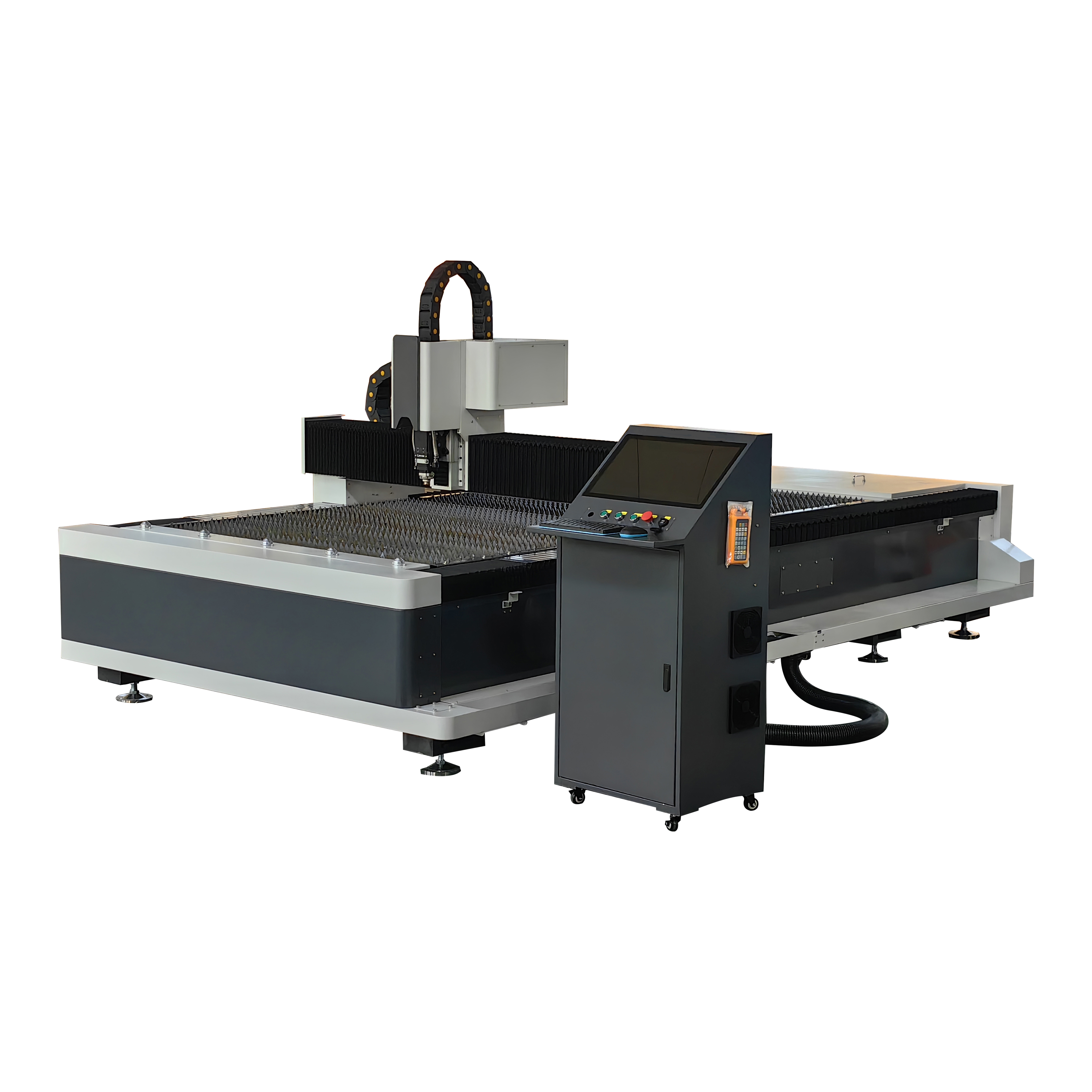
An enclosed fiber laser cutting machine is an industrial metal-cutting system designed with a comprehensive, heavy-duty protective housing. Unlike open-bed routers or basic plasma cutters, these machines feature a full metal roof, specialized laser-safe viewing windows, and a deeply integrated exhaust infrastructure.
The core technology relies on fiber optics and laser diodes to generate an intensely focused beam of light. This beam typically operates at a wavelength of around 1064 nanometers. Because this wavelength is highly concentrated and capable of slicing through thick carbon steel or titanium in mere seconds, housing this immense power within a physical barrier is a critical engineering requirement.
Open-type machines may initially appear more accessible for loading materials from multiple angles. They also often carry a lower procurement cost. However, they lack the fundamental safety barriers necessary for high-power applications, which generally includes anything above 1500 watts. The enclosure is never merely a cosmetic cover. Rather, it functions as a highly engineered safety apparatus designed to contain optical, chemical, and physical hazards simultaneously.
To truly understand the value of a sealed housing, we must examine the objective risks associated with open-bed environments. Operators and facility managers frequently battle three primary hazards that compromise workplace safety on a daily basis.
Fiber lasers operate in the near-infrared spectrum. Crucially, the 1064nm wavelength is completely invisible to the human eye. The human blink reflex is only triggered by visible light. Therefore, an operator will not instinctively close their eyes or turn away if exposed to a stray beam. Furthermore, the cornea and lens do not absorb this wavelength. Instead, they focus it directly onto the retina. Even a fractional second of exposure to a scattered or reflected beam from an unshielded machine can cause permanent blind spots or complete vision loss.
The thermal cutting process does not merely separate metal. It violently vaporizes a microscopic portion of the material along the kerf. This vaporization creates hazardous fumes and fine particulate matter. Processing galvanized steel releases zinc oxide fumes. Inhaling these fumes can trigger a debilitating condition known as metal fume fever. Similarly, slicing through aluminum, stainless steel, and titanium releases microscopic metallic dust. Open machines allow these micro-particles to drift freely into the operator breathing zone, posing severe long-term respiratory risks.
Industrial metal fabrication utilizes high-pressure assist gases like oxygen or nitrogen. These gases blow molten material out of the cut width. This process violently ejects sparks, hot slag, and sharp micro-debris at high velocities. In an open environment, this molten material can travel several feet. It poses a direct burn hazard to anyone walking by. It also creates a severe fire risk if the hot sparks land on combustible materials like cardboard packaging or cleaning solvents nearby.
The primary function of a housed system is the absolute containment of optical radiation. Manufacturers achieve this through a sophisticated combination of material science and automated safety protocols.
The viewing windows on a protective cabin are not standard glass or basic acrylic. They are engineered using specialized polymer or mineral glass infused with specific absorbing dyes. These windows are rated by their Optical Density. For a fiber laser, the glass typically requires an OD6 or higher rating at the 1064nm wavelength. An OD6 rating means that only one millionth of the laser light can pass through the window. Consequently, the operator can safely monitor the cutting process in real-time without the risk of retinal damage. This eliminates the constant need for cumbersome laser safety goggles during standard operation.
Under international laser safety standards, the raw laser source used in metal cutting is classified as a Class 4 laser. This is the most dangerous category. It is capable of causing severe eye and skin damage, as well as posing a high fire hazard. By housing this laser within a certified and interlocked enclosure, the entire machine is downgraded to a Class 1 laser product. A Class 1 rating signifies that the machine is inherently safe for use under all normal operating conditions. This drastically simplifies facility safety protocols.
Human error remains a significant factor in industrial accidents. To aggressively mitigate this, sealed cutting machines are equipped with redundant, fail-safe door interlock systems. These electronic sensors continuously monitor the state of the enclosure doors. If an operator or maintenance worker accidentally opens a panel while the laser is active, the interlock system instantly severs the power to the laser source. This microsecond response ensures that no one can ever be exposed to an active, unshielded beam.
Once the optical hazard is contained, airborne contaminants become the next engineering challenge. A solid structural boundary provides the necessary physical containment to implement effective air quality control.
An enclosure acts as a containment chamber for the smoke and gases generated during the cut. Because the roof and walls trap the emissions, the high-powered exhaust fans can create a negative pressure environment inside the cabin. Advanced systems utilize zoned downdraft tables synchronized with the cutting head. The exhaust valves only open in the specific zone where the laser is currently active. This concentrates the suction power, effectively pulling the fumes downward and immediately away from the operator.
Implementing fume controlled laser cutting ensures that hazardous particulate matter is captured long before it can settle on expensive shop equipment or in workers lungs. The extracted air is typically routed through heavy-duty industrial dust collectors equipped with HEPA filters or specialized cartridge filters. This process isolates the microscopic metal dust safely into collection bins for proper disposal.
Beyond light and air containment, the sheer physical robustness of the enclosure provides a vital shield against kinetic and thermal hazards.
The heavy-gauge sheet metal used to construct the enclosure acts as an impenetrable physical barrier. As high-pressure assist gases blow molten slag and sparks out of the cutting bed, the sturdy walls safely deflect this debris downward into collection trays. This containment protects any personnel walking past the machine. It prevents hot sparks from igniting flammable materials elsewhere in the facility.
To maintain peak productivity without ever compromising safety, most industrial enclosed models utilize dual exchange tables. This automated system allows the operator to load raw sheet metal and unload finished parts on a table located entirely outside the enclosure. Once the loading is complete, the machine swaps the tables. The new material is brought inside the protective housing to be cut. As a result, the operator remains completely separated from the active cutting zone at all times.
Feature | Open-Bed Fiber Laser | Enclosed Fiber Laser |
|---|---|---|
Radiation Safety | High risk. Requires strict PPE and restricted access zones. | Inherently safe. OD-rated glass blocks 1064nm wavelengths. |
Fume Extraction | Poor. Smoke dissipates into the general shop environment. | Excellent. Negative pressure cabin captures and filters particulates. |
Debris Containment | None. Sparks and hot slag can travel several feet. | Complete. Heavy-gauge metal walls deflect kinetic debris downward. |
Compliance Level | Often fails stringent OSHA and EPA audits for high-power units. | Meets strict CE, FDA, and OSHA industrial safety standards. |
Investing in safety is often incorrectly viewed as a sunk cost. In the context of modern industrial fabrication, it provides a highly measurable return on investment and significant operational advantages.
Operating high-power industrial machinery requires passing rigorous safety audits. Purchasing a fully enclosed machine ensures immediate alignment with stringent global standards, including CE, FDA, and OSHA workplace safety mandates. This out-of-the-box compliance saves businesses hundreds of hours in administrative work and expensive retrofitting costs.
Insurance companies calculate premiums based on rigorous risk assessments. An open Class 4 laser system represents a massive liability due to the potential for severe worker injury and fire. By upgrading to safe fiber laser cutting through fully enclosed systems, facility managers demonstrate proactive risk mitigation. This verifiable reduction in workplace hazards frequently translates directly to lower workers compensation rates and reduced facility insurance premiums.
Selecting the appropriate equipment involves more than just evaluating cutting speed. It requires a careful assessment of your production environment, floor space, and specific safety risks. Not all enclosed systems are identical. The right machine depends heavily on aligning specifications with your operational goals.
In heavy manufacturing sectors such as shipbuilding and structural steel fabrication, the demand for processing thick metal plates at rapid speeds is constant. These applications typically require laser sources of 6000 watts or higher. At these extreme power levels, the safety hazards multiply exponentially. A high-power laser beam generates intense back-reflection and a massive volume of molten slag. For these demanding environments, a heavy-duty enclosed system featuring a welded bed and aviation aluminum gantry is a strict regulatory requirement. It keeps the immense kinetic energy and thermal output safely isolated from the shop floor.
Industries such as aerospace, medical device manufacturing, and electronics require a completely different approach. Here, the focus shifts from raw power to microscopic accuracy. When cutting thin-gauge metals or specialized alloys, even the slightest environmental variable can compromise the edge quality. In precision manufacturing, an enclosed laser cutter serves a vital dual purpose. First, it protects the operator from sharp, high-frequency micro-sparks. Second, by isolating the cutting bed, the enclosure prevents ambient shop dust and temperature fluctuations from interfering with the laser focal point. This ensures burr-free edges and reduces secondary finishing costs.
Small job shops and prototyping laboratories often face severe floor space limitations. In these compact environments, operators are physically much closer to the machinery. This proximity makes robust safety features even more critical. Space constraints should never be an excuse to compromise on safety. Compact enclosed models, such as 60x60cm footprint machines running 1500W to 2000W sources, deliver the full safety benefits of a Class 1 enclosure. They include OD-rated glass and proper exhaust ports but are scaled down to fit comfortably into tight workshops.
Technology alone cannot replace diligent operational protocols. The physical barriers provided by the machine are highly effective, but their long-term reliability depends entirely on proper usage and routine maintenance.
Operators should perform a daily pre-shift inspection to verify that the magnetic or mechanical door interlocks are functioning perfectly. If the machine does not immediately halt the laser emission when a door is slightly opened, it must be locked out and tagged out until repaired. Operators must clean the viewing windows daily using only approved, non-abrasive optical cleaning solutions to prevent micro-scratches.
The exhaust fans and filtration units can only protect respiratory health if the filters are unobstructed. As the filtration system captures metallic dust, the filter cartridges gradually clog. When this happens, backpressure builds up within the enclosure. This reduces extraction efficiency and potentially allows hazardous smoke to escape. Maintenance teams must monitor differential pressure gauges and adhere to a strict schedule for replacing HEPA filters.
Generally, no. The specialized viewing glass on a fully enclosed machine provides adequate protection, effectively creating a safe working environment during standard operations. This allows operators to monitor the cutting process safely without protective eyewear. However, certified laser safety glasses are strictly required during maintenance procedures, optics cleaning, or if authorized personnel are operating the machine with the enclosure doors open using maintenance override keys.
Not necessarily. While a basic open bed allows access from all sides, most industrial enclosed machines feature automated exchange tables. This system allows operators to safely load new sheet metal on an external table while the machine actively cuts another sheet inside the closed housing. Once the cut is finished, the tables swap automatically in seconds.
The specialized safety glass does not degrade purely from absorbing stray laser light. However, its lifespan is heavily dictated by the shop environment and maintenance habits. If operators clean the glass with abrasive cloths, micro-scratches will eventually compromise visibility and structural integrity. With proper daily cleaning using optical-grade solutions, the glass typically lasts for the entire operational life of the machine.
Yes. Cutting highly reflective materials like brass, copper, and polished aluminum generates intense back-reflection. This reflected energy can damage unprotected optics and pose a severe blinding hazard. An enclosed system safely contains these intense reflections within the metal walls. Modern fiber laser sources also utilize built-in back-reflection isolators to protect the internal diodes, making the enclosed setup the safest way to process these challenging materials.
While aftermarket enclosures and custom-built housings do exist, it is highly recommended to purchase a factory-built enclosed machine. Factory models ensure that the magnetic door interlocks, the exact ratings of the safety glass, and the zoned exhaust systems are perfectly integrated and tested. Retrofitting often leaves dangerous gaps in safety compliance and extraction efficiency.
An enclosed fiber laser cutting machine is a critical investment for any modern fabrication facility. It effectively blocks harmful radiation, controls toxic fumes, and physically shields workers from flying debris. Safe cutting practices protect your most valuable asset—your workforce—while simultaneously ensuring high-speed, highly profitable daily production. Evaluate your shop space, material thickness requirements, and production volume to choose the right system. Browse the certified catalog at EasyCNCLaser to find your ideal precision, high-power, or compact enclosed equipment, or contact the engineering team today for a custom safety consultation tailored to your shop floor.


