
Please Choose Your Language
Views: 0 Author: Site Editor Publish Time: 2026-10-19 Origin: Site


Walking onto a modern manufacturing floor, you quickly realize that traditional engraving methods are rapidly becoming obsolete. Old techniques like mechanical CNC routing, chemical etching, or manual stamping waste valuable production time. They also consume expensive materials at an unsustainable rate. More importantly, these outdated approaches simply lack the micro-precision demanded by today's stringent manufacturing standards. Whether you are crafting intricate bespoke jewelry or stamping serial numbers on aerospace turbines, a fiber laser marking machine solves these inefficiencies with remarkable elegance. In this comprehensive guide, I will share insights from the shop floor, explore the underlying physics of this technology, and provide a clear roadmap for selecting the perfect equipment for your facility.
Unmatched Precision: Fiber laser technology delivers microscopic accuracy. It has established itself as the absolute industry standard for intricate designs, micro-text, and complex high-density barcodes.
High ROI and Low Maintenance: These systems operate with a solid-state lifespan frequently exceeding 100,000 hours. They require absolutely zero consumables, representing a highly durable and cost-effective capital investment.
Versatile Metal Compatibility: The technology seamlessly processes stainless steel, bare and anodized aluminum, brass, titanium, and precious metals. It achieves this without compromising the structural integrity of the workpiece.
Essential for Traceability: Laser technology ensures strict regulatory compliance across the aerospace, medical device, and automotive sectors.
Scalable Solutions: Equipment ranges from automated desktop units integrated with vision systems to high-power 300W 3D Galvo setups designed for aggressive deep metal sculpting.
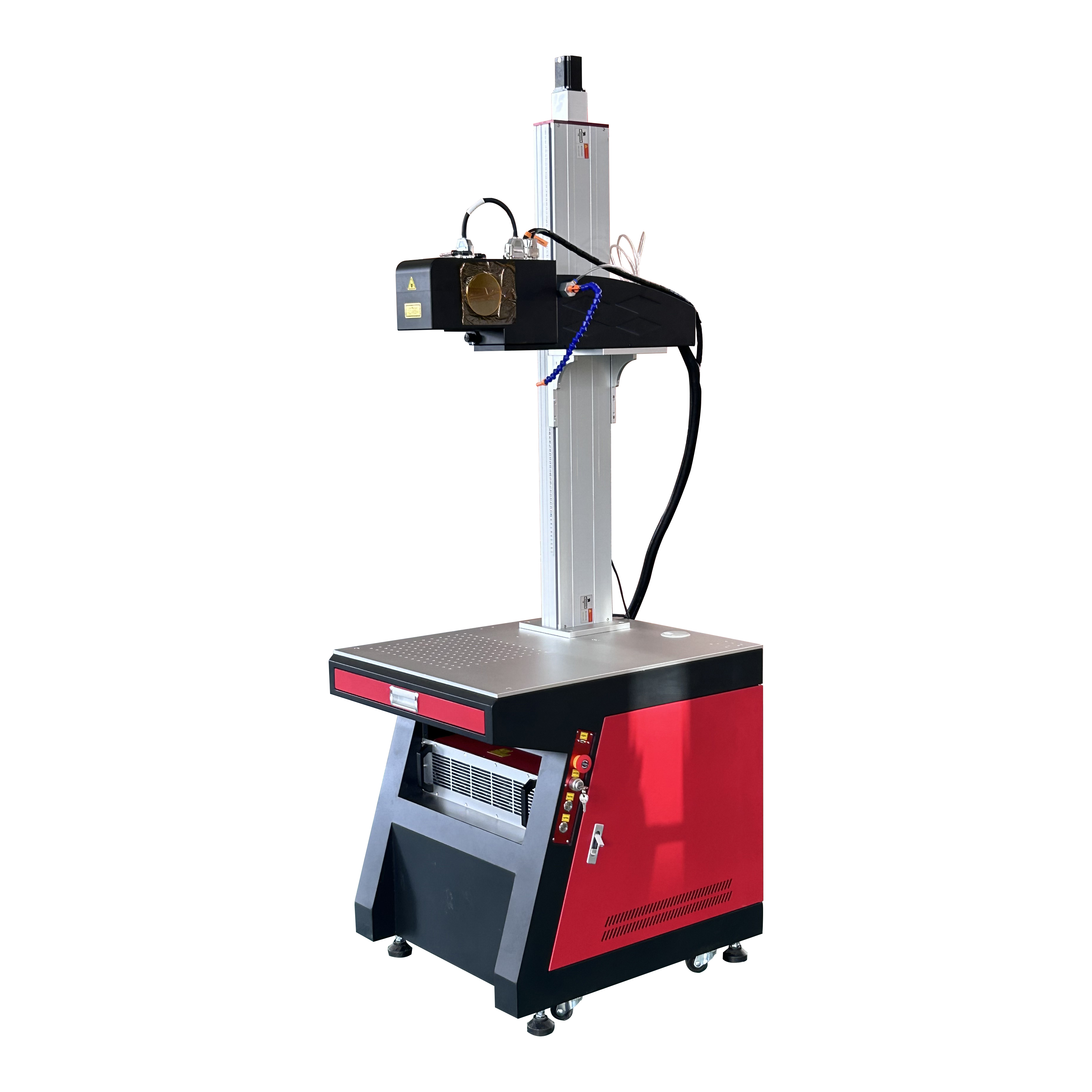
To truly appreciate the industrial value of a modern laser engraver, we must look beyond the sleek exterior and examine the underlying physics. The optical mechanics at play separate this technology entirely from traditional mechanical drag engraving or older gas-based laser systems.
Looking under the hood, the system generates an intense beam using an optical fiber doped with rare-earth elements. Ytterbium is the most common choice here. When pump light enters this specialized fiber, it excites the ions. This reaction amplifies the light, creating a highly focused and aggressive beam. From a technical standpoint, the most critical specification is the operating wavelength, which sits at approximately 1064 nanometers. This specific near-infrared wavelength is a massive advantage for industrial manufacturing because metallic structures absorb it exceptionally well. In stark contrast to older technologies that largely bounce off metallic surfaces, the 1064 nanometer wavelength penetrates the metal efficiently. It rapidly converts optical energy into localized thermal energy, allowing the operator to alter or vaporize the material instantly.
In modern fabrication, the term fine engraving goes far beyond mere aesthetics. It refers to the critical ability to generate highly detailed, microscopic marks that remain perfectly legible under strict quality control inspections. Fiber lasers achieve this through an ultra-fine focal spot size. This spot frequently measures less than 30 microns in diameter, which is thinner than a human hair. This concentrated spot size translates into an exceptionally high energy density, paving the way for flawless engraving. Consequently, manufacturers can seamlessly render high-resolution vector graphics, microscopic QR codes, and crisp serial numbers on components as minute as internal microchips or delicate surgical instruments. Furthermore, the thermal affected zone is kept to an absolute minimum. This ensures the surrounding material does not suffer from warping, discoloration, or metallurgical degradation.
For production managers and business owners, evaluating new manufacturing equipment requires a ruthless analysis of Return on Investment, ongoing operational expenses, and overall lifecycle durability. Moving away from legacy systems often requires a mindset shift, but the financial data heavily supports the transition.
Production Metric | Traditional Methods | Fiber Laser Systems |
|---|---|---|
Consumables | High recurring costs for inks, chemical solvents, and drill bits. | Zero consumables. Only requires standard electrical power. |
Processing Speed | Slow and mechanical. Prone to production bottlenecks. | Extremely fast, frequently exceeding 7,000 millimeters per second. |
Maintenance | Frequent tool sharpening, fluid changes, and mechanical repairs. | Virtually maintenance-free with a 100,000-hour solid-state lifespan. |
Precision Level | Limited by the physical size of the routing bit or stamp. | Microscopic precision with a spot size under 30 microns. |
Specifically, traditional marking methods tether a business to endless consumable purchases. Inks, toxic solvents, and fragile mechanical drill bits represent a recurring operational expense that scales aggressively as production volume increases. Conversely, a fiber laser utilizes a non-contact process. No physical tool ever touches the substrate. There are no bits to sharpen and no inks to refill. The sole primary operating cost is the electrical power required to run the machine, which remains remarkably low due to the superior electrical-to-optical conversion efficiency.
On a bustling factory floor, production bottlenecks frequently occur at the final identification stage. Fiber lasers dismantle this hurdle by offering blistering processing speeds. Because the tiny mirrors inside the galvanometer scanning head pivot at extreme velocities to steer the beam, the actual marking process for a serial number often takes merely fractions of a second. This rapid velocity ensures that the marking station can easily keep pace with automated manufacturing lines.
Looking at the broader manufacturing landscape, there is a definitive global shift toward automated traceability. Driven by stringent anti-counterfeiting laws and international quality standards, companies are moving away from manual batch labeling. Recent industry analyses reveal a surging demand for smart laser systems equipped with artificial intelligence and vision alignment. Modern factories require permanent product identification that can survive the entire lifecycle of a part. Advanced setups can automatically recognize a component's geometry on a moving conveyor and adjust the engraving coordinates in milliseconds. This trend highlights a broader transition. Laser engraving is no longer just about marking a logo. It is about embedding permanent, scannable data that tracks a component from the foundry to its end-of-life recycling.
It is a common misconception that all laser operations are identical. In reality, the interaction between the beam and the substrate encompasses various distinct techniques. The right choice depends entirely on the desired visual outcome, required depth, and specific material properties.
Surface marking is a delicate process designed to alter the top layer of the metal without removing a significant volume of material. Annealing utilizes lower power and a slower speed to apply localized heat, drawing carbon to the surface. This creates a controlled oxidation layer that changes color to a rich, dark black. The resulting mark is entirely smooth to the touch. This makes it highly favored in the medical device industry where crevices could harbor dangerous bacteria. Etching is slightly more aggressive. It rapidly melts and expands the surface of the material, creating a shallow mark characterized by high visual contrast.
If your project requires tactile depth, deep engraving is the necessary route. This aggressive process involves repeatedly vaporizing successive micro-layers of metal to carve out physical cavities, custom molds, or intricate 3D reliefs. Because this requires ablating a substantial volume of dense material, it demands significantly higher energy output. Standard low-wattage machines will struggle and overheat trying to achieve this. Instead, heavy-duty applications require specialized equipment. For instance, deploying a metal laser marking system equipped with a 200W to 300W source and a 3D FEELTEK Galvo head changes the game. These specific machines offer a massive 600 by 600 millimeter working area. They handle 3D relief sculptures by actively adjusting the focal length in real-time as the beam digs deeper into the metal, ensuring clean ablation without manual intervention.
The near-infrared wavelength is incredibly versatile across the metallurgical spectrum. However, achieving the perfect finish requires operators to understand that different metal alloys demand distinct parameter adjustments. You must carefully tweak the speed, power, and pulse frequency for each job.
Stainless steel remains arguably the most common material processed in job shops today. By dialing in a low speed combined with high frequency, operators can coax out a flawless black annealed mark that boasts excellent resistance to corrosion. Carbon steel reacts similarly well, yielding high-contrast marks perfect for heavy machinery data plates.
Bare aluminum poses a slight challenge due to its high thermal conductivity and reflective nature. It requires a punch of higher peak power to engrave effectively. Anodized aluminum, on the other hand, is an operator's dream. The beam effortlessly vaporizes the dyed anodic layer, cleanly exposing the raw aluminum underneath to produce a striking white or grey graphic.
In the bespoke jewelry sectors, material loss directly equals financial loss. Fiber lasers are overwhelmingly preferred for precious metals like gold and silver because the highly localized vaporization minimizes waste dust. Meanwhile, titanium behaves entirely differently. It reacts beautifully to thermal manipulation. By precisely controlling the heat input, operators can manipulate the oxidation layers to generate vibrant colors directly on the titanium surface without ever using a drop of ink.
The explosive demand for automated tracking is largely driven by tightening global regulatory standards and rigorous quality control measures across various critical sectors.
Components within the aerospace and automotive industries are routinely subjected to extreme friction, blistering heat, and caustic chemical exposure. To guarantee safety, manufacturers deploy these systems to engrave Vehicle Identification Numbers, complex DataMatrix codes, and batch numbers directly onto engine blocks and delicate turbine blades. These robust marks remain perfectly readable throughout the decades-long lifespan of the vehicle.
Furthermore, medical regulatory bodies strictly enforce Unique Device Identification regulations for surgical instruments. Everything from scalpels to titanium bone screws must feature a permanent barcode. Laser annealing is often the only legally acceptable method for these tools. It produces a dark mark that survives thousands of harsh autoclave sterilization cycles without creating microscopic pits where pathogens could proliferate.
While the internal physics are undeniably complex, modern software interfaces have made the actual workflow highly accessible. Implementing this technology into your production line requires a systematic approach. Below is a practical guide to executing a flawless engraving.
The foundation of any successful project originates in the digital workspace. Operators must utilize vector graphic files rather than pixel-based raster images. Vector files consist of mathematical paths that the galvanometer can track seamlessly, ensuring infinite scalability without jagged edges. Once imported into the control software, the operator defines the dimensions and applies hatch patterns. Hatching dictates exactly how the beam will fill the empty space within the vector outline.
Absolute precision is heavily dependent on establishing the correct focal distance. The beam must converge exactly at the surface of the workpiece to achieve the smallest possible spot size. Operators typically rely on a dual red-dot pointer system integrated into the laser head. By physically adjusting the vertical axis until the two red dots merge into a single sharp point on the material surface, perfect focus is achieved.
Dialing in the machine parameters is a nuanced skill. The raw output power dictates the energy level. Superficial etching might only require low power, while deep cavity engraving demands maximum output. The speed of the beam is equally critical. Slower speeds allow thermal energy to pool and penetrate deeply, whereas rapid speeds are ideal for light passes. Finally, adjusting the frequency alters the rate of individual pulses, determining whether the beam blasts away material or provides a silky smooth finish.
Because every batch of metal alloy reacts slightly differently to thermal energy, running a test matrix on a piece of scrap material is a non-negotiable best practice. A test matrix is an automated grid generated by the software that applies varying combinations of speed and power to different squares on the metal. By visually and tactilely inspecting this grid, the engineer can empirically select the exact parameter combination that yields perfect contrast.
With the parameters locked in, the operator initiates the sequence. Rather than the loud grinding associated with CNC routers, there is only a brief hum as the beam instantly vaporizes the surface. Once the machine stops firing, the part must be cleaned. A quick wipe with a microfiber cloth and some isopropyl alcohol removes any residual oxidation, revealing a pristine mark ready for the assembly line.
Selecting the appropriate hardware requires a rigorous evaluation of your daily production volume, specific material types, and required engraving depths. Aligning the machine's technical capabilities with your industrial applications is critical to maximizing your investment.
The power output of the source acts as the primary bottleneck for processing speed and material removal rates. 20W to 50W systems represent the industry standard for surface-level marking. They are incredibly efficient for creating high-contrast logos, annealing medical tools, and etching barcodes. Conversely, high-power systems ranging from 200W to 300W are engineered specifically for heavy-duty industrial abuse. These machines physically vaporize substantial layers of dense metal rapidly, making them mandatory for deep engraving and rapid mold making.
The galvanometer head directs the beam via motorized mirrors. A standard optical system is designed strictly for flat planes. If your material features a curve or a step, the edges will fall out of the focal range, resulting in a blurry mark. Advanced optical setups actively adjust the focal length in milliseconds as the beam travels. This breakthrough technology enables flawless engraving across complex geometries and sweeping cylinders without requiring the operator to stop and manually reposition the equipment.
For high-volume manufacturing facilities, relying on an operator to manually load and align parts creates an unacceptable bottleneck. To mitigate this, factories are transitioning to intelligent automated solutions. By integrating a Desktop 50W-60W-80W CCD Camera Fiber Laser Marking Machine, businesses achieve seamless online marking. The integrated camera captures a live feed of the workspace. Intelligent software instantly recognizes the position and orientation of incoming parts on a conveyor belt. Even if a component arrives skewed, the system calculates the offset and adjusts the engraving path in real-time. This entirely eliminates the need for expensive mechanical fixturing.
Today, this technology stands as the gold standard for fabrication facilities. It provides unparalleled speed and microscopic precision without the financial burden of ongoing consumable costs. By fundamentally altering the surface of the material, it guarantees flawless, highly durable identification that withstands the harshest industrial environments. Whether your business requires delicate surface annealing for medical compliance or aggressive deep engraving for automotive molds, selecting the correct wattage and optical system is paramount. To ensure your production line is equipped to meet the rigorous traceability standards of tomorrow, explore the professional-grade solutions available at EasyCNC Laser to find the exact configuration tailored to your shop floor requirements.
For standard surface marking, annealing, and creating high-contrast black marks on stainless steel, a 30W to 50W machine is highly efficient and represents the industry sweet spot. If your application requires deep cavity engraving into the steel, you will need to scale up to a 100W or even a 200W system to remove material fast enough without causing excessive heat buildup.
While primarily designed for surface alteration and engraving, high-wattage systems typically 50W and above can cut through very thin sheet metals like brass, silver, or gold up to 1 millimeter thick. However, this requires multiple slow passes and is not as efficient as a dedicated flatbed cutting laser. It is best utilized for intricate jewelry cutting rather than bulk industrial metal fabrication.
The maximum depth is determined by the wattage, the density of the metal alloy, and the number of passes executed. Standard 30W to 50W machines are optimized for surface marking but can achieve depths of up to 1 millimeter on softer metals like aluminum if the operator runs multiple consecutive passes. For industrial deep engraving, high-power machines ranging from 200W to 300W are utilized to achieve depths of several millimeters rapidly.
No, the marks created by this technology are exceptionally durable and resilient. Unlike inkjet printing or chemical labeling, which merely deposit a fragile layer of pigment on top of the material, the beam fundamentally alters the physical and chemical structure of the metal surface. These marks are engineered to withstand prolonged exposure to ultraviolet light, extreme thermal fluctuations, harsh chemical solvents, and severe mechanical abrasion.
The necessity of a rotary attachment depends entirely on the geometry of the products you intend to process. A standard optical system has a fixed focal plane, meaning it can only engrave cleanly on flat surfaces. If you plan to engrave on cylindrical objects like pipes, mechanical shafts, or jewelry rings, a rotary axis is highly recommended. It mechanically turns the object in perfect synchronization with the firing sequence.
Yes, these systems are perfectly safe for standard workshop environments, provided that strict safety protocols are observed. The near-infrared wavelength generated by the machine is invisible to the human eye but can cause severe retinal damage if exposed directly. Operators must always use proper safety enclosures or wear certified safety glasses specifically rated for the 1064 nanometer wavelength. Pairing the machine with an industrial fume extractor is also strongly advised.
The fundamental difference lies in the wavelength of the light emitted, which dictates material compatibility. The 1064 nanometer wavelength is highly absorbed by metals and rigid industrial plastics. In contrast, a CO2 system operates at a much longer wavelength of 10,600 nanometers. This wavelength reflects right off bare metals but is perfectly absorbed by organic materials. Therefore, CO2 systems are utilized for cutting wood, acrylic, and leather, but are entirely ineffective for direct metal engraving.


