
Please Choose Your Language
Views: 0 Author: Site Editor Publish Time: 2026-08-27 Origin: Site


Transitioning from traditional arc welding to laser technology requires absolute certainty regarding material compatibility to justify the capital expenditure. Manufacturers frequently encounter production bottlenecks, thermal distortion, and high post-processing costs when joining heat-sensitive, highly reflective, or dissimilar metals using conventional methods. Evaluating how a Laser Welding Machine interacts with specific alloys—and understanding the metallurgical realities of these interactions—is critical for determining equipment ROI, selecting the right machine specifications, and scaling production efficiently. You cannot simply point a beam at a joint and expect structural integrity. You must understand exactly how photons transfer energy into different crystal lattices, how rapid thermal cycles alter microstructures, and what specific parameters prevent catastrophic joint failure on the shop floor.
Optimal Candidates: Stainless steel, titanium, and nickel alloys exhibit excellent absorption rates, resulting in high-strength, low-distortion welds with minimal heat-affected zones (HAZ).
Reflective Challenges: Non-ferrous metals like aluminum, copper, gold, and silver require specific power thresholds, beam modulation, or alternative wavelengths to overcome initial energy reflection.
Dissimilar Joining: Precision laser welding provides a distinct competitive advantage by successfully joining metals with differing melting points and thermal conductivities, a process highly prone to failure in traditional welding.
Specification Alignment: Successful implementation requires matching the metal laser welder’s power output, beam delivery (pulsed vs. continuous wave), and shielding gas to the specific metallurgical properties of the target material.
Understanding the physics of laser-metal interaction dictates your success or failure during production. Different metals absorb or reflect laser energy based on the beam's wavelength, the material's surface finish, and the ambient temperature. When the focused beam first strikes the metal surface, the process begins in conduction mode. The energy heats the top layer, and thermal conductivity pulls that heat downward into the base material. This creates a shallow, wide weld pool suitable for thin foils or cosmetic passes.
As you increase the power density beyond approximately 10^6 W/cm², the process violently transitions into keyhole mode. The intense energy instantly vaporizes the metal locally. This creates a deep, narrow cavity—the keyhole—filled with superheated, ionized metal vapor. This vapor cavity acts as a black body, absorbing nearly 100% of the incoming laser energy and allowing the beam to penetrate deeply into the material. The molten metal flows around this advancing keyhole, solidifying rapidly at the trailing edge to form a high-aspect-ratio weld.
Trace elements and specific alloying compositions heavily influence this rapid solidification process. Elements like sulfur, phosphorus, and lead drastically alter the weldability of the base metal. They lower the surface tension of the weld pool and segregate at the grain boundaries during cooling. This segregation frequently causes hot cracking. The extreme cooling rates associated with laser processing leave very little time for trapped gases to escape, making the process highly susceptible to porosity if the base material chemistry is poor.
You evaluate a successful laser weld using strict, measurable metrics. We rely on the following criteria to qualify a joint:
Penetration depth must meet or exceed the engineered structural requirements without burning through the root.
Tensile strength and yield strength must match the base material specifications.
Metallurgical cross-sections must show an absence of macro-porosity, micro-cracking, and severe underfill.
The final assembly must exhibit minimal thermal distortion, preserving tight dimensional tolerances for downstream processing.
Material type directly dictates your baseline equipment requirements. Standard carbon steels and stainless alloys respond exceptionally well to standard 1µm fiber lasers. Highly reflective metals demand different wavelengths, such as green or blue lasers, or complex beam modulation strategies. Your power rating, beam delivery method, and optical configuration must align perfectly with the physical properties of the metal you intend to join.
Ferrous metals generally present the most straightforward path to successful laser implementation. Their high absorption rates at standard near-infrared wavelengths make them highly efficient to process, requiring less raw power to achieve deep penetration compared to non-ferrous alloys.
Austenitic stainless steels represent the ideal candidate for a laser welding machine. Grades like 304, 316L, and 321 absorb laser energy efficiently and possess relatively low thermal conductivity. This combination allows the energy to concentrate exactly at the focal point rather than dissipating into the surrounding plate. The resulting welds are clean, structurally sound, and aesthetically superior. Because the heat-affected zone (HAZ) remains incredibly narrow, stainless steel components retain their inherent corrosion resistance. Manufacturers routinely achieve zero post-grinding requirements, sending welded parts directly to final assembly, passivation, or electropolishing.
Ferritic and martensitic stainless steels (the 400 series) require more caution. While they absorb energy well, their microstructures are sensitive to rapid thermal cycling. Grade 430, for example, can experience grain growth in the HAZ, leading to a loss of toughness. Martensitic grades like 410 or 420 will harden significantly during the rapid quench of a laser weld, often requiring pre-heating or post-weld heat treatment (PWHT) to prevent cold cracking.
Carbon content dictates the weldability of these standard industrial steels. Low-carbon steels (like 1018 or A36) weld easily and form strong, ductile joints without complex thermal management. As the carbon equivalent (CE) increases beyond 0.30%, the risk of martensite formation spikes. The rapid heating and quenching cycle of a focused laser beam causes high-carbon steels to form a brittle, glass-like microstructure. To prevent embrittlement and subsequent cracking under load, operators must implement pre-heating strategies, utilize a slightly defocused beam to widen the heat input, or carefully control the cooling rates.
HSLA steels rely on specific, carefully controlled microstructures to achieve their high strength-to-weight ratios. Laser welding introduces a severe thermal cycle that can obliterate these microstructures in the fusion zone. You must configure parameters to maintain the mechanical properties of HSLA steels without degrading the joint strength. Fast travel speeds and low overall heat input generally yield the best results, minimizing the time the metal spends at elevated temperatures. However, the exact parameters vary based on the specific micro-alloying elements (like niobium, vanadium, or titanium) present in the steel batch.
Cast iron remains an exceptionally unfriendly material for any rapid thermal process. Its massive carbon content (typically 2-4%) and inherent brittleness make it prone to catastrophic cracking under intense laser energy. Laser welding cast iron is generally limited to micro-repairs, mold tooling restoration, or cosmetic surface corrections. Successful processing requires specialized nickel-based filler wire to add ductility to the weld pool and absorb the carbon migrating from the base metal. You also need strict thermal control, often involving high pre-heat temperatures (above 300°C) and extremely slow, controlled post-weld cooling in an insulated environment.
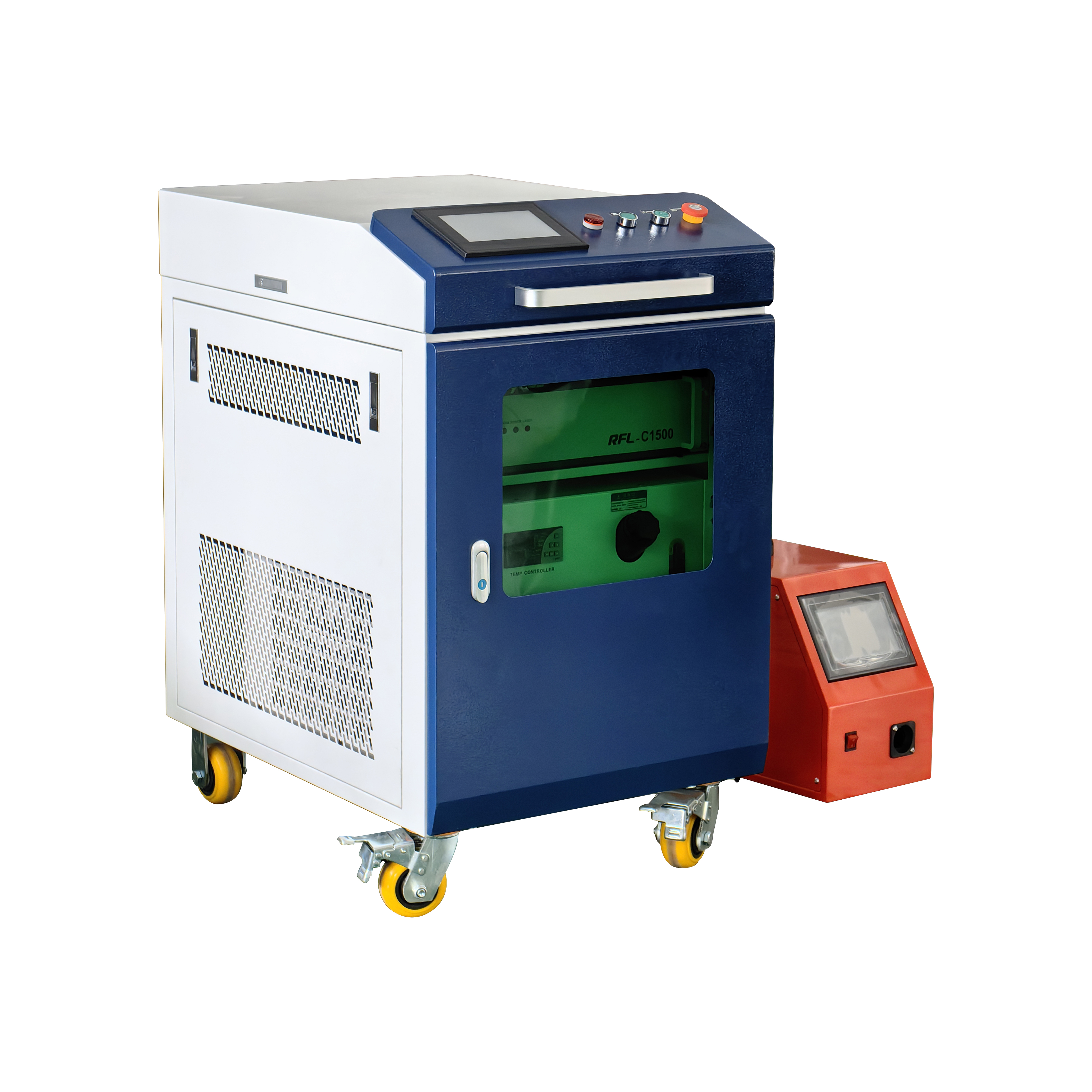
Non-ferrous metals introduce significant processing challenges on the shop floor. High thermal conductivity rapidly pulls heat away from the joint, while high surface reflectivity bounces the incoming laser energy away before melting can even initiate.
Aluminum combines high thermal conductivity with high initial reflectivity. You need massive peak power to break through the reflective aluminum oxide layer and establish the keyhole. Once the keyhole forms, absorption increases dramatically, and the power must often be ramped down to prevent blow-through. Aluminum processing carries specific, severe defect risks.
Hot cracking is notoriously common in 6000-series alloys (like 6061) due to their specific solidification temperature ranges. Hydrogen entrapment frequently causes extensive macro-porosity, as molten aluminum absorbs hydrogen rapidly but expels it upon freezing. Furthermore, the intense heat of the keyhole can vaporize volatile alloying elements. Welding 5000-series aluminum can lead to a significant loss of magnesium, weakening the final joint. Proper filler wire selection—typically 4043 (silicon-rich) or 5356 (magnesium-rich)—helps mitigate these metallurgical issues by altering the weld pool chemistry.
Copper acts as a near-perfect mirror at standard near-infrared (1µm) wavelengths. A standard fiber laser struggles immensely to couple energy into the material. If you simply increase the wattage to force absorption, the metal suddenly absorbs up to 90% of the energy the millisecond it melts. This thermal runaway leads to violent spatter, unstable keyholes, and massive blowholes. Battery manufacturing and electronics assembly are driving a massive shift toward green (532nm) or blue (450nm) laser wavelengths. Copper absorbs these shorter wavelengths highly efficiently even at room temperature. This shift increases initial absorption, eliminates the thermal runaway, reduces spatter, and stabilizes the weld pool.
Brass introduces another severe complication: zinc vaporization. Zinc boils at approximately 906°C, which is significantly lower than the melting point of copper (1085°C). When laser welding brass, the zinc outgasses violently before the copper fully melts. This results in severe porosity, erratic weld pools, and heavy soot deposition on the optics. Managing brass requires precise gap control to allow the zinc vapor to vent, or specialized beam shaping to keep the keyhole open longer.
Jewelry manufacturing, medical device assembly, and microelectronics rely heavily on precision joining of precious metals. Gold and silver possess extreme reflectivity and massive thermal conductivity. You cannot use continuous wave (CW) lasers effectively here; the heat simply dissipates too fast. Instead, you need high-peak-power pulsed lasers, often Nd:YAG systems. The massive peak power of the pulse overcomes the reflectivity instantly. The extremely short pulse duration (measured in milliseconds) achieves localized melting without damaging surrounding heat-sensitive areas, integrated circuits, or gemstones. The precise control over pulse shape, duration, and frequency prevents the metal from overheating and distorting.
Aerospace, medical, and nuclear sectors utilize specialty alloys that demand flawless joint integrity. Laser technology provides the precise thermal control necessary to process these advanced, unforgiving materials.
Titanium exhibits an excellent response to laser processing. Its low thermal conductivity keeps the heat highly localized, allowing for exceptionally deep penetration with minimal power input. However, titanium is highly reactive at elevated temperatures. Above 400°C, it readily absorbs oxygen, nitrogen, and hydrogen from the atmosphere. This atmospheric contamination causes severe embrittlement, known as alpha case formation, turning the weld brittle and blue or white in color.
You must utilize absolute inert gas shielding to weld titanium successfully. This setup includes:
Primary coaxial nozzle coverage to protect the immediate molten pool.
Elongated trailing shields to flood the solidifying metal with argon until it cools below 400°C.
Dedicated backing gas fixtures to protect the root of the weld from atmospheric exposure.
Nickel alloys and Inconel dominate high-temperature environments like jet engine turbines and nuclear reactor components. These materials retain their immense strength at extreme temperatures. Laser welding provides the low heat input necessary to maintain their complex structural integrity. When welding thick-section Inconel 718 or 625, you must carefully manage parameters to avoid micro-fissuring and solidification cracking in the HAZ. Controlling the weld pool shape—aiming for a wider, shallower profile rather than a deep, narrow teardrop—and ensuring flawless joint fit-up are critical steps to prevent these stress-induced defects.
Refractory metals like molybdenum and tungsten possess extremely high melting points (above 2600°C). They are also notoriously brittle at room temperature. Laser welding can join these materials, but the process is highly specialized. You need immense power density to achieve melting. The rapid cooling cycle of a laser weld often exacerbates their inherent brittleness, leading to transverse cracking immediately upon solidification. Pre-heating the components to several hundred degrees and welding inside a controlled atmosphere glovebox often yields the most reliable results.
Joining two entirely different metals presents complex metallurgical challenges. The primary issue is the formation of brittle intermetallic compounds. When you mix metals with vastly different thermal expansions, melting points, and crystal structures, the resulting alloy in the weld pool is often extremely hard, weak, and prone to cracking under minimal stress. For example, mixing iron and titanium creates Fe-Ti intermetallics that shatter like glass.
Despite these severe challenges, precision laser welding can achieve proven dissimilar combinations that are physically impossible with traditional arc welding. Common successful joints include:
Copper to Aluminum: This combination is critical for electric vehicle (EV) battery tabs and busbars.
Stainless Steel to Copper: Frequently used in thermal management systems, heat exchangers, and conductive components.
Titanium to Stainless Steel: This joint often requires an intermediary layer, like a vanadium or tantalum foil, to prevent brittle phase formation.
Success relies heavily on advanced beam manipulation techniques. Beam oscillation, utilizing programmable wobble heads, stirs the weld pool dynamically and helps control the exact mixing ratio of the two metals. Operators also use precise beam placement. By offsetting the beam slightly (e.g., 0.2mm) toward the more conductive or higher-melting-point metal, you can balance the thermal input. This ensures both materials melt simultaneously and mix in a highly controlled manner, minimizing the volume of brittle intermetallics formed at the interface.
Selecting the correct machine architecture ensures you can process your target materials efficiently. The two primary delivery methods dictate how the energy interacts with the metal: Continuous Wave (CW) and Pulsed.
Continuous Wave lasers emit an uninterrupted, steady beam of energy. They are ideal for achieving deep penetration in thick steels, stainless alloys, and aluminum. CW lasers dominate high-volume manufacturing where travel speed and penetration depth are paramount. Pulsed lasers emit energy in short, high-intensity bursts. They are ideal for heat-sensitive components, thin foils, medical devices, and highly reflective metals. The off-time between pulses allows the material to cool slightly, preventing thermal distortion, warping, and burn-through on delicate parts.
Power output directly correlates to penetration depth and travel speed. You must size your kilowatt rating to your thickest required joint. Below is a realistic framework for single-pass penetration depths using a standard 1µm fiber metal laser welder:
Laser Power Output | Mild Steel Penetration (Approx.) | Aluminum Penetration (Approx.) | Typical Applications |
|---|---|---|---|
1000W (1kW) | Up to 3.0 mm | Up to 2.0 mm | Sheet metal enclosures, thin-wall tubing, kitchenware. |
1500W (1.5kW) | Up to 4.5 mm | Up to 3.0 mm | Automotive components, HVAC ducting, light structural frames. |
2000W (2kW) | Up to 6.0 mm | Up to 4.0 mm | Pressure vessels, heavy brackets, aerospace components. |
3000W (3kW) | Up to 8.0 mm | Up to 6.0 mm | Shipbuilding panels, heavy machinery, thick battery busbars. |
Shielding gas selection plays a massive role in weld quality, plasma suppression, and root protection. You must map specific gases to your material types. Argon is the industry standard, providing excellent, cost-effective coverage for steel and aluminum. Helium offers superior thermal conductivity and better plasma suppression, allowing for deeper penetration in thick materials, though it is significantly more expensive. Nitrogen is frequently used for austenitic stainless steel to improve the weld's cosmetic appearance, increase strength, and maintain corrosion resistance. Gas mixtures (like Argon/Helium blends) are often tailored to optimize plasma suppression and protect the weld pool dynamically during high-speed processing.
Transitioning to laser technology requires a deep understanding of specific defect risks and mitigation strategies. Managing weld porosity and cracking requires strict, repeatable process control. You must adjust the focal position accurately. A beam focused too deep inside the material can cause root porosity and erratic keyhole behavior. Modifying travel speed helps control the cooling rate; moving too fast traps gas, while moving too slow widens the HAZ unnecessarily. Above all, you must ensure absolute pre-weld surface cleanliness. Laser welding is highly intolerant of oil, rust, mill scale, or drawing compounds. Any surface contaminant will immediately vaporize, collapse the keyhole, and cause massive porosity.
Joint fit-up tolerances are significantly tighter than traditional MIG or TIG methods. Laser welding requires virtually zero gap between components. The focused beam is incredibly narrow, often less than 0.6 millimeters in diameter. If there is a gap larger than 10% of the material thickness, the beam will simply pass through it, cutting the material rather than welding it. This necessitates high-precision upstream machining, laser cutting, or stamping. If machining tolerances cannot be improved to meet these strict zero-gap requirements, you must integrate automated wire feeders to bridge the gaps and add necessary volume to the weld pool.
Facility safety and operator training require a complete paradigm shift on the shop floor. These machines operate as Class 4 laser devices. The scattered radiation from a multi-kilowatt beam can cause instant, permanent eye damage and severe skin burns across the room. Implementation requires light-tight enclosures, safety interlocks on all access doors, and specialized laser safety eyewear rated for the specific wavelength. The operator role also shifts dramatically. You are moving away from manual welding dexterity toward CNC and parameter programming skills. Operators must understand metallurgy, focal lengths, gas dynamics, and robotic kinematics rather than manual puddle manipulation.
Take the following steps to advance your implementation and ensure structural integrity across your product lines:
Audit your current joint designs to identify which assemblies can transition to autogenous, zero-gap configurations to eliminate filler wire dependencies.
Send representative material batches to equipment manufacturers for physical weld trials, macro-etching, and destructive cross-section testing.
Upgrade upstream machining and cutting processes to ensure parts consistently meet the strict fit-up tolerances required for automated laser processing.
Implement a comprehensive Class 4 laser safety protocol, including light-tight enclosures and interlocked access doors, before equipment delivery.
A: Yes, but it is highly complex. Directly welding aluminum to steel creates extremely brittle intermetallic phases that fail under minimal stress. Successful joining requires specialized techniques, precise beam offsetting toward the steel, or the use of transition materials like a bimetallic strip to prevent the two base metals from mixing directly in the weld pool.
A: Maximum thickness scales directly with kilowatt power. A 3kW fiber laser can typically penetrate up to 8mm of mild steel in a single pass. For thicker materials, you can utilize multi-pass welding with filler wire, or upgrade to higher power systems (10kW to 20kW+), which can penetrate 20mm or more in heavy industrial applications.
A: Not always. Laser welding frequently utilizes autogenous welding, where no filler metal is added, relying entirely on melting the base materials. However, automated wire feeders are used when you need to bridge gaps from poor fit-up, alter the weld pool chemistry to prevent cracking, or add reinforcement to the joint profile.
A: Laser welding is significantly faster than TIG, often operating at speeds up to ten times faster. It introduces a fraction of the heat input, virtually eliminating thermal distortion and the need for post-weld straightening. While TIG requires immense manual dexterity, laser systems rely more on parameter programming and automated motion control.
A: Copper is highly reflective at the standard 1µm wavelength of fiber lasers, bouncing the energy away. When it finally melts, absorption spikes suddenly, causing violent spatter and unstable keyholes. Modern solutions utilize green or blue wavelength lasers, which copper absorbs highly efficiently at room temperature, stabilizing the process.
A: It is difficult. The zinc coating boils at a lower temperature than the steel melts. This causes violent outgassing, leading to severe porosity and spatter. To weld it successfully without removing the coating, you must maintain a precise gap between the sheets to allow the zinc vapor to escape, or use specialized beam shaping techniques.
A: Standard fiber lasers designed for metal operate at wavelengths that pass through or burn plastics. However, specific diode lasers can join thermoplastics via transmission laser welding. This process requires one polymer layer to be transmissive to the laser and the underlying layer to be absorptive, melting them together at the interface.


