
Please Choose Your Language
Views: 0 Author: Site Editor Publish Time: 2026-09-26 Origin: Site


Tired of lugging heavy gas tanks and wrestling with tangled coolant lines on remote job sites? Mobile welding has historically been a slow and logistically complex endeavor. Traditional laser welders deliver incredible precision. However, they have long required bulky water chillers to manage their intense thermal output. This inherent limitation kept these powerful tools firmly anchored to the factory floor.
The landscape of on-site fabrication is undergoing a massive shift. Modern thermal management technology is finally freeing contractors from the workshop. Let us explore exactly how this hardware transforms field repairs and installations, straight from an engineering perspective.
Before examining the technical mechanics, you need to understand the practical benefits of adopting this agile technology for field operations. The transition from stationary setups to mobile configurations relies heavily on specific hardware evolutions.
To grasp how this equipment supports mobile work, we must first examine the core technology that enables its operation. Historically, fiber lasers generated significant amounts of heat. That thermal load could only be managed by continuous liquid cooling. Today, advanced thermal management supports high-power outputs entirely without liquid.
Legacy fiber laser systems rely heavily on water chillers to dissipate the intense thermal energy generated by the laser source. Water chillers are highly effective for continuous industrial applications. Yet, they are inherently heavy, bulky, and stationary. They demand strict maintenance schedules. Operators must perform routine water replacements, filter changes, and constant monitoring to prevent algae buildup or freezing in cold environments.
For mobile work, the industry desperately needed a different approach. Modern air-cooled technology utilizes phase-change heat sinks combined with advanced, high-velocity fans. These heat sinks contain a specialized fluid that absorbs heat, vaporizes, travels to a cooler area to condense, and then returns to the heat source. This closed-loop thermal management system effectively cools the laser source without the crushing weight or maintenance of a water reservoir.
A modern compact laser welding machine is designed with deep integration and space-saving architecture in mind. The setup typically consists of four primary components.
Recent market analyses reveal a massive shift within the mobile fabrication sector. Severe skilled labor shortages continue to challenge the traditional welding industry. Consequently, contractors are desperately seeking technologies that lower the barrier to entry while simultaneously boosting productivity. The miniaturization of laser sources has directly answered this industry-wide call.
Specifically, mobile laser welding is experiencing a projected double-digit compound annual growth rate over the next five years. This surge is driven largely by the automotive repair, architectural, and HVAC sectors. Forward-thinking contractors are no longer just looking at the initial capital expenditure. They are calculating the overall lifecycle cost. These agile systems drastically cut down on consumable usage like shielding gas and abrasive grinding discs while multiplying daily output. Therefore, adopting this technology is rapidly shifting from an operational luxury to a baseline requirement for staying competitive in field services.
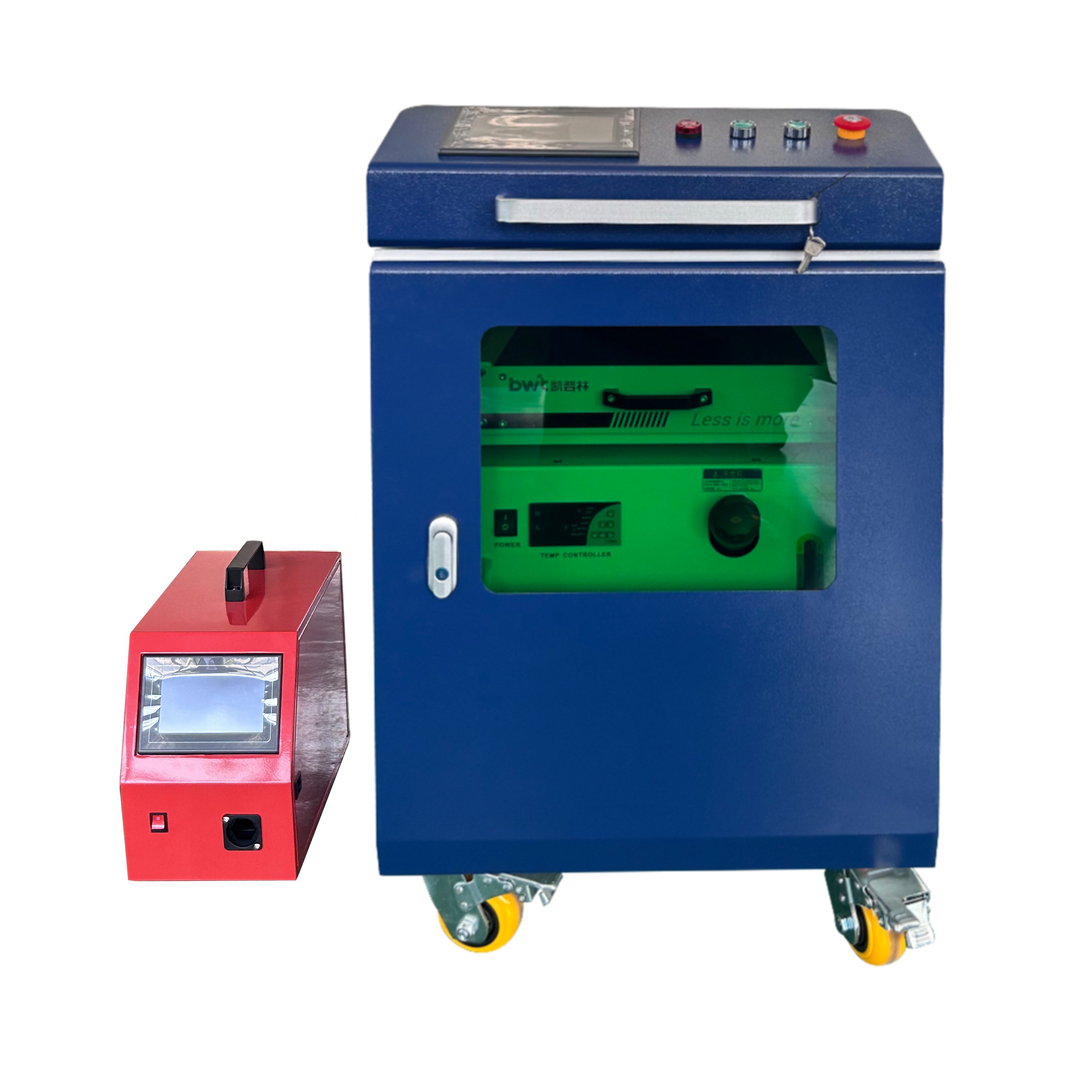
Transitioning to this technology fundamentally changes how contractors approach on-site fabrication. By examining the operational differences, we can identify five distinct ways this equipment supports and enhances mobile workflows.
The most immediate and impactful benefit is the drastic reduction in equipment weight. Traditional water-cooled setups often weigh upwards of 200 kilograms when fully assembled with a filled water tank. Moving such equipment requires a forklift, multiple personnel, or a dedicated heavy-duty trailer.
Unlike legacy setups, an air-cooled system completely removes the compressor, water pump, and reservoir. This strips the total machine weight down to typically under 40 kilograms. Instead of coordinating a lifting crew, a single operator can safely grab the ergonomic handles, lift the unit into the back of a standard transit van, and transport it to the job site. This physical agility is the absolute cornerstone of efficient field service.
Time is a critical metric for mobile contractors. Traditional welding setups require tedious preparation. You have to secure heavy shielding gas cylinders, unspool long lengths of heavy-gauge wire, and ensure coolant lines are primed and leak-free.
A portable welding system utilizing air-cooling technology offers genuine plug-and-play functionality. Upon arriving at a site, the operator simply plugs the unit into an appropriate power source, connects a lightweight shielding gas canister, and powers on the machine. There are no water tanks to fill, drain, or monitor. Consequently, the technician can strike their first arc within minutes of parking their truck.
Mobile work is rarely conducted in comfortable, climate-controlled environments. Operators frequently face freezing winter temperatures on outdoor construction sites or intense summer heat in shipyards. Liquid-cooled systems are highly sensitive to these extremes. In sub-zero conditions, the water inside a chiller can freeze. This potentially ruptures internal lines and destroys the expensive laser source. Conversely, in highly humid environments, cold water lines cause condensation to form on internal optics, leading to catastrophic equipment failure.
Air-cooled systems cleverly mitigate these environmental risks. Liquid coolant poses a freezing risk in winter. Phase-change cooling eliminates this threat entirely. Advanced thermal management software regulates internal airflow to prevent condensation buildup, ensuring the machine operates reliably regardless of the weather forecast.
Equipment downtime in the field translates directly to lost revenue and frustrated clients. Water chillers introduce multiple points of potential failure. Pumps can seize, coolant can leak during bumpy transit, and water filters can clog with debris if not meticulously maintained.
By removing the liquid cooling loop entirely, the maintenance burden on the operator is slashed. There are no coolant levels to check before a job. There are no filters to flush. You eliminate the anxiety about a water leak frying sensitive electronics while driving over rough terrain. Mobile workers demand equipment that functions flawlessly every time the power switch is flipped. The simplified mechanics of air cooling deliver exactly that reliability.
Power availability is a constant headache on remote job sites. Heavy-duty industrial welding equipment often requires three-phase 380V power. This is practically non-existent in residential or light-commercial settings. Powering a water chiller refrigeration compressor also draws a massive amount of continuous electrical current.
Because air-cooled systems lack this power-hungry compressor, their overall electrical draw is substantially lower. Many compact units, such as modern 1500W models, are engineered to operate smoothly on single-phase 220V power. This lower consumption means the machine can often run on standard job-site power grids or be powered by a portable inverter generator. This provides ultimate flexibility for remote tasks.
To fully justify the investment in laser technology, it is necessary to compare it objectively against the legacy systems currently dominating mobile work.
While MIG and TIG welding have been the industry standard for decades, they present specific logistical and operational bottlenecks when deployed outside a controlled workshop.
The transition to an air cooled laser welder addresses these legacy limitations directly through the physics of focused light.
| Feature | Air-Cooled Laser | TIG Welding | MIG Welding |
|---|---|---|---|
| Speed | Extremely fast, up to 4x faster | Slow, requires meticulous pacing | Moderate to fast |
| Heat Input & Distortion | Minimal heat affected zone, no warping | High heat input, high warping risk | High heat input, moderate warping risk |
| Post-Weld Cleanup | Virtually zero grinding required | Moderate polishing needed | Heavy grinding and spatter removal |
| Learning Curve | Hours to master basic joints | Years of muscle memory required | Weeks to months |
First and foremost is unprecedented speed. Laser welding is empirically faster than traditional methods. The highly concentrated energy beam melts the material rapidly, allowing travel speeds that are often three to four times faster than TIG welding. This velocity directly translates to shorter time-on-site for mobile contractors.
Furthermore, the minimal Heat-Affected Zone is a game-changer. Because the laser energy is pinpoint-focused and the travel speed is so rapid, the surrounding metal absorbs very little ambient heat. This prevents warping and distortion. It is absolutely critical when performing on-site cosmetic repairs on thin metals, such as stainless steel commercial kitchen fittings or architectural panels.
The unique blend of portability and surgical precision has made air-cooled laser technology highly sought after across various sectors that require on-site fabrication.
Commercial HVAC systems rely on sprawling networks of galvanized steel or aluminum ductwork. These ducts must be flawlessly sealed to prevent air leaks, which compromise the entire building energy efficiency. Traditional methods involving screws, rivets, and messy mastic sealants are time-consuming and prone to long-term degradation.
Using a portable laser welder allows technicians to permanently fuse thin-gauge ductwork directly on the construction site. The low heat input prevents the thin metal from burning through. The rapid travel speed allows contractors to seal hundreds of feet of ductwork in a fraction of the time required by legacy methods.
Mobile mechanics and custom automotive fabricators frequently wrestle with complex, thin-walled materials. Whether patching a rusted body panel, modifying a custom exhaust system, or repairing a cracked aluminum subframe, precision is mandatory.
The ability to bring a laser welder directly to the vehicle is highly advantageous. It eliminates the need to pay for towing the vehicle to a specialized shop. Laser technology excels at joining dissimilar metals and working with thin automotive body panels without causing heat distortion. This ensures the structural integrity and aesthetic lines of the vehicle are perfectly maintained.
In commercial construction, stainless steel is heavily utilized for elevators, handrails, and decorative facades. These elements are often assembled on-site and require flawless, aesthetically pleasing joints.
TIG welding stainless steel on-site almost always results in heat tint. It requires hours of hazardous chemical passivation, grinding, and polishing to restore the finish. A portable laser welder produces a narrow, pristine weld bead with virtually no spatter and minimal discoloration. This allows architectural metalworkers to complete installations faster and achieve a premium finish without agonizing post-processing.
For businesses evaluating the transition to mobile laser technology, selecting the right equipment is a critical engineering decision. Not all machines are engineered equally for the harsh realities of field work. Buyers should focus heavily on specifications that directly impact agility and usability.
The primary reason to choose air cooling is mobility. Therefore, the physical dimensions and weight of the unit are highly important. Procurement managers should look for machines that weigh under an acceptable threshold for a single person to lift. A high-quality 1500W air-cooled unit typically weighs around 38 kilograms. Additionally, the form factor should include ergonomic lifting handles and reinforced impact-resistant corners to navigate gravel or uneven job site terrain.
In a mobile setting, it is rarely possible to place the base unit directly next to the workpiece. The length and durability of the fiber optic cable connecting the base to the welding gun dictate the operator working radius.
A standard cable length of 5 to 10 meters is highly recommended for field work. This allows the technician to maneuver around large structures, like a vehicle chassis or a long architectural railing, without constantly repositioning the heavy base machine. Crucially, the cable must be heavily armored to prevent crushing or kinking from falling debris or foot traffic. Severe impacts can permanently shatter the internal glass fiber.
Job sites are chaotic, fast-paced environments where time spent tweaking complex machine settings is money burning away. A field-proven portable system should feature an intuitive, digital touchscreen interface.
It should come equipped with a robust library of pre-saved parameter synergic curves. This allows the operator to simply tap the screen to select the material type, like 2mm aluminum, and immediately begin welding. The machine automatically dials in the optimal laser power, pulse frequency, and wire feed speed. This guarantees consistent quality regardless of the operator technical background.
Investing in advanced laser technology requires a notable capital expenditure. However, for mobile contractors, the Return on Investment is realized shockingly fast through operational efficiencies and slashed labor costs.
The most direct impact on your bottom line is the sheer reduction in active welding time. A laser welder operates at speeds up to four times faster than a traditional TIG setup. A fabrication task that previously ate up four hours can potentially be knocked out in one.
For a mobile contractor, this time savings is revolutionary. It means the ability to schedule two or three additional client visits in a single workday. You can complete a massive commercial fabrication project days ahead of schedule, directly multiplying daily revenue capacity.
In traditional welding, particularly MIG, laying the bead is only half the battle. Operators must then spend agonizing hours hunched over with angle grinders to remove sharp spatter, flatten the bulky weld bead, and polish the surface. This process consumes expensive abrasive discs and incurs massive labor costs.
Laser welding inputs heat into a highly localized zone. The resulting weld is exceptionally clean, smooth, and virtually free of spatter. Post-weld processing is nearly eliminated. Workers can drop their torches and move immediately to final assembly. This dramatically lowers consumable expenses and frees up skilled labor for more profitable tasks.
While the operational benefits are undeniable, deploying a Class 4 laser in an open, mobile environment introduces specific safety requirements. These differ vastly from traditional arc welding. Safety protocols must be strictly enforced to protect both the operator and oblivious bystanders.
Unlike a factory floor with dedicated, enclosed laser cells, a construction site is an unpredictable open environment. The invisible infrared laser beam can reflect off shiny surfaces like diamond plate aluminum or glass. The beam can travel significant distances, posing a severe hazard to the eyes of anyone in the vicinity.
Mobile operators must establish a strict Laser Controlled Area. This involves deploying portable, laser-rated safety screens or opaque barriers around the welding zone to absorb stray reflections. Clear, highly visible signage must be posted to warn other contractors on the site that active laser operations are underway.
Standard auto-darkening welding helmets designed for UV arc protection are entirely useless against the specific wavelengths of light emitted by a fiber laser. Operators must wear specialized Personal Protective Equipment.
The absolute most critical component is a pair of laser safety glasses or a specialized helmet with an Optical Density rating that matches the precise wavelength of the machine. This is typically around 1064nm to 1080nm for fiber lasers, which requires OD 6+ protection. Despite the lower ambient heat output, operators must still wear standard flame-resistant welding jackets and heavy leather gloves to protect their skin from scattered radiation and minor sparks generated during the metal fusion process.
An air-cooled laser welding machine fundamentally transforms the reality of mobile work. It seamlessly combines the surgical precision and incredible speed of fiber lasers with the true portability of a suitcase-sized unit. By eliminating the heavy water chillers, slashing maintenance, and allowing operators to plug in and weld anywhere, this technology is redefining on-site fabrication.
For modern contractors, adopting this agile equipment is a competitive necessity. Those who embrace the speed, cleanliness, and efficiency of air-cooled laser welding will undoubtedly outpace competitors still lugging heavy gas tanks and grinders to the job site. Ready to upgrade your field fabrication capabilities? Evaluate your specific power and material requirements, then explore the advanced lineup at EasyCNCLaser. Whether you need a dedicated air-cooled unit or a versatile 4-in-1 system, you can find the exact match for your mobile workflow.
While highly effective for thin to medium materials, there are physical limitations based on the machine overall wattage. Most portable air-cooled units operate in the 1200W to 1500W range. At these power levels, they can comfortably achieve full-penetration welds on stainless steel, carbon steel, and aluminum up to 4mm to 6mm in thickness, depending on joint preparation. For very thick, heavy-duty industrial plate welding exceeding 10mm, a higher-wattage, stationary liquid-cooled system is still the recommended choice to manage the sustained thermal load.
Modern air-cooled units have been specifically engineered from the ground up for mobility. By completely eliminating the bulky water tank, refrigeration compressor, and liquid coolant lines, these machines typically weigh between 35kg and 50kg. Their compact chassis is usually similar in size to a standard travel suitcase. This allows the equipment to be easily lifted by a single technician and comfortably transported in the back of a standard pickup truck or utility van.
No, provided it is operated within its specified environmental parameters. Advanced systems utilize phase-change cooling technology. This involves specialized liquid-filled heat pipes and high-velocity fans that dissipate thermal energy much faster than traditional solid aluminum heat sinks. Smart thermal management software continuously monitors internal temperatures. These machines are engineered to operate continuously at a 100 percent duty cycle in normal ambient temperatures, often up to 40 degrees Celsius, without experiencing thermal shutdown or performance drops.
Yes, running this equipment on a generator is entirely feasible. However, the generator must meet strict electrical criteria. Laser sources contain sensitive electronics that require clean, highly stable power to function correctly and prevent motherboard damage. An inverter generator that produces a pure sine wave is strongly recommended. Additionally, you must verify the peak and running wattage requirements of your specific laser welder. This typically requires a generator rated for at least 6kW to 8kW on a 220V circuit to ensure it can handle the power draw without dangerous voltage drops.
One of the primary benefits of an air-cooled system is the drastic reduction in mechanical maintenance. Without a water chiller, there is no need to check coolant levels, replace messy water filters, or flush out algae buildup. The primary maintenance involves the handheld welding torch itself. Operators must regularly inspect and swap out the inexpensive protective glass lenses inside the torch head. These lenses prevent stray spatter from damaging the internal focusing optics. Keeping the machine exterior fan vents clear of job-site dust and construction debris is also essential to maintain optimal airflow and cooling efficiency.
While the fundamental principles of joint preparation and metal fusion remain the same, laser welding requires far less manual dexterity and muscle memory than traditional TIG welding. The synergic controls and pre-set parameters automate much of the complex calibration. A fabricator with basic welding knowledge can typically learn to lay a perfect bead with a laser welder within a few hours. Mandatory safety training is absolutely required regarding laser radiation hazards, safe handling of delicate fiber optic cables, and the proper setup of a Laser Controlled Area to ensure strict compliance with occupational safety regulations.
Portable laser welders are incredibly versatile when it comes to material compatibility. They excel at welding carbon steel, stainless steel, aluminum alloys, galvanized steel, and even copper or brass. One of the greatest engineering advantages of laser technology is its ability to successfully join dissimilar metals, such as welding stainless steel directly to carbon steel. The highly focused heat input prevents the brittle intermetallic compounds that typically plague traditional arc welding when mixing materials.
Yes, just like traditional MIG or TIG welding, laser welding requires a shielding gas to protect the molten weld pool from atmospheric contamination. Nitrogen or Argon are the most commonly used gases. Nitrogen is often preferred for stainless steel to achieve a bright, clean weld bead, while Argon is standard for aluminum and carbon steel. Because the laser weld pool is very small and freezes rapidly, the overall gas flow rate required is generally lower than traditional methods, which helps mobile contractors save on consumable costs.


