
Views: 0 Author: Site Editor Publish Time: 2026-09-18 Origin: Site


Shop floor time directly dictates profitability in custom metal fabrication. Facility managers often assume that plugging in a newer model will instantly slash cycle times and boost margins. The reality is far more complex. Pushing a laser to its absolute limits relies on a deep synergy of mechanical and physical factors. Understanding the specific variables that dictate speed is the only proven way to optimize workflow and reduce cost-per-part.
Before analyzing the technical mechanics, operators must recognize the core elements that ultimately determine throughput.
Recent market analyses reveal a definitive shift in the metalworking sector. Manufacturers are moving away from merely assessing raw resonator wattage. They now prioritize overall system efficiency and automation integration. The current trend highlights that cutting speed is no longer just a metric of the laser source. It is a holistic output combining AI-driven predictive nesting, high-pressure gas control, and ultra-rigid machine frames. Shops that adapt to these integrated systems are reporting up to a 40 percent reduction in cycle times compared to legacy setups. This shift underscores a universal truth in modern engineering: raw power combined with intelligent motion control is becoming a baseline requirement to stay competitive.
The absolute foundation of cutting velocity is the output power of the laser resonator. In practical engineering terms, laser power represents the volume of thermal energy delivered to a microscopic focal point on the sheet metal every second. Higher wattage allows the equipment to reach the vaporization or melting point of the alloy almost instantly. This rapid phase change permits the cutting head to traverse the X and Y axes at a significantly higher velocity.
For facilities engaged in standard sheet metal work, 1500W to 2000W fiber lasers represent the industry sweet spot. They excel at processing thin to medium-gauge materials ranging from 1mm to 6mm. A prime example of this tier is a precision metal cutter featuring a compact 60x60cm working area. At these wattages, the energy density is highly efficient for the rapid processing of thin carbon steel and stainless steel.
The primary advantage of this power bracket is the delicate balance between capital expenditure, electrical consumption, and output speed. Operators maintain continuous, stable feed rates without drawing excessive industrial power. For job shops focusing on intricate designs rather than sheer volume, this tier serves as a highly reliable solution that delivers a predictable, high-quality edge.
When production demands shift toward thicker plates exceeding 10mm or extreme-volume processing, high-power systems transition from a luxury to an operational necessity. A 6000W laser does not merely cut thicker materials; it drastically reduces the cycle time on thinner materials as well. For example, a 6000W source slices through 3mm carbon steel exponentially faster than a 2000W source. The sheer velocity of a high-power cutting head minimizes the labor and overhead time allocated to each individual component. This capability rapidly drives down the overall cost-per-part and fundamentally alters the throughput calculations of a facility.
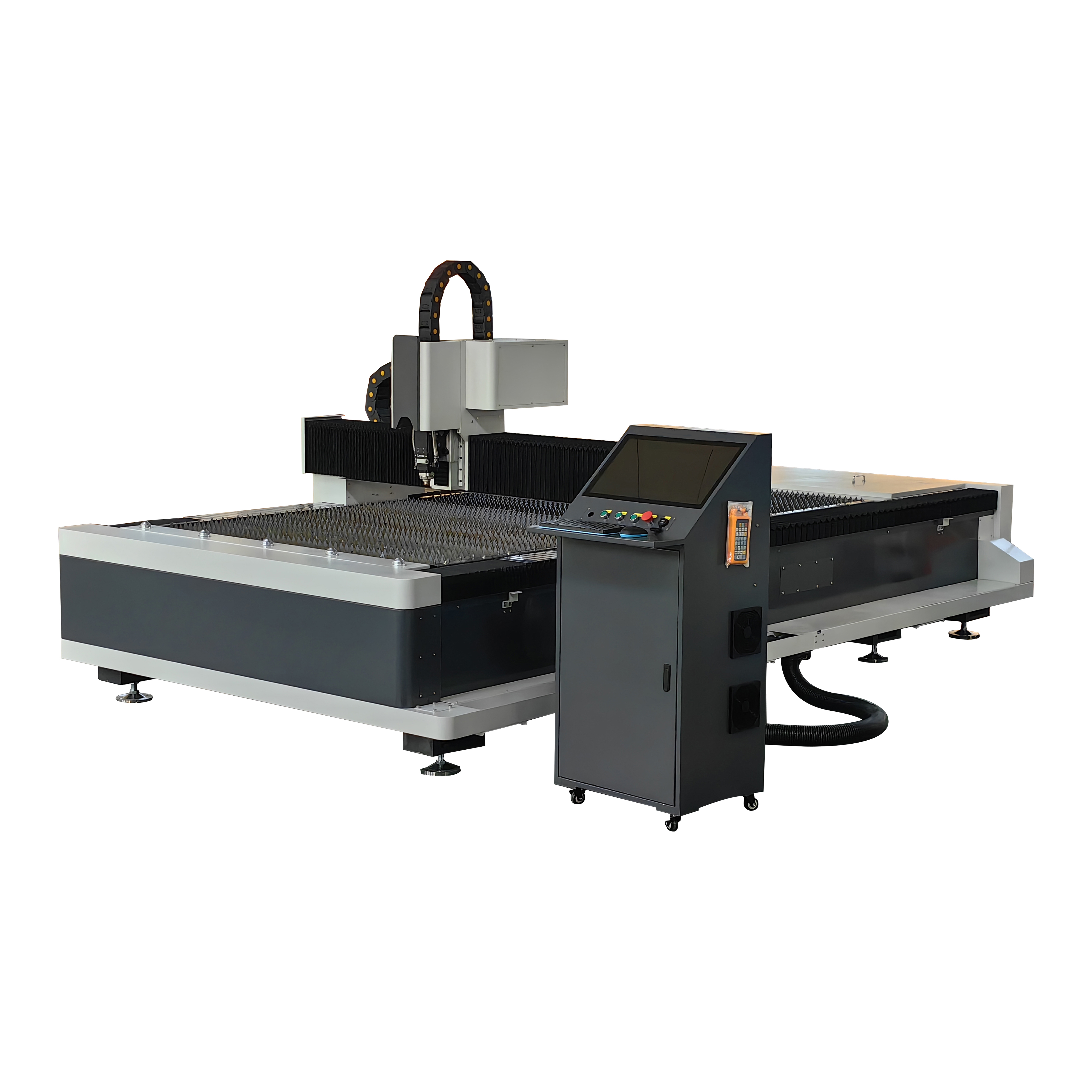
Even the most robust resonator cannot process all alloys at identical rates. The physical dimensions and metallurgical composition of the workpiece impose strict limitations on how fast the gantry can move while still producing a clean, dross-free edge.
The interaction between the fiber laser wavelength, typically around 1064 nm, and the metal surface dictates the energy absorption rate. Carbon steel absorbs this specific wavelength highly efficiently. When combined with the right assist gases, carbon steel generally allows for the fastest feed rates on the shop floor.
Conversely, non-ferrous metals like aluminum and copper present distinct physical hurdles. They are highly reflective, meaning a portion of the laser energy bounces off the surface initially. More importantly, they possess high thermal conductivity. As the laser applies heat, it dissipates rapidly into the surrounding metal rather than remaining concentrated at the cut zone. To compensate for this rapid heat loss, operators must either utilize significantly higher laser power or reduce the cutting speed to maintain the necessary melt pool.
There is an unavoidable inverse relationship between material thickness and cutting velocity. As the gauge of the metal increases, the volume of material that must be melted and evacuated from the kerf increases proportionally. Pushing a 12mm mild steel plate through at speeds meant for a 2mm sheet yields a predictable failure. The inevitable result is a shower of sparks above the plate, incomplete penetration, and a heavily drossed edge below.
| Material Type | Thickness (mm) | Relative Speed Impact | Edge Quality Risk if Sped Up |
|---|---|---|---|
| Carbon Steel | 2.0 | Maximum processing speed | Minimal |
| Carbon Steel | 6.0 | Moderate speed reduction | Mild dross formation |
| Carbon Steel | 12.0 | Severe speed reduction | Loss of cut / Heavy striations |
| Aluminum | 2.0 | Moderate processing speed | Micro-burrs / Heat distortion |
Furthermore, assist gas dynamics fundamentally alter processing times. While the focused beam melts the alloy, it is the assist gas that performs the actual cutting by physically evacuating the molten material out of the kerf. The selection, pressure, and purity of this gas are critical variables in the speed equation.
When processing carbon steel, oxygen is the standard assist gas for maximizing speed on thicker plates. Oxygen does not merely blow away the slag. It reacts chemically with the heated iron to create a violent exothermic reaction. This burning process contributes substantial secondary thermal energy to the cut zone. Because this chemical reaction actively assists the laser, operators achieve surprisingly high feed rates on thicker mild steel, even with lower-wattage sources.
Nitrogen acts as an inert shielding gas during the cutting process. It is primarily deployed for stainless steel and aluminum to prevent oxidation, leaving a clean, silver edge that is immediately ready for welding or powder coating. Because nitrogen does not create an exothermic burning reaction, the laser source must provide all the thermal energy required to melt the metal. Consequently, cutting with nitrogen demands higher raw laser power to maintain the same velocity as an oxygen-assisted cut.
Industrial compressed air is composed of approximately 78 percent nitrogen and 21 percent oxygen. Utilizing high-pressure, dry, and heavily filtered compressed air has become a dominant engineering trend for maximizing speed while drastically minimizing operational costs on thin sheet metals. It provides a partial exothermic boost from the oxygen content while utilizing the high kinetic pressure of the nitrogen to rapidly clear the kerf.
In addition to thermal dynamics, real-world cutting speed is heavily constrained by the physical mechanics of the gantry. The machine must move a heavy cutting head with microscopic precision, often changing directions in fractions of a second.
Basic stepper motors are entirely insufficient for high-speed industrial environments because they lose torque at high RPMs and are prone to micro-stuttering. Advanced systems utilize high-torque AC servo motors paired with precision rack-and-pinion gears or magnetic linear drives. These components dictate the acceleration and deceleration rates, measured in G-force. High acceleration is crucial for maintaining overall cycle speed when navigating complex geometries with sharp corners or intricate hole patterns.
A frequently ignored factor in continuous processing is the structural integrity of the machine bed itself. High-speed gantry movements generate massive kinetic energy. If the frame is lightweight or poorly welded, this energy translates into vibration. Vibrations cause the focal point of the beam to oscillate, resulting in jagged edges and forcing the operator to manually slow the machine down. Investing in a rigidly constructed metal laser cutting machine ensures that the heavy-duty frame absorbs these violent directional changes. This stability allows the servo motors to operate at their maximum rated speeds without compromising dimensional accuracy.
Sustaining high-speed operations over a grueling 12-hour shift demands rigorous consistency from the supporting infrastructure. When a machine fails to maintain optimal operating parameters, the internal control systems automatically throttle the cutting speed to prevent catastrophic damage.
A fiber laser source converts electrical energy into a highly concentrated light beam, generating immense internal heat in the process. The industrial water chiller is responsible for dissipating this heat and maintaining strict temperature tolerances for both the resonator and the optical components inside the cutting head.
Neglecting the cooling system causes efficiency to drop drastically. When sensors detect temperatures rising above the safe threshold, the system instantly reduces power output. A drop in power output directly translates to a mandatory reduction in cutting speed. Monitoring the chiller digital readout and adhering to routine maintenance ensures the equipment sustains its maximum rated velocity without thermal throttling.
The entire setup relies on a continuous, stable supply of electrical power to maintain a consistent beam mode. Voltage fluctuations, spikes, or brownouts in the facility power grid cause micro-interruptions in the laser output. Even a momentary dip in voltage alters the energy density delivered to the material. Operators are forced to reduce the overall feed rate to ensure the beam has enough time to penetrate the metal fully during these lower-power intervals.
| Infrastructure Component | Common Issue | Impact on Cutting Speed |
|---|---|---|
| Water Chiller | Clogged filters or poor water quality | Triggers thermal throttling; forces the machine to reduce power and slow down. |
| Power Supply | Voltage fluctuations from the grid | Causes inconsistent beam delivery; requires slower feed rates to prevent uncut sections. |
| Air Compressor | Moisture or oil bypassing the dryer | Contaminates the cutting lens; scatters the beam and drastically reduces cutting efficiency. |
Human error and neglected routine maintenance are often the true culprits behind sluggish production times. A high-end system can only perform as well as its optical path allows. Operators who meticulously manage their consumables consistently achieve faster cycle times.
The cutting head houses highly sensitive optical components, most notably the protective cover glass and the copper nozzle. The cover glass shields the expensive focusing lens from molten spatter. If this glass accumulates dust, smudges, or burn marks, it scatters the light passing through it. Empirical engineering data shows that even a minor degradation in lens clarity results in a disproportionate loss of focal power density. To compensate, the operator must slow down.
Similarly, a nozzle that has been dented by a tip-up or partially clogged alters the aerodynamic flow of the assist gas, creating turbulence in the kerf. Regular inspection and timely replacement of these inexpensive consumables are vital for maintaining peak cutting velocities.
Speed is not solely defined by how fast the head moves while emitting light. It is equally defined by how efficiently it moves between cuts. This non-cutting movement is known as rapid travel. Advanced CNC nesting software calculates the absolute most efficient path across the sheet. Features like fly cutting, where the laser pulses on and off rapidly while moving in a continuous straight line over a grid of holes, drastically reduce the total distance the gantry must travel. Path optimization significantly increases overall throughput per shift without changing the actual cutting parameters.
Investing in new equipment requires an objective analysis of specific facility bottlenecks. Making an informed decision means looking beyond the specification sheet and analyzing the entire workflow to establish practical selection standards.
Before upgrading to a faster model, it is critical to identify where actual production delays occur. A common pitfall is purchasing an ultra-fast cutter only to realize that downstream processes cannot keep up. If operators spend 20 minutes manually loading a heavy steel plate and sorting parts, reducing the actual cutting time from 10 minutes to 5 minutes yields a negligible impact on daily output. Facility managers must ensure that material handling capabilities and press brake departments can absorb the increased volume.
Higher wattage machines carry a steeper initial purchase price, but they fundamentally alter the economics of fabrication through sheer volume output. The ROI calculation must factor in the cost per part rather than just the hourly operating cost. A high-power machine consumes more electricity per hour. However, if it cuts 10mm carbon steel three times faster, the electrical and gas cost per cut part actually decreases. For businesses with steady demand, this higher upfront cost pays for itself rapidly through increased capacity and shorter lead times.
Achieving maximum cutting speed requires a delicate orchestration of laser power, material properties, assist gas dynamics, and rigorous machine maintenance. Neglecting any single variable, whether it is a dirty protective lens, a fluctuating power grid, or inefficient software nesting, immediately throttles throughput.
To truly maximize shop potential, evaluate the entire fabrication system carefully. Inspect consumables daily, maintain cooling systems meticulously, and honestly assess production bottlenecks. For facilities ready to upgrade their capabilities, exploring tailored solutions is the next logical step. Discover the ideal balance of speed, power, and precision for your specific engineering needs by reviewing the advanced equipment available at EasyCNCLaser to optimize your production line today.
Yes, you can increase effective throughput without buying a new resonator. This is achieved by optimizing assist gas pressure to ensure efficient molten metal removal, ensuring protective lenses and copper nozzles are perfectly clean, and utilizing advanced nesting software. Software features like common line cutting and fly cutting minimize non-cutting rapid travel, significantly reducing the total cycle time per sheet.
Aluminum possesses two physical traits that challenge thermal processing: it is highly reflective and highly thermally conductive. The reflectivity means a portion of the energy bounces off the surface initially. Its thermal conductivity causes the heat to dissipate rapidly across the sheet rather than concentrating at the cut zone. Because the heat escapes so quickly, the gantry must move at a slower pace to maintain a sufficient melt pool to sever the material effectively.
The decision depends entirely on primary material thickness and daily production volume. A 2000W setup is highly efficient, cost-effective, and fast for processing materials under 6mm in thickness. If your business requires the rapid, continuous processing of thick metal plates of 10mm and above, or operates in a high-volume industrial manufacturing environment where turnaround time is critical, a 6000W system is required to maintain profitable speeds.
Absolutely. The assist gas is a critical variable in speed optimization. Using oxygen on thick mild steel creates an exothermic burning reaction that adds supplementary heat to the cut, allowing for significantly faster speeds even at lower power levels. Conversely, nitrogen is an inert gas used to blow away molten metal without burning. While it requires more raw power to maintain speed, it delivers a clean, oxidation-free edge immediately ready for downstream processing.
The focal position determines exactly where the narrowest, most intense part of the laser beam hits the material. If the focus is set too high or too low relative to the material surface, the energy density at the cut zone drops. This incorrect positioning forces the operator to reduce cutting speed to ensure the beam fully penetrates the metal. Properly calibrating the focal point based on material thickness guarantees maximum energy transfer and peak cutting velocity.
A 2000W fiber laser can comfortably cut carbon steel up to 16mm and stainless steel up to 6mm under optimal conditions. However, cutting at these maximum limits requires drastically reduced feed rates and perfect gas pressure. For high-speed, continuous production environments, a 2000W system is best utilized for materials ranging from 1mm to 6mm, where it can maintain excellent edge quality and rapid cycle times.


