
Please Choose Your Language
Views: 0 Author: Site Editor Publish Time: 2026-10-08 Origin: Site


The rapid evolution of fabrication floors is fundamentally changing how we join metals. While the blinding arcs, heavy protective gear, and slow meticulousness of traditional TIG and MIG welding have defined the industry for decades, modern technology is actively disrupting the market. Recent industry trend analyses highlight a critical and growing skilled labor shortage in the global manufacturing sector. The average age of master welders is steadily increasing. Fewer young apprentices are entering the trade. Consequently, fabrication shop managers are desperately seeking smart technologies that bridge this widening skills gap.
The miniaturization of fiber laser technology into a compact format answers this exact call. It provides an automated feel to a traditionally manual process. Beyond merely filling a labor void, unprecedented speed and efficiency are driving this technological shift. Laser technology operates up to ten times faster than conventional methods. It transforms high-volume production from a chronic bottleneck into a streamlined workflow. By using a handheld laser welding machine, operators no longer need years of muscle memory to create flawless joints. The internal software handles the complex thermal dynamics automatically. Even novice workers can lay down perfect beads with minimal hands-on training.
When dealing with industrial ductwork and custom electrical enclosures, airtight seals are absolutely non-negotiable. A portable laser welder handles thin sheet metal flawlessly. As an engineer who has spent years inspecting HVAC joints, I can attest that minimizing heat input is crucial. The laser glides effortlessly along the joints. It creates structurally sound and hermetically sealed edges essential for high-performance systems to function without pressure loss.
Aesthetics matter deeply in commercial kitchenware and food-processing equipment. Traditional arc methods often leave bulky and discolored seams. These require hours of aggressive grinding and chemical polishing. In contrast, laser technology leaves a beautiful and smooth finish right out of the gate. This makes it the perfect tool for fabricating food-grade stainless steel sinks, countertops, and custom cabinetry with virtually zero post-processing.
Auto body shops frequently encounter challenges with panel warping due to excessive heat input from standard MIG welders. By strictly controlling the thermal energy, operators can execute flawless outer panel repairs. They can fabricate custom exhaust systems and perform intricate body modifications without compromising the structural integrity of the vehicle chassis.
Crafting thin channel letters, architectural displays, and intricate metal signs requires clean and distortion-free seams. Because the heat-affected zone is incredibly narrow, operators can join delicate thin-gauge metals without the dreaded burn-through that often ruins expensive bespoke signage.
Aluminum has long been notoriously tricky for traditional arc processes. Its high thermal conductivity and propensity for atmospheric porosity cause endless frustration. However, engaging in manual metal laser welding makes joining aluminum highly efficient. The concentrated energy beam penetrates quickly. It overcomes the reflective nature of the metal and delivers a solid joint without excessive pre-heating.
These remain the bread-and-butter materials for most fabrication floors. Operators consistently achieve deep penetration and exceptionally high-strength joints on both stainless and carbon steel. Furthermore, the process yields a visually appealing bead that maintains the inherent tensile strength of the base metal.
Fusing copper to stainless steel is incredibly difficult with traditional methods due to vastly differing melting points. The rapid heating and cooling cycle of the laser makes these complex metallurgical bonds possible. This opens up entirely new avenues in battery manufacturing and custom electronics.
To truly understand the shop-floor impact, we must look at the hard data. Below is a direct comparison based on real-world engineering metrics.
Feature | Handheld Laser | TIG Welding | MIG Welding |
|---|---|---|---|
Speed | Up to 4x-10x faster | Slow and meticulous | Moderate |
Heat Affected Zone | Minimal distortion | Wide area affected | Moderate to wide |
Post-Weld Cleanup | Virtually none | Requires grinding and polishing | Heavy slag and splatter removal |
Learning Curve | Days | Months to years | Weeks |
On the shop floor, time is quite literally money. The distinct lack of slag, splatter, and heat distortion means workers spend zero time huddled over parts with loud angle grinders. Components move straight from the welding table to the paint booth. This drastically accelerates the overall production cycle.
Instead of endlessly searching for elusive master craftsmen, shop owners can now confidently hire entry-level workers. New hires learn to operate the equipment safely in a matter of days. This drastically reduces onboarding costs and stabilizes production schedules.
Abstract concepts do not help you buy the right equipment. You need hard parameters. When upgrading your facility, look at these exact specifications based on industry-leading designs.
Selecting the right wattage dictates your maximum penetration capability.
1500W Systems: Ideal for thin sheet metal, HVAC ductwork, and signage. Perfect for materials up to 3mm thick.
2000W Systems: The sweet spot for most custom fabricators. Handles up to 5mm stainless steel and provides excellent versatility.
3000W Systems: Built for heavy-duty industrial fabrication. Penetrates up to 8mm carbon steel effortlessly.
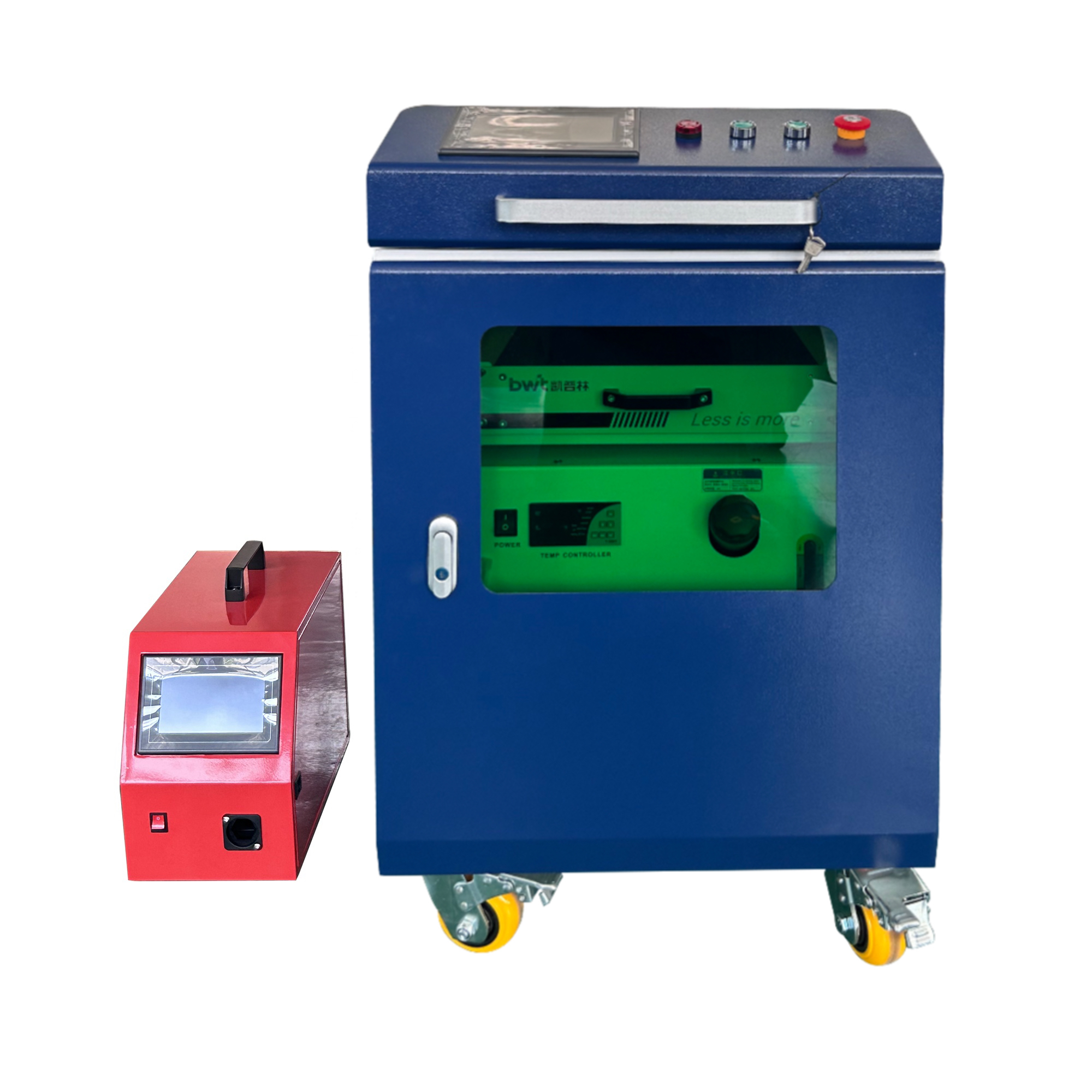
Do not compromise on cooling. For continuous uninterrupted operation across multiple shifts, a built-in industrial water chiller is mandatory. Water-cooled machines offer exceptional temperature stability compared to air-cooled alternatives. They ensure consistent beam quality and protect the delicate internal optical components from thermal degradation.
Modern equipment goes far beyond simple metal joining. The latest 4-in-1 systems combine welding, pre-weld rust and oil cleaning, post-weld seam cleaning, and light metal cutting into one single interface. Investing in this specific configuration eliminates the need to purchase separate plasma cutters or chemical cleaning stations.
This technology is a highly profitable tool tailored for everyday fabricators, auto repair centers, and precision manufacturers. By evaluating your current production bottlenecks and upgrading to a multi-functional water-cooled system, you effectively future-proof your business in a fast-paced manufacturing landscape.
Stop letting slow production times and extensive grinding eat into your profit margins. Assess your material thickness requirements, decide on the appropriate wattage, and make the switch. For proven industrial-grade solutions that meet all these rigorous specifications, you can explore the premium equipment available at EasyCNCLaser to find the exact machine that fits your specific shop demands.
Yes. It features intuitive touchscreen controls and pre-set material parameters that manage complex thermal dynamics automatically. This drastically reduces the learning curve. Beginners can produce professional-grade smooth seams in a fraction of the time compared to traditional arc methods.
For thin to medium-gauge sheet metal and highly aesthetic jobs, it absolutely can replace TIG. However, a traditional TIG setup may still be kept on hand for highly specialized ultra-thick structural joints where deep heavy filler deposition is structurally required.
Safety is paramount when dealing with concentrated light energy. Operators must wear specialized safety glasses or helmets designed for the exact wavelength of the machine. Furthermore, protective clothing is required. The operation must take place in an enclosed or shielded area to protect bystanders from harmful invisible reflections.
Depending on the specific wattage of the unit, which typically ranges from 1500W to 3000W, these systems can comfortably penetrate materials ranging from 0.5mm up to 8mm. This makes them highly versatile for a wide range of fabrication projects.
Yes. Just like traditional MIG or TIG processes, shielding gas is necessary to protect the molten weld pool from atmospheric contamination. Nitrogen or Argon are typically used depending on the specific metal being joined. This ensures a clean and porosity-free seam.
Maintenance is surprisingly straightforward. The primary tasks involve regularly checking and replacing the protective lenses in the gun head to prevent dust burn-in. Additionally, operators must monitor the water chiller levels and replace the distilled water periodically to maintain optimal cooling performance.


