
Please Choose Your Language
Views: 0 Author: Site Editor Publish Time: 2026-10-04 Origin: Site


Modern sign makers face an increasingly demanding landscape. Tight deadlines and rising labor costs are the daily norm. Clients expect highly intricate and flawless designs. Traditional fabrication methods like manual saws or basic routers often struggle to keep pace. They frequently leave rough, clouded edges on acrylics. They cause delicate wood veneers to splinter. Ultimately, these outdated tools bottleneck the entire production pipeline.
Upgrading to a high-quality CO2 laser cutting machine serves as the ultimate game-changer for sign shops. By utilizing a non-contact, highly focused beam of light, this equipment revolutionizes fabrication. Workshops can bypass tedious manual finishing entirely. This shift dramatically accelerates production cycles while elevating the final product quality.
Recent market analyses highlight a massive shift in the signage sector toward bespoke, multi-layered visual communications. Corporate clients and retail storefronts now demand illuminated architectural wayfinding. They expect mixed-media displays featuring intricate vector geometries. This trend renders traditional manual saws and basic routers obsolete for premium projects. Consequently, advanced optical cutting capabilities have shifted from a luxury to a baseline requirement. Customers expect absolute perfection. Traditional tools simply fall short of delivering these modern aesthetics.
Instant Edge Quality: Achieve flame-polished edges on acrylics right off the workbed. This entirely eliminates manual post-processing.
Unmatched Precision: Effortlessly cut intricate serif fonts and complex vector logos. Traditional CNC routers simply cannot navigate these sharp inner corners.
Material Versatility: Process wood, cast acrylic, genuine leather, and two-color laminates with a single piece of equipment.
High Commercial ROI: Drastically reduce material waste and eliminate physical tool wear. This accelerates production cycles for a rapid return on investment.
Scalable Solutions: From compact desktop units for fine engraving to large-format dual-head systems equipped with CCD cameras. There is a tailored solution for every volume requirement.
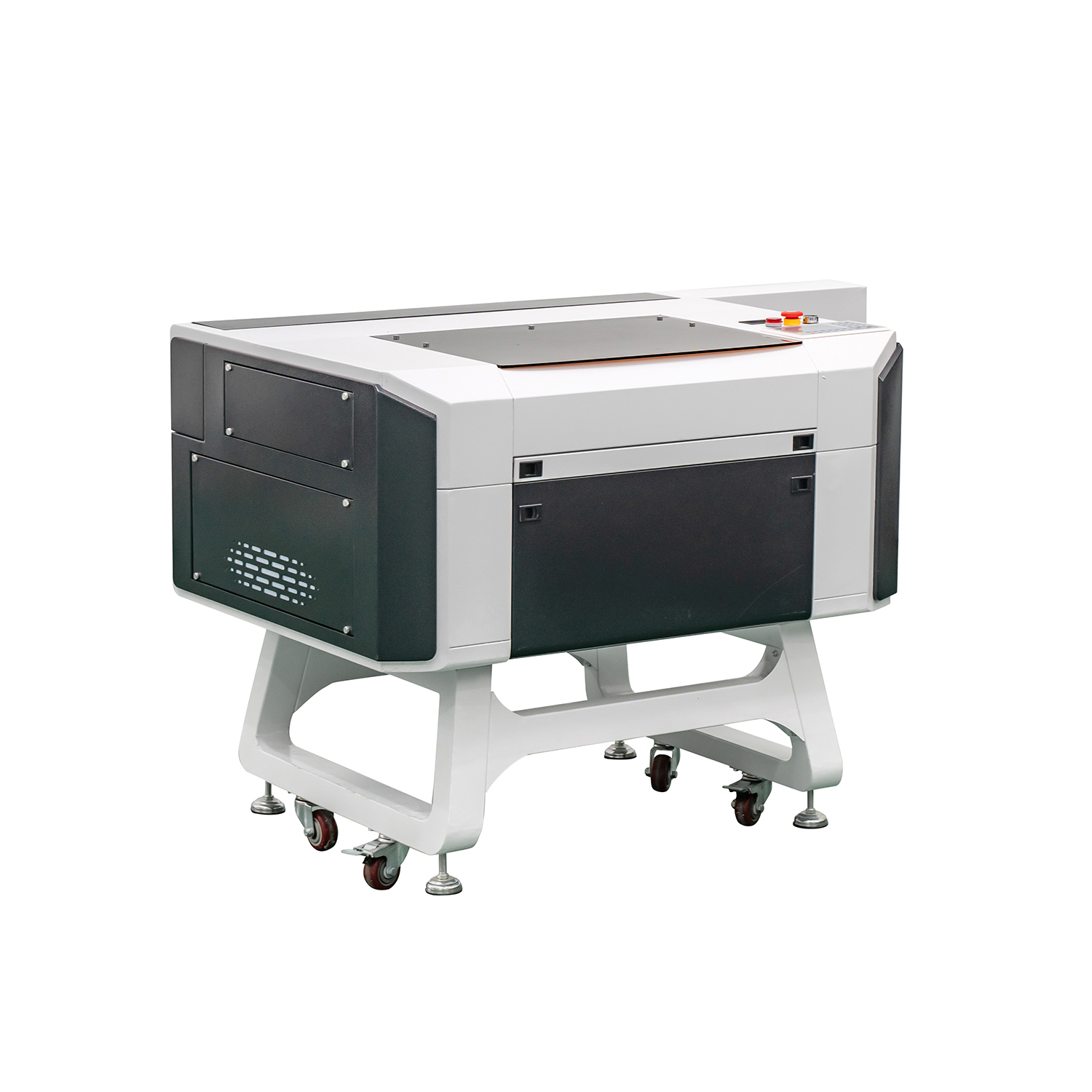
As an engineer who frequently calibrates shop-floor machinery, I always look at the underlying physics. A CO2 laser operates by exciting a gas-filled tube with high voltage. This generates an intense, invisible beam of light at a wavelength of 10.6 micrometers. Guided by mirrors and focused through a specialized lens, this specific wavelength is exceptionally well-suited for vaporizing non-metallic substrates.
Furthermore, the non-contact nature of the process is a massive operational advantage. The beam does the work without applying physical force. Operators skip the tight clamping phase entirely. This eliminates the risk of scratching delicate surfaces like mirrored acrylic or pre-painted wooden panels. You get a pristine finish every single time.
Edge finishing is notoriously labor-intensive. When using a router, the resulting edge is typically frosted. It requires multiple stages of sanding and flame buffing to restore transparency. In contrast, the intense heat of the optical beam naturally melts and polishes the acrylic edge simultaneously during the cut. Imagine pulling a freshly cut letter right off the honeycomb bed. Its edges already gleam like glass, instantly ready for assembly.
Consider the kerf width. It is typically just a fraction of a millimeter. This microscopic footprint allows the machinery to execute razor-sharp internal corners. It easily handles elegant serif fonts and highly detailed corporate logos. Where a spinning router bit is physically limited by its diameter, a focused beam traces the finest vector paths flawlessly.
Physical drill bits and end mills dull over time. This leads to inconsistent cuts, torn edges, and the constant expense of replacement parts. Non-contact systems bypass this mechanical friction entirely. The equipment guarantees consistent, premium cut quality from the very first sign to the thousandth. This drastically reduces ongoing maintenance headaches on the shop floor.
Modern architectural design heavily favors contrasting textures. Walk into any contemporary corporate lobby or upscale retail storefront. You will likely see crisp, glossy acrylic paired with rustic, warm wood. Mastering acrylic wood laser cutting enables shops to tap into this lucrative trend. It delivers high-value products that command premium prices.
For standard sign blanks, a mid-sized machine is highly efficient. Models featuring a 900x600mm working area hit the sweet spot for most independent shops. Configured with 80W, 100W, or 150W glass tubes, these machines provide serious brute power. They cleanly sever thick acrylic and solid wood in a single pass. By adjusting the power settings, fabricators can also burn high-contrast logos directly into the wood surface before cutting out the final shape.
The workflow for a premium layered sign is remarkably streamlined. First, the operator cuts a sturdy wooden backer board. Next, perfectly matched acrylic letters are cut from a separate sheet. Because the digital files are identical, the acrylic pieces align flawlessly onto the wooden base. This creates a stunning 3D effect with minimal physical effort.
Producing directional wayfinding and professional nameplates requires incredible detail. This is where a high-quality nonmetal laser cutter equipped with a Radio Frequency metal tube excels. A compact 6040 model with a 600x400mm bed and an RF tube fires faster and produces a much finer dot size than standard glass tubes. By precisely engraving away the microscopic top layer of a two-color laminate sheet, the contrasting color beneath is revealed instantly.
Signage extends far beyond rigid boards. Custom leather patches for rustic branding and specialized fabric banners are easily processed. The thermal action of the beam seals the edges of synthetic fabrics as it cuts. This completely prevents unsightly fraying and ensures a durable final product.
Choosing the right fabrication tool dictates your shop capabilities. Here is a direct engineering comparison to clarify which technology suits specific signage tasks.
Technology | Optimal Materials | Edge Finish Quality | Best Signage Application | Clamping Required |
|---|---|---|---|---|
CO2 Laser | Acrylic, Wood, Leather, Laminates | Flame-polished acrylic, sealed fabric | Illuminated letters, 3D acrylic signs, fine engraving | No |
CNC Router | Thick Wood, Aluminum Composite, Plastics | Requires sanding and manual buffing | Large-scale V-carving, heavy dimensional signs | Yes |
Fiber Laser | Stainless Steel, Aluminum, Brass | Clean, sharp metal edges | Outdoor metal plaques, heavy industrial signage | No |
Abstract concepts do not help you buy machinery. You need strict selection standards based on your daily production volume and material thickness.
If your primary focus involves ultra-fine details like small employee name badges or intricate acrylic awards, prioritize beam quality over raw power. An RF tube is mandatory here. A 6040 RF machine offers this precision without consuming valuable floor space. The metal tube ensures longevity and an exceptionally fine spot size.
Most independent sign makers need a machine large enough to handle standard material sheets but compact enough to fit in a standard workshop. A 9060 system equipped with 100W or 150W glass tubes provides the perfect balance. It delivers enough wattage to cut 10mm to 15mm acrylic cleanly while maintaining a reasonable footprint.
High-production environments require serious throughput. If you print graphics on flatbed UV printers and need them cut out, you need vision technology. Integrating a 1610 Dual Laser Head CO2 Laser Engraving Machine effectively doubles your output. The 1600x1000mm bed handles large formats. More importantly, the overhead CCD camera automatically detects printed registration marks. It flawlessly aligns the digital cut path to match the printed graphics, eliminating alignment errors entirely.
Achieving the perfect result requires a firm grasp of optimal parameters. Specifically, cutting thick acrylic demands high power and relatively low speed. This allows the heat to melt the edge smoothly. Engraving requires the exact opposite. You need high speed and low power to gently vaporize the surface without burning too deeply.
Air assist pressure is another crucial variable. Pumping high-pressure compressed air through the nozzle during cutting blows away vaporized debris and prevents material flare-ups. However, when engraving, dial the air pressure down. Too much air will push smoke back onto the material surface, causing stains.
When working with sensitive surfaces, utilize the masking tape trick. Leave the protective paper or plastic film on your acrylic and wood sheets while cutting. This simple barrier prevents sticky smoke residue and scorch marks from ruining the final product. Just peel it off afterward to reveal a pristine surface.
In today competitive fabrication market, advanced non-contact cutting technology is no longer just an optional workshop upgrade. It is the absolute backbone of a profitable, modern sign-making business. By moving away from outdated manual tools, shops drastically reduce turnaround times and elevate their craftsmanship.
Mastering mixed-media fabrication and utilizing a dedicated non-metal processing system allows creative shops to deliver premium products faster. You achieve significantly higher profit margins. The ability to seamlessly transition from cutting thick cast acrylic to delicately engraving natural wood opens doors to entirely new client bases.
Take a moment to evaluate your current production bottlenecks. Are manual finishing tasks eating into your profits? Explore the advanced machinery parameters discussed in this guide. Head over to easycnclaser.com to find the exact wattage, bed size, and camera configuration that fits your specific volume needs. Reach out to an equipment specialist today to take your sign production to the next level.
It depends entirely on the wattage of the tube. A 100W machine can comfortably slice through up to 10-12mm acrylic in a single pass. Meanwhile, higher wattages like 150W can tackle thicknesses of 20mm or more. This leaves a beautifully flame-polished edge without requiring a second pass.
No. Standard configurations are designed specifically as non-metal processors. Because of the 10.6-micrometer wavelength of the light, the beam bounces off bare metal. To cut metal signs, you need a Fiber Laser or a highly specialized mixed-cutting CO2 system equipped with oxygen assist.
For a dedicated sign shop, 100W to 150W is the industry standard. A 100W tube provides an excellent balance of cutting power for thick acrylics while still maintaining a small enough beam spot for crisp engraving. If you strictly cut thick materials and rarely engrave, leaning toward 150W will significantly increase your cutting speed.
First, ensure your air assist compressor is running at high pressure to blow smoke down and away from the cut line. Second, apply a layer of standard paper masking tape over the wood surface before cutting. The tape takes the brunt of the smoke residue and peels off easily, leaving the wood beneath completely clean.
Not at all. Modern systems utilize highly intuitive control software like LightBurn or RDWorks. These operate very similarly to standard graphic design programs like Adobe Illustrator or CorelDRAW. If you can design a vector file and assign different colors to your cut and engrave lines, you can easily operate the machine.
A CCD camera is highly recommended for sign makers who regularly use flatbed UV printers. The overhead camera reads printed registration marks on the material. It automatically aligns the digital cut path to match. This ensures perfect contour cuts around printed graphics, even if the material is placed slightly askew on the honeycomb bed.
Routine maintenance is surprisingly simple and straightforward. It primarily involves gently cleaning the reflective mirrors and the focal lens with a specialized wipe. You also need to ensure the industrial water chiller is functioning properly to keep the glass tube cool. Occasionally apply lubrication to the mechanical guide rails to ensure smooth motion.


