
Please Choose Your Language
Views: 0 Author: Site Editor Publish Time: 2026-10-07 Origin: Site


The garment, upholstery, and technical textile industries are currently undergoing a massive transformation. For decades, manufacturers relied on rotary blades and die presses. Unfortunately, these traditional methods often lead to excessive fraying, material distortion, and painfully slow production cycles. Imagine trying to cut flimsy chiffon with dull shears. It inevitably snags and pulls. To overcome these bottlenecks, modern production floors have turned to the fabric laser cutting machine as the ultimate solution for precision, speed, and flawless edges.
Recent market analyses reveal a distinct industry shift. The automotive, aerospace, and fast-fashion sectors are aggressively transitioning toward lightweighting and advanced composites. Manufacturers face immense pressure to process high-performance fabrics without compromising structural integrity. Consequently, thermal processing is no longer just an alternative. It has become the absolute baseline for survival in modern textile manufacturing.
Understanding the fundamental mechanics of how a CO2 beam interacts with woven and non-woven textiles is crucial. As engineers, we look closely at the thermal affected zone and edge quality. This technology offers distinct advantages that traditional mechanical blades simply cannot match.
Unlike a physical blade that drags across the material, the focused beam glides over the substrate. Zero physical contact means zero friction. This contactless approach prevents the stretching or distortion of delicate fabrics. Your geometric design remains perfectly intact from the digital CAD file to the physical product.
Furthermore, the intense heat of the CO2 beam melts synthetic fibers just enough to fuse the ends together. This creates a clean, sealed edge. It completely eliminates the need for post-cut hemming or serging. For manufacturers producing fast fashion or outdoor gear, skipping this secondary finishing step saves countless hours of labor and drastically reduces overhead.
Manual tools fall completely short when handling complex geometric shapes. Automated systems execute highly detailed vector paths at incredible speeds. Specifically, automated feeding beds paired with digital contouring allow for the continuous processing of rolled textiles.
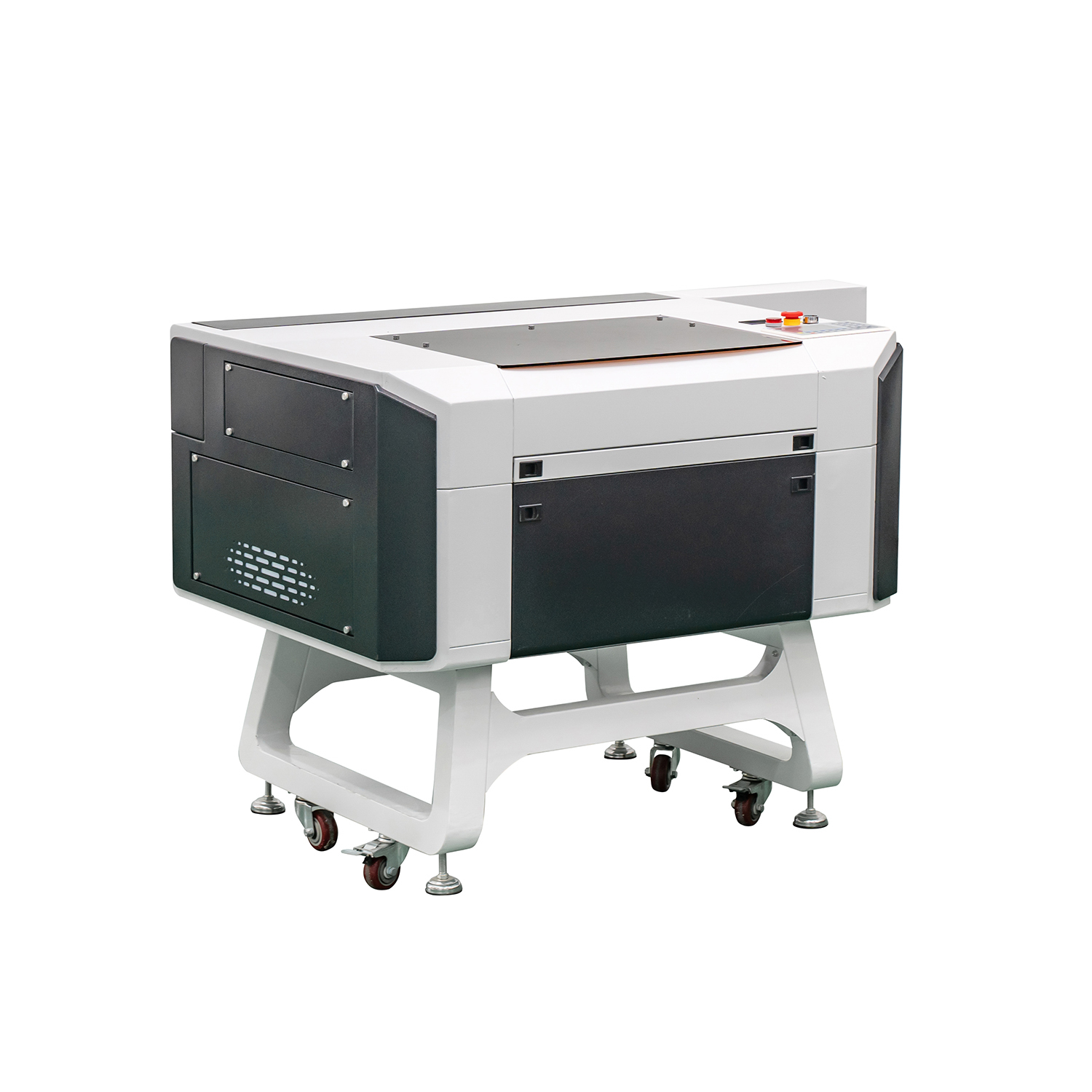
While synthetics melt, natural fibers are organic. They vaporize when exposed to a high-powered beam. Because of this vaporization process, organic materials require slightly different handling and parameter adjustments on the shop floor.
You can achieve incredibly clean lines on cotton and linen. However, a slight amber tint may appear on the cut edge due to carbonization. In many rustic designs, this is perfectly acceptable. If pristine white edges are strictly required, dialing in a high-pressure air assist will blow away the carbon dust and minimize discoloration.
Delicate fabrics benefit immensely from a textile laser cutter. The sheer lack of mechanical drag ensures flawless cuts. Tailors rely heavily on this technology to produce intricate appliques without a single frayed thread.
CO2 technology is highly prevalent in footwear and bespoke accessories. Genuine leather cuts beautifully, leaving a sharp profile. Processing leather does leave a temporary burnt odor. Fortunately, this scent dissipates quickly over time or with a quick wipe-down using standard leather conditioners.
If natural fibers are highly compatible, synthetic textiles are where thermal technology truly dominates. The melting reaction creates a self-finishing edge that revolutionizes manufacturing workflows.
Polyester and nylon are arguably the most commonly processed fabrics in the industry. The beam slices through polyester effortlessly. It leaves a crisp, sealed border that prevents all future fraying, even after repeated industrial washing.
Activewear manufacturers face a unique challenge. Stretch fabrics easily warp under a rotary blade. In contrast, thermal processing handles elastane without applying any physical tension. This guarantees the garment maintains its exact sizing and compression properties.
Dealing with thick, fluffy piles can be a nightmare for traditional shears. The focused beam easily penetrates thicker synthetic fleeces without crushing the material. This preserves the fabric loft and essential insulating properties.
Beyond fashion, industrial applications require robust manufacturing solutions. Tactical gear and motorcycle apparel rely heavily on aramid fibers. These incredibly tough materials wear out traditional steel blades in a matter of hours. Thermal processing cuts through ballistic fibers effortlessly. It is a highly cost-effective method for heavy-duty manufacturing.
Materials like synthetic suede, seatbelt webbing, and airbag textiles require strict quality control. Commercial-grade equipment ensures every single cut meets the rigorous safety standards demanded by aerospace engineers.
Multi-layered foam-backed textiles are notoriously difficult to process cleanly. The beam penetrates thick spacer fabrics without compressing the edges. You get a pristine, uncrushed profile ready for immediate assembly.
While versatility is high, certain chemical compositions pose severe safety hazards. Establishing strict material guidelines on your production floor is absolutely non-negotiable.
Materials containing polyvinyl chloride must be strictly banned from your machine bed. When burned, PVC emits toxic chlorine gas. As this gas mixes with ambient moisture, it creates hydrochloric acid. Not only is this lethal for operators to breathe, but it will rapidly rust your linear guides and destroy your expensive optics.
Many cheap faux leathers use PVC rather than safe polyurethane. Always check the manufacturer specification sheets before processing. If unsure, perform the copper wire burn test in a well-ventilated area to verify the absence of chlorine.
To streamline your shop floor operations, use this quick reference guide for material behavior and optimal machine setup.
Material Category | Cutting Behavior | Edge Finish | Air Assist Strategy |
|---|---|---|---|
Natural Fibers | Vaporization | Clean, slight amber tint | High pressure to remove carbon |
Synthetic Textiles | Melting | Sealed, completely fray-free | Low pressure for smooth melt |
Technical/Ballistic | High-temp melting | Strong, fused profile | Medium pressure for cooling |
Choosing the right machine configuration is critical for maximizing your return on investment. Let us translate abstract requirements into concrete equipment specifications.
A standard single-head setup is excellent for custom tailors and R&D laboratories. For ultra-fine details on delicate silk, consider upgrading to an RF metal tube configuration. RF tubes pulse much faster than traditional glass tubes. This results in a significantly smaller spot size and higher engraving precision.
For manufacturers dealing with high-volume, repetitive patterns, implementing a dual head fabric cutting system is a massive operational upgrade. This configuration utilizes two independent laser tubes and heads moving simultaneously. You can literally cut two identical sleeves or upholstery panels at the exact same time, instantly doubling your daily throughput.
Modern industrial equipment features sophisticated CCD cameras. The camera reads registration marks on sublimated fabrics in real-time. The software then dynamically adjusts the cutting path to match the printed contours. This automatically compensates for any fabric stretch or shrinkage that occurred during the dye-sublimation process.
Even with top-tier equipment, achieving a flawless finish requires operational finesse. Here are a few practical engineering details to refine your workflow.
High speed and relatively low power are best for thin textiles. Pumping too much heat into a thin layer of nylon will cause excessive melting, leading to a hard, scratchy edge. Always run a parameter test grid on scrap material to find the optimal thermal balance.
Compressed air is critical. It blows away vaporized material instantly, cooling the edge and preventing flare-ups. If you notice yellowing on white natural fabrics, increasing your air line pressure is usually the quickest fix.
Never process textiles on a solid flatbed. Use a honeycomb bed or a specialized conveyor mesh bed. Furthermore, ensure your exhaust fan has enough CFM capacity to pull smoke downward through the mesh. This keeps the smoke away from the top surface, ensuring the final product remains clean.
A CO2 laser is an indispensable industrial tool capable of processing almost any natural or synthetic textile, provided it is free of PVC. By eliminating mechanical drag and automatically sealing synthetic edges, this technology drastically reduces production time and improves overall product quality.
Evaluate your current throughput bottlenecks. Do you need high-speed RF precision for delicate appliques, or an automated CCD dual-head system for massive sublimation runs? We invite you to explore the specialized lineup of industrial cutting solutions at EasyCNCLaser to find the exact configuration tailored to your production floor.
Yes, but with strict limitations. While it can process a few layers of thin synthetics, cutting too many layers causes the melted edges to fuse together. This essentially welds the pieces into a single block. For massive multi-layer stacks, a CNC knife cutter is traditionally used. Lasers excel at single or low-ply high-precision work.
Natural fibers like cotton or leather will retain a temporary campfire odor immediately after processing. This dissipates quickly when the garment is aired out or washed. Synthetics usually emit a slight plastic odor that also fades. Utilizing proper downward exhaust ventilation minimizes this issue entirely.
Absolutely. By lowering the power output and significantly increasing the gantry movement speed, the beam removes just the top layer of dye or material. This creates beautiful, permanent textured designs on fleece, denim, and leather without cutting all the way through.
Yes. CO2 tubes operate at a specific 10,600nm wavelength that is highly absorbed by organic materials and fabrics. This makes them much faster, cleaner, and significantly more efficient than diode modules. Diodes often struggle to process light-colored or pure white fabrics due to severe beam reflection.
The maximum thickness depends entirely on the material density and tube wattage. Standard 80W to 130W tubes easily slice through 1mm to 5mm thick textiles, including heavy felt and spacer foams. Thicker materials require slower speeds and higher air pressure to clear the deeper kerf.
Preventing burns comes down to three factors: high travel speed, low power output, and optimal air assist. Moving the head swiftly ensures the heat does not linger in one spot. Additionally, maintaining a precise focal length keeps the energy concentrated, minimizing the surrounding thermal affected zone.


