
Please Choose Your Language
Views: 0 Author: Site Editor Publish Time: 2026-10-22 Origin: Site


A fabrication shop floor operating at peak capacity often still struggles to meet customer deadlines. The constant pressure to increase production volume without sacrificing dimensional quality is a universal pain point for modern manufacturers. Legacy equipment creates severe bottlenecks during high-volume runs. Operators find themselves waiting on the machine while watching precious seconds tick by during slow pierces and sluggish feed rates.
To break these operational bottlenecks, integrating a high-wattage laser system has emerged as the definitive engineering solution. Upgrading your wattage is not merely about achieving raw straight-line speed. It fundamentally transforms the entire manufacturing workflow. You drastically reduce piercing times, deliver pristine edge quality, and eliminate downstream secondary operations. By rethinking how thermal energy is applied to metal, fabrication facilities unlock unprecedented levels of throughput.
Exponential Speed Gains: Elevated wattage drastically reduces processing times. Shops push significantly more sheets through the production line per hour.
Lightning-Fast Piercing: High power cuts down initial piercing times on thick metals from agonizing seconds to mere fractions of a second.
Superior Edge Quality: Modern systems produce cleaner cuts. This virtually eliminates time-consuming secondary finishing processes like manual deburring.
Synergy with Automation: Intense laser power must be paired with rapid machine dynamics and automated material handling systems to maximize true throughput.
Higher ROI: Despite the initial capital investment, the drastically reduced cost-per-part makes high-power machinery incredibly profitable for continuous operations.
Before analyzing throughput metrics, we must establish a clear baseline of modern power standards. Standard entry-level machines typically fall into the 1.5kW to 3kW range. True high-power systems generally span from 6kW to 12kW. Ultra-high-power models now push boundaries at 20kW and beyond.
Recent industry trend analyses surrounding metal fabrication reveal a pivotal shift. Facilities are rapidly migrating toward these 6kW and higher systems. This transition is not a luxury. It is a direct response to tightening global supply chain demands and persistent skilled labor shortages. Shops need machines that can do the work of three older lasers in a fraction of the footprint.
Unlike legacy CO2 systems relying on complex mirrors and volatile gas mixtures, fiber laser technology utilizes solid-state laser diodes. The light is amplified and delivered through a flexible fiber optic cable directly to the cutting head. This solid-state delivery is inherently more efficient. It converts a much higher percentage of electrical energy into raw cutting power.
Thermal dynamics dictate the core relationship between laser power and cutting speed. Increasing the wattage allows the focused laser beam to melt and vaporize metal at a significantly accelerated rate. Consider standard mild steel. A 6000W machine does not just cut slightly faster than a 2000W unit. It completes the exact same profile in less than half the time.
Specifically, cutting speeds on thin sheet metal increase linearly with power. However, the true advantage of high wattage emerges in the mid-to-thick material range. High-power systems maintain aggressive feed rates through dense metals where lower-power machines would otherwise stall or produce excessive dross. Look at the performance data below to see how wattage scales with production speed.
Material Type | Plate Thickness | 2000W Cutting Speed | 6000W Cutting Speed | 12000W Cutting Speed |
|---|---|---|---|---|
Carbon Steel | 10mm | 1.2 m/min | 3.5 m/min | 5.8 m/min |
Carbon Steel | 16mm | 0.6 m/min | 1.8 m/min | 3.2 m/min |
Stainless Steel | 6mm | 2.5 m/min | 6.0 m/min | 10.5 m/min |
One of the most notorious hidden bottlenecks in manufacturing is the initial pierce time. When dealing with thick plate laser cutting, older technology might require three to five seconds just to penetrate a 20mm steel plate. Over the course of a single shift, those seconds compound into hours of dead time.
High power fiber lasers utilize advanced piercing technologies. These include multi-stage and lightning pierce algorithms. They blast through thick carbon steel or aluminum in milliseconds. Consider a real-world scenario featuring a nested sheet containing 500 individual parts. If a high-wattage laser saves just 2.5 seconds per pierce, that translates to over 20 minutes of pure production time saved on a single sheet. Multiplied across a week of continuous operation, the throughput gains are staggering.
Throughput is not strictly defined by how fast a part drops off the machine grate. It is measured by how quickly that part can move to the next stage of manufacturing. A high power fiber laser cutter fundamentally improves edge quality by maintaining optimal heat distribution. It utilizes high-pressure assist gases like nitrogen or customized gas mixes to instantly clear molten material.
Furthermore, this precise thermal control results in significantly less dross and much smoother edge striations. Parts emerge from the cutting bed with pristine edges. The need for manual deburring or mechanical grinding is completely eliminated. Bypassing these labor-intensive secondary finishing processes drastically increases total factory throughput. Workers can focus on higher-value assembly tasks rather than tedious cleanup.
A common trap for eager buyers is assuming that raw laser power solves all production woes. Mounting a massive 12kW laser source onto a slow, flimsy machine frame is a recipe for wasted capital. To harness high wattage effectively, the mechanical framework must match the optical power. This requires high-acceleration gantry systems capable of pulling intense G-forces. These gantries are guided by robust linear drives and ultra-fast servo motors.
In addition, true throughput maximization relies heavily on automation. Shuttle tables swap finished sheets for raw material in seconds. When combined with automated loading and unloading towers, the laser beam remains active on the material for upwards of 90 percent of the shift. Without these dynamic systems, the world's fastest laser will simply sit idle while operators manually wrestle with heavy steel plates.
Selecting the ideal equipment requires a rigorous assessment of your shop's specific parameters. You must evaluate dominant material types, maximum plate thickness, daily production volume, and available floor space. Matching the machine to your realistic workload prevents under-performance and unnecessary capital expenditure.
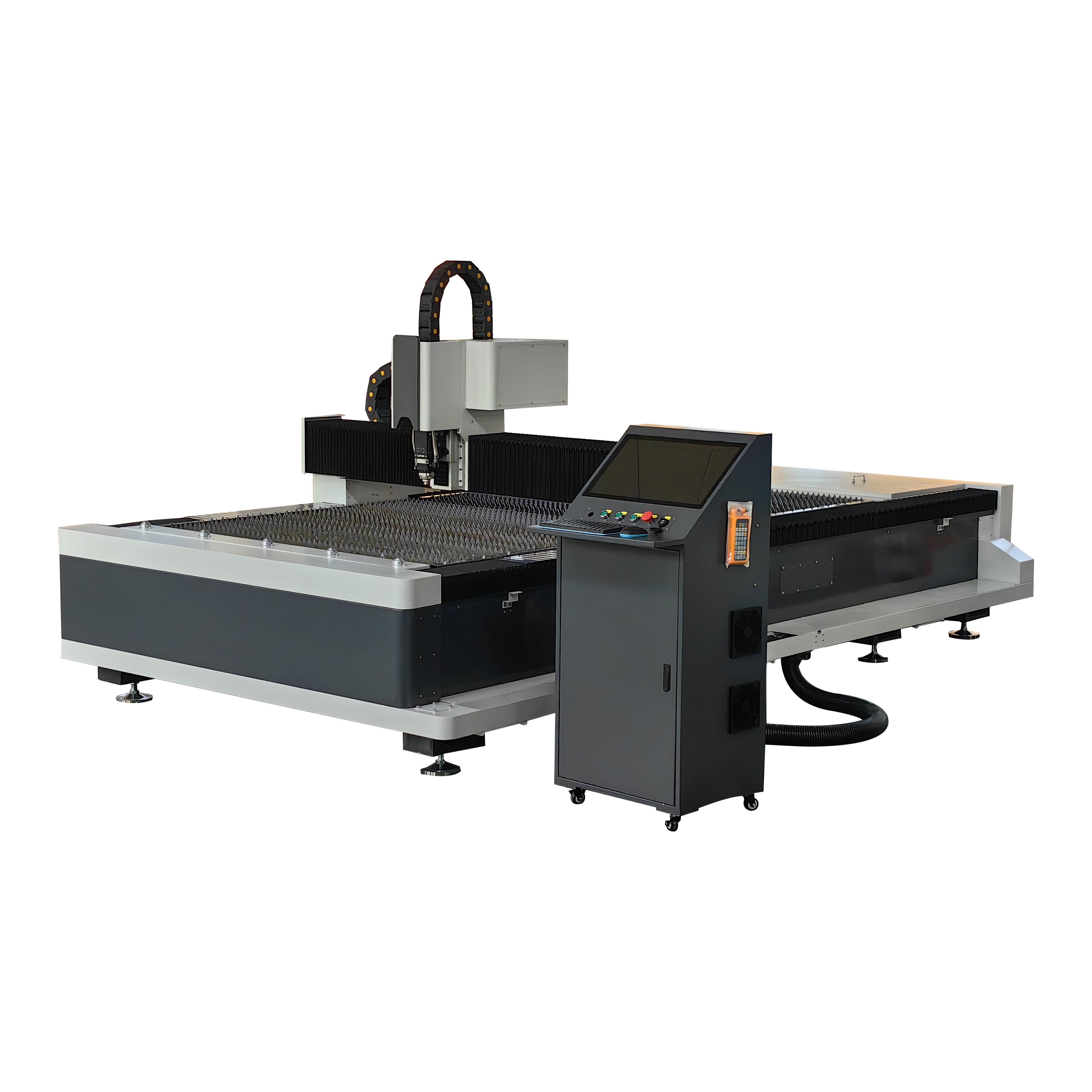
For entry to mid-level production environments dealing primarily with thinner gauges or constrained by floor space, compact models are ideal. Facilities in this category benefit immensely from a 60x60cm 1500W-2000W Fiber Laser Cutting Machine. With its 600x600mm working area, this equipment offers precision cutting and excellent energy efficiency in a highly optimized footprint.
In contrast, heavy-duty and high-volume production floors require serious thermal muscle. For these demanding environments, upgrading to a High Power 6000W Fiber Laser Cutting Machine is a strict engineering requirement. A 6kW system effortlessly processes up to 25mm carbon steel while maintaining pristine edge quality. It provides the exact piercing speed and continuous feed rates necessary to keep industrial production lines moving.
Business owners are naturally cautious about the higher initial capital expenditure associated with high-wattage systems. However, industrial financial models consistently show that the justification lies in the cost-per-part metric. Faster cutting speeds combined with drastically reduced pierce times mean more parts are produced per hour.
Moreover, modern fiber lasers consume significantly less electricity than legacy technologies. They also use assist gas much more efficiently per meter of cut. When you factor in the elimination of secondary finishing labor, the cost to produce each individual component plummets. This accelerated production cycle makes high-power systems incredibly profitable for continuous industrial metal cutting operations.
Increasing manufacturing throughput requires a holistic and well-rounded approach. It is not just about upgrading a laser source. It is about combining high laser power with rapid machine dynamics, intelligent automation, and the complete elimination of secondary finishing operations. By addressing the entire production cycle, metalworking shops can permanently eliminate bottlenecks.
Investing in a high-wattage system is no longer a luxury reserved exclusively for massive multinational corporations. It is a critical necessity for any fabrication shop looking to stay fiercely competitive. Evaluate your current production bottlenecks today. Explore the specialized equipment catalog at Easy CNC Laser to find the exact high-power solution tailored to your factory floor.
Generally speaking, yes. However, the most significant speed increases are observed in mid-to-thick materials. For very thin sheet metal, the physical acceleration and dynamics of the machine frame often matter just as much as raw wattage. The laser can melt thin metal faster than a standard gantry can physically move.
For consistent and high-quality processing of thick materials like 15mm to 25mm carbon steel, a 6000W to 12000W system is standard. This power range ensures clean edges, minimizes dross, and facilitates the ultra-fast pierce times necessary to keep production moving.
Absolutely. Unlike older CO2 lasers that struggle with back-reflection, fiber lasers operate at a specific wavelength at around 1.06 micrometers. This wavelength is readily absorbed by reflective metals like aluminum, brass, and copper. This makes them exceptionally versatile for diverse fabrication applications.
While the initial purchase price of the machine is higher, the operating cost per part drops significantly. The system processes more parts per hour, uses less assist gas per meter cut, and saves on manual labor by eliminating deburring. Consequently, the overall profitability of your manufacturing floor increases.
The choice of assist gas depends entirely on the material and desired edge finish. Oxygen is typically used for thick carbon steel to create an exothermic reaction that aids the cutting process. Nitrogen is preferred for stainless steel and aluminum to prevent oxidation, leaving a clean edge that requires no secondary processing.
A well-calibrated 6000W fiber laser cutting machine can efficiently process carbon steel up to 25mm thick and stainless steel up to 16mm thick. The exact maximum thickness will depend on the quality of the material, the assist gas used, and the specific dynamics of the cutting head.


