
Please Choose Your Language
Views: 0 Author: Site Editor Publish Time: 2026-09-09 Origin: Site


Industrial manufacturing faces strict regulatory pressures, environmental standards, and workplace safety mandates. Production managers must balance high-speed metal fabrication with operator safety, environmental compliance, and contamination control. Operating advanced cutting equipment requires mitigating the inherent hazards of intense light, molten metal, and toxic exhaust. Open-bed systems offer lower initial costs and easier manual access. However, specific production volumes, material types, and regulatory environments make an Enclosed Fiber Laser Cutting Machine a non-negotiable operational requirement. You need a system that handles high-throughput workflows without compromising workforce safety. Upgrading ensures you meet strict OSHA and EPA guidelines while processing reflective metals or thick steel plates. We see shops struggling with open-bed limitations daily. Transitioning to a fully enclosed setup eliminates scattered radiation risks and captures hazardous fumes at the source.
Upgrading metal fabrication equipment requires a strict evaluation of baseline operational requirements. Operator safety stands at the forefront of any shop floor decision. Fiber lasers operate at a wavelength of approximately 1064 nanometers. This specific wavelength is invisible to the human eye but highly damaging to the retina. Open-bed systems expose the surrounding environment to scattered radiation. This exposure forces operators to wear specialized protective eyewear and necessitates dedicated, restricted-access laser safety zones. Beyond radiation, high-power cutting generates significant thermal output and hazardous airborne particulates. A modern facility must manage air quality and thermal control to protect personnel and sensitive adjacent machinery.
Solution categories in the market address these challenges differently. Open-bed systems remain viable for specific, limited use cases. They excel in low-volume, large-format prototyping where operators need constant, unimpeded access to the cutting bed to adjust heavy, oversized, or irregularly shaped workpieces. However, for high-power, continuous production environments, fully enclosed systems are essential for safe fiber laser cutting. They provide a physical barrier that contains sparks, molten slag, and scattered laser light, ensuring a secure perimeter.
Evaluating the conceptual trade-offs involves weighing immediate facility constraints against long-term operational advantages. Enclosed systems demand a larger facility footprint and represent a higher initial capital investment. The physical housing, integrated extraction systems, and automated pallet changers require dedicated floor space. However, this upfront commitment drastically reduces workplace hazard liabilities. By containing the cutting process, facilities lower their insurance costs and eliminate the need for facility-wide laser safety protocols. Enclosed systems also drive increased throughput. They are inherently designed to pair with automated material handling, allowing the machine to cut continuously while operators safely load and unload materials outside the hazardous zone.
| Operational Metric | Open-Bed Systems | Fully Enclosed Systems |
|---|---|---|
| Safety Classification | Class 4 (Requires facility-wide PPE and restricted zones) | Class 1 (Safe external environment, no specialized PPE required outside) |
| Fume Management | Ambient dispersion, requires heavy facility HVAC compensation | Source capture via integrated downdraft and HEPA filtration |
| Automation Integration | Manual loading, high operator intervention required | Seamless integration with shuttle tables and tower storage |
| Material Capability | Limited to non-reflective, thinner materials at lower power | Capable of cutting thick, highly reflective metals at maximum power |
| Footprint | Compact, minimal peripheral equipment | Large, requires space for housing, chillers, and extraction units |
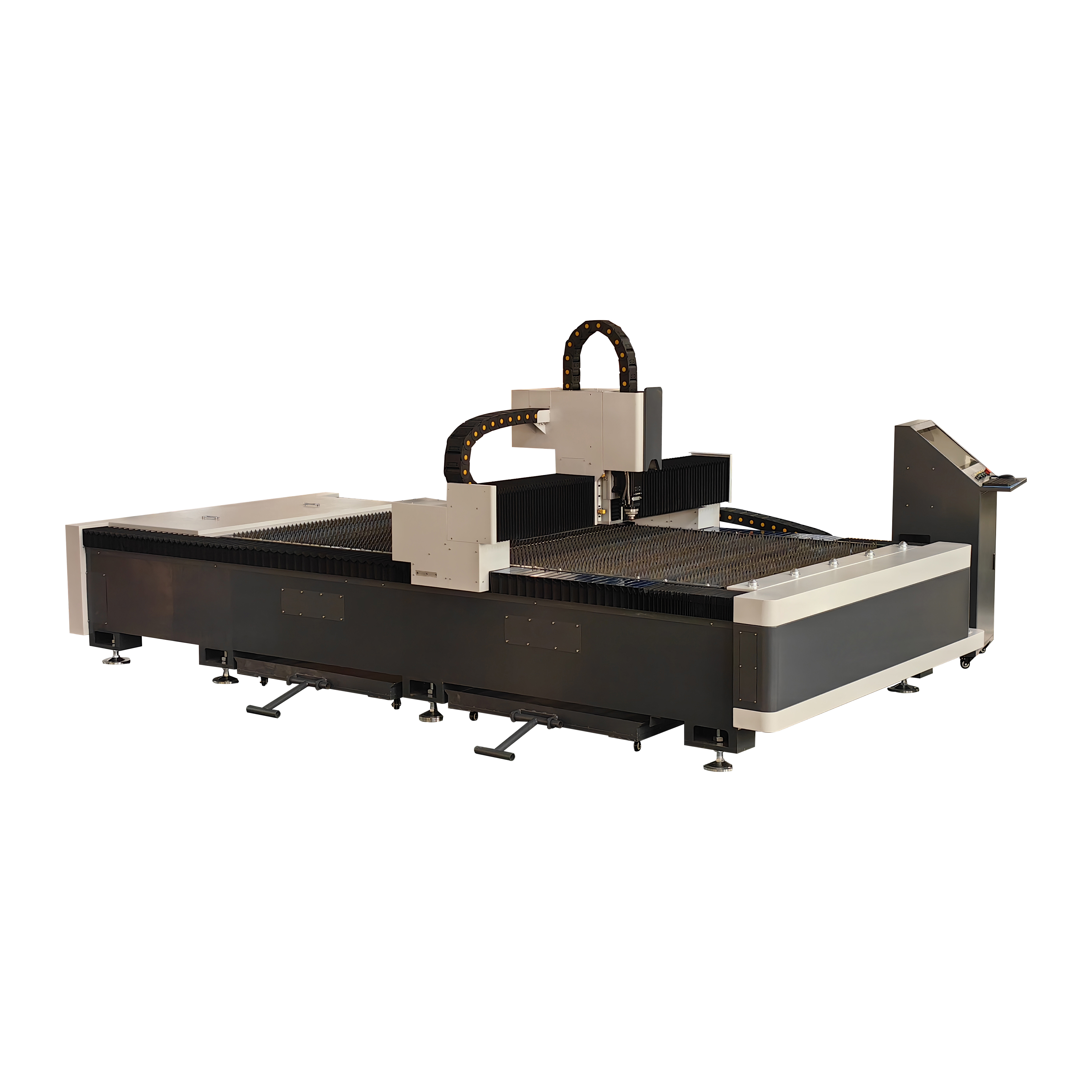
Certain manufacturing sectors operate under conditions that make open-bed cutting an unacceptable risk. The demands of material variety, production volume, and strict quality control require robust containment strategies. You cannot run high-wattage lasers in an open shop without severe safety violations in these specific fields.
Contract manufacturers rarely process a single type of material. A typical shift might involve transitioning from cutting 3mm mild steel to processing 10mm aluminum, brass, or galvanized sheets. Processing mixed materials at high speeds introduces unpredictable variables. Different metals generate varying levels of spatter, and the toxicity of the fumes changes with every material switch. Cutting galvanized steel releases zinc oxide, while stainless steel produces hexavalent chromium. Enclosures protect workers from these fluctuating hazards. Contract shops rely on rapid, automated changeovers to maintain profitability. Enclosed systems allow dual-pallet changers to swap finished sheets for raw materials in seconds without compromising shop floor safety or exposing nearby workers to sudden bursts of scattered light.
Aerospace components demand the precision cutting of exotic, high-strength alloys such as titanium, Inconel 718, and specialized aerospace-grade aluminum. These materials are highly reactive. They require intense laser power combined with high-pressure assist gases like nitrogen or argon to achieve clean, oxidation-free edges. The high-pressure gas blows molten material violently through the kerf. The aerospace and defense sectors operate under strict federal safety protocols. Manufacturing environments must often maintain zero-defect conditions, meaning ambient dust and debris must be strictly controlled. Fully enclosed, Class 1 safety-rated housings are mandatory in these facilities to prevent external contamination of the workpiece and to shield the facility from the intense energy required to process high-strength alloys.
The automotive industry, particularly the rapidly expanding electric vehicle sector, relies on high-volume, continuous production. EV battery enclosures, structural frames, and specialized brackets are often stamped or laser-cut from lightweight, high-strength materials like aluminum and advanced high-strength steel. The sheer volume of automotive manufacturing requires seamless integration with automated sheet loaders, coil-fed systems, and robotic part sorters. Enclosures are vital here to maintain continuous, safe production lines. They allow robots and operators to work in close proximity to the cutting cell without risking exposure to the hazardous cutting zone. You will often see these machines running lights-out across three shifts, which is impossible without a fully interlocked enclosure.
Medical manufacturing requires unparalleled cleanliness. Producing surgical instruments, implantable devices, or medical-grade stainless steel components often occurs within cleanrooms or highly controlled manufacturing environments. Open-bed lasers generate micro-particulates and metallic dust that can easily contaminate an ISO Class 7 cleanroom, leading to immediate quality control failures. Enclosed systems, when paired with high-efficiency extraction units, prevent micro-particulate contamination. They maintain a negative pressure environment within the cutting cabin. This ensures that all dust and fumes are immediately evacuated and filtered, preserving the strict environmental standards required by medical regulatory bodies.
Manufacturing earthmoving equipment, cranes, and agricultural machinery involves processing massive, thick steel plates. Cutting mild steel up to 30mm or 40mm thick requires ultra-high-power fiber lasers, often ranging from 10kW to 30kW or more. At these extreme power levels, the cutting dynamics change drastically. Piercing thick plates creates explosive spatter, ejecting massive volumes of molten slag across the machine bed. The scattered light intensity is severe enough to cause instant eye damage from reflections alone. These extreme power levels make an enclosure mandatory to contain the violent piercing process, protect the facility from fire hazards, and shield operators from the intense radiant heat and light.
The electronics industry frequently processes highly reflective materials, primarily copper and aluminum, used in electrical enclosures, heat sinks, and conductive busbars. Fiber lasers are highly effective at cutting these materials, but they introduce the specific risk of back-reflection. The 1064nm wavelength can reflect off the shiny surface of copper or aluminum, bouncing back toward the cutting head or out into the facility. Enclosures are critical in this sector to protect facility personnel from stray reflective beams. They also house the specialized optics and sensors that monitor and mitigate back-reflection damage to the machine itself, preventing catastrophic failure of the fiber delivery cable.
Determining the necessity of an enclosed system requires evaluating your facility against specific regulatory, environmental, and operational benchmarks. You must look at your current material mix and your projected growth over the next five years.
Occupational safety organizations, including OSHA in the United States, the FDA's Center for Devices and Radiological Health, and CE standards in Europe, strictly classify laser equipment based on radiation hazards. An open-bed fiber laser is universally classified as a Class 4 laser product. This is the highest and most dangerous class, indicating that direct viewing, specular reflections, and even diffuse reflections are hazardous to the eyes and skin. Operating a Class 4 laser requires a controlled area, warning signs, interlocks, and mandatory personal protective equipment for anyone in the vicinity. By implementing a fully enclosed machine with certified safety glass and interlocked doors, the external environment is downgraded to a Class 1 safe zone. This eliminates the need for facility-wide laser safety gear and simplifies compliance audits.
Thermal cutting vaporizes metal, creating a hazardous plume of smoke and sub-micron particulates. Cutting specific materials drastically increases this hazard. Galvanized steel releases zinc oxide, which can cause metal fume fever. Stainless steel cutting generates hexavalent chromium, a known carcinogen with strict exposure limits. Painted or coated metals release volatile organic compounds. Implementing fume controlled laser cutting is essential for environmental and occupational health. Enclosed machines integrate seamlessly with high-capacity dust collectors and downdraft extraction systems. The enclosure traps the rising smoke plume, allowing the downdraft system to pull the hazardous particulates away from the operator's breathing zone and capture them at the source. This ensures strict compliance with EPA and local environmental exhaust regulations.
Laser power dictates the intensity of the cutting process. Low-power lasers under 2kW generate manageable levels of spatter and light. However, the industry consensus establishes that fiber lasers exceeding the 3kW to 4kW threshold generally require full enclosures. At 4kW and above, the intensity of the cutting plume, the volume of molten material ejected during piercing, and the brightness of the scattered radiation become too severe for open-bed operation. As facilities scale up their capabilities to process thicker materials at faster speeds, investing in an enclosed system becomes a prerequisite for deploying higher-wattage power sources safely.
Risk management directly impacts a facility's bottom line. Operating an open-bed Class 4 laser introduces significant liability. The potential for eye injuries, severe burns from ejected slag, or facility fires caused by stray sparks can inflate workers' compensation and facility insurance premiums. Insurance underwriters assess the physical hazards present on the shop floor. Upgrading to a fully enclosed, Class 1-rated system provides documented risk mitigation. By physically isolating the hazard, companies can negotiate better insurance rates and protect themselves from the severe corporate liability associated with workplace injuries.
Transitioning to an enclosed system introduces specific logistical and operational challenges. Proactive planning is required to ensure a smooth integration into your existing production flow.
The most immediate challenge is space. Enclosed systems, especially those equipped with dual-pallet changers, large chiller units, and high-capacity extraction systems, require significantly more floor space than open-bed models. The footprint can easily double. To mitigate this risk, facilities must conduct a comprehensive 3D spatial audit before procurement. Map out the exact dimensions of the proposed enclosed laser cutter, including maintenance access clearances and material loading zones. If space is severely limited, evaluate compact enclosed models or reconfigure existing material flow paths to accommodate the larger footprint.
Experienced operators rely on visual cues to monitor cut quality and detect issues like loss of cut or excessive dross buildup. The physical enclosure and the dark, OD6+ rated tinted safety glass restrict direct visual monitoring. This can potentially delay response times to cutting errors. To mitigate this, ensure the chosen machine features high-definition internal cameras displayed on the operator console. Invest in smart cutting heads equipped with real-time feedback sensors that automatically detect piercing completion or cut failure, pausing the machine instantly without requiring operator intervention.
Open-bed systems allow operators to quickly drop a sheet of metal onto the bed and start cutting. Enclosures introduce physical barriers that can result in slower manual loading times, potentially creating a bottleneck. To offset manual loading delays and maximize spindle time, facilities must invest in automated material handling. Implementing shuttle tables allows one pallet to be loaded while the other is inside the enclosure being cut. For higher volumes, integrating tower storage systems ensures a continuous supply of raw material, completely removing the manual loading bottleneck.
An enclosure is only as effective as its extraction system. If the dust collector fails or filters become clogged, the enclosure will rapidly fill with dense, toxic smoke. This internal machine contamination coats the precision optics, linear guides, and sensors, leading to poor cut quality and expensive downtime. Mitigation requires implementing strict preventative maintenance schedules for the fume extraction unit. Utilize advanced dust collectors equipped with sensors to monitor differential pressure across the HEPA filters. These systems provide automated alerts when filter cleaning or replacement is necessary, ensuring the cutting cabin remains clear and the optics remain protected.
A: A Class 4 laser is the most hazardous, capable of causing severe eye and skin damage from direct or scattered radiation, requiring strict safety zones and operator PPE. A Class 1 laser machine features a fully interlocked, certified enclosure that contains all radiation. It is considered safe under normal operating conditions, eliminating the need for specialized safety gear outside the machine.
A: Yes. Aluminum and copper are highly reflective materials. When cut with a fiber laser, the 1064nm wavelength can bounce off the material surface. An enclosure is critical to contain this dangerous scattered radiation, protecting operators from eye injuries and preventing damage to surrounding facility infrastructure.
A: The enclosure traps the rising smoke and toxic particulates generated during cutting. A high-powered extraction unit pulls air through a downdraft table beneath the cutting bed. The contaminated air is forced through spark arrestors and HEPA filters, capturing hazardous dust before exhausting clean air back into the facility or outside.
A: Industry consensus and safety standards dictate that fiber lasers exceeding 3kW to 4kW require full enclosures. At these power levels, the intensity of the scattered light, the volume of toxic fumes, and the explosive nature of molten spatter during piercing become too dangerous to manage in an open-bed environment.
A: While technically possible, retrofitting is highly discouraged. Custom aftermarket enclosures are expensive and difficult to integrate with existing machine software and safety interlocks. Achieving official Class 1 safety certification for a retrofitted machine is a complex, costly process that often voids the original manufacturer's warranty.
A: An enclosed system typically requires 50% to 100% more floor space than a comparable open-bed model. This accounts for the physical housing, the integration of a dual-pallet shuttle table, the high-capacity dust collection unit, and the required safety clearances for automated material loading.
A: Yes, it often does. By upgrading to a fully enclosed system, you transition from a high-risk Class 4 environment to a safe Class 1 environment. This documented reduction in workplace hazards, fire risks, and potential liability claims allows facilities to negotiate lower workers' compensation and general liability insurance premiums.


