
Please Choose Your Language
Views: 0 Author: Site Editor Publish Time: 2026-11-17 Origin: Site


Are rising raw metal costs hurting your production margins? Fluctuating prices for steel, aluminum, and brass place immense pressure on B2B manufacturing facilities today. Factory managers often accept material waste as an unavoidable cost of doing business. It remains a silent profit killer on the shop floor.
However, a fundamental shift is happening in modern fabrication. Forward-thinking companies are aggressively adopting automated optical cutting systems to insulate themselves from supply chain shocks. Maximizing raw material yield turns scrap reduction into a distinct competitive advantage. Transitioning from legacy mechanical tools to focused optical technology represents a massive leap in resource conservation. This guide breaks down exactly how upgrading your equipment transforms a resource-heavy operation into a lean, zero-waste powerhouse.
Global metal fabrication markets are currently experiencing a structural transformation. Recent industry analysis highlights a critical pivot where fabricators are moving away from labor-intensive, high-waste processes toward digitally integrated, high-yield automation. Stricter environmental regulations and volatile commodity pricing drive this trend.
Facilities can no longer afford the 15% to 20% scrap rates typical of conventional sawing and plasma routing. Consequently, the adoption rate of advanced optical systems has surged. Plant managers now prioritize technologies that offer immediate material savings alongside high-speed output. This dual focus on sustainability and profitability is redefining baseline competitiveness in the structural steel and tube processing sectors.
Metal fabrication facilities relied on conventional mechanical and thermal cutting methods for decades. These legacy systems built modern manufacturing. Yet, they inherently suffer from physical limitations leading to substantial material waste. Identifying these mechanical bottlenecks is the first step toward optimizing your shop floor.
Mechanical saws and older plasma cutters have long served as standard components in a conventional tube processing machine. Mechanical band saws rely on physical friction and material removal to part a metal tube. The physical blade must possess a certain thickness to maintain structural integrity under heavy load. This thickness translates directly into lost material.
Plasma cutting introduces different inefficiencies. Plasma arcs are wide and notoriously difficult to focus precisely on curved tubular surfaces. This lack of focus blasts a wider path of destruction through the metal. When you process thousands of pipe segments annually, the cumulative loss from these inefficient tools adds up to massive volumes of wasted inventory.
The term kerf describes the width of material removed by a cutting process. Traditional methods generate a wide kerf, often ranging from 3mm to 5mm per cut. Imagine an operator wrestling a 6-meter carbon steel pipe into a band saw for fifty individual cuts. That wide kerf alone vaporizes a significant portion of sellable inventory into useless metal dust.
Plasma cutting generates uncontrolled heat. This creates a large heat-affected zone around the cut edge. Excessive heat alters the metallurgical properties of the steel. It frequently causes thermal distortion, warping, or micro-cracking in thin-walled tubes. Parts warping out of dimensional tolerance must be scrapped and remanufactured. This doubles the material cost for a single structural component.
| Cutting Technology | Average Kerf Width | Heat-Affected Zone | Typical Scrap Rate | Secondary Processing Required? |
|---|---|---|---|---|
| Band Saw / Cold Saw | 3.0mm - 5.0mm | None | 10% - 15% | Yes (Deburring) |
| Plasma Cutting | 2.0mm - 4.0mm | Large (High Distortion Risk) | 12% - 18% | Yes (Dross Removal) |
| Optical Fiber Technology | 0.1mm - 0.2mm | Minimal | Under 5% | No (Burr-free) |
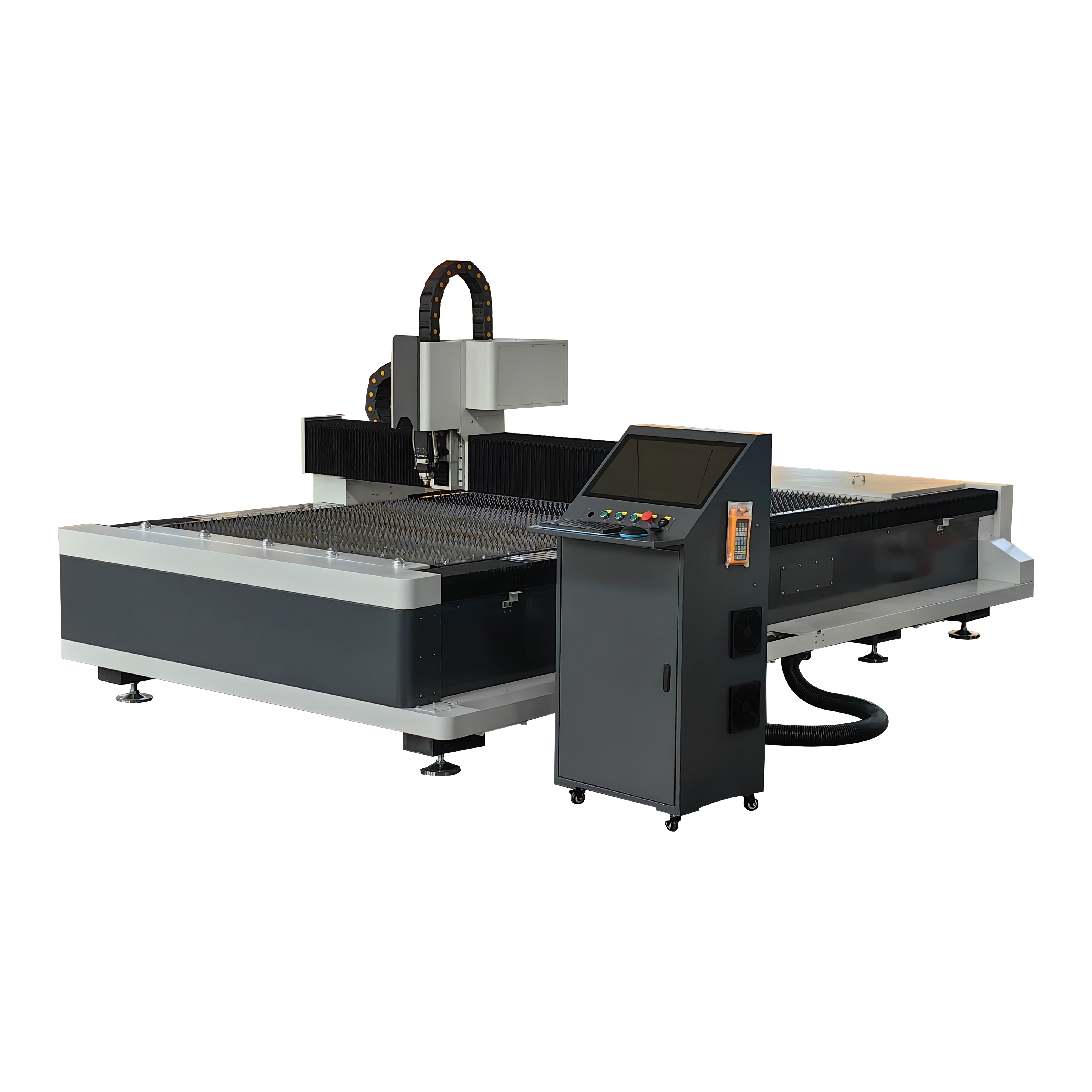
Hardware precision fundamentally alters how much material survives the fabrication process. Delivering focused light through fiber optic cables provides unparalleled engineering accuracy. This directly mitigates raw material waste.
The core advantage of optical technology lies in its beam delivery and focal diameter. A modern beam focuses to a spot size of approximately 0.1mm to 0.2mm. The cutting tool is essentially a microscopic point of intense light. Therefore, the kerf width is virtually negligible compared to mechanical blades.
Consider cutting a standard 6-meter pipe into multiple 100mm segments. A 3mm saw blade consumes nearly 180mm of pipe just in sawdust. A focused optical beam consumes less than 12mm of material over the exact same production run. This micro-millimeter precision allows engineers to pack parts incredibly close together during the design phase. It maximizes the physical yield of every purchased metal tube.
Mechanical cutting requires heavy clamping forces to hold the pipe steady against the physical drag of a saw blade. This intense clamping pressure frequently causes crushing or surface scratching on thin-walled tubes, aluminum profiles, or fragile metal alloys. Damaged pipes head immediately to the scrap bin.
Modern optical systems operate through non-contact processing. The cutting head glides millimeters above the material surface. It never applies lateral mechanical force to the tube. Pneumatic chucks only need to hold the pipe securely enough to rotate it. They do not fight the torque of a physical blade. This frictionless environment preserves the structural integrity of delicate materials. It drastically reduces rejected parts caused by mechanical deformation.
Hardware precision alone cannot achieve zero-waste manufacturing. The true multiplier effect in material conservation comes from sophisticated control software. Modern systems pair with intelligent nesting algorithms. They treat raw material optimization as a mathematical certainty rather than a guessing game.
Operators input their required part dimensions into the control software before making a single cut. The nesting algorithm analyzes the production order. It calculates the most efficient geometric arrangement of these parts along the length of the raw pipe.
The software evaluates thousands of layout permutations in seconds instead of relying on manual calculations. It strategically places shorter components in the leftover spaces of longer components. This ensures the unusable end piece remains as short as physically possible. B2B manufacturers utilizing these advanced digital layouts consistently achieve material utilization rates exceeding 90%. They turn scrap metal into sellable inventory.
Common-line cutting stands out as a highly advanced material-saving feature. When two identical straight-edged parts nest next to each other, the software programs the machine to make a single cut separating both parts simultaneously.
Because the parts share a mathematical border, zero material remains between them. This technique completely eliminates the skeletal scrap web typically left behind. Common-line cutting reduces the number of initial pierces required. It saves processing time, reduces assist gas consumption, and prevents localized thermal stress.
Material waste extends beyond kerf loss and remnants. It includes fully processed parts failing quality control inspections. Rejecting a finished component is the most expensive form of waste. It discards both the raw material and the operational time invested. High-accuracy processing eliminates this costly variable.
Industrial steel pipe laser cutting relies on a network of integrated sensors to maintain absolute accuracy. Capacitive height sensors located in the cutting head continuously measure the microscopic distance between the copper nozzle and the metal surface.
Standard metal pipes are rarely perfectly straight or perfectly round. These sensors detect surface deviations in real-time. The Z-axis servo motors instantly adjust the cutting head height to compensate for any bowing or ovality in the pipe. This closed-loop feedback system ensures the focal point remains perfect throughout the entire cutting cycle. It prevents incomplete cuts or dimensional inaccuracies resulting in scrapped materials.
Manual tube fabrication relies heavily on tape measures, marking tools, and operator dexterity. Human error in measuring or aligning the pipe inevitably leads to off-spec components. Even a one-millimeter deviation in a complex intersection cut renders a part unusable for downstream welding.
Computer numerical control systems eliminate human layout errors entirely. The machine translates digital design files directly into machine code. Heavy-duty servo motors and precision linear guide rails execute this code with exact positioning. Removing the variable of manual measurement ensures the first part and the thousandth part are dimensionally identical. This effectively reduces operator-induced scrap to zero.
The benefits of material conservation extend far beyond the cutting bed. Downstream manufacturing workflows become significantly more efficient when parts are cut with high precision and thermal stability. Reducing waste at the primary stage creates a positive ripple effect throughout the entire production floor.
Traditional sawing or plasma routing invariably leaves behind burrs, sharp edges, or hardened dross on the interior and exterior of the tube. Workers must manually grind or deburr the edges to make these parts safe for handling and assembly.
Grinding is a wasteful process itself. It removes base material as metallic dust, altering the final dimensions of the part. The superior beam quality of optical technology produces a smooth, burr-free edge straight off the machine. Eliminating the grinding phase saves the physical material that would have been ground away. It also eliminates labor costs, abrasive consumable costs, and time delays associated with secondary finishing.
Parts must fit together precisely in tubular frame manufacturing to ensure strong, aesthetically pleasing welds. Poorly cut pipes with gaps require welders to use excessive filler metal to bridge those voids. In worst-case scenarios, the thermal stress of filling large gaps causes the entire welded sub-assembly to warp beyond repair.
Precision-cut tubes feature exact intersection profiles, including complex fish-mouth cuts, chamfers, and slot-and-tab designs. These precise geometries allow parts to self-fixture and interlock perfectly. This perfect fit-up reduces welding wire consumption. It minimizes heat input during welding and prevents the catastrophic waste of scrapping an entire multi-part welded assembly due to poor initial cut quality.
Upgrading industrial equipment must be justified by clear, measurable financial returns for manufacturing decision-makers. The reduction of material waste is not just an operational improvement. It acts as a strategic financial mechanism accelerating return on investment.
The true cost of a manufactured part is heavily weighted by raw material expenses. If a facility processes $500,000 worth of steel tubing annually, a traditional scrap rate of 15% means $75,000 is lost to the scrap bin.
Implementing advanced nesting and narrow kerf technology realistically reduces that scrap rate to 5% or lower. That 10% improvement translates directly into $50,000 of reclaimed capital per year. The cost-per-part drops significantly when factoring in the elimination of secondary grinding labor and reduced part rejection rates. These compounding savings frequently allow the equipment to pay for itself within the first 12 to 18 months of operation.
Modern B2B supply chains increasingly prioritize environmental, social, and governance criteria. Reducing material waste serves as a highly effective way to lower a factory's overall carbon footprint.
Steel and aluminum production are highly energy-intensive industries. Every kilogram of metal wasted and sent back for recycling requires immense thermal energy to melt and re-forge. Maximizing the yield of virgin material indirectly reduces the greenhouse gas emissions associated with metal recycling. These solid-state devices are highly energy-efficient, consuming a fraction of the electricity required by traditional plasma systems.
Capitalizing on material savings requires selecting equipment aligned with your specific production volume, material types, and facility constraints. Matching machine specifications to your workflow is critical for maximizing efficiency.
The thickness and type of metal tubes you process dictate the required power output of the laser source. Processing thick-walled carbon steel or highly reflective materials like aluminum and brass requires substantial energy density. This maintains clean, dross-free cuts preventing material waste.
For heavy-duty structural applications, evaluating a pipe fiber laser cutter equipped with a high-power 6000W source ensures rapid piercing and cutting of thick materials without compromising edge quality. Decision-makers should look for robust heavy-duty welded machine beds for vibration dampening and advanced autofocus cutting heads adjusting automatically to different material thicknesses.
Equipment size and automation levels must match the physical footprint of the factory and the volume of the production line. Facilities processing standard 6-meter or 8-meter lengths of pipe require full-sized industrial machines equipped with automatic bundle loading systems to prevent handling damage.
Conversely, shops focusing on specialized, smaller-batch components or those with limited floor space should evaluate compact designs. A highly efficient 60x60cm format with a 1500W to 2000W power source offers incredible precision for smaller tubular components while minimizing floor space requirements. Regardless of the footprint, the chosen system must feature rigid pneumatic chucks adapting to various tube profiles without requiring constant, time-consuming mechanical changeovers.
Advanced optical tube cutting technology is far more than just a fabrication tool. It acts as a strategic investment in material conservation and cost control. Manufacturers can reclaim thousands of dollars previously lost to the scrap bin by replacing the wide kerfs and thermal distortion of traditional methods with micro-millimeter precision and intelligent nesting software.
In an era characterized by high material costs and strict sustainability standards, upgrading your equipment allows you to produce better-fitting parts with almost zero wasted scrap. This minimizes waste through advanced tube processing technology, giving companies a distinct competitive edge, ensuring long-term profitability, and driving operational excellence.
Ready to eliminate material waste and boost your production margins? Explore the full range of high-precision solutions tailored to your fabrication needs. Visit Easy CNC Laser today to find the perfect equipment to transform your shop floor into a zero-waste powerhouse.
Yes, modern optical technology is highly versatile and engineered to process a wide spectrum of industrial metals. It is exceptionally effective for cutting carbon steel, stainless steel, aluminum alloys, brass, and copper. The specific power and assist gases required will vary depending on the material's reflectivity and thickness, but the machine adapts easily to diverse production runs without wasting setup materials.
Material savings depend highly on part complexity and your previous cutting methods. However, objective industry data indicates many users report a 15% to 30% increase in raw material utilization. This dramatic improvement is primarily driven by intelligent nesting software calculating the most mathematically efficient layout to pack parts tightly together.
No, contemporary nesting and control software features user-friendly, intuitive interfaces. Operators do not need advanced programming degrees. The software often includes automated nesting functions, automatic error detection, and real-time 3D simulation. This prevents operators from making costly manual layout mistakes, reducing material wasted due to human error during setup.
The term kerf refers to the width of the material removed during the cutting process. Traditional saw blades have a wide kerf, often 3mm or more, turning a significant amount of metal into dust. A focused optical beam has a micro-millimeter kerf width, often less than 0.1mm. This microscopic kerf means practically no material vaporizes unnecessarily, allowing the software to pack parts much closer together on the pipe.
Absolutely. Professional equipment is engineered specifically to handle complex geometric intersections, bevels, saddle cuts, and contouring that traditional tools cannot achieve without expensive custom tooling. Utilizing multi-axis cutting heads, the machine executes these complex profiles flawlessly on the first attempt, eliminating the trial-and-error scrap typically associated with fabricating complex tubular joints.
Maintaining high precision requires routine cleaning of the protective lenses, checking the concentricity of the copper nozzle, and ensuring the chiller unit maintains optimal water temperature. Regular lubrication of the linear guide rails and rack-and-pinion systems prevents mechanical backlash. Keeping these components in top condition ensures the focal point remains perfectly aligned, which is critical for maintaining dross-free cuts and avoiding material waste.
Raw metal pipes often suffer from slight bowing or ovality straight from the mill. Advanced cutting heads utilize capacitive height sensing technology to counteract this. The sensor detects variations in the tube's surface in milliseconds and adjusts the Z-axis height dynamically. This maintains a constant focal distance regardless of the tube's physical irregularities, ensuring precise cuts and preventing scrapped parts due to out-of-tolerance dimensions.


