
Please Choose Your Language
Views: 0 Author: Site Editor Publish Time: 2026-09-13 Origin: Site


Industrial surface preparation relies heavily on abrasive blasting or chemical solvents, methods that frequently degrade base materials, incur high consumable costs, and introduce severe environmental liabilities. Facilities must effectively strip specific contaminants—such as rust, industrial coatings, or machining oils—without altering the underlying substrate's tolerances. However, determining if a Laser Cleaning Machine is the viable replacement requires a strict understanding of ablation thresholds, material interactions, and geometric constraints. This guide details the specific contaminants laser ablation can successfully target, the underlying physics of the process, and the technical criteria required to evaluate this technology for your metal surface cleaning operations.
Laser ablation operates on the principle of precise energy delivery and material absorption. When photons from a focused laser beam strike a contaminated surface, the contaminant layer absorbs this optical energy rapidly. This absorption converts light into thermal energy, causing extreme localized heating. Depending on the laser parameters and the material properties, the contaminant either vaporizes instantly into a gas or fractures away from the substrate through a thermomechanical process known as spallation. Understanding this mechanism is the first step in evaluating whether a specific residue can be removed effectively.
Every material possesses a specific ablation threshold. We define this as the minimum energy density (fluence) required to break the material's molecular bonds and initiate removal. A successful cleaning operation requires a stark contrast between the materials involved. The contaminant's ablation threshold must be significantly lower than the substrate's threshold.
When you configure the equipment correctly, the laser energy easily exceeds the threshold of the rust, paint, or oil, vaporizing it instantly. However, because the energy remains below the threshold of the underlying metal, the base material simply reflects the remaining light or dissipates the minor heat. This selective absorption prevents surface melting, micro-cracking, or metallurgical changes. It preserves the exact dimensional tolerances of the base part, which is why this technology is heavily favored in aerospace and precision machining.
Hardware selection directly impacts cleaning performance and substrate safety. The two primary architectures available are Continuous Wave (CW) and Pulsed lasers. They deliver energy in fundamentally different ways, making them suitable for entirely different industrial applications.
| Laser Type | Energy Delivery | Heat Affected Zone (HAZ) | Ideal Industrial Applications |
|---|---|---|---|
| Continuous Wave (CW) | Constant, uninterrupted stream of optical energy. | High. Transfers significant heat into the base material. | Thick rust on heavy structural steel, ship hulls, thick marine epoxies. |
| Pulsed | Short, intense bursts (nanosecond duration). | Minimal. High peak power vaporizes material before heat transfers. | Aerospace components, injection molds, historical restoration, precision tooling. |
CW lasers provide high average power and high heat input. They are brute-force tools. If you are stripping heavy mill scale from one-inch thick carbon steel plates, a CW system will perform the job rapidly. Pulsed lasers emit energy in short bursts. This delivers massive peak power with minimal thermal transfer. Pulsed systems create a very small heat-affected zone, making them the only choice for delicate substrates where warping or metallurgical alteration is unacceptable.
Evaluating success requires more than a visual inspection of the workpiece. Defining a surface as "clean metal" is an incomplete metric for industrial production. You must verify that the required surface profile (roughness) remains intact. The process must maintain strict dimensional accuracy, often down to the micron level. Furthermore, the operation must meet specific cycle time requirements to keep up with production lines. A successful implementation achieves all three metrics simultaneously without introducing secondary defects.
Industrial facilities encounter a diverse range of surface residues. Different contaminants require specific parameter adjustments. Operators must tune the wavelength, average power, pulse duration, and scanning speed to match the target material's absorption characteristics.
Iron oxide absorbs standard 1064nm fiber laser wavelengths exceptionally well. Implementing laser rust removal vaporizes oxidation rapidly. Flash rust—the light, orange oxidation that forms on bare steel in humid environments—disappears in milliseconds with a single pass. The process leaves a pristine surface ready for immediate coating or welding.
Heavy, pitted rust scale and hot-rolled mill scale require more aggressive parameters. Operators must often use multiple passes or higher-wattage CW systems for thick scale. The laser energy penetrates the rigid scale structure, causing rapid thermal expansion that fractures the oxide layer away from the base steel. Unlike sandblasting, which can peen rust into the metal's pores, photothermal ablation leaves a completely bare, uncontaminated surface.
Weld integrity demands pristine surfaces. AWS structural welding codes require the removal of all foreign materials before striking an arc. Lasers remove drawing oils, moisture, and oxides prior to welding. This eliminates the primary causes of weld porosity and hydrogen-induced cracking. The beam can clean a precise, narrow strip exactly where the weld joint will be, leaving the surrounding mill coating intact.
Post-weld applications are equally valuable. Stainless steel welding generates severe heat tint and discoloration, which depletes the chromium layer and invites corrosion. Lasers strip this heat tint instantly, restoring the passivation layer. They also remove light silicate islands without the abrasive grinding that frequently causes undercutting at the weld toe. This preserves the structural integrity and fatigue life of the joint.
Laser energy breaks the chemical bonds of polymers and resins. The removal rate depends heavily on the coating's chemical composition, thickness, and pigmentation. Dark pigments absorb more optical energy, meaning black or dark grey paints ablate much faster than white or highly reflective silver coatings.
Coating thickness dictates cycle times. Thin varnishes, clear coats, and light primers vaporize quickly. Thick marine epoxies, CARC (Chemical Agent Resistant Coating) paints used in military applications, and heavy powder coats require high-power systems and slower traverse speeds. In some cases, operators use a multi-pass strategy: a high-power pass to bulk-remove the top layers, followed by a low-power, high-frequency pass to clean the remaining primer without damaging the substrate.
Organic compounds respond well to photothermal energy. Lasers vaporize machining oils, stamping lubricants, and heavy greases efficiently. This is particularly useful in automotive manufacturing, where parts must be completely oil-free before structural adhesive bonding.
However, vaporizing thick hydrocarbons generates dense, heavy smoke. Proper fume extraction is absolutely critical here. Without high-velocity extraction at the ablation zone, vaporized oils will condense and redeposit on the workpiece. More dangerously, the smoke can foul the expensive protective lenses on the laser optics, leading to thermal lens failure and catastrophic equipment damage.
Hard carbon buildup plagues internal combustion engine components and jet turbine blades. Aerospace and automotive rebuilders use lasers to ablate these stubborn deposits safely. Traditional chemical soaking takes hours and requires hazardous solvents. Laser ablation removes baked-on carbon in seconds, leaving the underlying aluminum or titanium alloy completely untouched.
Lasers also handle micro-burrs left behind by precision CNC machining operations. When focused tightly, the intense energy melts or vaporizes these tiny metallic protrusions. The result is a smooth, contaminant-free edge, eliminating the need for manual deburring under a microscope.
Tire manufacturing and plastic injection molding generate stubborn residues. Over thousands of cycles, vulcanized rubber, EPDM, and mold release agents bake onto the steel or aluminum tooling. Cleaning these molds traditionally requires taking the press offline, cooling the heavy steel down, and using dry ice blasting or chemical baths.
Lasers can clean hot molds in-situ. The operator simply points the beam at the tooling while it is still mounted in the press. The beam vaporizes rubber flash and release agents instantly. More importantly, it causes zero abrasive wear. Traditional abrasive methods round off the sharp edges of the mold over time, leading to part flashing. Laser cleaning extends the lifespan of expensive tooling indefinitely.
Micro-cleaning applications require extreme precision and highly controlled energy delivery. Low-power, highly focused lasers target electronic contaminants on printed circuit boards (PCBs). They remove rosin core solder flux residues, conformal coatings, and leaked electrolytes.
The short pulse durations prevent thermal damage to the board. Adjacent microelectronics, delicate solder joints, and the underlying FR4 fiberglass substrates remain completely safe. This provides a dry, chemical-free alternative to ultrasonic solvent baths for high-reliability electronics used in aerospace and medical devices.
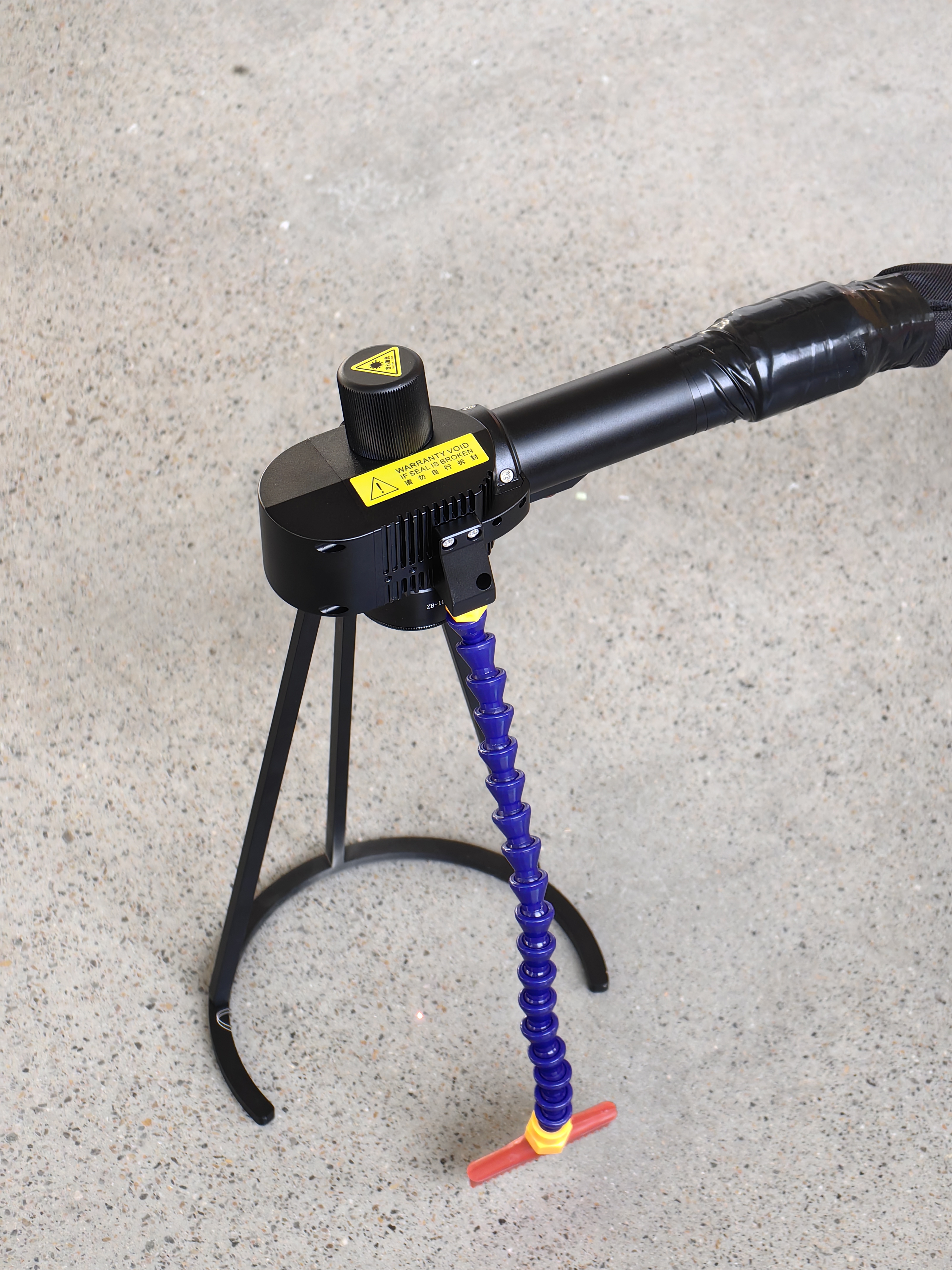
The base material dictates the feasibility of the entire process. Not all substrates react favorably to concentrated optical energy. You must evaluate material properties, specifically thermal conductivity and optical reflectivity, alongside part geometry.
Carbon steel, cast iron, and stainless steel offer the highest success rates. These ferrous alloys absorb standard 1064nm fiber laser wavelengths predictably and have moderate thermal conductivity. Implementing metal surface cleaning on these materials is highly efficient and easily controlled.
Non-ferrous metals present distinct physical challenges. Aluminum and copper possess extremely high thermal conductivity. They pull heat away from the surface rapidly. They are also highly reflective at the 1064nm wavelength. Cleaning them requires specific parameter tuning. Operators must use shorter pulses and higher peak powers to overcome the initial reflectivity and vaporize the contaminant before the heat dissipates into the base metal.
| Substrate Material | Reflectivity (at 1064nm) | Thermal Conductivity | Cleaning Feasibility |
|---|---|---|---|
| Carbon Steel | Low | Moderate | Excellent. Wide processing window. |
| Stainless Steel | Moderate | Low | Excellent. Requires pulsed laser to prevent heat tint. |
| Aluminum | High | High | Good. Requires high peak power and precise focus. |
| Copper | Very High | Very High | Challenging. High risk of beam reflection. |
Laser cleaning relies on direct optical access. The beam must physically hit the contaminant to transfer energy. This line-of-sight requirement creates hard physical limitations in industrial environments.
Cleaning deep blind tapped holes is extremely difficult. Internal pipe diameters, complex undercuts, and the inside of narrow tubing block the beam path. While specialized optical probes and rotating mirror heads exist for internal pipe cleaning, they are limited by diameter and focal depth. For these specific, hidden geometries, traditional chemical dipping or ultrasonic cleaning remains the superior choice.
Standard industrial fiber lasers are designed specifically for metals. They will easily burn, char, or melt plastics, wood, and carbon fiber composites. These substrates have very low thermal damage thresholds and absorb the 1064nm wavelength aggressively.
Cleaning non-metals requires highly specialized setups. Low-power UV lasers or CO2 lasers (operating at 10,600nm) are necessary to avoid destroying the base material. If your primary operation involves stripping paint from fiberglass or wood, a standard industrial fiber laser is the wrong tool for the job.
Adopting this technology requires a strategic operational assessment. You must align the equipment's capabilities with your production demands, facility layout, and safety infrastructure.
Scalability varies drastically by equipment type. Handheld units serve Maintenance, Repair, and Operations (MRO) perfectly. They offer flexibility for complex, low-volume parts, allowing an operator to walk around a large casting or structural beam. However, handheld operation relies on the user to maintain the correct focal distance and traverse speed, which introduces variability.
High-volume inline production requires automation. You can mount 2D or 3D laser scanning heads on 6-axis robotic arms or linear gantry systems. Integrating the laser with a PLC ensures a consistent focal distance, uniform traverse speeds, and repeatable quality. Automated systems can run 24/7, stripping specific zones on stamped parts just seconds before they enter a robotic welding cell.
Laser systems eliminate abrasive media and chemical solvents entirely. This feature drives major EHS outcomes on the factory floor. You eliminate hazardous waste disposal manifests associated with spent chemical baths. You reduce the need for heavy PPE, such as supplied-air respirators and Tyvek suits, associated with sandblasting and chemical handling.
Facilities easily achieve compliance with strict environmental regulations regarding VOC emissions from solvents and airborne silica dust from blasting media. The process generates no secondary waste; the only byproduct is the vaporized contaminant itself, which is captured by filtration systems.
Replacing traditional methods involves balancing upfront costs against long-term operational efficiency. The right choice depends entirely on your specific application parameters, production volume, and quality requirements.
The financial trade-off is clear and unavoidable. A laser system requires a high upfront capital expenditure. An industrial-grade pulsed laser costs significantly more than a standard sandblasting pot, air compressor, and blast cabinet setup.
However, the operating expenses are remarkably low. You have near-zero consumable costs. There is no garnet, aluminum oxide, or glass bead to purchase, store, and dispose of. Energy consumption is minimal compared to running massive rotary screw air compressors for blasting. You also eliminate the secondary labor required to sweep up, shovel, and dispose of spent abrasive media from the shop floor.
Operational realities dictate process selection. Lasers offer unmatched precision. They guarantee zero substrate damage, making them mandatory for aerospace alloys, injection molds, and nuclear decontamination.
However, traditional abrasive blasting may still yield faster cycle times for extreme cases. Stripping exceptionally thick marine epoxies (greater than 2mm), heavy pipeline coal tar enamels, or thick welding slag is often faster with aggressive media blasting. Lasers excel where preservation of the base metal is critical; blasting excels where bulk removal speed on thick, cheap steel is the only metric that matters.
Deploying high-power optics introduces new facility risks. You must engineer specific safety and environmental controls before operation begins. Failing to implement these mitigations will result in equipment failure or severe personnel injury.
Vaporized contaminants do not simply disappear. They become airborne particulates, metallic dust, and toxic gases. Integrating high-efficiency particulate air (HEPA) filtration is mandatory. You must also use activated carbon fume extraction systems.
These systems capture toxic vapors safely at the source. Vaporized lead paint, heavy oils, hexavalent chromium from stainless steel, and metallic dust pose severe respiratory hazards without proper extraction. The extraction nozzle must be mounted directly adjacent to the laser scanning head to ensure adequate capture velocity. Failure to extract these fumes will also coat the laser's protective lens in soot, causing it to overheat and shatter.
Industrial cleaning lasers are Class 4 devices. Direct or reflected beam exposure causes instant, permanent eye damage and severe skin burns. You must mitigate this risk through strict administrative and engineering controls.
Outline requirements for Laser Safety Officer (LSO) training for your facility. Mandate the use of proper Optical Density (OD) safety glasses rated specifically for the 1064nm wavelength. For automated systems, construct interlocked, light-tight enclosures. These enclosures must feature safety PLCs that instantly shut down the laser source if a door is opened, protecting surrounding personnel from stray reflections.
A laser cleaning machine provides a highly precise, low-OpEx solution optimized for removing rust, paint, oxides, and organics from metal substrates. It excels in applications where dimensional integrity is paramount, substrate wear is unacceptable, and environmental compliance is strictly enforced.
Decision-makers should evaluate their current surface preparation bottlenecks. If abrasive media causes unacceptable substrate degradation, or if chemical disposal costs are eroding profit margins, photothermal ablation is the logical upgrade. To successfully implement this technology, follow these actionable steps:
A: Yes. However, processing time differs significantly from flash rust. Flash rust vaporizes in a single, rapid pass. Heavy, pitted rust scale requires higher-wattage systems and slower traverse speeds. Operators typically use multiple passes to fracture and ablate thick scale completely without overheating the base metal.
A: No, provided the parameters are correct. The process relies on selective absorption. By setting the laser energy below the substrate's ablation threshold, the base metal simply reflects the beam or dissipates the heat. This ensures zero damage and preserves exact dimensional tolerances.
A: Pulsed lasers deliver energy in short bursts, offering high peak power with very low heat transfer. They are ideal for delicate parts and molds. Continuous wave (CW) lasers provide a constant beam with high average power and high heat. CW is better suited for thick rust on heavy steel plates.
A: Yes. Highly transparent coatings allow the laser beam to pass through without absorbing energy. Very thick elastomeric or rubberized coatings absorb energy poorly and are slow to remove. Highly reflective metallic coatings can also deflect the beam, reducing cleaning efficiency.
A: It is highly limited. Laser cleaning strictly requires a direct line of sight. The optical beam must physically strike the contaminant. Blind holes, deep crevices, or internal pipe walls block the beam path, making them exceptionally difficult to clean without specialized optical probes.
A: Vaporized materials become airborne smoke and particulate matter. You must use localized fume extraction systems. These systems pull the contaminated air through HEPA filters for particulates and activated carbon filters for volatile organic compounds (VOCs), ensuring a safe breathing environment and protecting the laser optics.
A: Yes, it is effective. However, powder coats are typically thicker and possess higher thermal resistance than standard wet paints. Removing them often requires higher power systems or multiple passes to break down the resilient polymer bonds completely without damaging the underlying metal.


