
Please Choose Your Language
Views: 0 Author: Site Editor Publish Time: 2026-09-15 Origin: Site


Is your metal fabrication shop rapidly running out of available floor space? You are certainly not alone. Industrial real estate is at an absolute premium right now. Expanding a facility to accommodate new machinery often drains tens of thousands of dollars before a single part is even cut. Buying separate machines for flat plates and pipes drains capital and wastes an enormous amount of room. In this post, you will discover exactly how investing in a sheet and tube laser cutter fundamentally solves this spatial crisis. It transforms a cramped workshop into a highly optimized production hub.
A sheet and tube laser cutting machine is an advanced piece of manufacturing equipment designed to process both flat sheet metal and three-dimensional metal tubes on a single platform. Fundamentally, it consists of a standard fiber laser system equipped with a traditional flatbed cutting table. This base is then supplemented by a side-mounted or fully integrated rotary chuck system specifically engineered for pipe profiling. This hybrid design empowers fabricators to execute complex cutting geometries on diverse materials without ever transferring parts between different workstations.
The engineering brilliance behind this dual-functionality relies on shared motion control systems. In a standard configuration, the machine utilizes a single, high-precision cutting head mounted on a heavy-duty gantry. An operator inputs a flat layout program. Instantly, the gantry glides the cutting head over the flatbed to process sheets. Conversely, initiating a tube-cutting program shifts the cutting head laterally to the rotary axis zone. Pneumatic or electric chucks secure the cylindrical, square, or rectangular tube. They rotate the material with pinpoint accuracy while the laser head performs intricate three-dimensional cutting operations.
This mechanical versatility allows the system to slice through carbon steel, stainless steel, aluminum, and brass utilizing the exact same laser source parameters. Furthermore, modern CNC software facilitates this transition almost instantaneously. It requires minimal manual intervention from the operator, save for a quick nozzle swap or focal adjustment.
The metal fabrication industry is currently experiencing a massive paradigm shift toward multi-functional equipment. This shift is driven largely by macroeconomic real estate trends and supply chain shifts. Recent industry analyses indicate that industrial warehousing shortages have driven lease rates per square foot to record highs globally. Consequently, warehouse expansion has become a prohibitive expense for many growing enterprises. Meanwhile, the growing trend of supply chain reshoring means local shops are receiving more complex, diverse orders than ever before.
Instead of acquiring single-purpose machines that sit idle during demand fluctuations, shop owners are adopting lean manufacturing principles. They are investing in versatile hybrid systems that maximize high-density production. By adopting equipment capable of handling multiple profiles, fabricators can diversify their service offerings and maintain a highly efficient operational footprint without pouring capital into concrete and drywall.
To truly grasp the spatial benefits of a hybrid system, a shop manager must objectively analyze the physical footprint of traditional fabrication setups compared to modern, consolidated layouts.
In a conventional metalworking environment, processing both sheets and tubes demands two dedicated machines. A standalone flatbed fiber laser typically featuring a 3000mm by 1500mm cutting area requires substantial floor space. Once you factor in the heavy machine frame, the automated pallet exchange table, the main control cabinet, and the mandatory safety enclosures, a standard flatbed setup easily occupies 15 to 20 square meters.
Simultaneously, a standalone tube laser demands a completely different, highly linear spatial configuration. Because pipes are processed linearly, a machine designed to handle standard 6-meter raw materials requires a long feeding zone, the central cutting enclosure, and a subsequent unloading zone. This footprint often stretches 12 to 15 meters in length. It consumes another 20 to 25 square meters of the shop floor.
A dual-purpose system merges these two distinct processing zones into a single, cohesive footprint. By attaching the tube rotary mechanism parallel to the main flatbed cutting area, the machine capitalizes on the existing gantry and foundational bed framework. The tube feeding mechanism runs snugly alongside the flatbed exchange table rather than requiring a completely isolated installation site. Mathematically, this shared structural design cuts the required installation footprint nearly in half. It saves approximately 20 square meters of prime workshop real estate.
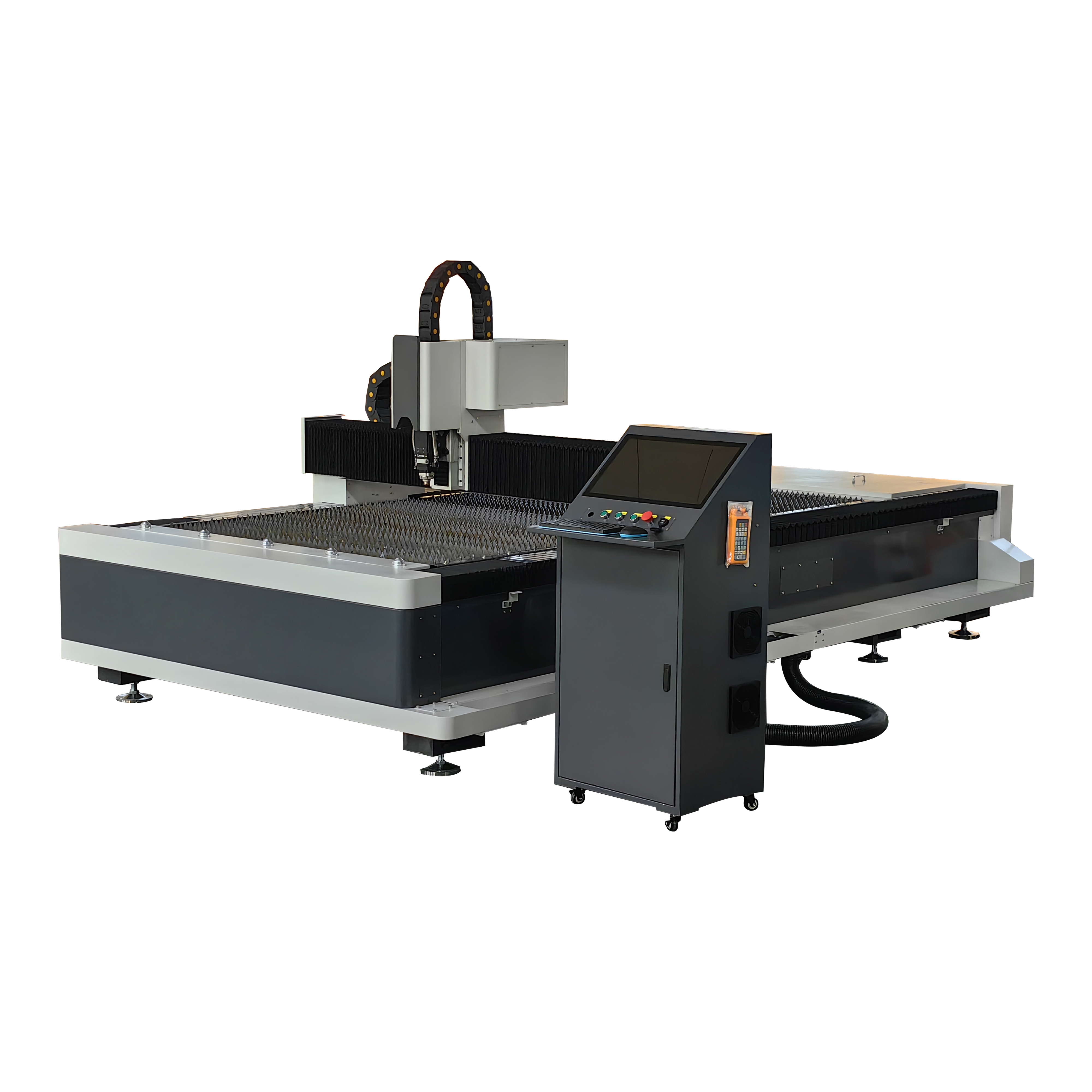
When evaluating industrial floor plans, fabricators must look far beyond the primary cutting beds. The peripheral accessories and support systems required to run a high-power fiber laser consume a staggering amount of square footage. Consolidating these bulky components is where a hybrid machine delivers exceptional spatial efficiency.
Every fiber laser requires a laser generator and a main electrical control cabinet. In a dual-machine scenario, a facility must house two separate generators and two distinct control cabinets. These highly sensitive units are typically enclosed in climate-controlled housing to prevent dust ingress and overheating, demanding significant clearance.
By upgrading to a hybrid machine, a facility only requires one laser source to power both flatbed and tube operations. For heavy-duty industrial applications, deploying a single combined metal laser cutting configuration equipped with a 6000W power source means you only need to allocate floor space for one large electrical cabinet. This strategic consolidation eliminates the redundant footprint of a second power source. That reclaimed space can be immediately repurposed for parts assembly, hardware insertion, or quality inspection stations.
Fiber lasers generate immense heat and hazardous metallic fumes during the cutting process. Consequently, they necessitate heavy-duty industrial water chillers to regulate the temperature of the optical components. They also require centralized dust extraction systems to comply with strict occupational safety regulations.
In a traditional two-machine layout, you are forced to install two separate chillers and two distinct filtration towers. These units are notoriously bulky. They require wide perimeters for proper airflow and maintenance access. In contrast, a combined machine utilizes a single dual-temperature, dual-control water chiller capable of servicing the shared laser source. Similarly, the internal zoning allows one centralized dust extraction system to pull fumes from either the flatbed zone or the rotary tube zone, depending on which is currently active. Eliminating these redundant peripheral systems drastically shrinks the total installation area.
The physical dimensions of the machine represent only one part of the spatial equation. How the equipment impacts the space around it plays a critical role in overall factory efficiency, specifically regarding material handling, logistics, and operator movement.
Material staging consumes a massive, often overlooked portion of any fabrication shop. In a divided setup, management typically maintains a heavy-duty sheet metal storage rack near the flatbed laser and a separate cantilever rack for pipes on the opposite side of the factory near the tube laser. This division forces the business to dedicate two separate zones exclusively to raw material inventory.
With a hybrid machine, inventory staging becomes highly centralized. Operators can stage both sheet metal pallets and raw tube bundles in a single loading zone adjacent to the machine. This unified approach reduces the physical distance materials must travel from the delivery truck to the storage rack, and finally to the cutting bed. It optimizes the internal supply chain and reclaims lost floor space.
Workplace safety regulations dictate that facilities must maintain wide, unobstructed aisles for forklifts and overhead cranes to safely maneuver heavy raw materials. A standard forklift aisle requires a minimum clearance of three to four meters. Having two separate machines inherently means dedicating floor space to two distinct loading zones and multiple, intersecting traffic aisles.
By transitioning to a dual-purpose machine, shop managers only need to dedicate one primary loading aisle. Consolidating the traffic zone eliminates hundreds of square feet of dead space. These are areas of the floor that cannot be used for revenue-generating production because they must remain clear for vehicle maneuvering. Specifically, a single jib crane or vacuum lifting assist device can be positioned to service both the flatbed exchange table and the tube feeding mechanism, maximizing the utility of your lifting equipment.
For shop owners and financial decision-makers, saving space is not merely an aesthetic preference. It is a hardline financial strategy. The true value of a hybrid machine is fully realized when spatial savings are translated into measurable financial returns.
As a metal fabrication business grows, the natural inclination is to purchase more equipment to handle increased order volume. However, adding machinery often leads to a critical spatial deficit. If your current facility lacks available square footage, you are forced into a difficult financial decision. You must lease a larger building, construct an extension, or turn down the work.
The costs associated with facility expansion are astronomical. Beyond the increased monthly rent or mortgage payments, businesses must account for the staggering costs of relocating heavy machinery, upgrading electrical infrastructure, and enduring days of production downtime. A combined system allows a growing business to stay in its current facility for a much longer period. By maximizing the production capacity of their existing square footage, shop owners avoid massive overhead costs. They convert what would have been real estate expenditure into working capital.
Historically, smaller workshops were forced to turn down lucrative contracts involving complex tube geometries because they simply did not have the physical space to install a dedicated tube laser alongside their existing flatbed. They had to outsource this work, slashing their profit margins and extending lead times for their clients.
Hybrid technology democratizes access to comprehensive fabrication services. Even shops operating within strict spatial constraints can now take on diverse, complex projects. By integrating a versatile plate and pipe cutting solution, small businesses can bid on complete assemblies like agricultural equipment frames, custom automotive chassis, or architectural handrails. For ultra-tight spaces, compact models featuring a 60 by 60 centimeter footprint with 1500W to 2000W power can handle smaller components efficiently. This capability opens up entirely new revenue streams without requiring a single additional square foot of factory space.
While the space-saving benefits are undeniable, purchasing a hybrid machine requires a careful assessment of your specific production workflows. A combined machine is an exceptional solution for many, but it is essential to qualify your shop operational needs to ensure it aligns with this technology.
The most critical metric to evaluate before purchasing a hybrid machine is your production ratio between flat sheets and tubular materials. Because a combined machine uses a single laser cutting head and one laser source, it can only process one type of material at a time. It cannot cut a flat sheet and a round tube simultaneously.
Therefore, you must calculate your machine utilization rates. If your shop workload consists of roughly seventy percent flat sheet cutting and thirty percent tube cutting, a hybrid machine is the perfect fit. A dedicated tube laser would sit idle for seventy percent of the time in this scenario, wasting valuable floor space and capital. Conversely, if your facility has enough demand to run a flatbed laser forty hours a week and a tube laser forty hours a week concurrently, a hybrid machine will create a production bottleneck. In that specific high-volume scenario, purchasing two separate machines is functionally necessary, provided you have the floor space.
If your production ratio aligns with a hybrid system, precise footprint planning is the next practical step. While a combined machine saves up to forty percent in overall space compared to two separate units, it still requires careful spatial management. You must account for the machine static dimensions, the dynamic movement of the gantry, safety enclosures, and necessary clearances.
When measuring your shop floor, ensure there is adequate linear space behind the machine to load standard 3-meter or 6-meter raw tubes into the rotary axis. Additionally, plan the location for the shared industrial water chiller and dust extraction unit. Consolidating these peripherals saves space, but they still require proper ventilation and maintenance access. Typically, engineers recommend a minimum of three feet of clearance around cooling units. Consulting with an equipment manufacturer for a precise layout drawing is highly recommended before finalizing any purchase.
To truly understand how a combined metal laser cutting machine transforms a facility, it is helpful to visualize a factory layout before and after its implementation. Factory layout optimization relies heavily on reducing the physical distance parts must travel, a concept often mapped out using spaghetti diagrams in lean manufacturing.
Imagine a mid-sized metal fabrication shop operating in a ten thousand square foot facility. To meet client demands, the shop utilizes an aging standalone flatbed laser on the east wall and a dedicated tube cutting machine on the west wall.
Because the machines are separated, the shop requires two distinct raw material staging areas and two separate loading aisles, constantly heavily trafficked by forklifts. The peripheral equipment, including two massive water chillers, two exhaust filtration systems, and two electrical cabinets, eats up valuable aisle space. Furthermore, the workflow is disjointed. If a welded assembly requires both cut plates and cut tubes, components must be transported via pallet jacks across the entire length of the shop to reach the welding stations. The environment feels cramped, and material flow is chaotic.
Now, imagine the same facility after replacing the two older machines with a single, modern sheet and tube laser cutting machine installed centrally along the main production wall.
The immediate visual impact is the massive reclamation of floor space. By removing the standalone tube laser and its associated peripherals, the west side of the factory is completely opened up. The shop now features a single, centralized cutting hub. Raw material storage is consolidated into one efficient staging area, requiring only one dedicated forklift aisle. Parts move logically from the rack, to the laser, and directly to the adjacent welding booths. The reclaimed square footage on the west side of the building is subsequently utilized to install a new CNC press brake, adding profitable bending capabilities to the shop repertoire without expanding the building physical footprint.
A combined laser machine is far more than just a versatile cutting tool. It is a strategic asset for comprehensive facility optimization. It effectively eliminates the need for two separate massive systems, drastically reducing the footprint of peripheral chillers and exhaust units. By streamlining material handling and minimizing forklift traffic zones, this smart investment boosts your overall production capacity efficiently.
You can process both flat plates and complex tubular profiles without expanding your facility or taking on crippling real estate overhead. Evaluate your current floor layout and production ratios today. If you are ready to reclaim your shop floor and boost your cutting capabilities, explore the high-performance solutions at Easy CNC Laser to find the perfect space-saving system tailored to your exact business requirements.
The required floor space depends heavily on the specific bed size and tube attachment length. A standard machine designed for 3000mm by 1500mm sheets with a 6-meter tube rotary attachment typically requires an installation footprint of roughly 25 to 30 feet in length and 15 to 18 feet in width. This includes the necessary safety enclosures and space for the shared chiller and exhaust system. While substantial, this footprint is historically thirty to forty percent less than the combined space required to house two separate machines of the same capacity.
No, you cannot process both materials simultaneously. A combined machine utilizes a single laser source and a single cutting head. The cutting head must physically transition from the flatbed zone to the rotary axis zone to process tubes. The machine is designed to offer maximum versatility and space-saving benefits for shops with mixed production needs, rather than simultaneous dual-cutting.
Not at all. The flatbed portion of the hybrid machine operates identically to a standalone flatbed laser. It utilizes the same heavy-duty machine frame, the same high-precision gantry, and the exact same autofocusing laser head. The structural integrity and cutting physics remain completely unchanged, ensuring that the precision, edge quality, and cutting speed for flat plates are never compromised by the presence of the side-mounted rotary axis.
Modern CNC control systems make the changeover process highly efficient and nearly instantaneous from a software perspective. The operator simply selects the corresponding cutting program on the control panel. Physically, the gantry automatically moves the cutting head over to the rotary axis. Depending on the machine model, the operator may need to perform minimal manual adjustments, such as changing the nozzle or ensuring the tube chucks are properly aligned. This typically takes only a few minutes, minimizing operational downtime.
Maintaining a hybrid machine is significantly more streamlined and cost-effective. Instead of servicing two separate laser sources, two chillers, and two dust collectors, your maintenance team only focuses on one unified system. This cuts filter replacement costs, coolant top-offs, and routine inspection times in half. However, because the single cutting head and gantry see more continuous use across both material types, adhering strictly to the manufacturer lubrication and rail-cleaning schedule is critical to prevent premature wear.
In most industrial cases, retrofitting a standard flatbed laser with a tube cutting attachment is not practical or cost-effective. Hybrid machines are engineered from the ground up with wider gantry spans, integrated dual-zone control software, and specific safety enclosures designed to accommodate the rotary axis. Attempting to bolt a rotary chuck onto a machine not originally designed for it often leads to severe software compatibility issues and compromises cutting precision. Upgrading to a purpose-built combined machine is the industry standard approach.


