
Please Choose Your Language
Views: 0 Author: Site Editor Publish Time: 2026-09-05 Origin: Site


Manual finishing processes like deburring, grinding, and edge polishing consume massive labor hours and create severe production bottlenecks in modern fabrication shops. Secondary operations destroy profit margins, introduce human error, and slow down overall throughput. Parts pile up waiting for manual touch-ups, complicating routing on the shop floor. A Sheet Metal Laser Cutting Machine solves this problem directly. It serves as a primary intervention for producing near-net-shape parts. Modern laser technology delivers flawless edge qualities that allow parts to bypass the finishing department entirely. We will explore how precise beam control eliminates secondary operations, optimizes edge quality across different materials, and reallocates labor for maximum floor efficiency.
The true cost of manual finishing extends far beyond simple hourly wages. Labor rates for grinding operators accumulate rapidly over a production year, but the hidden expenses lie in the consumables and facility requirements. Abrasive consumables drain operational budgets continuously. Flap discs, grinding wheels, and sanding belts wear out and require constant replacement. A single operator can easily consume ten to fifteen zirconia flap discs in a single shift when processing heavy dross. Floor space dedicated to grinding stations eats into profitable manufacturing areas. Dust collection systems demand ongoing maintenance, expensive filter replacements, and high electrical draw. Every square foot used for manual edge smoothing is space stolen from revenue-generating assembly or machining work.
Parts waiting for manual deburring disrupt continuous flow manufacturing. They sit on pallets, creating physical roadblocks on the shop floor and requiring constant forklift movement to manage the work-in-progress. This idle time extends lead times drastically. A part might take thirty seconds to cut on a machine but wait three days for a grinding operator to become available. This bottleneck prevents fast delivery to customers and forces production managers to build bloated buffer schedules into every job. Eliminating this wait time accelerates order fulfillment, increases overall shop capacity, and allows for true just-in-time manufacturing.
Manual finishing varies heavily from operator to operator. One worker might grind an edge perfectly flush, while another might apply too much pressure and gouge the material, altering the final dimensions of the part. Automated downstream processes demand identical accuracy. Robotic welding cells require perfectly consistent joint fit-ups; if a manual grinder removes too much material, the robot will burn through the gap because it cannot dynamically adjust its weld pool like a human welder. CNC press brakes need uniform edge dimensions to gauge correctly against the backstops. Hand-ground parts often fail to meet these strict repeatable tolerances, leading to scrapped parts, welding defects, and costly rework loops.
Advanced metal fabrication laser cutting utilizes a highly concentrated, coherent beam of light. Fiber lasers operate at a specific wavelength of approximately 1.064 micrometers, which absorbs perfectly into metals. The machine delivers this beam through a fiber optic cable into a cutting head, where collimating and focusing lenses concentrate the photons into a microscopic spot. This beam rapidly vaporizes, melts, or burns the material upon contact. The intense heat acts instantly, slicing through metal with extreme accuracy. The localized energy input creates a microscopic melt pool, and this highly focused power prevents the surrounding material from warping or distorting.
Cutting metal requires more than just heat; it requires mechanical force to remove the molten material. A coaxial assist gas immediately ejects the liquified metal from the cut zone. This gas flows directly through the cutting nozzle alongside the laser beam, enveloping the focal point. It blows the molten material down and away before it can cool and adhere to the bottom edge as dross. Without this high-velocity gas stream, cutting would be prohibitively slow. The metal would simply melt and fuse back together, leaving heavy, hardened slag requiring intense manual grinding to remove.
The microscopic kerf of a fiber laser minimizes material deformation. The kerf is the actual width of the cut slot, which often measures less than 0.1 millimeters depending on the material thickness and focal spot size. A narrow kerf reduces structural stress along the cut line and allows for intricate geometries, sharp internal corners, and complex hole patterns. This tight tolerance ensures parts fit together perfectly during assembly. Precision cutting eliminates the gaps and overlaps that cause severe problems during downstream welding operations.
Proper pre-cut software preparation prevents edge gouging and thermal buildup. CAD/CAM programmers use specific techniques to control how the laser interacts with the material, directly reducing the need for manual touch-ups.
Selecting the correct assist gas dictates the final edge condition and determines whether secondary finishing is required.
| Assist Gas Type | Primary Mechanism | Typical Materials | Edge Condition | Post-Processing Required |
|---|---|---|---|---|
| Nitrogen | Cold Cutting (Inert) | Stainless Steel, Aluminum, Thin Mild Steel | Clean, silver, oxide-free | None. Ready for paint or welding. |
| Oxygen | Exothermic Reaction | Thick Mild Steel, Carbon Steel | Dark, oxidized scale | Mechanical brushing or chemical descaling before powder coating. |
| Compressed Air | Mixed (Partial Oxidation) | Galvanized Steel, Aluminum | Slightly rough, minor yellowing | Minimal, depending on cosmetic requirements. |
Achieving a bright, oxide-free edge on stainless steel requires high-pressure nitrogen. The gas pressure must be high enough—often exceeding 250 PSI—to clear the viscous molten stainless quickly before it solidifies. This process eliminates the need for post-cut passivation or chemical cleaning. The edge comes out completely clean and retains its anti-corrosive properties. It is ready for immediate use in food-grade, pharmaceutical, or medical applications where contamination and rust are unacceptable.
Laser cutting produces a flawless edge on thin mild steel. As plate thickness exceeds half an inch, the process dynamics change. Cutting thick carbon steel with oxygen relies on an exothermic reaction that adds significant heat to the cut zone. While this allows for faster cutting speeds on thick plates, it may leave minor dross or striation marks on the bottom edge. Operators must balance cutting speed against edge quality. Slowing the machine down improves the edge finish but reduces throughput. Proper focal point adjustment—typically setting a negative focus deep into the material—is critical to keeping the bottom edge clean on thicker plates.
Historically, aluminum formed heavy burrs during thermal cutting. Its high thermal conductivity pulled heat away from the cut zone rapidly, causing the molten metal to freeze before the assist gas could blow it clear. Modern high-kilowatt fiber lasers overcome this easily. A powerful sheet metal laser cutter produces smooth edges on highly reflective alloys like 5052 and 6061 aluminum without hesitation. The intense energy density melts the aluminum instantly before the heat can dissipate into the surrounding sheet, leaving a clean, burr-free bottom edge.
Thermal distortion is a reality in all thermal metal cutting. The Heat-Affected Zone is the area where the metal's metallurgical properties change due to extreme heat exposure. While minimal compared to plasma cutting, HAZ still exists with lasers. The rapid heating and cooling cycle can slightly harden the edge of carbon steels. Aerospace or high-stress structural components require careful evaluation of this localized heating to ensure it does not induce micro-cracking. However, for standard sheet metal enclosures, brackets, and panels, the laser HAZ is negligible and does not impact part performance or bendability.
Plasma cutting relies on an electrically conductive gas arc to melt the metal. It leaves heavy dross, a wide kerf, and a noticeable edge bevel of 3 to 5 degrees. Plasma cutting demands extensive manual grinding to prepare edges for welding or tapping. Laser cutting provides a microscopic kerf and a near-perfect, square edge. It drastically reduces post-processing. Lasers excel in thin to medium gauge materials, while plasma is generally reserved for very thick, heavy structural plates where precision is less critical and heavy grinding is already factored into the workflow.
Waterjet cutting uses ultra-high-pressure water mixed with abrasive garnet to erode the material. It eliminates the heat-affected zone entirely and cuts without altering the material's temper. However, waterjet cuts significantly slower than a laser, often taking ten times as long to process thin gauge sheet metal. It is also messy and requires constant abrasive management, water treatment, and garnet disposal. For standard sheet metal gauges, precision sheet cutting with a laser offers vastly superior speed and much lower operating costs.
Turret punching relies on mechanical force to shear the metal. It uses micro-joints and overlapping hits to separate parts from the sheet. This mechanical shearing leaves nibble marks, sharp scallops, and a distinct rollover zone along the edge. These marks require aggressive manual filing or orbital sanding to remove before the part is safe to handle or paint. A laser delivers a continuous, smooth contour straight off the machine. It eliminates the need for secondary edge smoothing entirely and does not require expensive physical tooling inventories.
Specific machine features drive real production outcomes and eliminate manual rework. Automated nozzle changers maintain perfect gas flow without operator intervention, ensuring the cut quality remains consistent across different materials. Variable beam shaping adapts the laser profile to different material thicknesses automatically, widening the beam for thick plate to improve edge smoothness. Auto-focus cutting heads adjust to wavy materials on the fly, maintaining the exact focal distance required for a clean cut. These advanced features directly reduce operator error and prevent edge defects that would otherwise require manual grinding to fix.
The true value lies in labor reallocation. Shift personnel from low-value grinding stations to high-value tasks. Move them to assembly, welding, or press brake operation. If a shop spends forty hours a week grinding laser-cut parts, that equals one full-time employee wasted on non-value-added work. Reallocating that person maximizes workforce productivity. It accelerates order fulfillment and increases total shop output without hiring additional staff. You transform a bottleneck department into a revenue-generating asset.
Laser assist gases, protective windows, and cutting nozzles carry ongoing costs. You must weigh these against eliminated expenses. You no longer buy endless grinding wheels, flap discs, sanding belts, and deburring tools. You also eliminate the maintenance costs associated with downdraft tables, dust collectors, and pneumatic grinder repairs. The reduction in abrasive consumables and associated maintenance often offsets a significant portion of the laser's daily operating costs, making the transition highly profitable.
Several factors can cause a laser to produce poor edges, forcing parts back into the grinding department. Contaminated assist gas ruins the cut surface immediately; using nitrogen with less than 99.99% purity will introduce oxygen and cause edge yellowing. Moisture or oil in the air supply causes violent reactions in the cut zone and damages the cutting head optics. Degraded optics or dirty protective windows scatter the laser beam, reducing power density and causing heavy dross. An incorrect focal position leaves jagged striations. Poor CAD/CAM nesting practices, such as placing parts too close together, cause thermal warping and edge burning.
Strict maintenance protocols are non-negotiable. Operators must inspect and clean protective windows daily to prevent thermal lensing. Chiller maintenance ensures stable laser source performance and prevents the cutting head from overheating. Skilled operators must dial in exact cutting parameters for every material batch. Material composition varies slightly from mill to mill. Operators must perform test cuts and adjust focus, gas pressure, and cutting speed to maintain a zero-finishing edge before running a full sheet.
High-quality cutting demands robust facility infrastructure. Bulk gas storage guarantees uninterrupted nitrogen and oxygen supply. Running out of gas mid-cut ruins the part, damages the nozzle, and creates a massive burr. Stable power supplies prevent voltage drops. Power fluctuations cause mid-cut failures that ruin edge quality and waste expensive sheet metal. Proper foundation isolation prevents shop floor vibrations from translating into jagged cut edges, ensuring the machine maintains its microscopic precision.
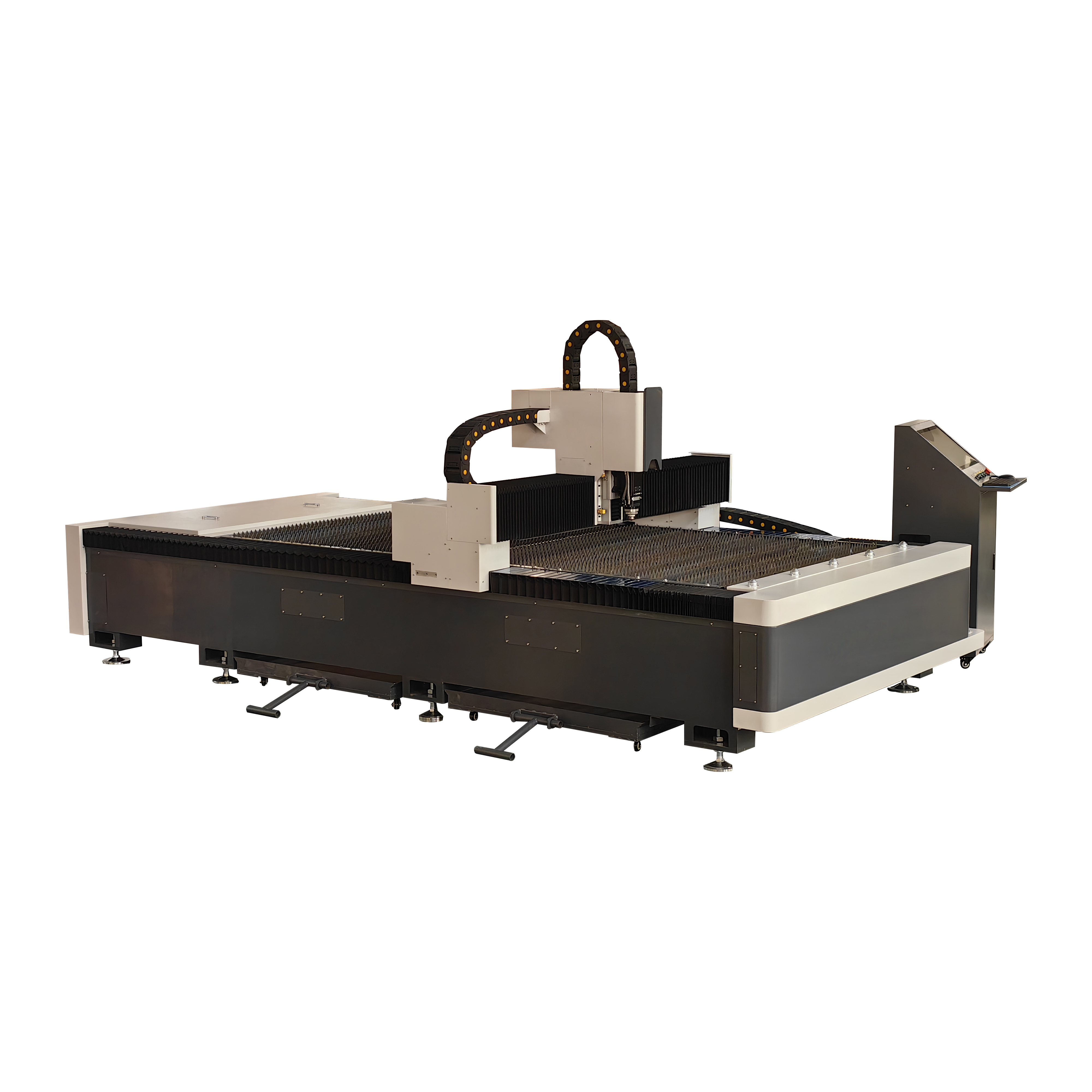
A sheet metal laser cutting machine acts as a strategic manufacturing asset. It consolidates multiple manufacturing steps into a single operation. It eliminates finishing bottlenecks and transforms shop floor routing. It is far more than just a cutting tool; it is a workflow optimizer that reclaims wasted labor hours and drives shop floor efficiency.
A: Properly calibrated lasers on appropriate thicknesses leave a clean, burr-free edge. Incorrect cutting parameters, dirty optics, or overly thick materials can result in dross accumulation at the bottom of the cut. Dialing in the correct gas pressure, cutting speed, and focal point eliminates this issue entirely.
A: Parts cut with high-pressure nitrogen typically do not require deburring or edge cleaning. Mild steel parts cut with oxygen leave an oxide layer. This dark scale layer requires mechanical brushing or chemical removal before powder coating to ensure proper paint adhesion and prevent flaking.
A: Proper design preparation prevents the laser head from dwelling and melting sharp corners. Strategic lead-ins, lead-outs, and corner loops ensure continuous, fluid movement. This software optimization prevents thermal gouging, eliminates craters, and removes the need for manual filing.
A: HAZ is the narrow area of metal altered by extreme heat during the cutting process. Its impact on thin sheet metal is minimal compared to other thermal cutting methods like plasma. It rarely affects the structural integrity or bendability of standard sheet metal components.
A: Micro-joints are tiny tabs programmed to keep parts attached to the main skeleton during cutting. Strategic placement on non-critical edges and minimal sizing allow parts to snap out easily. Proper micro-joint programming reduces the need for manual filing after part removal.
A: Yes. Modern high-power fiber lasers effectively cut aluminum with incredibly smooth edges. Their high energy density easily overcomes the reflective nature and high thermal conductivity challenges that previously plagued older CO2 laser systems, preventing the molten aluminum from freezing into burrs.


