
Please Choose Your Language
Views: 0 Author: Site Editor Publish Time: 2026-10-18 Origin: Site


Facility managers and engineers frequently face a frustrating bottleneck on the shop floor. They need to remove stubborn rust, thick industrial paint, or heavy oxidation. However, they must do it without damaging the expensive metal substrate underneath. Traditional surface preparation methods, like abrasive sandblasting or highly acidic chemical baths, often cause unintended disasters. Micro-abrasions, structural warping, and long-term chemical degradation are common issues. Ultimately, these outdated techniques compromise the integrity of high-value components.
This is where the pulsed laser cleaning machine completely changes the game. It is an innovative, non-destructive, and eco-friendly surface treatment solution. Unlike continuous wave technology that constantly pumps heat into a part, pulsed lasers deliver concentrated energy in ultra-short nanosecond bursts. This advanced mechanism vaporizes surface contaminants instantly. As a result, the underlying base material remains completely untouched and structurally sound.
This comprehensive guide explores the physical science behind how this technology protects your base material. We will analyze the core industrial applications, look at emerging market trends, and provide an objective framework to help you select the exact equipment for your facility's operational requirements.
The Magic of the Ablation Threshold: Pulsed lasers operate on specific energy frequencies. They are engineered to vaporize surface contaminants while remaining strictly below the damage threshold of the underlying metal.
Zero Thermal Damage: By utilizing ultra-short, high-intensity pulses, the technology prevents residual heat accumulation. This ensures the structural integrity of delicate substrates remains intact.
Pulsed vs. CW: Continuous Wave lasers are effective for thick, heavy rust removal on thick plates. In contrast, a pulsed laser system is the scientifically superior choice for high-precision, non-destructive surface preparation.
Versatile Applications: This technology excels at stripping aerospace coatings and performing precision oxide removal across stringent manufacturing industries.
High ROI: The initial capital investment is higher. However, the total elimination of consumable media, zero substrate degradation, and minimal maintenance yield substantial long-term financial savings.
To truly grasp how a base material remains protected during such a violent molecular process, we must first look at the physics of the laser beam itself. In optical physics, a "pulsed" laser does not emit a steady, continuous beam of light. Instead, the system accumulates optical energy and releases it in tens of thousands of high-intensity light pulses every single second.
These pulses are incredibly brief. They are typically measured in nanoseconds, which is one-billionth of a second. Because the energy is compressed into such a microscopic timeframe, the peak power of each individual pulse is exceptionally high. This allows the beam to instantly vaporize surface layers without transferring sustained, damaging heat to the material below.
A standard pulsed laser cleaning system relies on three primary components working in perfect synchronization. First is the fiber laser source, generating highly concentrated light using rare-earth-doped optical fibers. Second is the digital control system. Acting as the brain of the machine, it allows operators to meticulously adjust parameters like pulse frequency, scanning speed, and power output. Finally, the scanning head rapidly directs and oscillates the beam across the target surface using a precision galvo lens.
To visualize this dynamic, imagine a standard garden hose running steadily. This represents a continuous laser. A pulsed laser, conversely, operates more like an industrial pressure washer that shoots microscopic, ultra-rapid bursts of water. These rapid bursts provide intense localized cleaning power without flooding the entire surrounding area with excess heat.
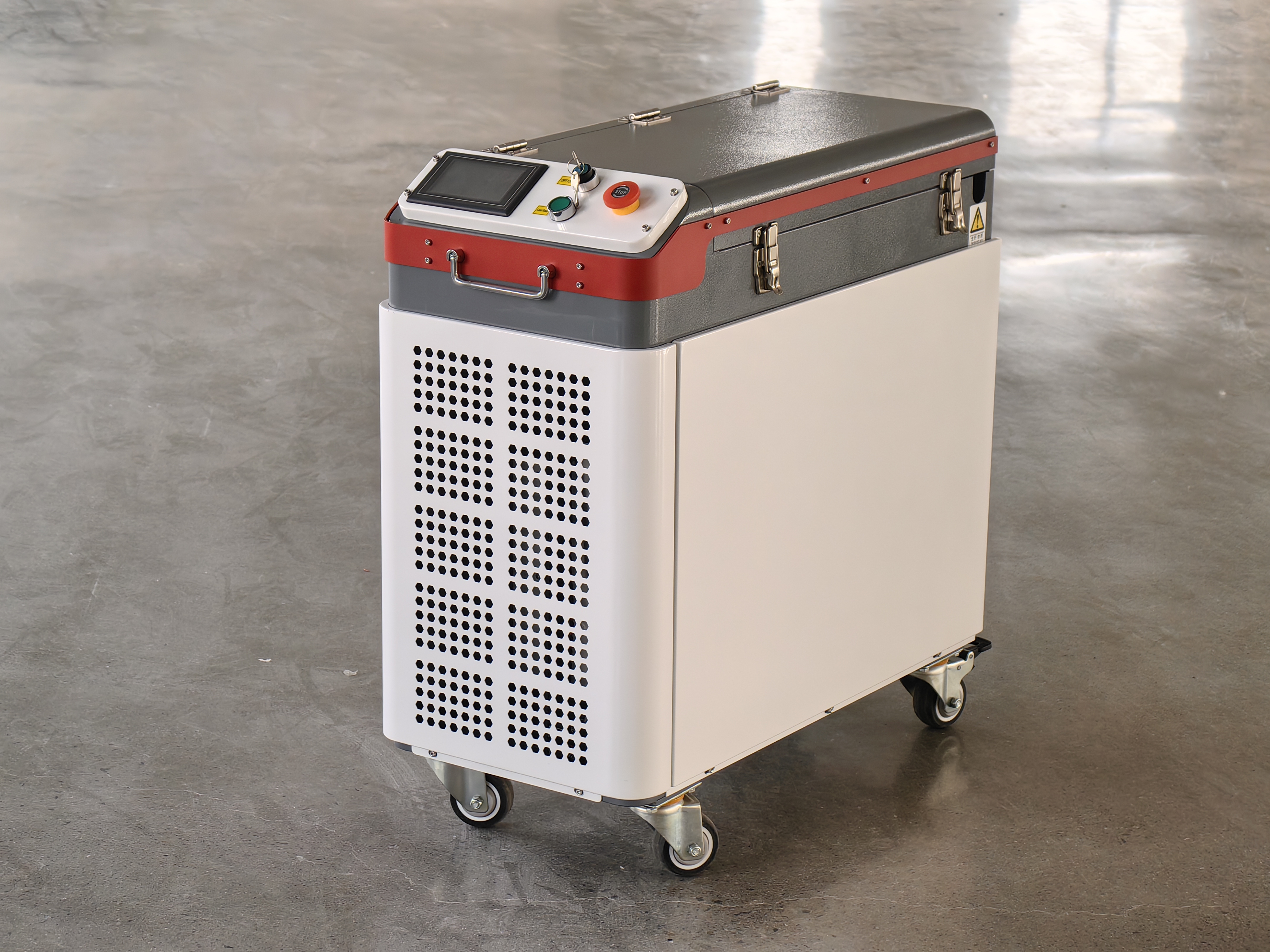
The fundamental scientific principle dictating why a pulsed laser does not destroy your base material lies in a concept known as the "ablation threshold." In material science, the ablation threshold is the exact minimum amount of absorbed laser energy required to break the molecular bonds of a specific material and transition it into a gas.
Different materials possess vastly different ablation thresholds. Surface contaminants such as iron oxide, industrial paint, and grease inherently possess a much lower ablation threshold than robust base metals like carbon steel, aluminum, or copper. Furthermore, dark contaminants absorb laser light highly efficiently. Bare, polished metals tend to reflect it.
When an operator dials in the machine, the pulsed laser is mathematically calibrated. It delivers an energy density that exceeds the contaminant's low threshold but stays significantly below the base material's high threshold. Once the dirt is vaporized, the remaining laser energy simply bounces off the clean, bare metal beneath. This precise interaction causes absolutely zero physical damage.
Specifically, when the laser pulses strike the surface, two distinct physical reactions occur simultaneously. First is the photothermal effect. The dark, light-absorbing contaminant absorbs the intense laser energy, rapidly converting it into heat and creating a localized micro-plasma burst.
Immediately following this is the photomechanical effect. The rapid thermal expansion forces the contaminant to expand violently in a fraction of a nanosecond, creating a microscopic acoustic shockwave. This shockwave forcefully shatters the mechanical bond between the contaminant and the substrate. The dirt or coating is instantly ejected from the surface as a gas and fine particulate. The underlying metal is left untouched, entirely free of the microscopic scratches associated with abrasive cleaning.
A frequent concern among manufacturing engineers is heat distortion. How can a laser hot enough to vaporize rust not melt the steel beneath it? The answer lies in "thermal relaxation time."
Because the laser pulse lasts only a few nanoseconds, the interaction time is astronomically shorter than the time it takes for heat to conduct downward through the metal lattice. The intense heat vaporizes the top layer and dissipates into the extracted vapor plume before it has the physical time to transfer into the base material. This precise timing prevents the formation of a Heat-Affected Zone. It ensures that the metallurgical properties, surface hardness, and exacting dimensions of the substrate remain completely unaltered.
Continuous Wave lasers operate exactly as their name implies: they emit an uninterrupted, continuous beam of laser light. Because the energy delivery never pauses, heat accumulates rapidly on the target surface. CW lasers are exceptionally powerful. They are highly regarded for the fast, aggressive removal of thick, scaling rust on heavy steel plates where microscopic precision is not the primary concern. For heavy-duty industrial jobs—like shipyard maintenance where the substrate is thick enough to absorb excess heat without warping—investing in a Continuous laser cleaning machine is often a highly efficient operational strategy.
However, when substrate protection is the absolute highest priority, CW lasers fall short. If a CW laser is left hovering over a single spot for even a fraction of a second too long, the sustained heat can cause micro-melting, warping, or metallurgical changes in the base metal.
Pulsed lasers, by contrast, offer surgical precision. The microscopic cooling period between each nanosecond pulse ensures that heat never accumulates in the base material. For delicate applications involving injection molds, thin aerospace alloys, historical artifacts, and thin sheet metals, pulsed lasers are the undisputed winner for non-destructive surface preparation.
Feature | Pulsed Laser Cleaning | Continuous Wave (CW) Cleaning |
|---|---|---|
Energy Delivery | Ultra-short, high-peak nanosecond bursts | Uninterrupted, steady beam of light |
Substrate Protection | Excellent (Zero thermal damage or warping) | Low to Moderate (Risk of micro-melting on thin metals) |
Best Applications | Aerospace alloys, molds, precision parts, auto restoration | Shipyards, heavy structural steel, thick scaling rust |
Heat Affected Zone (HAZ) | None | Present (Requires careful operator speed) |
Recent market analyses and search trends reveal a massive paradigm shift in industrial surface preparation. Driven by the booming Electric Vehicle sector and advanced aerospace manufacturing, the demand for non-contact, non-destructive cleaning solutions has skyrocketed. Modern manufacturing utilizes ultra-thin aluminum battery casings and complex composite materials that simply cannot withstand traditional abrasive blasting.
In addition, global environmental regulations from agencies like the EPA and OSHA are tightening. Facilities can no longer easily dispose of toxic chemical sludge or contaminated blasting media without incurring hefty compliance fines. Consequently, the industry is rapidly transitioning away from hazardous legacy methods. Plant managers are increasingly adopting pulsed laser technology not just for cleanliness, but as a strategic asset. It extends component lifecycles, automates smart factory lines, and helps achieve zero-waste operations.
In sectors where dimensional tolerances are critical, a pulsed system is invaluable. Meticulously cleaning oxidized mechanical gears, sensitive engine blocks, and medical-grade surgical tools requires absolute precision. Traditional abrasive methods often round off sharp edges or alter the microscopic dimensions of these parts, rendering them out of tolerance. Pulsed lasers remove the corrosion layer molecule by molecule. This ensures the original geometry of the part remains exactly as engineered.
Removing industrial coatings without damaging the base is notoriously difficult. Yet, a paint removal laser utilizing pulsed technology handles this effortlessly. Because operators can precisely tune the pulse frequency and power, the laser can strip coatings layer by localized layer. This is particularly crucial in the aerospace industry. Stripping paint from an airplane fuselage must be done without compromising the integrity of the ultra-thin aluminum alloy beneath. Similarly, in classic automotive restoration, it removes decades of paint and body filler while leaving the original steel pristine and ready for immediate repriming.
Furthermore, precision welding operations demand perfectly clean surfaces to prevent porosity and structural defects. Today, oxide laser cleaning is rapidly becoming the gold standard for pre-weld preparation and post-weld finishing. Aluminum and stainless steel naturally form stubborn oxide layers that can ruin a weld seam. A pulsed laser removes these oxides instantly without the need for grinding wheels, which often gouge the metal and thin the base material prior to welding. Post-welding, the laser effortlessly cleans heat tints and weld discoloration, restoring the metal's natural passivation layer without mechanical damage.
Manufacturing molds used for rubber, plastic, or glass injection are massive capital investments machined to exacting tolerances. Over time, release agents and material residues bake onto the microscopic crevices of the mold surfaces. Cleaning these molds with abrasive media or wire brushes slowly wears down the steel. Eventually, this creates flashing defects in the final molded products. Pulsed lasers safely vaporize this residue completely touch-free, extending the lifespan of the tooling indefinitely and saving manufacturing facilities hundreds of thousands of dollars in replacement costs.
Sandblasting relies entirely on kinetic energy. It propels hard abrasive media—like silica sand, aluminum oxide, or glass beads—at high velocities to physically smash contaminants off a surface. While undeniably effective for bulk removal, this brute-force method inherently pits, scratches, and degrades the base material over time. Laser cleaning is a completely non-contact process. Absolutely nothing touches the base metal except concentrated light, eliminating physical wear and tear entirely.
Industrial chemical baths and solvent stripping are heavily used for paint and grease removal. Unfortunately, aggressive chemicals can seep into the microscopic pores of base materials. In high-stress metals, this can lead to a dangerous phenomenon known as hydrogen embrittlement, where the metal becomes brittle and prone to catastrophic failure. Furthermore, chemicals leave toxic residues that require secondary washing. A pulsed laser cleaning machine provides a completely dry process, leaving zero chemical residue and fully preserving the structural integrity of the metal.
Mechanical grinding and wire brushing are highly dependent on operator skill. Anyone who has operated an angle grinder on a shop floor knows that human error inevitably leads to removing a thin layer of the actual base metal along with the rust or weld scale. Because the pulsed laser operates strictly on the principle of the ablation threshold, the cleaning process stops exactly at the atomic boundary of the metal automatically. The laser simply cannot cut into the metal under normal cleaning parameters, entirely removing the risk of operator-induced gouging.
Any objective analysis of laser cleaning technology must address its primary barrier to entry: the upfront cost. A high-quality pulsed laser cleaning machine requires a significantly larger initial capital investment compared to purchasing a commercial sandblaster, an angle grinder, or chemical vats. The sophisticated fiber laser source, advanced cooling systems, and precise internal optics dictate a higher manufacturing cost. For small, hobbyist workshops with infrequent cleaning needs, this upfront cost can be a genuine hurdle.
However, for industrial facilities that clean parts regularly, the Return on Investment is exceptionally strong. To calculate true costs, facility managers must look beyond the initial purchase price. Laser machines require zero consumable media. There is no sand to purchase, store, or sweep up from the factory floor. There are no hazardous chemical disposal fees or regulatory compliance costs associated with toxic runoff.
Most importantly, because the laser does not damage expensive base parts, businesses save massive amounts of money on scrap reduction and tooling replacement. Combined with extremely low electricity consumption, most industrial users find that the machine fully pays for itself within 24 to 36 months of operation.
While the base material is completely protected, industrial laser safety cannot be ignored. These machines utilize Class 4 lasers, meaning the direct or scattered beam can cause severe eye and skin damage. Operating a pulsed laser safely requires strict adherence to safety protocols. Operators must wear designated laser safety glasses with an appropriate Optical Density rating specifically matched to the laser's wavelength. Additionally, cleaning should always be conducted in designated enclosures or behind laser-safe curtains to protect bystanders from stray reflections.
Because the laser vaporizes contaminants rather than blasting them away, the rust, paint, or oil is converted into airborne particulate matter and gases. While the substrate remains safe, operator lungs are at risk if these fumes are inhaled. Therefore, operating a laser cleaner must always be paired with a high-efficiency industrial fume extractor. The extractor captures the micro-plasma plume directly at the source, filtering out hazardous particulates and ensuring the breathing zone remains fully compliant with occupational safety standards.
From an ecological standpoint, pulsed lasers are vastly superior to legacy methods. They produce absolutely no secondary waste streams. When you sandblast a painted part, you are left with a massive pile of toxic, paint-contaminated sand that requires specialized hazardous waste disposal. Laser cleaning only produces a tiny amount of captured dust securely held in the fume extractor's filter. It requires no water, utilizes no volatile organic compounds, and maintains a remarkably low carbon footprint.
Selecting the right equipment requires carefully matching the machine's wattage to your specific operational needs. More power is not always better; it is about finding the optimal balance for your substrate.
50W - 100W: These lower-power units are ideal for highly delicate operations. They are perfect for historical artifact restoration, cleaning high-precision injection molds, and light oxide removal on thin materials.
200W - 300W: This is widely considered the industrial sweet spot. It provides enough energy for efficient, large-scale paint removal and heavy rust eradication while maintaining strict substrate protection. For a reliable balance of power and precision, investing in a 200W or 300W air-cooled system is an optimal choice for most aerospace, automotive, and manufacturing facilities.
The choice of cooling system impacts both portability and duty cycle. Air-cooled pulsed lasers are highly portable, require less maintenance, and are perfect for field work or moving around a large, dynamic factory floor. Water-cooled systems, while heavier and less mobile, are absolutely essential for higher-wattage machines or for facilities running continuous, 24/7 automated industrial cleaning shifts where thermal management is critical.
A pulsed laser is a highly tuned optical instrument. Purchasing a machine based solely on the lowest price often leads to failing galvo motors, degrading fiber optic cables, and non-existent technical support. Partnering with an established manufacturer ensures that your equipment is built with top-tier internal components, providing reliable pulse stability over tens of thousands of hours.
Ultimately, a pulsed laser cleaning machine is the ideal tool for modern businesses that cannot afford to compromise the integrity of their assets. By leveraging the science of ablation thresholds and ultra-short light pulses, this advanced technology offers unmatched precision for your most demanding industrial needs. Evaluate your current abrasive cleaning costs and substrate damage rates today, and step into the future of non-destructive surface preparation. For tailored solutions and robust industrial equipment, explore the full range of professional systems at Easy CNC Laser to find the exact match for your operational needs.
No. Because metals have an exceptionally high ablation threshold and highly reflective properties, the laser energy harmlessly bounces off the base metal once the dark, light-absorbing contaminant is fully vaporized. The nanosecond pulses ensure heat does not have time to build up and cause melting.
Yes, but it requires highly precise parameter tuning and operator skill. Lower wattage pulsed lasers can successfully clean wood or remove coatings from composite plastics without burning the underlying substrate, provided the operator controls the energy output and scanning speed carefully.
Pulsed lasers require much more complex internal optical components to generate those incredibly fast, high-peak-power bursts of light. This advanced engineering is precisely what ensures zero thermal damage to the base material, justifying the higher manufacturing cost.
Absolutely. It is empirically one of the best methods for industrial paint removal. It strips the paint layer by layer without leaving microscopic scratches or warping the metal underneath, which is a strict, non-negotiable requirement for the automotive restoration and aerospace industries.
Maintenance is incredibly low compared to traditional abrasive methods. The primary tasks involve keeping the protective optical lens on the laser gun clean from dust using specialized wipes and occasionally checking the cooling system, such as clearing dust from fans for air-cooled units.
Laser cleaning is a surface-level treatment. It removes coatings, rust, and oxides layer by layer at the micron level. It will not penetrate deeply into the base metal, which is exactly why it is non-destructive. If corrosion has already eaten deep pits into the steel, the laser will clean the rust out of the pits, but it cannot restore the missing metal.
No. Unlike sandblasting which leaves piles of abrasive media, laser cleaning vaporizes the contaminants. When paired with a proper industrial fume extractor, the process is completely dry and leaves virtually zero mess on the shop floor.


