
Please Choose Your Language
Views: 0 Author: Site Editor Publish Time: 2026-08-19 Origin: Site


Thermal distortion destroys yield and profitability in high-tolerance manufacturing. When you process intricate components, heat acts as a destructive force. It drives up the hidden costs of scrapped parts, rejected batches, and labor-intensive secondary finishing operations. Vaporizing solid metal requires intense, localized energy. The cutting kerf routinely experiences temperatures reaching thousands of degrees Celsius. This extreme thermal input inherently causes rapid material expansion, followed immediately by sudden contraction as the beam moves away. Standard cutting equipment struggles to manage this severe thermal stress. The inability to control heat transfer leads to warped edges, micro-cracking, and compromised structural integrity in the final part. Achieving tight tolerances requires more than raw cutting speed. A true Precision Laser Cutting Machine is defined by its integrated thermal management systems. Hardware components, control software, and gas delivery mechanisms must work in perfect synchronization. Evaluating these systems thoroughly dictates whether you achieve dimensional accuracy and repeatable quality.
Heat-Affected Zone (HAZ) Minimization: High-end machines utilize ultra-fast pulse capabilities and dynamic power modulation to minimize the HAZ, preventing material warping.
Assist Gas Dynamics: Automated, proportional control of assist gases (like Nitrogen) is critical for dissipating heat and preventing exothermic reactions during fine metal laser cutting.
Environmental and Hardware Cooling: Consistent cutting quality requires robust integrated chillers and controlled ambient environments to stabilize optics and machine frames against seasonal temperature shifts.
Software-Driven Pathing: Advanced CNC software predicts thermal buildup and automatically adjusts cutting paths, speeds, and laser frequency to allow localized cooling.
The baseline requirement for accurate metal fabrication is maintaining absolute dimensional stability during extreme temperature fluctuations. When a laser pierces a metal sheet, it introduces a massive thermal shock to a highly localized area. Success on the shop floor is measured by the machine's ability to vaporize the target material without allowing that thermal energy to migrate into the surrounding substrate. If heat migration exceeds the material's ability to dissipate it, the part will warp, bow, or lose its geometric tolerances. You see this constantly when cutting thin-gauge materials with improper settings. The metal literally curls off the slat bed.
The Heat-Affected Zone represents the area of un-melted metal immediately adjacent to the cut edge that has undergone microstructural changes due to extreme heat exposure. The mechanics of this zone dictate the final quality of the part. As the laser beam applies energy, the localized area expands violently. Once the beam passes, the ambient air and assist gases cause rapid cooling, forcing the metal to contract just as quickly.
This aggressive expansion and contraction cycle creates severe internal residual stresses. Excessive HAZ fundamentally alters the metallurgy of the cut edge. The rapid quenching effect often hardens the perimeter, making the material brittle. This brittleness leads to micro-cracking, especially if the part requires subsequent forming, bending, or tapping operations. Minimizing the HAZ is the primary objective of any thermal management strategy. If you plan to run a press brake operation on a laser-cut blank, a hardened HAZ will crack the flange every time.
Different metals react to intense heat based on their unique thermal conductivity ratings. Thermal conductivity determines how efficiently a material pulls heat away from the cut zone and distributes it across the wider sheet.
Aluminum possesses excellent thermal conductivity. It rapidly moves heat away from the kerf, which helps prevent localized melting but requires higher initial laser power to achieve vaporization. In stark contrast, stainless steel acts as a thermal insulator. It features poor thermal conductivity, meaning the heat generated by the laser remains trapped directly at the cut edge. This trapped energy causes the edge to overheat rapidly, making stainless steel notoriously prone to severe warping, discoloration, and edge blowout.
When you process 304 or 316 stainless steel, the material fights the cutting process. The heat stays localized. If you do not use high-pressure nitrogen to blast that heat through the bottom of the kerf, the top surface will scorch, and the part will warp out of tolerance before the cutting head even finishes the profile. Conversely, 6061 aluminum pulls the heat away so fast that you risk losing the cut if the laser power drops even slightly. You have to push more energy into aluminum just to maintain the vaporization threshold, but because the heat dissipates rapidly, the overall distortion risk remains lower than with stainless.
Material Type | Thermal Conductivity | Distortion Risk | Preferred Assist Gas |
|---|---|---|---|
Stainless Steel (304/316) | Low (Traps Heat) | Very High | High-Pressure Nitrogen |
Aluminum Alloys (6061) | High (Dissipates Heat) | Low to Medium | Nitrogen or Air |
Carbon Steel (Mild) | Medium | Medium | Oxygen (for speed) or Nitrogen |
Copper / Brass | Very High | Low (but highly reflective) | Nitrogen or Argon |
Standard cutting systems typically rely on continuous-wave (CW) laser delivery. A CW laser pumps a constant, uninterrupted stream of energy into the material. While this approach maximizes straight-line cutting speed on thick plates, it completely fails when precision is required. Continuous energy delivery overwhelms the material's ability to cool.
The failure points become obvious during complex operations on the shop floor:
Sharp corners melt away because the machine slows down while the laser continues dumping maximum heat.
Thin webs between closely nested parts warp instantly as the heat from one cut bleeds into the adjacent cut.
In dense nesting layouts, this continuous heat input causes thermal runaway, where the entire skeletal sheet expands, shifting the coordinates of uncut parts and ruining the entire batch.
Lead-in points develop heavy dross accumulation due to prolonged dwell times without power modulation.
Modern fiber lasers possess an extreme energy density that fundamentally changes how heat interacts with metal. Compared to legacy CO2 systems, a fiber laser generates a significantly smaller spot size. This concentrated beam vaporizes metal instantly, creating a much narrower kerf.
While a smaller spot size is highly desirable for precision, it demands far more rigorous, built-in thermal management. The energy is so concentrated that any pause or hesitation in machine movement will instantly over-burn the material. The hardware must be capable of moving the beam flawlessly while managing the intense energy generated at the focal point. You cannot rely on manual overrides; the machine's internal architecture must handle the thermal load automatically.
The cutting head is the most critical hardware component for thermal stability. Advanced cutting heads utilize closed-loop, water-cooled internal structures. Coolant circulates continuously around the collimating and focusing lenses. This active cooling prevents thermal drift.
When lenses absorb stray laser energy or radiant heat from the cutting process, they physically expand. This expansion alters the lens geometry, causing the focal point to shift up or down. A shifting focal point widens the beam at the material surface, which drastically increases the amount of heat pumped into the part. Water-cooled heads lock the focal spot in place. A smaller, denser, and stable beam requires less overall energy input to achieve a clean cut, directly reducing thermal distortion. If you touch the cutting head after a long run and it feels hot, your cooling system is failing, and your cut quality will degrade.
Internal machine heat is only half the battle. External environmental factors heavily impact cutting performance. Hot shop floors, poor ventilation, and seasonal weather changes introduce massive variables into the cutting process. If the ambient temperature rises, the machine frame expands, and the cooling systems struggle to keep up.
Heavy-duty, dual-circuit water chillers are mandatory for consistent operation. A dual-circuit system independently regulates two separate cooling loops. One circuit cools the laser source, managing the massive heat generated by the diodes. The second circuit operates at a slightly different temperature to cool the optical head. This separation prevents heat from the high-power source from transferring into the delicate optics, ensuring absolute stability regardless of shop floor conditions.
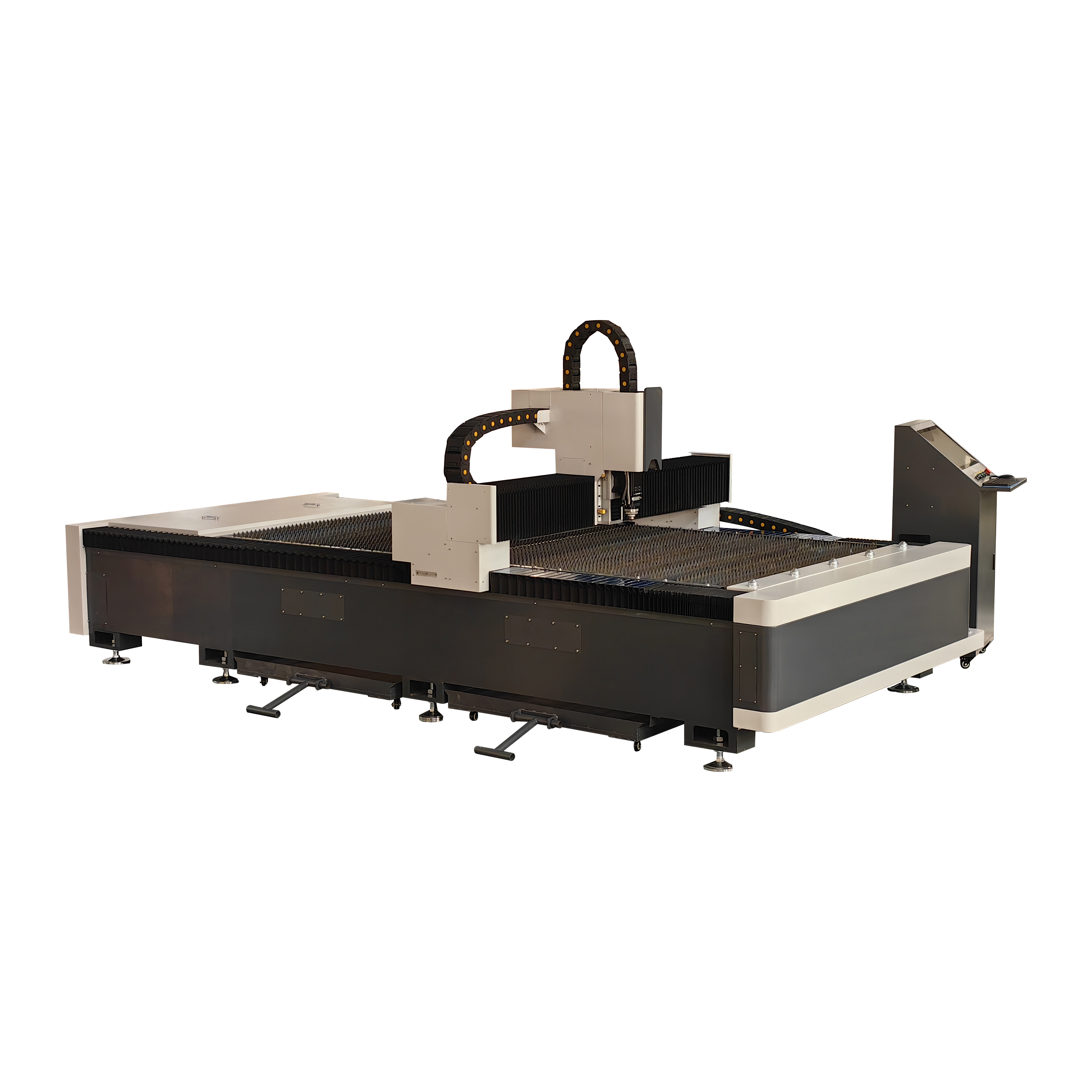
Hardware provides the foundation, but control software dictates the execution. Evaluating a machine's software requires looking past basic user interfaces and examining how the CNC handles thermal management algorithms. The software must translate geometric shapes into dynamic thermal commands in real-time. You need software that actively anticipates heat buildup before the laser even fires.
High-frequency pulsing is the most effective software-driven tool for controlling heat. Instead of a continuous beam, the software commands the laser to turn on and off thousands of times per second. This creates a series of overlapping micro-cuts.
During the off-cycle of each pulse, the material experiences a microscopic cooling period. This drastically reduces the overall heat input compared to CW lasers. Pulsing allows the machine to process intricate geometries, sharp points, and delicate filigree without melting the surrounding metal. It is the definitive technique for achieving successful fine metal laser cutting on thin or highly conductive materials.
Parameter | Continuous Wave (CW) | Pulsed Laser Delivery |
|---|---|---|
Energy Output | 100% Constant | Modulated (On/Off Cycles) |
Heat Input | Maximum | Significantly Reduced |
Best Application | Thick plate straight-line cutting | Intricate geometries, sharp corners |
Distortion Risk | High on thin materials | Low across all thicknesses |
Physical mass dictates that a cutting head must decelerate when approaching a sharp corner or a tight radius. If the laser power remains constant while the feed rate drops, the energy delivered per millimeter skyrockets. This excess energy causes localized melting, blowing out the corner and ruining the part's tolerance.
Precision software utilizes dynamic power ramping. As the servo motors decelerate the cutting head, the software automatically scales down the laser power in exact proportion to the speed reduction. When the head accelerates out of the corner, the power ramps back up. This synchronized modulation ensures a consistent energy density along the entire cutting path, completely eliminating corner burnout.
Advanced CAM software features predictive path planning to manage heat across the entire sheet. Standard software often cuts parts in a simple, linear sequence, moving from one adjacent part to the next. This traps massive amounts of heat in one localized zone of the sheet.
Predictive pathing analyzes the nest for thermal density. It automatically optimizes the cutting sequence to distribute heat. The machine will cut a part on the left side of the sheet, then jump to the right side, allowing the first area to cool completely before cutting nearby. This strategy prevents the skeletal web from warping and shifting, ensuring the final parts remain dimensionally accurate.
Assist gas delivery is not just about blowing away molten metal; it is a primary thermal control mechanism. Assessing gas delivery systems requires evaluating how the machine handles different gas types and how precisely it controls flow rates during complex cutting routines.
The choice of assist gas fundamentally alters the thermal physics of the cut. Oxygen creates an exothermic reaction when it interacts with vaporized metal. It literally burns the material, adding a massive amount of secondary heat to the process. While this added heat increases cutting speed on thick carbon steel, it drastically increases the risk of distortion on thin or intricate parts.
High-pressure Nitrogen acts as a physical coolant and an inert shield. It does not react with the metal. Instead, it forcefully ejects the molten material while absorbing and carrying away residual heat. It also shields the cut edge from oxidation, leaving a clean, weld-ready surface. Utilizing Nitrogen is absolutely mandatory for processing sensitive alloys and preventing heat soak in stainless steel.
Nozzle geometry plays a massive role in thermal management. You cannot use the same nozzle for every material and expect good results. Single-layer nozzles are typically used with Nitrogen for high-pressure fusion cutting. They provide a focused, high-velocity gas stream that blasts molten material and heat straight down through the kerf. Double-layer nozzles are used with Oxygen for oxidation cutting. They create a secondary gas shield that controls the exothermic reaction, preventing the oxygen from burning too wide and destroying the part edge. Selecting the wrong nozzle diffuses the gas pressure, leaving heat trapped in the cut zone and causing immediate dross buildup.
Static gas pressure is insufficient for complex parts. Programmable, proportional gas valves are required for optimal thermal management. These valves adjust flow rates dynamically based on material thickness, cutting speed, and real-time geometry.
When piercing the material, the valve might deliver a specific pressure to prevent spatter from hitting the lens. Once the cut begins, the pressure adjusts to clear the kerf. If the machine enters a delicate, intricate section, the proportional valve can modulate the flow to prevent excessive cooling or gas turbulence. This dynamic control ensures the exact volume of gas reaches the cut zone precisely when needed.
Evaluating specification sheets requires understanding the inherent trade-offs between production speed and thermal accuracy. Buyers must guide their purchasing decisions based on the specific tolerances required by their parts, rather than simply chasing the highest wattage available.
The relationship between speed and heat is a delicate balance. Running a machine at maximum speed requires higher laser power. While this maximizes throughput, it significantly increases the risk of thermal runaway. If the material parameters, focus position, or gas pressure are even slightly miscalibrated, the excess power will immediately warp the part.
Operators must often throttle back the speed and power to maintain tight tolerances on delicate parts. A machine with superior thermal management systems allows you to run closer to maximum speed without crossing the threshold into thermal distortion. The value lies in the machine's ability to maintain stability at high outputs.
Beam Parameter Product (BPP) defines the quality and shape of the laser beam. BPP heavily impacts the machine's ability to cut thicker materials without causing excessive heat soak. A highly focused, narrow beam (low BPP) is perfect for thin sheets, delivering minimal heat and extreme precision.
However, when cutting thick plates, a narrow beam struggles to clear the deep kerf. The molten metal gets trapped, forcing the operator to slow down and pump more heat into the part. Advanced machines utilize beam shaping technology to adjust the BPP. They widen the beam for thick materials, creating a wider kerf that ejects molten metal efficiently. You must match machine wattage and beam quality capabilities to your specific material portfolio to guarantee accurate metal cutting across all thicknesses.
Focal length dictates the depth of field and the spot size of the laser beam. A short focal length creates a microscopic spot size with extreme energy density, perfect for vaporizing thin gauge materials rapidly with minimal heat input. However, a short focal length has a very shallow depth of field. If you try to cut thick plate with it, the beam diverges too quickly inside the kerf, heating the side walls instead of cutting through. For thicker materials, you need a longer focal length to maintain a straight beam profile through the entire thickness, allowing the assist gas to clear the molten metal without overheating the plate.
Deploying advanced cutting equipment introduces operational realities that can undermine the machine's capabilities. Even the most sophisticated hardware will produce warped parts if implemented poorly. Addressing these risks proactively protects your investment and ensures consistent yield.
The most common implementation risk is operator error. Inexperienced operators often rely on factory default parameters for complex, heat-sensitive geometries. Default settings are designed for general-purpose cutting, not micro-tolerances. Using them on delicate parts leads to melted corners and ruined batches.
Mitigating this risk requires mandatory OEM training. Operators must understand the physics of the machine.
Train operators to adjust pulse frequency based on material feedback.
Teach the relationship between duty cycle and heat input.
Require operators to manually verify focus position daily.
Establish standard operating procedures for dynamic speed ramping adjustments.
Ambient environment fluctuations pose a severe risk to cutting quality. Summer heatwaves or unheated winter shops cause massive temperature swings. These swings induce thermal expansion in the machine frame, misaligning the gantry. Extreme heat also overwhelms the chiller's capacity, leading to optical drift and ugly, failed cuts.
Mitigating environmental risks requires physical infrastructure upgrades.
Install dedicated climate control systems within the laser enclosure.
Maintain a consistent ambient temperature between 65°F and 75°F year-round.
Clean chiller condensers weekly to maintain airflow.
Monitor coolant conductivity and replace filters according to the OEM schedule.
Request a physical sample cut of a heat-sensitive, intricate part, such as a thin-webbed stainless steel component, to verify the machine's thermal management claims.
Demand a detailed time-study from the manufacturer that explicitly lists the pulse frequencies, gas pressures, and power ramping parameters used during the test run.
Audit your shop floor environment to confirm you can provide the stable ambient temperatures and clean power required for high-tolerance equipment.
Schedule comprehensive OEM training for your operators focused specifically on manipulating duty cycles and thermal parameters for complex geometries.
A: Thermal stress occurs because the laser generates intense, localized heat—often reaching thousands of degrees Celsius—to vaporize the metal. The material immediately surrounding the cut absorbs this extreme heat and expands rapidly. As the beam moves away, the area cools and contracts just as quickly. This violent cycle of expansion and contraction creates severe internal stress, causing the metal to warp and distort.
A: It prevents warping by utilizing high-frequency pulsing and dynamic power modulation. Instead of a continuous beam, the laser pulses thousands of times per second, allowing micro-cooling periods between cuts. Additionally, the software automatically reduces laser power as the cutting head decelerates into corners, preventing excess heat buildup in delicate areas.
A: Stainless steel has very poor thermal conductivity compared to metals like aluminum. Instead of dissipating the heat generated by the laser across the entire sheet, stainless steel traps the energy directly at the cut edge. This localized heat buildup quickly overwhelms the material, leading to severe warping and edge discoloration.
A: Yes, ambient temperature heavily impacts quality. Hot environments and seasonal weather changes strain the machine's water chillers. If the chillers cannot maintain precise temperatures, the optical lenses experience thermal drift, shifting the focal point. Extreme temperature swings also cause the machine's steel frame to expand or contract, ruining positional accuracy.
A: Nitrogen is an inert gas that acts as a physical coolant. It forcefully clears molten metal from the kerf while absorbing heat and preventing oxidation. Oxygen creates an exothermic reaction. It burns the metal, adding massive amounts of secondary heat to the process, which drastically increases the risk of thermal distortion.
A: The HAZ is the area of un-melted metal adjacent to the cut edge that experiences microstructural changes due to extreme heat. It matters because excessive heat hardens this zone, making the edge brittle. A brittle edge is highly susceptible to micro-cracking during subsequent forming, bending, or tapping operations.


