
Please Choose Your Language
Views: 0 Author: Site Editor Publish Time: 2026-09-07 Origin: Site


Mechanical cutting of leather and synthetic leather blends often results in microscopic tearing. This tearing pulls fibers out of alignment, leading to frayed edges that demand immediate attention. Operators must rely on labor-intensive edge painting, burnishing, or binding to fix these imperfections. These manual corrections slow down the entire manufacturing workflow.
In production environments, manual edge finishing creates a severe bottleneck. Operators spend hours masking, painting, drying, and sanding edges. Inconsistent edge quality directly leads to material waste, higher labor costs, and rejected final products. When scaling operations, relying on physical blades like rotary cutters or clicker presses becomes unsustainable for intricate designs.
Transitioning from mechanical blades to thermal processing solves the fraying issue at the structural level. By vaporizing or melting the material, thermal tools permanently seal the edge as they cut. This guide examines the mechanics of thermal edge sealing, evaluates equipment requirements, and outlines the operational realities of using a Leather Laser Cutting Machine for production.
Understanding the structural difference between natural and synthetic materials is the first step in solving edge degradation. Natural leather consists of densely woven collagen fibers. The top grain layer is tight and dense, while the lower corium layer is looser and more fibrous. These fibers give the hide its strength and flexibility. Synthetic leather typically features a polyurethane (PU) or polyvinyl chloride (PVC) layer bonded to a woven fabric backing. When a mechanical blade drags through these materials, friction severely distorts the structure.
This physical drag pulls fibers out of alignment. As the blade dulls, it stops slicing cleanly and begins to crush and tear the material. The blade compresses the loose corium layer before actually cutting it. This causes severe fraying, particularly in soft synthetics, suede, and chrome-tanned leathers. The fabric backing on synthetic leathers is especially prone to unraveling once sheared. You will often see loose threads hanging from the edge of a freshly cut PU panel.
A thermal system eliminates physical drag entirely. It uses focused thermal energy to process the material without any physical contact. When the beam hits natural leather, the intense heat instantly vaporizes moisture and organic matter. This rapid vaporization cauterizes the collagen fibers along the cut line. The result is a crisp, hardened edge that physically cannot fray. The structural integrity of the edge is locked in place by the heat. You do not have to worry about the corium layer separating or shedding fibers.
Synthetic leathers undergo a completely different thermal reaction. The laser simultaneously melts the top synthetic polymer coating and the underlying fabric matrix. As the laser head moves forward, this molten edge quickly cools and fuses the two distinct layers together. It forms a unified, hardened boundary. This melting process locks all internal fabric fibers securely in place, creating a factory-sealed edge that requires zero post-processing to prevent unraveling.
| Material Type | Mechanical Blade Reaction | Thermal Laser Reaction | Edge Result |
|---|---|---|---|
| Vegetable-Tanned Leather | Clean cut when sharp, crushes corium when dull. | Vaporizes collagen, leaves carbon char. | Hardened, sealed edge requiring light sanding. |
| Chrome-Tanned Leather | Prone to stretching and fiber pull-out. | Vaporizes fibers, slight edge shrinkage. | Sealed edge, prevents fibrous shedding. |
| PU Synthetic Leather | Fabric backing frays immediately. | Melts polymer and fabric together. | Fused, plasticized edge with zero fraying. |
| Suede / Nubuck | Heavy distortion and shedding. | Cauterizes loose surface fibers. | Crisp edge, requires masking to prevent smoke stains. |
Not all thermal cutting systems handle organic and synthetic textiles equally. Selecting the correct technology dictates the quality of the final edge. The primary decision revolves around the laser source, airflow management, and material handling. You must match the hardware to the specific demands of textile processing.
The wavelength of the light beam determines how efficiently a material absorbs thermal energy. A CO2 leather cutter operates at a 10,640nm wavelength. Organic materials, including the water content within natural leather, absorb this specific wavelength highly efficiently. This allows the machine to slice through thick hides rapidly. Diode lasers typically operate around the 450nm wavelength, which is absorbed differently and often less efficiently by organic matter.
Because of this high absorption rate, CO2 systems require fewer passes to penetrate the hide. They generate much less localized heat bleed into the surrounding material. This yields exceptionally clean edges with minimal scorching. You can cut a 6oz veg-tan hide in a single, fast pass. While diode lasers remain viable for entry-level crafting, their lower power and shorter wavelength demand slower travel speeds or multiple passes. This drastically increases the heat-affected zone (HAZ) and heavily exacerbates edge charring. The longer the beam sits on the material, the more the edge burns.
Thermal processing generates smoke, vaporized carbon, and debris. High-pressure air assist is mandatory for managing these byproducts during the cut. A continuous stream of compressed air shoots directly out of the nozzle, coaxial with the laser beam. This airflow evacuates vaporized material directly from the kerf.
Clearing the kerf prevents the laser beam from refracting through dense smoke. Refraction diffuses the beam, widening the focal point and increasing the HAZ. Operating without adequate air assist leads to excessive edge burning. It also causes dangerous flare-ups, as the vaporized gases can ignite. Proper air pressure ensures the beam remains sharp, maintaining tight tolerances and clean edges. You should use a dedicated air compressor capable of delivering a consistent 30 to 50 PSI, rather than relying on a small aquarium-style pump.
Moisture control within the air assist line is equally important. Compressed air naturally generates condensation. If water droplets blow through the nozzle, they will hit the focusing lens. This causes the lens to crack under thermal shock or creates inconsistent cutting power. Always install an inline moisture trap between the compressor and the machine.
Scalability and precision require proper airflow beneath the material. Solid workbeds trap smoke and heat, causing backside scorching. Honeycomb or knife-blade beds allow smoke and heat to escape downward into the exhaust system. Honeycomb beds offer dense support for flexible textiles, while knife beds work well for rigid, thicker hides.
Leather naturally curls, warps, and shrinks under intense heat. Maintaining a perfectly flat surface is vital for keeping a consistent focal distance. If the material bows upward, the beam loses focus, resulting in a wider, charred cut. Effective hold-down tactics include:
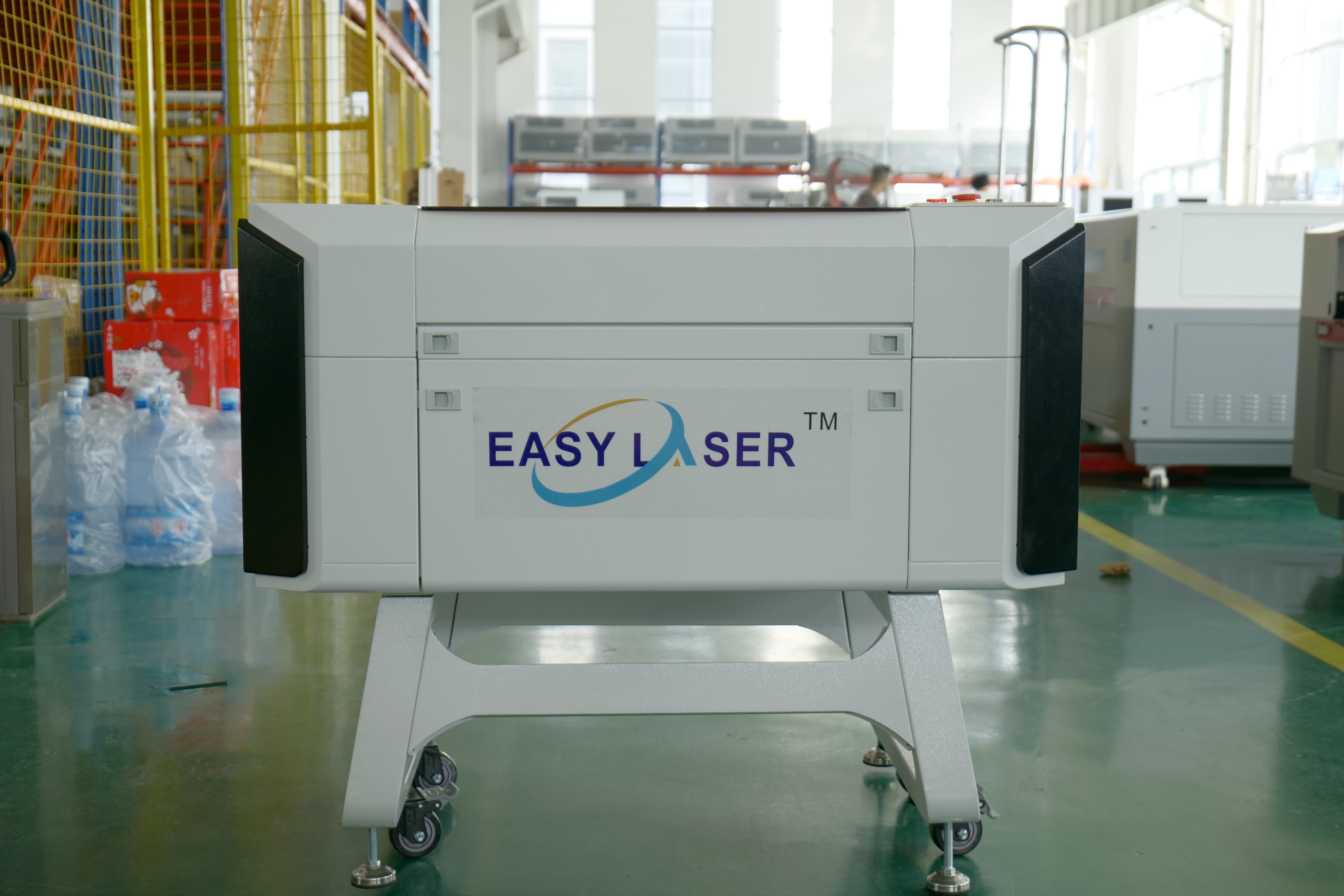
Hardware alone does not guarantee a perfect edge. Operators must calibrate software settings and optical components to match the specific density and thickness of the hide. Proper optimization minimizes thermal damage while maximizing throughput. You have to test and record your parameters for every new batch of hides.
The core operational framework for thermal processing is the "High Speed, Low Heat" principle. To achieve a clean seal without excessive burning, operators must move the laser head as fast as possible while maintaining a continuous cut. This minimizes the exact amount of time thermal energy dwells on any single point along the edge.
Finding this balance requires running a grid test on scrap material. Start with a high speed and gradually increase power until the beam barely penetrates the bottom of the hide. Adjusting the Pulses Per Inch (PPI) or frequency also controls heat buildup. Lowering the frequency reduces the continuous thermal load on the material. This specific adjustment mitigates edge scorching during intricate leather pattern cutting, where the laser head must slow down to navigate tight corners. If the machine slows down for a corner but the PPI remains too high, the corner will burn away completely.
Lens selection dictates the shape and depth of the kerf profile. Different lenses focus the beam at different angles, affecting how straight the cut edge appears on thicker materials. You cannot use a single lens for every type of leatherwork.
| Lens Focal Length | Spot Size / Kerf | Ideal Material Application | Edge Profile Result |
|---|---|---|---|
| 1.5 Inch | Very Fine | Thin synthetics, garment leather (under 3oz) | Extremely narrow kerf, highly detailed cuts. |
| 2.0 Inch | Medium | Standard veg-tan, upholstery (3oz - 6oz) | Versatile balance of detail and cutting depth. |
| 2.5 Inch | Medium-Wide | Thick tooling leather, saddle skirting (7oz - 9oz) | Straighter vertical edge, less beam divergence. |
| 4.0 Inch | Wide | Heavy armor leather, stacked hides (10oz+) | Maintains a straight edge on very thick materials. |
A shorter focal length creates a finer spot size for a narrower kerf on thin leathers. However, the beam diverges quickly past the focal point, creating a slanted edge on thick materials. A longer focal length maintains a straighter edge profile on thick tooling leather by extending the usable focal depth. If you cut 8oz leather with a 1.5-inch lens, the top of the cut will be significantly wider than the bottom, resulting in a sloped edge.
High-CFM (Cubic Feet per Minute) exhaust systems are mandatory for quality control. They pull smoke down through the honeycomb bed and away from the cut line. This aggressive downward draft prevents soot from settling back onto the leather surface.
Proper extraction stops surface staining and preserves the visual quality of the cut edge. If smoke drifts over the top of the hide, it leaves a stubborn, yellowish-brown residue that ruins the finish. Upgrading the inline exhaust fan is often the easiest way to improve overall cut cleanliness. Keep your ducting runs as short and straight as possible. Every 90-degree bend in your exhaust hose reduces the effective CFM of your fan.
Adopting thermal processing requires adjusting post-production workflows. While a leather laser cutting machine completely eliminates physical fraying, it introduces new variables that operators must manage. Understanding the difference between inevitable byproducts and preventable errors dictates your finishing process.
Acknowledge that thermal processing inherently leaves a layer of carbon dust on the edges of natural veg-tan and chrome-tan leathers. This edge char is a structural reality of vaporized organic matter. It is the exact mechanism that seals the fibers. You must distinguish this inevitable edge char from surface heat marks.
Surface heat marks occur when smoke stains the top grain or when the laser dwells too long on a corner. Surface marks are entirely preventable through proper air assist and speed calibration. Edge char, however, will always exist on natural hides and requires specific mitigation strategies. You cannot avoid edge char on natural leather, but you can control how much of it transfers to your hands or the final product.
Integrating simple pre-processing and post-processing steps keeps the final product clean and professional. Operators can scale these workflows depending on production volume. Do not skip these steps, or your final product will look dirty and unfinished.
Thermal processing carries strict material limitations. You must strictly prohibit cutting PVC-based synthetic leathers with a laser. Vaporizing Polyvinyl Chloride releases corrosive hydrochloric acid gas and highly toxic chlorine gas.
These gases pose severe health risks to operators. Furthermore, hydrochloric acid gas rapidly corrodes the metal rails, bearings, and sensitive optics inside the machine. Always verify material composition before cutting. Request safety data sheets (SDS) from suppliers. If you are unsure about a synthetic material, perform a Beilstein test. Heat a copper wire with a torch, touch it to the synthetic leather, and put the wire back in the flame. If the flame turns bright green, the material contains chlorine and must never go in the machine. Stick exclusively to 100% PU (Polyurethane) synthetics or natural leather to ensure operator safety and protect your equipment.
A: Yes, cutting natural leather with a laser relies on thermal vaporization. This process inherently leaves a layer of carbon residue (char) on the edge. You can minimize this char with optimal speed settings and high-pressure air assist. However, it still requires light sanding or wiping to fully clean before final finishing.
A: Surface burn marks are preventable. Use high-pressure air assist to blow smoke down through the cut line. Ensure your machine has strong under-bed exhaust to pull fumes away. Additionally, apply a low-tack masking tape over the leather surface before cutting to block smoke stains entirely.
A: Yes. CO2 lasers operate at a 10,640nm wavelength, which is highly absorbed by organic materials. This allows for faster, single-pass cuts. This efficiency minimizes the heat-affected zone and produces a significantly cleaner edge compared to the slower, multi-pass cuts required by diode lasers.
A: Leather often warps under intense heat. Secure the hide using a vacuum table or strong neodymium magnets around the perimeter. Alternatively, use specialized hold-down pins pushed directly into the honeycomb grid along the edges to hold the material tight across the platform.
A: Yes, laser cutting is ideal for synthetic leather like Polyurethane (PU). The heat simultaneously melts and fuses the synthetic face to the underlying fabric backing. This creates a sealed, molten edge that locks fibers in place and will not fray.
A: No. While natural leather (veg-tan, chrome-tan) and Polyurethane (PU) synthetics are generally safe with proper ventilation, you must never laser cut PVC (Polyvinyl Chloride) leather. Vaporizing PVC emits highly toxic chlorine gas and corrosive hydrochloric acid that destroys equipment.


