
Please Choose Your Language
Views: 0 Author: Site Editor Publish Time: 2026-09-10 Origin: Site


Manufacturers constantly fight to balance weld strength with aesthetic quality on the fabrication floor. Traditional arc welding methods leave hidden expenses scattered across the production line through post-weld grinding, polishing, and heat distortion correction. TIG and MIG introduce massive amounts of excessive heat directly into the workpiece. This uncontrolled thermal input warps thin-gauge materials, creates expansive Heat-Affected Zones (HAZ), and yields inconsistent seam profiles requiring heavy secondary processing. You can eliminate these downstream bottlenecks by upgrading your joining processes. A Laser Welding Machine provides a precision-engineered solution. It leverages concentrated photon energy and computer-controlled systems to achieve deep penetration and narrow seams. You get minimal thermal distortion, fundamentally altering production economics by removing manual rework.
The system generates a high-intensity light beam within a solid-state laser source. Active optical fibers doped with rare-earth elements amplify this light. The machine delivers the raw beam through flexible fiber optic cables directly to the welding head. Inside the head, collimating and focusing lenses converge the light into a microscopic focal point on the workpiece surface. Advanced computer-controlled systems guide this focal point with extreme accuracy. The beam stays perfectly aligned with the joint seam.
This concentrated optical delivery creates an immense energy density at the focal spot. It often reaches up to 1 MW/cm². When this intense energy hits the metal surface, it rapidly melts the material exactly at the joint interface. The energy is delivered quickly and in a confined area. Heat does not have time to conduct outward and spread to surrounding areas. Highly localized melting ensures the surrounding base metal retains its original structural properties. You prevent the widespread annealing or hardening that accompanies traditional arc welding. For example, when joining 16-gauge stainless steel, the focused beam penetrates the joint in milliseconds. The surrounding metal remains cool enough to touch shortly after the pass.
Operators utilize different optical delivery modes depending on joint requirements and material thicknesses. Conduction mode works best for shallow, wide, and aesthetically flawless seams. The laser beam melts the surface of the metal, and thermal energy conducts downward to create the bond. Fabricators rely on conduction mode for joining thin materials, sealing visible edges, and creating cosmetic welds. Surface appearance matters more than deep structural penetration in these applications.
Keyhole mode operates on a completely different physical principle. The intense energy density at the focal point vaporizes the metal rather than just melting it. Rapid vaporization creates a deep, narrow cavity filled with ionized metal vapor and plasma. As the beam moves along the joint line, molten metal flows around this vapor cavity and rapidly solidifies behind it. This advanced mode delivers the deep, narrow penetration profiles necessary for heavy structural applications.
| Welding Mode | Physical Mechanism | Penetration Profile | Ideal Applications |
|---|---|---|---|
| Conduction Mode | Surface melting and downward thermal conduction | Shallow and wide (Aspect ratio ~1:1) | Thin gauge sheets, cosmetic outer corners, visible enclosures |
| Keyhole Mode | Material vaporization creating a plasma-filled cavity | Deep and narrow (Aspect ratio up to 10:1) | Thick structural plates, high-pressure vessels, deep lap joints |
Modern laser welding heads incorporate programmable beam oscillation. Shop floor personnel commonly refer to this as wobble technology. Internal optics feature specialized galvanometers that rapidly move the focused beam. They create circular, linear, figure-eight, or infinity patterns at high frequencies. Rapid oscillation effectively widens the active weld pool without requiring the operator to increase the overall power output. Sweeping the beam across a wider path distributes the heat evenly across the joint interface.
Wobble technology provides a massive advantage when bridging wider gaps caused by imperfect part fit-up. Standard sheet metal tolerances often leave slight variations between mating parts. The oscillating motion stirs the molten puddle. This stirring action allows trapped shielding gases and metallic impurities to escape to the surface before the metal solidifies. Dynamic, programmable movement enhances overall seam strength. It creates a smoother bead profile and significantly reduces the occurrence of internal porosity. Operators can adjust the wobble width and frequency on the fly to match the specific gap conditions of each individual part.
Rapid heating and cooling cycles provide significant metallurgical benefits to the finished assembly. The concentrated photon energy source melts and solidifies the joint in milliseconds. This rapid thermal cycle creates a remarkably small Heat-Affected Zone compared to TIG or MIG processes. A smaller HAZ prevents excessive grain growth in the surrounding metal structure. When metal remains at high temperatures for extended periods, the internal grain structure expands. Expanded grain structures inherently weaken the material and create stress concentration points.
Maintaining a fine, tight grain structure preserves the original tensile strength, ductility, and corrosion resistance of the base metal. You avoid the brittleness and stress-cracking associated with slow-cooling traditional welds. For materials like stainless steel, minimizing the HAZ prevents carbide precipitation. The metal retains its rust-resistant properties without requiring extensive chemical passivation or pickling after the welding process is complete. Parts maintain their structural integrity and visual appeal straight off the welding table.
Fabricators choose between spot and continuous modes based on the mechanical demands of the final assembly. Laser spot welding delivers rapid, isolated pulses of energy to create localized bonds. This technique works perfectly for high-strength tacking and securing delicate components. You can assemble heat-sensitive parts like battery terminals or electronic housings without damaging internal circuitry. Pulsed energy delivery ensures the surrounding material remains completely cool.
Continuous seam welding provides an uninterrupted, solid bond along the entire length of the joint. Continuous seams distribute mechanical stress and load-bearing forces evenly across the entire structure. Uniform stress distribution produces superior structural integrity compared to traditional intermittent stitch welds. When subjected to vibration, torsion, or heavy loads, a continuous laser seam resists fatigue failure far better than a joint with multiple start and stop points. The automated travel speed ensures the bead remains consistent from the beginning of the run to the crater fill at the end.
Implementing precision laser welding actively minimizes traditional shop floor defects like porosity, hot cracking, and excessive spatter. The highly stable, controlled melt pool prevents atmospheric contamination from compromising the joint. Operators maintain strict, digital control over parameters including power output, travel speed, focal position, and shielding gas flow rates. You do not rely on the manual dexterity or physical consistency of the operator to maintain the arc length.
Precise parameter control ensures consistent penetration depth. It prevents the turbulent melt pool dynamics that typically cause spatter to stick to the workpiece. By dialing in the exact wattage and wobble frequency for a specific material thickness, the operator creates a calm, predictable weld puddle. The result is a flawless, clean seam right off the machine. You eliminate the inclusions, undercutting, and lack of fusion that plague manual arc welding operations.
Consistent, automated heat input creates an exceptionally smooth surface finish straight from the torch. The resulting weld bead sits flush or only slightly proud of the base material. You see minimal surface oxidation or discoloration. The process generates virtually no spatter and leaves a cosmetically perfect bead. Fabricators can completely bypass the finishing department for most visible joints on consumer-facing products.
This elimination saves countless labor hours previously spent on manual grinding, blending, and polishing. You eliminate the heavy recurring costs associated with abrasive flap discs, grinding wheels, sanding belts, and polishing compounds. Parts move directly from the welding station to final assembly or powder coating. Bypassing the grinding booth drastically reduces the overall manufacturing cycle time. It frees up your workforce for more valuable fabrication tasks rather than tedious surface preparation.
The continuous, uniform nature of a laser seam makes it inherently reliable for fluid and gas containment applications. The stable keyhole process leaves no micro-fissures, pinholes, or cold lap defects along the joint line. Absolute reliability is mandatory for applications requiring strict hermetic sealing. Manufacturers rely heavily on this technology to produce components that must pass rigorous helium leak testing protocols.
Common applications include electric vehicle battery enclosures, implantable medical device housings, aerospace fluid lines, and high-pressure heat exchangers. Consistent penetration depth guarantees a permanent, leak-proof barrier under extreme pressure and temperature fluctuations. By eliminating the risk of human error in maintaining travel speed, the machine ensures every inch of the seam meets strict containment specifications. The automated nature of the process guarantees that the first part of the shift matches the quality of the last part of the shift.
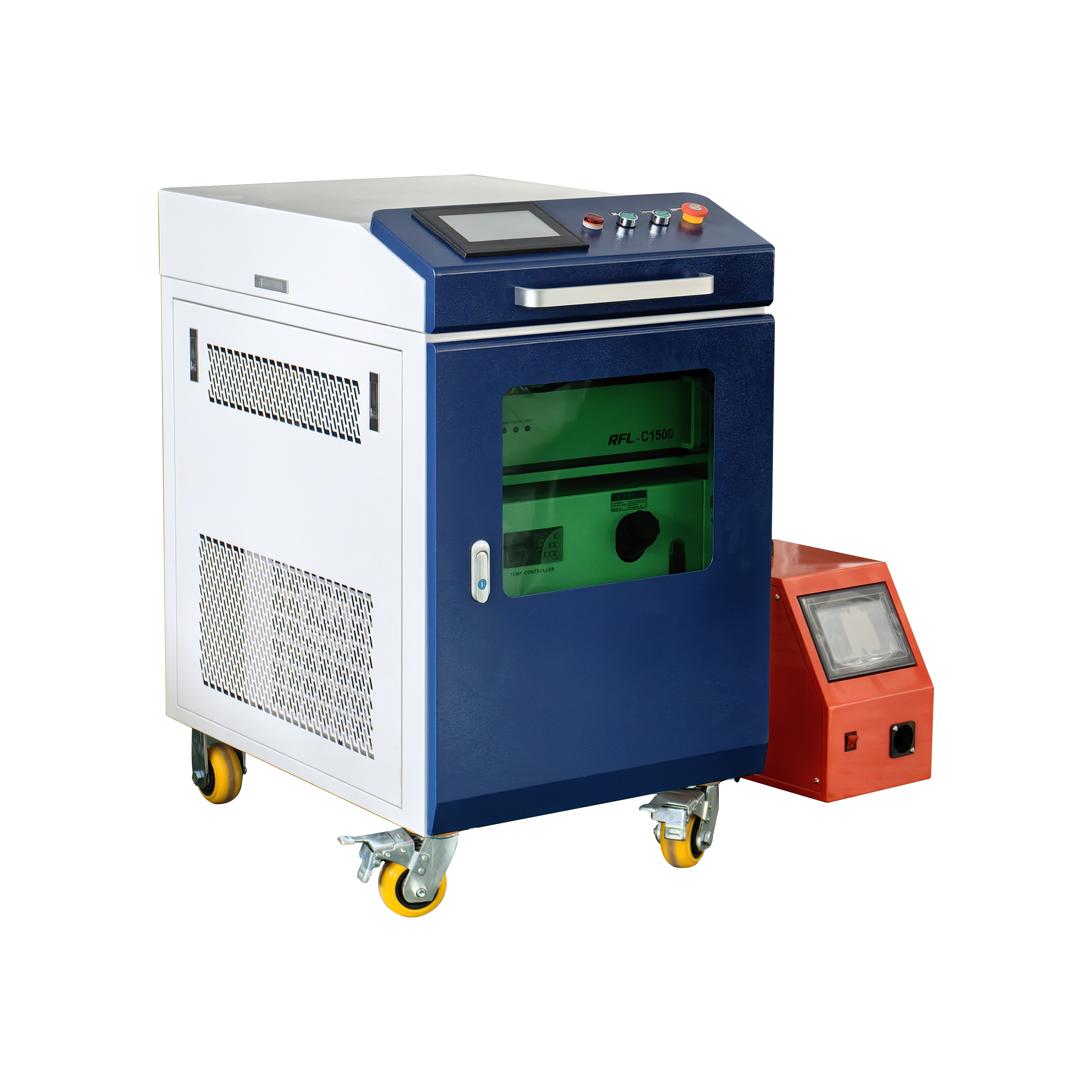
A metal laser welder excels at joining thin sheet metals that typically warp or burn through under traditional arcs. You can easily weld stainless steel, carbon steel, and galvanized sheets under 3mm thick without risking severe thermal distortion. Highly localized heat input prevents the buckling, oil-canning, and warping commonly seen when applying TIG welding to thin-gauge materials. You no longer need to spend hours straightening warped panels with a hammer and torch.
Butt, corner, and lap joints on thin sheets yield clean, flush seams with excellent mechanical strength. Aesthetically pleasing joints require zero post-processing. This technology fits perfectly into the production of architectural metal panels, commercial kitchen equipment, food-grade enclosures, and precision HVAC ducting. The ability to weld thin materials autogenously keeps the joint profile perfectly flat and ready for immediate painting or anodizing.
Welding highly reflective materials historically presented massive challenges for optical systems due to back-reflection. The laser beam would bounce off the shiny surface of copper or aluminum and travel back up the fiber optic cable. This reflection severely damaged internal diodes and lenses. Modern continuous wave (CW) fiber lasers utilize specific 1070nm wavelengths. Reflective metals absorb this wavelength much more readily, completely bypassing the reflection issue.
High power density quickly overcomes the initial reflectivity threshold of the material to establish a stable, deep keyhole. This advanced capability allows fabricators to create strong, porosity-free seams in highly conductive materials. You can confidently weld copper busbars for electrical switchgear, aluminum structural components for marine applications, and complex heat sinks. You do not have to worry about equipment damage or weak, cold welds that fail under mechanical stress.
Joining metals with vastly different melting points, thermal conductivities, and expansion rates requires extreme precision and control. Precision laser welding handles dissimilar metals by strictly controlling the energy input and managing the melt pool dynamics. The incredibly rapid cooling rate of the laser process prevents the formation of brittle intermetallic compounds at the boundary layer between the two different metals.
You can successfully join copper to stainless steel, aluminum to copper, or titanium to nickel alloys. These combinations are common in advanced electrical, aerospace, and thermal management applications. By focusing the beam slightly off-center toward the material with the higher melting point, operators create a perfect fusion bond. This bond maintains the electrical conductivity and mechanical strength required for complex, multi-material assemblies.
Travel speeds directly dictate your production throughput and lead times. Laser welding operates at travel speeds typically 3x to 10x faster than manual TIG welding. It is also significantly faster than standard MIG processes. A joint that takes five minutes to TIG weld can often be completed in under forty seconds with a laser system. This massive increase in travel speed allows a single welding station to output the volume of three traditional welding bays.
Computer-controlled systems and pre-programmed parameter libraries ensure consistent, high-quality results across multiple shifts. Rapid setup times drastically reduce machine downtime compared to the constant manual tuning required for traditional arc welding.
Follow this standard setup sequence to initiate production:
MIG and TIG operations rely heavily on continuous filler wire consumption, frequent contact tip replacements, and high volumes of expensive shielding gas. Laser welding often operates completely autogenously. It uses no filler wire at all for tight-fitting joints. When wire is required for gap bridging, the feed rates are generally much lower. Shielding gas requirements are also significantly lower due to the much smaller size of the active melt pool.
Modern fiber lasers boast excellent wall-plug electrical efficiency. They convert incoming electrical power into usable laser light much more efficiently than older transformer-based arc welding power sources. High electrical efficiency combines with the drastic reduction in consumable wire, abrasives, and shielding gas. This combination streamlines daily operating expenses and simplifies shop floor inventory management. You spend less money on raw materials and utility bills per part produced.
Finding highly specialized, master TIG welders remains a major bottleneck for the fabrication industry. Software-driven systems completely flatten the traditional learning curve. A modern laser welding machine handles all the complex variables of heat input, penetration depth, and puddle manipulation internally. New operators achieve production-quality, visually perfect welds in a matter of days rather than the years of muscle memory required for manual TIG feeding.
The operator simply focuses on maintaining a smooth travel speed and the proper torch angle relative to the joint. Operational simplicity reduces your facility's reliance on hard-to-find skilled labor. You can cross-train assembly workers or entry-level fabricators to operate the laser equipment. This flexibility stabilizes your production schedules and eliminates bottlenecks caused by welder shortages or unexpected absences.
Industrial laser equipment requires a higher upfront capital investment than purchasing standard MIG or TIG welding machines. Facility managers must justify this initial expenditure by calculating the return on investment based on tangible, measurable production improvements. You must factor in the massive throughput increases, the drastic reduction in scrap and rework rates, and the complete elimination of grinding and polishing labor.
Calculate the raw labor hours saved in the finishing department alone. Combine that with the ability to push three times more volume through the welding cell. The equipment often pays for itself rapidly through these operational efficiencies. Frame the investment as a comprehensive upgrade that eliminates downstream bottlenecks and reduces your overall cost per part. Do not view it as a simple one-to-one welder replacement.
These systems operate as Class 4 lasers, requiring strict safety protocols and facility modifications. Stray reflections from the high-power invisible beam can cause immediate, severe eye and skin damage. Facilities must implement light-tight safety enclosures around automated robotic cells. Handheld operations require designated welding zones surrounded by certified laser-safe curtains or solid walls.
Operators must wear specialized laser safety glasses matched exactly to the 1070nm wavelength of the machine. Heavy-duty protective clothing is also mandatory. You must install electrical interlock systems on all doors leading into the welding area. These interlocks instantly shut down the laser source if a bystander accidentally enters the active workspace without proper personal protective equipment. Strict adherence to safety standards prevents workplace injuries and liability issues.
The microscopic focal spot size presents a critical physical limitation. The process requires highly accurate part fit-up. Gaps that a MIG welder could easily bridge with heavy filler wire will cause a focused laser beam to pass right through the joint. The beam will fail to fuse the materials. You must implement strict upstream process improvements to ensure tight tolerances before parts reach the welding cell.
Utilize precision laser cutting machines and highly accurate CNC press brakes to guarantee parts fit together perfectly. If your current cutting and bending processes leave large gaps or inconsistent edges, you will struggle to implement autogenous laser welding effectively. When gaps are unavoidable due to part geometry, you must equip the laser system with a synchronized automated wire feeder to bridge the inconsistencies and add necessary structural reinforcement.
A: These systems effectively join carbon steel, stainless steel, aluminum, titanium, galvanized steel, and copper. The maximum weldable thickness depends entirely on the machine's wattage. A standard 1500W system easily handles metals up to 3mm thick, while higher-power industrial units can penetrate much thicker structural plates.
A: No, it frequently utilizes autogenous welding, which fuses the base metals directly together without any filler material. However, if your fabricated parts have poor fit-up, inconsistent edges, or wide gaps, you can integrate a synchronized automated wire feeder to bridge those gaps and add structural reinforcement.
A: Penetration depth scales directly with the kilowatt power of the laser source. A 1kW system typically penetrates up to 2mm in mild steel. A 3kW system can achieve deep keyhole penetration up to 6mm or more in steel. Highly reflective materials require more power to achieve the same depth.
A: Yes, the mechanical strength is comparable and often superior. The extremely narrow Heat-Affected Zone prevents thermal degradation, warping, and grain growth in the base metal. The highly stable, computer-controlled melt pool also significantly lowers the risk of internal porosity, inclusions, and micro-cracking.
A: Operators must wear specialized laser-rated safety glasses matched to the specific wavelength of the machine. The workspace requires a light-tight enclosure with safety interlocks to protect bystanders from scattered radiation. Proper fume extraction is also mandatory to remove vaporized metal particulates from the breathing zone.
A: Absolutely. Manufacturers frequently integrate laser welding heads onto 6-axis robotic arms and multi-axis CNC gantries. This integration enables high-volume, continuous production with perfectly repeatable, defect-free seams across complex three-dimensional part geometries and large-scale assemblies.


