
Please Choose Your Language
Views: 0 Author: Site Editor Publish Time: 2026-09-22 Origin: Site


Frayed edges have long been the enemy of high-quality textile production. For decades, manufacturers battled with mechanical cutting tools that left threads unraveling almost immediately. This frustrating reality diminishes the quality of the final garment. Furthermore, it wastes valuable time and money on manual hemming, overlocking, and secondary finishing processes.
Fortunately, thermal technology solves this issue instantly. By harnessing concentrated thermal energy, modern systems slice through materials while simultaneously finishing the borders in a single fluid motion. In this comprehensive guide, we will explore the exact science behind thermal edge sealing. You will learn which materials react best to the process and how upgrading to a high-precision fabric laser cutting machine can drastically reduce operational overhead while elevating product durability.
Before diving into the mechanics, it is crucial to understand where the textile industry is heading. In recent years, global manufacturing has experienced a massive shift toward automation and sustainable on-demand production. Rising labor costs and stricter environmental regulations force brands to rethink their factory floors.
Historically, manufacturers relied heavily on chemical anti-fray agents or labor-intensive overlock stitching to secure raw edges. Today, there is a distinct migration away from chemical binders due to environmental compliance and toxicity concerns. Thermal edge sealing has emerged as the preferred eco-friendly alternative. By achieving a perfect cut and seal in a single step, automated thermal systems align perfectly with the modern demand for zero-waste, high-efficiency, and lean manufacturing models. It is no longer just about cutting fabric; it is about eliminating entire steps from the production line.
Understanding the mechanics behind edge sealing requires a brief look into the physics of thermal energy transfer. Mechanical blades rely on physical shear force to separate fibers. A laser operates entirely differently. It uses a principle known as localized photothermal ablation. This non-contact method fundamentally changes how materials behave at the microscopic level.
Industrial textile processing predominantly relies on CO2 lasers. These sophisticated systems generate a highly focused beam of infrared light, typically at a wavelength of 10.6 micrometers. This specific wavelength is highly absorptive for organic materials and polymers. When the focused beam contacts the textile, the material absorbs the light energy and converts it into intense localized heat.
This rapid accumulation of thermal energy causes the material directly in the beam's path to undergo sublimation. It transitions almost instantly from a solid state to a vapor. Consequently, this creates a precise microscopic kerf without ever physically touching the fabric.
The true value of thermal processing lies in what happens immediately adjacent to the vaporized zone. In metallurgy and laser physics, the area surrounding the cut is known as the Heat-Affected Zone. As the cutting head glides along its programmed CNC path, intense heat transfers to the extreme edges of the remaining fabric.
For synthetic materials, this residual heat raises the polymer chains to their exact melting point. The molten synthetic fibers fuse together and then rapidly cool as the heat source moves away. In practical terms, this rapid solidification binds the woven or knitted threads into a continuous microscopic plasticized bead. It effectively cauterizes the edge. This locks the fibers in place and prevents any future unraveling, even under heavy stress.
A critical yet often overlooked component of this process is the air assist system. A steady stream of compressed air is directed coaxially with the beam through the cutting nozzle. This airflow serves multiple vital functions on the factory floor.
First, it aggressively blows vaporized material, smoke, and carbonized debris out of the kerf. This ensures the optical beam remains unobstructed. Second, it cools the surrounding material, preventing delicate fabrics from sustaining unwanted thermal damage, scorching, or yellowing. Proper air pressure calibration is essential. An experienced operator knows that balancing this airflow is the absolute secret to achieving a smooth, flexible seal rather than a hard, brittle edge.
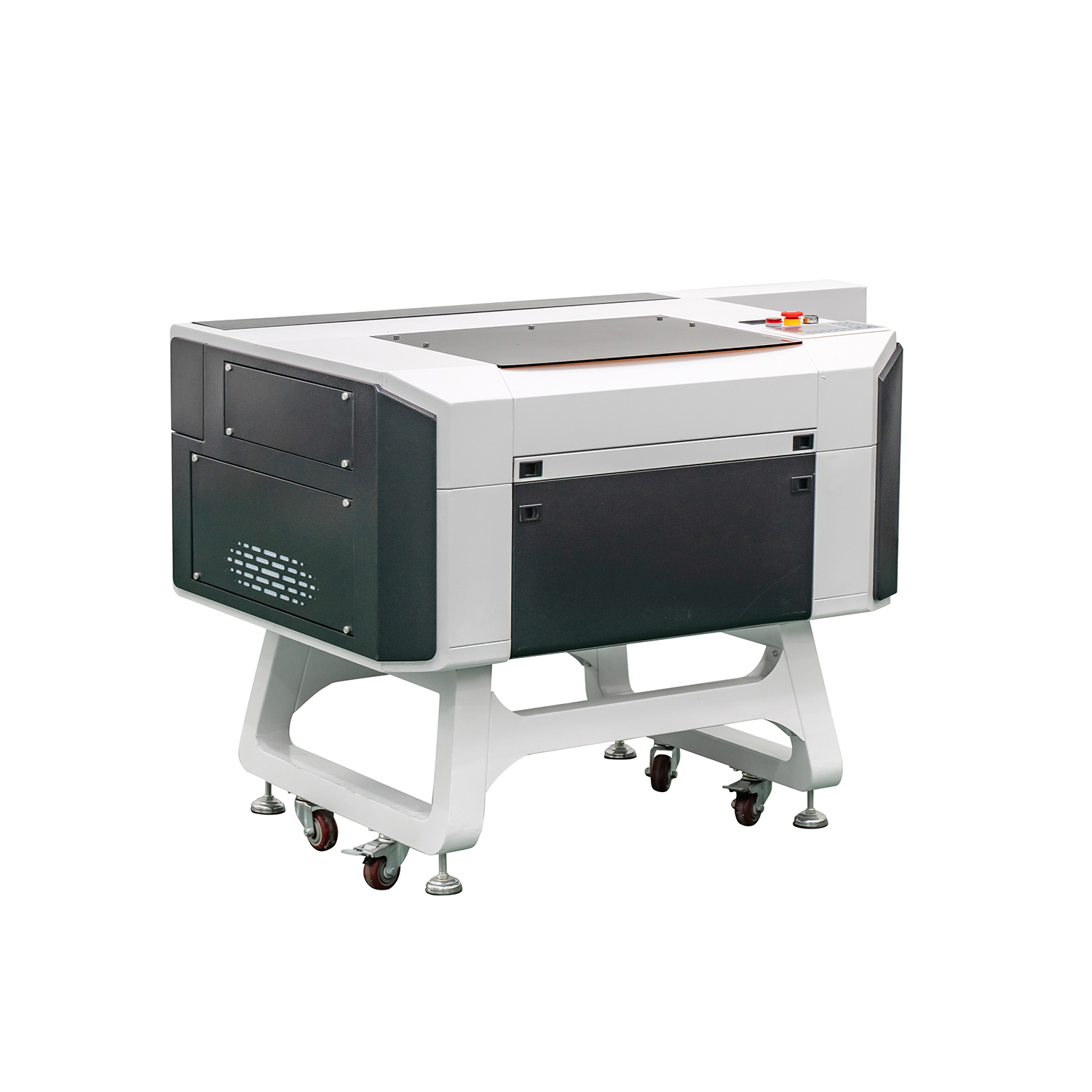
The efficacy of thermal edge sealing is strictly dictated by the material composition of the textile. Because the sealing process relies fundamentally on melting, different fabrics respond in distinct ways based on their molecular structure.
Synthetic textiles are composed of petroleum-based polymers. Materials such as polyester, nylon, spandex, Cordura, acrylic, and fleece are thermoplastic. This means they melt when subjected to specific elevated temperatures. When processed by a commercial textile laser cutter, these materials yield optimal results. The edges melt uniformly and re-harden into a durable welded boundary. This unique characteristic makes thermal cutting the undisputed industry standard for manufacturing activewear, outdoor tactical gear, automotive upholstery, and soft signage.
Natural fibers, including cotton, linen, silk, wool, and denim, are primarily composed of cellulose or proteins. These materials fundamentally lack a melting point. Instead, they combust or vaporize when exposed to extreme heat. While thermal equipment will slice through natural fibers with exceptional precision and blistering speed, it will not leave a plasticized seal. The resulting edge is crisp, clean, and completely free of the mechanical friction that pulls at threads during blade cutting. Immediate fraying is minimized. However, because the edge remains unsealed, it may still require traditional hemming depending on the final consumer application.
Poly-cotton blends and other mixed textiles present a variable outcome. The quality of the edge seal is directly proportional to the percentage of synthetic fiber present in the weave. As a general industry benchmark, a fabric must contain at least 60 to 70 percent synthetic fibers, such as a standard 65/35 poly-cotton blend, to achieve a commercially viable thermal seal. Lower synthetic ratios will result in an incomplete seal that may still fray under mechanical stress or repeated washing.
| Material Type | Common Examples | Reaction to Thermal Heat | Final Edge Condition |
|---|---|---|---|
| Synthetic | Polyester, Nylon, Spandex | Melts and fuses rapidly | Permanently sealed, zero fraying |
| Natural | Cotton, Silk, Denim | Vaporizes or cleanly burns | Clean cut, no thermal seal formed |
| Blends | Poly-Cotton blends | Partial melting of synthetic fibers | Semi-sealed based on synthetic ratio |
| Technical | Kevlar, Aramid | High-temp vaporization | Clean cut, highly resistant to melting |
Transitioning to a thermal cutting methodology offers quantifiable advantages for modern manufacturing facilities. The integration of sealed edges directly impacts operational workflows, extends product lifespan, and expands creative design parameters.
In traditional manufacturing setups, cutting the fabric is only the first hurdle. To prevent unraveling, those raw edges must undergo secondary processes such as hemming or serging. By utilizing thermal technology to cut and seal simultaneously, these secondary labor-intensive steps are completely eliminated. This strategic consolidation of processes drastically reduces direct labor hours. It decreases the footprint of machinery required on the factory floor and accelerates the overall production cycle from roll to final garment.
Mechanically cut and stitched edges are constantly subjected to wear, chemical degradation from harsh detergents, and physical stress during washing cycles. In contrast, a thermally sealed edge creates a continuous bonded perimeter. This exhibits incredibly high tensile strength and wash-fastness. For products subjected to rigorous daily use, such as tactical military gear, parachutes, athletic wear, and medical textiles, the thermal seal ensures the structural integrity of the fabric remains intact far longer than traditional thread-based finishes.
Rotary blades and die presses exert immense mechanical shear force on textiles. When attempting to cut complex internal geometries, sharp corners, or delicate lace-like patterns, this friction can distort, stretch, or pull the threads. This leads to inaccurate cuts and immediate fraying. Because thermal systems operate entirely as a non-contact tool, the fabric remains perfectly stationary on the cutting bed. The focused beam easily navigates microscopic radii and sharp internal angles without causing any physical distortion. Every complex edge is sealed flawlessly.
To fully evaluate the operational impact of thermal sealing, it is necessary to benchmark it against conventional textile cutting methods that have dominated the industry for decades.
Mechanical cutting tools, such as CNC knife systems and rotary cutters, are highly effective for straight lines and large-radius curves on natural fibers. However, they possess inherent and costly limitations. Physical blades dull over time. This requires routine replacement and causes frustrating maintenance downtime. As a blade gradually loses its edge, the physical friction increases. This exacerbates fabric distortion and leads to severe fraying on synthetic materials. Die presses are incredibly fast for mass production of static shapes, but they require expensive custom tooling for every new pattern. This makes them entirely cost-prohibitive for short runs, custom apparel, or rapid prototyping.
The primary advantage of non-contact thermal technology is the total lack of tool wear. The thermal dynamics applied to the very first unit are identical to the ten-thousandth unit. This ensures absolute consistency in edge sealing across massive production runs. Furthermore, transitioning from one design pattern to another requires zero physical tooling changes. The operator simply loads a new digital CAD file. This unmatched flexibility provides a highly agile and cost-effective production environment tailored for today's fast-paced market.
For large-scale facilities handling high-volume orders, throughput speed is the most critical metric. While standard single-head systems provide excellent quality, advanced configurations are engineered specifically to tackle mass production bottlenecks.
A dual-head system is a marvel of modern engineering. It mounts two independent laser tubes and two cutting nozzles onto a single heavy-duty gantry. These heads are configured to operate simultaneously, moving in perfect tandem across the working area.
The implementation of dual head fabric cutting mathematically doubles the production output for symmetrical or duplicated parts. Because both heads are driven by the exact same motion controller and execute the identical path, the thermal parameters remain perfectly synchronized. This guarantees that the edge seal quality on the fabric processed by the first head is completely indistinguishable from the fabric processed by the second head. Facilities can maintain strict quality control while slashing production time in half.
This dual-processing technology is highly utilized in sectors requiring the rapid turnaround of identical components. Fast fashion apparel, plush toy manufacturing, sportswear panels, and personal protective equipment benefit immensely from these configurations. By processing two layers or two identical patterns side-by-side, manufacturers comfortably meet strict delivery deadlines without needing to increase their labor force.
Investing in industrial cutting equipment requires a thorough understanding of the hardware specifications that directly impact production quality. When evaluating commercial machinery, decision-makers should focus heavily on the core components that govern precision and material handling capabilities.
The power source is the beating heart of the machine. Choosing the right type is critical for edge sealing quality. Commercial systems typically offer two distinct options: Direct Current glass tubes and Radio Frequency metal tubes.
Glass tubes are highly cost-effective and provide excellent raw cutting power. They are highly suitable for heavy-duty materials like thick canvas, webbing, or multi-layer fleece. However, they pulse at lower frequencies and possess a slightly larger beam spot.
RF metal tubes represent the premium industry standard for high-precision textile manufacturing. For example, a 6040 RF CO2 system generates a significantly narrower beam and pulses at incredibly high frequencies. This rapid pulsing minimizes the Heat-Affected Zone. For delicate synthetic fabrics like spandex, silk-blends, or lightweight nylon, an RF tube creates a microscopic flexible edge seal without the yellowing often associated with slower glass tubes. Additionally, RF tubes boast a much longer operational lifespan and can be recharged, offering a superior long-term return on investment.
In modern garment manufacturing, particularly within the booming dye-sublimation sportswear sector, fabrics frequently shrink, stretch, or distort during the high-heat transfer printing process. Cutting these warped materials based on the original CAD file inevitably results in misaligned borders and ruined garments.
To combat this, advanced machines, such as the 1610 series, integrate high-resolution CCD cameras. The camera visually scans the entire working bed, recognizing printed fiducial markers or the actual contours of the printed graphics. The proprietary software then instantaneously recalculates and adjusts the cutting path to compensate for any fabric distortion. This ensures that the thermal edge seal perfectly aligns with the printed design, effectively eliminating reject parts.
| Hardware Feature | Best Application | Engineering Benefit |
|---|---|---|
| RF Metal Laser Tube | Delicate synthetics, high-precision activewear | Smaller beam spot, faster pulsing, minimal heat distortion |
| Dual Head Configuration | Mass production, symmetrical garment panels | Doubles throughput speed with synchronized thermal sealing |
| CCD Camera System | Dye-sublimation fabrics, printed textiles | Automatically compensates for fabric stretch and shrinkage |
| Conveyor Working Table | Roll-to-roll continuous processing | Automates material feeding, maintains perfect bed tension |
Achieving a flawless, fray-free edge on synthetic textiles is not quite as simple as pressing start. It requires a precise calibration of thermal dynamics. Operators must balance multiple parameters to ensure the material melts just enough to bind the fibers, but not so much that it burns or creates a rigid uncomfortable edge.
The delicate relationship between movement speed and power output dictates the overall quality of the thermal seal. If you apply too much power or move too slowly, the fabric absorbs excessive thermal energy. This causes the synthetic polymers to overheat, resulting in scorched or dark edges. The melted plastic will form a thick hard bead that feels scratchy against the skin. This is entirely unacceptable for apparel manufacturing.
Conversely, if you use too little power or move too fast, the beam fails to penetrate the material entirely. The result is an incomplete cut with stringy unsealed fibers that will immediately begin to fray. The ultimate engineering goal is to find the sweet spot where the machine moves as fast as possible while using the minimum power required to cleanly sever the material. Experienced operators conduct a material test matrix on every new fabric roll to determine the exact optimal parameters before beginning a production run.
The focal length is the precise distance from the lens to the exact point where the beam converges to its smallest diameter. A smaller focal spot concentrates energy into a tighter area, resulting in a thinner kerf and a much more precise edge seal.
If the lens is out of focus by even a few millimeters, the beam diverges and becomes wider. A wider beam disperses heat over a larger surface area, which melts more fabric than necessary and creates a thick undesirable plastic edge. Operators must use a focal gauge or rely on auto-focus sensors to ensure the lens is perfectly calibrated to the material's thickness.
When processing synthetic fabrics like polyester, the sublimation process instantly converts solid polymers into gaseous fumes. Proper management of these fumes is critical on the factory floor.
First, it ensures edge cleanliness. If the air pressure is too low, lingering smoke stains light-colored fabrics. Second, it protects the expensive optics. Without adequate downward airflow, vaporized plastic rises and adheres to the lens, eventually causing it to crack from thermal stress. Finally, melting synthetic materials releases volatile organic compounds. A commercial setup must include a high-capacity bottom-exhaust fan that pulls the fumes through the conveyor bed and routes them to an industrial extractor.
A high-quality automated cutting system is far more than just a tool for slicing fabric; it is a comprehensive edge-finishing solution. By simultaneously cutting and thermally sealing the edges of synthetic textiles, manufacturers save countless hours of labor. You eliminate the need for secondary hemming and elevate the overall durability and quality of the final product.
Upgrading to advanced machinery supports growing manufacturing businesses by significantly increasing daily output and operational agility. Whether you need the ultra-fine precision of a 6040 RF CO2 system for delicate activewear, or the massive throughput of a 1610 Dual Head CCD machine for dye-sublimated sportswear, choosing the right equipment is paramount. If you are ready to revolutionize your production line, explore the extensive catalog of precision equipment at EasyCNC Laser. Contact our expert engineering team for a custom consultation to find the perfect machine tailored to your exact textile manufacturing needs.
If the machine settings are not properly optimized, it can indeed leave a hard scratchy edge on synthetic fabrics. This happens when too much heat is applied, causing a thick bead of melted plastic to form. However, when the speed, power, and focal length are correctly calibrated by the operator, the thermal seal is microscopic. The resulting edge remains highly flexible, soft to the touch, and completely fray-free. Because of this precision, thermally sealed edges are widely used in the production of seamless activewear and intimate apparel without causing any discomfort to the wearer.
Yes, nylon reacts exceptionally well to thermal processing. Because nylon is a synthetic polymer, the intense heat instantly melts the fibers, creating a clean, durable, and perfectly sealed edge that will not unravel. Kevlar, however, behaves quite differently. While a high-powered system can easily and precisely cut through Kevlar fabric, Kevlar is an aramid fiber specifically designed to resist high heat and melting. Therefore, you get a highly precise clean cut without mechanical fraying, but it does not leave the plasticized melted seal characteristic of standard synthetic plastics.
Absolutely. For synthetic fabrics containing at least 60 to 70 percent thermoplastic fibers like polyester or nylon, the thermal cauterization creates a permanent structural bond at the edge. Unlike chemical anti-fray sprays that wash out over time, or loose overlock threads that can snag and break in a washing machine, the melted polymer bead is highly resistant to water, detergent chemicals, and the mechanical agitation of washing cycles. The edge remains perfectly intact for the lifespan of the garment.
While both methods use heat to melt and seal synthetic fabrics, the execution and precision differ vastly. A hot knife relies on physical contact, dragging a heated metal blade across the fabric. This physical friction can distort stretchy materials, drag threads, and leave a wider, bulkier melted edge. Furthermore, hot knives struggle with intricate curves. Laser technology is entirely non-contact. The focused beam of light causes zero mechanical distortion, easily navigates microscopic internal geometries, and creates a significantly finer, softer, and more precise edge seal than any hot blade can achieve.
No, it is strictly unsafe to inhale the fumes generated during the thermal cutting process. When synthetic fabrics are subjected to intense heat, the thermal decomposition releases volatile organic compounds, hazardous gases, and fine particulate matter. To ensure a safe working environment and comply with occupational health regulations, any commercial fabric cutting system must be paired with a robust industrial exhaust system. This typically involves high-pressure extraction fans that pull the fumes away from the operator and route them through multi-stage fume extractors containing HEPA and activated carbon filtration.
The maximum thickness a machine can cut and seal depends entirely on the wattage of the power tube and the density of the material being processed. For textile applications, machines are typically equipped with tubes ranging from 80W to 150W. An 80W system easily seals single-ply fabrics, lightweight silks, and standard polyester blends. A 150W system has the thermal power to cut and seal heavy-duty materials, such as thick fleece, multi-layer laminated textiles, automotive upholstery, or 1000D Cordura up to several millimeters thick in a single pass. The edge seal remains consistent regardless of thickness, provided the focal point is adjusted correctly.


