
Views: 0 Author: Site Editor Publish Time: 2026-10-16 Origin: Site


Manufacturing facilities frequently hit a brutal production bottleneck. Order volumes surge past existing capacity. During peak seasons, relying on standard single-head equipment severely chokes output. It inflates labor hours and delays order fulfillment. Traditionally, scaling up meant buying more machines and hiring extra operators. That old-school approach bleeds valuable factory floor space, skyrockets overhead costs, and turns workflow management into a logistical nightmare.
Looking at current fabrication trends, the industry-wide shift toward lean manufacturing is undeniable. Modern e-commerce has conditioned both B2B and B2C clients to expect lightning-fast turnarounds for micro-batch and personalized products. Industry analysts note that competitive job shops are aggressively moving away from single-tool setups. To survive shrinking lead times without inflating consumer prices, adopting multi-head automation is no longer just an operational luxury. It is a baseline requirement for survival.
Fortunately, a highly engineered alternative exists for scaling businesses. By integrating two cutting heads onto a single moving gantry, you effectively double processing capacity without doubling your daily operational expenses. In this technical guide, we will break down how this architecture operates on the factory floor, the concrete ways it multiplies yield, and how to select the exact configuration for your production line.
Double the Output Capacity: Processing two identical pieces simultaneously cuts the required production time in half for bulk orders.
Lower Operational Costs: Facilities achieve massive production yields without proportionally doubling payroll, floor space, or daily energy consumption.
Enhanced Material Efficiency: Advanced nesting algorithms combined with synchronized heads drastically reduce material waste during large runs.
Measurable ROI: Accelerated production directly translates to wider profit margins, especially in fast-paced sectors like apparel, signage, and packaging.
To fully grasp the commercial value of this equipment, we must establish a baseline of its core components. A standard CO2 laser excites a specific gas mixture—primarily carbon dioxide, nitrogen, and helium—using high voltage to generate a concentrated beam of infrared light. Operating at a wavelength of 10.6 micrometers, this thermal beam vaporizes non-metallic substrates like wood, acrylic, fabric, and industrial plastics with extreme precision.
A dual head CO2 laser cutter takes this foundational science and scales it for heavy industrial manufacturing. Instead of a lone focal lens traveling across the material bed, the machine utilizes a single X-axis gantry equipped with two distinct laser heads. These heads fire simultaneously, processing materials across two separate zones of the honeycomb or blade bed.
Manufacturers engineer these systems in two distinct configurations. The first is a shared tube setup, where specialized optics split a single high-powered beam, directing half the wattage to each head. The second, and far more robust configuration for continuous factory use, involves dual independent tubes. Here, the machine chassis houses two completely separate glass or radio frequency laser tubes. Each tube is dedicated to powering one specific laser head. Ultimately, this independent architecture is engineered exclusively for mass production environments where thousands of identical parts must be cut flawlessly.
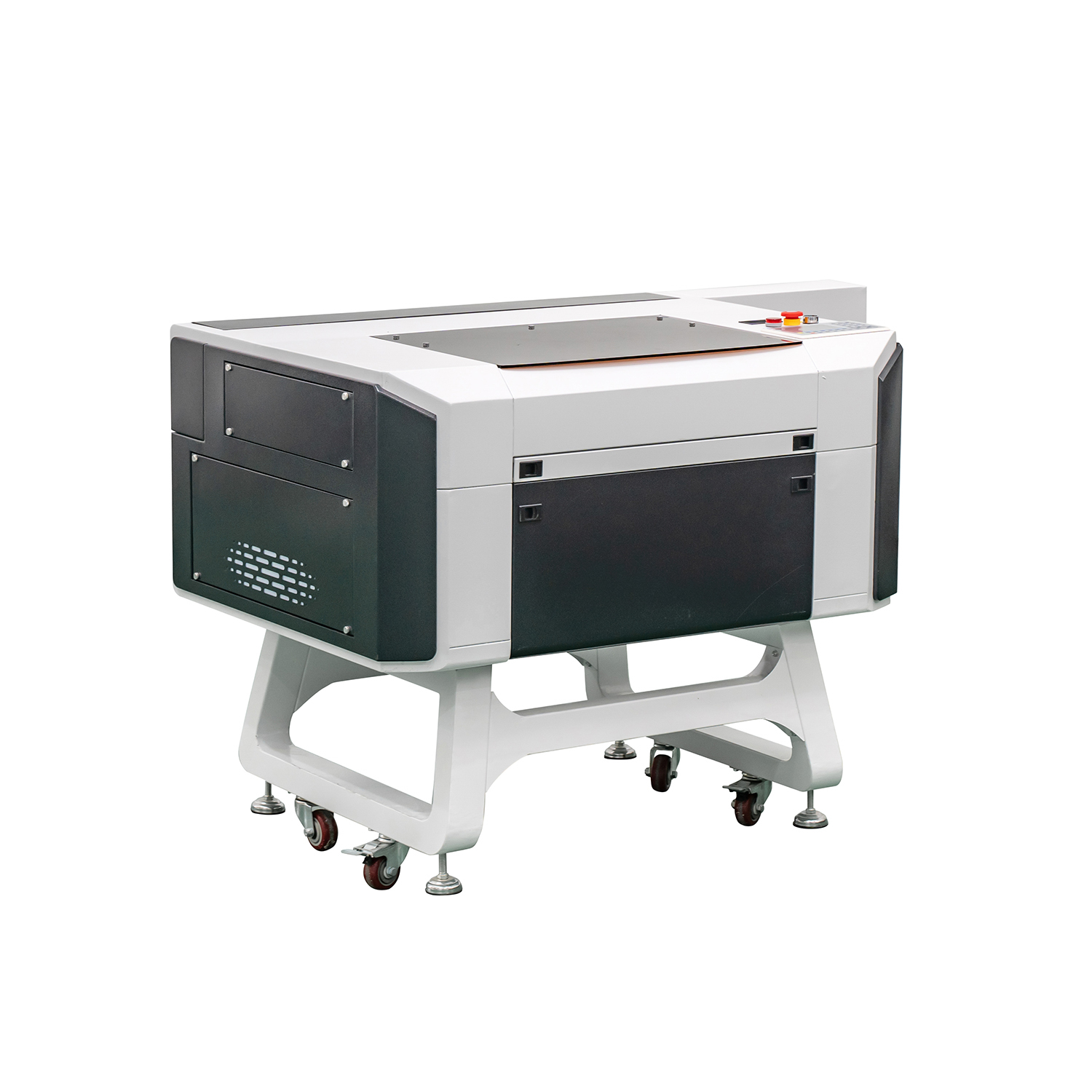
For facility managers evaluating equipment upgrades, understanding the mechanical realities of a two head laser machine is critical. Assessing its reliability requires looking past the spec sheet and understanding how it integrates into existing workflows. The operation relies heavily on rigid mechanical engineering and perfectly synchronized control systems.
Because both laser heads are physically bolted to the same rigid X-axis gantry, they move in absolute tandem. Driven by high-torque stepper or servo motors, the gantry glides along the Y-axis while the heads travel horizontally. When the digital signal processing controller receives a complex vector file from software such as RDWorks or LightBurn, both heads execute the exact same cutting path down to the millimeter. This synchronous movement guarantees total dimensional consistency across massive batches. It virtually eliminates the micro-variations that often plague multi-machine setups.
Flexibility on the shop floor is non-negotiable. Operators can adjust the physical distance between the two laser heads depending on the design dimensions and the raw material width. On standard models, the operator simply loosens a locking lever, slides the secondary head along the precision linear guide rail to the required position, and locks it down. Furthermore, premium industrial models feature motorized spacing. Operators just input the desired distance into the control panel, and the machine adjusts itself automatically, removing human error from the setup process.
Consistent cutting depth requires an unwavering power supply. In systems utilizing dual independent tubes, each head receives uncompromised wattage from its own dedicated high-voltage power supply. This guarantees that a sudden drop in performance on the left side does not affect the right side. Both parts retain identical kerf widths and focal depths. Maintaining this consistency requires highly stable reflection mirrors and focal lenses. The mechanical rigidity of the gantry must prevent high-speed vibrations to keep both optical paths perfectly aligned during rapid directional changes.
Upgrading to a dual-head setup is a strategic business decision. The productivity gains are not theoretical marketing fluff. They are hard, measurable metrics that directly impact your bottom line.
The most immediate benefit is the literal doubling of throughput for identical parts. The math is undeniable. If a standard single-head machine takes 60 minutes to cut 100 cast acrylic keychains, a dual-head machine effortlessly drops 200 keychains into the collection tray in that exact same hour. For businesses managing high-volume B2B contracts, this cuts machine operating time in half. You can process twice the orders per shift without paying overtime or running a graveyard shift.
Labor remains the highest variable cost in custom fabrication. Traditionally, doubling production meant buying a second machine and hiring a second operator to babysit it. A dual-head system fundamentally breaks this cycle. A single operator loads one full sheet of plywood, configures the software once, and monitors a machine yielding double the output. Consequently, you scale your manufacturing capacity without a linear spike in payroll, drastically driving down your cost-per-part.
Square footage is a premium asset. While a dual-head machine is slightly wider than an entry-level single-head model to accommodate the dual-tube chassis and a broader 1600mm by 1000mm cutting bed, it demands significantly less space than installing two separate machines. This spatial efficiency allows shop managers to maximize revenue per square meter. It frees up vital room for raw material storage, post-processing stations, and shipping logistics.
Scrap material eats directly into your profit margins. Modern computer-aided manufacturing software is specifically coded to optimize layouts for multi-head systems. Intelligent nesting algorithms calculate the optimal spacing for two heads. They ensure standard material sheets are utilized to their absolute maximum potential. By factoring in the exact laser kerf and aligning the dual heads precisely, operators achieve incredibly high material yields with minimal offcuts.
In competitive markets, lead time dictates client retention. By leveraging high output laser cutting, manufacturers severely compress their production schedules. Faster production means quicker fulfillment and happier clients. Specifically, it gives your production manager the logistical breathing room to accept premium-priced rush orders without derailing the standard daily queue.
Making a smart procurement decision requires an objective look at Return on Investment. Neither machine is universally superior. Their true value depends entirely on your product mix and daily volume.
Feature |
Single Head Laser |
Dual Head Laser |
|---|---|---|
Ideal Application |
Prototypes, unique custom jobs, varied sizes |
Mass production, batch orders, standardized parts |
Initial Capital Expenditure |
Lower |
Higher |
Operating Expense Per Part |
Standard |
Significantly Lower |
Labor Requirement |
1 Operator per machine |
1 Operator yields 2x output |
Floor Space Efficiency |
Standard footprint |
High revenue per square meter |
Consider a realistic shop scenario where you bill machine time at $50 per hour. If a dual-head machine saves 20 hours of production time per week by doubling output, that equates to $1,000 of recovered machine value weekly. That is a staggering $52,000 annually. In heavy industrial settings, the price premium of the dual-head upgrade is fully recovered within the first few months.
Certain manufacturing sectors benefit disproportionately from synchronized processing. If your factory floor operations fall into the following categories, integrating this technology is highly recommended.
The fast-fashion industry demands rapid, continuous cutting of synthetic fabrics. Dual-head lasers dominate the production of fabric patterns, leather patches, and garment appliqués. Because the thermal beam instantly heat-seals the edges of polyester and nylon, it completely prevents fraying. This single step eliminates the need for costly secondary edge-finishing processes.
Sign makers constantly mass-produce acrylic letters and point-of-purchase retail displays. A dual-head setup allows these shops to tear through full sheets of cast acrylic with incredible efficiency. They cut identical lettering simultaneously, delivering clean, flame-polished edges ready for immediate chemical welding with zero post-processing.
For shops producing customized corporate gifts or intricate birch plywood puzzles, batch processing is a daily reality. A dual-head system processes large sheets of MDF and bamboo rapidly. This ensures massive holiday orders are fulfilled on strict deadlines without ever sacrificing edge quality or burning the wood face.
The packaging sector relies on the mass production of custom protective inserts. Dual-head machines slice through thick corrugated cardboard, EVA foam, and polyethylene inserts used to protect luxury goods. Cutting two identical thick foam inserts simultaneously slashes the time required to fulfill massive logistics contracts.
When evaluating technical specifications, abstract features do not cut it. You need concrete engineering standards to ensure long-term reliability. Cautious procurement officers should rigorously verify the following components before issuing a purchase order.
Even identical glass laser tubes from the same manufacturing batch experience slight variances in power output as the gas depletes over thousands of hours. It is absolutely essential that the machine's digital controller allows for independent power adjustment. If Head A cuts slightly deeper than Head B, the operator must be able to tweak the milliamp output of Tube B independently. This fine-tuning ensures both parts meet your stringent quality control standards.
Relying on a manual acrylic spacer to set focal length wastes precious setup time and invites human error. Industrial machines must utilize auto-focus sensors to automatically set the perfect focal distance. Furthermore, for industries cutting pre-printed materials like sublimated sportswear, a CCD camera system is mandatory. The camera reads registration marks printed on the fabric, automatically adjusting the cutting path to compensate for material stretch. Equipment built to these high-end specifications seamlessly integrates visual recognition with dual-head mechanical efficiency.
Because the main gantry carries the physical weight of two laser heads and moves at rapid speeds, the mechanical drive system must be exceptionally robust. Demand machines equipped with precision linear guide rails and steel-reinforced timing belts. These premium components prevent microscopic vibrations during rapid directional changes, ensuring cut edges remain perfectly smooth over years of heavy-duty abuse.
To protect your capital investment and maintain peak operational efficiency, routine maintenance is non-negotiable. A strict maintenance schedule keeps the machine running flawlessly shift after shift.
A dual-head system inherently features two separate optical paths comprising multiple reflection mirrors and focal lenses. Operators must verify mirror alignment weekly using thermal tape and gently clean the lenses with industrial-grade isopropyl alcohol. This prevents beam scattering, reduces thermal stress on the optics, and ensures maximum cutting power reaches the material bed.
Firing two laser tubes simultaneously generates twice the thermal load of a standard machine. A high-capacity, active-cooling industrial water chiller is mandatory. Operators must monitor water levels daily, blow dust out of the condenser fins, and strictly use distilled water to prevent catastrophic mineral scale buildup inside the delicate glass tubes.
Upgrading to a dual head CO2 laser cutter is one of the most direct paths to shattering your factory's production bottlenecks. By processing two identical components simultaneously, you effectively slash labor costs in half, optimize your valuable floor space, and widen your profit margins rapidly.
While the initial capital investment is higher than buying a standard single-head machine, the return on investment for volume-driven businesses is undeniable. As client demands for faster turnarounds intensify, having the right automated equipment makes the difference between struggling to keep up and dominating your market sector.
If you are ready to scale your operations and eliminate production delays, evaluate your current workflow. Consider how dual-head technology can transform your daily output. Explore the industrial-grade solutions at https://www.easycnclaser.com to find the exact machine configuration engineered for your high-volume factory floor.
Generally, no. The laser heads are mechanically mounted to the exact same X-axis gantry. This means they move synchronously to cut two identical designs simultaneously. The system is engineered specifically for high-volume batch processing of standardized parts, not independent multi-tasking.
It does consume more power than a single-head machine because it actively fires two laser tubes, runs dual high-voltage power supplies, and requires a larger industrial water chiller. However, it is far more energy-efficient than running two completely separate machines, ultimately lowering your facility's power draw per unit produced.
Yes, absolutely. High-quality systems allow operators to easily disable one laser tube via the digital control panel. This provides the crucial flexibility to process a single, massive item that requires the entire working bed without the second head firing and ruining the material.
It requires slightly more time because you are aligning two separate optical paths instead of one. However, the mechanical process and underlying physics are identical to a standard machine. With proper maintenance and securely tightened adjustment screws, the mirrors hold their alignment reliably over long production runs.
Cutting thickness depends entirely on the wattage of the laser tubes installed, not the number of heads. For example, a dual-head machine equipped with two independent 150W tubes can comfortably cut through 15mm to 20mm of cast acrylic or 12mm of high-density plywood in a single pass at a slow speed.
Over time, laser tubes naturally degrade at slightly different rates. To maintain perfect consistency, you must use the machine's digital signal processing controller to adjust the milliamp output independently. If one head begins cutting shallower than the other, simply increase its specific power output in the software settings to match the depth of the opposing head.


