
Please Choose Your Language
Views: 0 Author: Site Editor Publish Time: 2026-05-29 Origin: Site


Processing precious metals leaves absolutely zero room for error in any professional workshop. Material waste and tooling inaccuracies directly erode your hard-earned profit margins. Traditional manufacturing methods struggle to keep pace daily. Manual sawing requires immense skill and excessive time. Basic casting cannot easily handle modern market demands. Consumers expect complex, deeply customized designs produced quickly. You need a faster, more reliable approach to survive.
A dedicated jewelry laser system shifts production significantly. It moves your workflow from labor-intensive manual work to predictable digital manufacturing. You achieve high-yield results quickly. However, the equipment must perfectly match the unique physical properties of gold and silver. You will learn how specialized lasers overcome extreme metal reflectivity safely. We will explore essential material recovery systems to protect your assets. Finally, you will discover crucial design preparation steps to avoid common production failures.
Material Recovery: Purpose-built machines feature enclosed recycling systems to capture highly valuable gold and silver dust.
Damage Prevention: Anti-high reflection technology is mandatory to prevent highly reflective jewelry metals from destroying the laser source.
Kerf Precision: Operating at a <0.02mm kerf width allows for intricate hollowing and interlocking designs that physical milling cannot achieve.
Physical molds and stamping dies drain your resources constantly. They cost a significant amount to produce upfront. You also need physical space to store them securely. Shifting to digital agility bypasses these expensive tools entirely. You can run low-volume jobs effortlessly and profitably. Rapid prototyping becomes a fast, seamless reality. Designers simply upload a vector file and begin cutting immediately. You skip the entire mold-making phase completely.
Lasers also provide true non-contact processing. Traditional physical milling relies heavily on friction and mechanical force. This mechanical force often bends or deforms extremely thin metal sheets. Jewelry components frequently range from 0.5mm to 2mm in thickness. Lasers exert zero mechanical stress on these delicate sheets. They vaporize the material using focused thermal energy instead. Your delicate pieces remain perfectly flat and structurally sound.
The transition requires a complete change in your production mindset. It drastically reduces labor-hours required per piece. You virtually eliminate defect-driven material scrapping. Your workshop scales output without hiring dozens of bench jewelers. Faster turnaround times keep your demanding clients happy.
Consider the standard workflow improvements you will experience:
You import the customer design directly into the control software.
You secure the flat precious metal sheet on the working bed.
The machine executes the intricate cut path in seconds.
You retrieve the finished piece ready for immediate polishing.
This streamlined approach removes bottlenecks effectively. You gain total control over your daily production schedule.
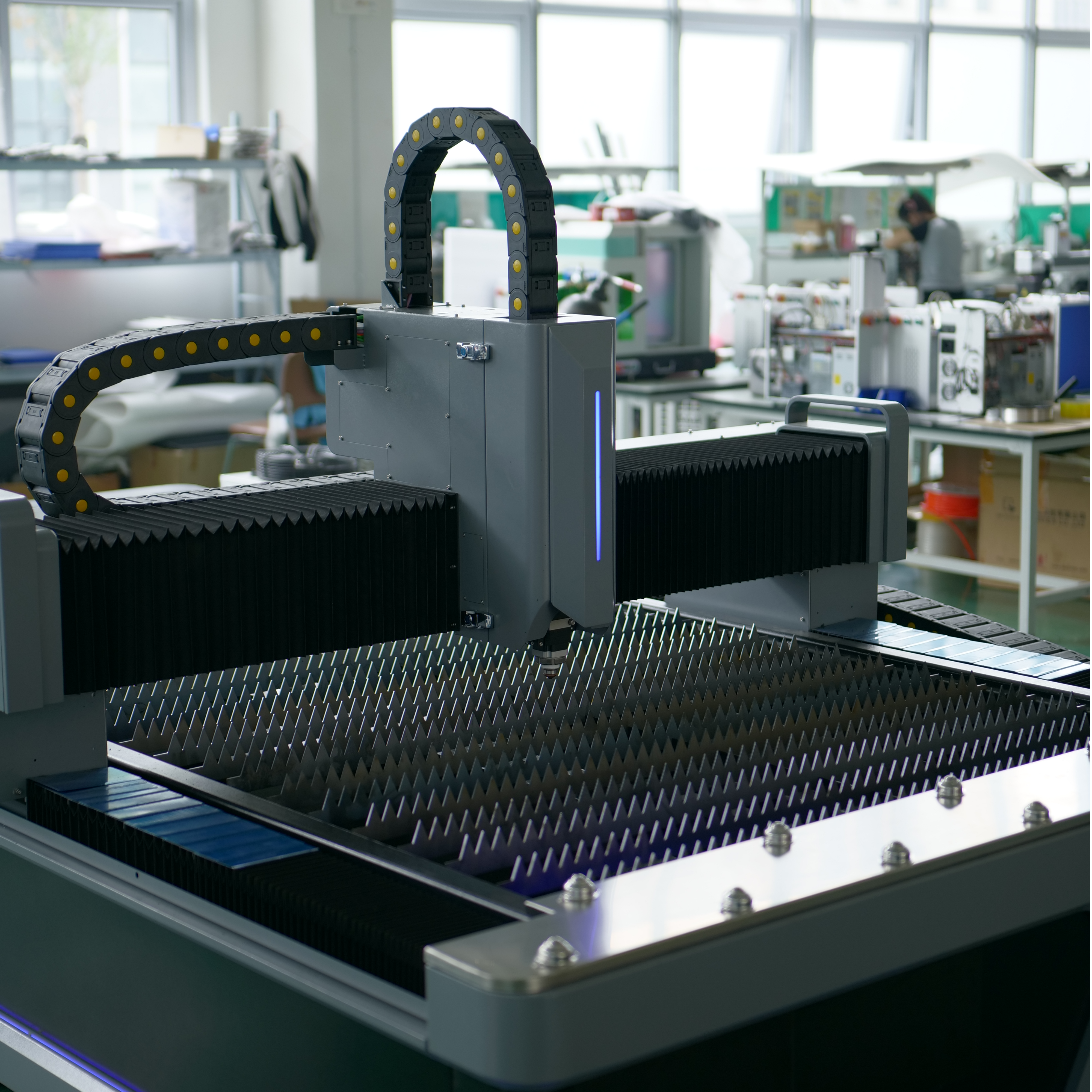
Gold, silver, and copper share a highly dangerous trait. They act as excellent mirrors for light. Standard industrial lasers struggle to process them safely. The laser beam can easily bounce back into the optic path. This bounce-back permanently damages the sensitive laser oscillator. You must secure your equipment against this specific threat. Evaluators need to look for built-in anti-high reflection optical isolators. These critical isolators absorb returning light safely. They protect your expensive laser source from instant destruction. You cannot afford to skip this feature.
Airborne precious metal dust equals lost revenue. Every microscopic particle floating away reduces your profit margins. Traditional jewelers sweep their floors to recover gold dust. Modern laser systems handle this task much more efficiently. A viable machine must feature a fully enclosed safety cover. You also need a specialized cutting fixture. Pneumatic clamps hold the sheets securely during processing. They maximize open space below the cut for dust collection.
A dedicated recycling system serves as your primary financial safeguard. Airborne particulates carry immense intrinsic value. You need a multi-layered approach to capture them effectively.
Internal Water Funnels: These sit directly below the cutting grid. They catch heavy metal flakes and prevent them from blowing around.
Fully Enclosed Cabinets: Heavy-duty sheet metal prevents any dust from escaping the primary work zone.
External HEPA Extraction: High-powered industrial vacuums pull lighter suspended dust into a secure, replaceable filter cartridge.
This comprehensive approach ensures greater than 99% precious metal recovery. You melt the recovered dust down later. You turn waste back into usable raw material easily.
High wattage does not always equate to better performance. A standard Sheet Metal Laser Cutting Machine might utilize 3000W or more. That immense power cuts thick steel beams quickly. Jewelry manufacturing requires controlled, delicate precision instead. The optimal power range falls exactly between 500W and 1500W. This specific bracket prevents excessive melting along the cut edges. It keeps the kerf extremely narrow on delicate pendants. You avoid warping thin silver or gold sections entirely.
Positioning accuracy directly determines your final product quality. You must look for an X/Y axis positioning accuracy of less than 0.02mm. High-grade ball screw transmissions drive this exact movement perfectly. They eliminate the physical slop found in cheaper belt drives. Reliable servo motors ensure the machine stops exactly where intended. You should actively avoid basic stepper motors for fine jewelry work. They lack the dynamic response required for micro-detailing. Stepper motors often lose steps during rapid directional changes.
The software bridging your design to the hardware matters immensely. The core CNC cutting machine controller must translate intricate vector paths flawlessly. It handles complex DXF or AI files without stuttering. This ensures perfectly smooth arcs on circular monograms. Complex earrings require continuous, unbroken beam movement. Advanced software provides this seamless interpretation natively. It optimizes the cutting path automatically. It prevents the cutting head from lingering and causing heat damage.
Many buyers believe laser systems operate as simple plug-and-play devices. They assume they can just press start and walk away. Hardware represents only half the complete manufacturing solution. CAD optimization remains absolutely mandatory to prevent production failures. Your digital files dictate the physical outcome completely.
Design rules play a massive role in your operational success. Bridging stands out as a critical concept to master. Internal cutouts will fall through if not properly bridged. Think about the center section of the letter "O". You must connect it to the outer frame in your vector file. Otherwise, the inner piece drops straight into the scrap tray. Designers must add tiny physical connecting tabs to hold elements together.
Typography requires specific preparation steps as well. Laser software cannot process live text fields directly. You must convert all names, logos, and fonts into vector shapes. Outlining your typography ensures the machine reads precise cutting paths. If you skip this, the software will output an error.
Surface protection saves you countless hours of post-processing. You should apply low-tack masking tape over the metal surface before cutting. The tape absorbs residual heat and vaporized metal fumes. This simple step prevents heat discoloration completely. It stops nasty burn marks from forming on the polished gold. It drastically reduces your post-cut polishing time. You simply peel the tape off to reveal a clean surface.
Here are common CAD mistakes to avoid:
Leaving overlapping vector lines in the design file.
Scaling intricate patterns down too far for the beam width.
Forgetting to convert custom fonts into outlined shapes.
Ignoring the kerf width when designing interlocking joints.
You must understand the distinct methodologies of these two systems. Lasers use focused thermal vaporization to separate materials. They offer a completely non-contact approach. Traditional CNC uses high-speed rotary end mills. This older method relies entirely on physical contact and friction.
Each technology excels in very different specific areas. A Precision Laser Cutting Machine is clearly superior for 2D profile cutting. It easily handles intricate hollowing out. It processes ultra-thin metals flawlessly. You can also perform precise surface engraving for logos or hallmarks. It handles sharp inner corners beautifully. Traditional CNC machining is much better suited for 3D volumetric milling. It carves thick structural components like stone-setting prongs easily. Many jewelers use it to create highly detailed wax molds. Rotary bits cannot cut sharp inner corners due to their cylindrical shape.
Your shortlisting logic should follow your primary business goals closely. Do you want to scale flat-sheet custom pendants? Are you producing thousands of name necklaces and intricate earrings? Laser technology yields a significantly faster production cycle for these items.
Comparing Processing Methods for Jewelry | ||
Feature | Precision Laser | Traditional Milling |
|---|---|---|
Processing Method | Non-contact thermal vaporization | Physical contact rotary cutting |
Material Stress | Zero mechanical force applied | High friction and clamping force |
Best For | Intricate 2D shapes, thin sheets | 3D carving, thick metal blocks |
Kerf Width | Less than 0.02mm | Usually 0.2mm or greater |
Tool Wear | None (optical delivery) | High (requires frequent bit changes) |
Integrating a modern laser cutter fundamentally changes how a jewelry studio operates. It unlocks massive scalability for incredibly intricate custom designs. The equipment must be engineered specifically for high-reflection, high-value materials. Standard industrial cutters will not protect your precious metal yield. You risk catastrophic damage to the laser source without proper isolators.
Take immediate action to secure your production future:
Define your maximum material thickness for daily cutting operations.
Assess your average daily production volume accurately.
Request a detailed sample cut test on your specific metal alloy.
Verify the multi-layered dust collection capabilities of your chosen model.
Commit to a final machine specification only after analyzing these precise factors. You will transform your workshop efficiency overnight.
A: No, provided the machine parameters are correctly tuned. You must set the speed and wattage properly. Lasers have an extremely narrow Heat-Affected Zone (HAZ). This focused energy prevents warping outside the immediate cut path. Your thin pieces remain perfectly flat and structurally solid.
A: Yes. A cutting machine can effectively perform precise surface engraving and hallmarking. You achieve this by adjusting the focal point dynamically. You also need to reduce the power output and increase the travel speed. This technique removes minimal material while leaving a crisp, readable mark.
A: Absolutely. Vaporizing metal produces hazardous fumes and micro-particulates. You cannot simply vent this into the open room. An industrial-grade fume extractor and air assist system are completely mandatory. They ensure daily operator safety. They also maintain equipment longevity by keeping the internal optics clean.


