
Please Choose Your Language
Views: 0 Author: Site Editor Publish Time: 2026-05-23 Origin: Site


Metal fabricators constantly face a difficult balancing act. You must align your capital expenditures closely against actual production capabilities. Buying massive, high-power lasers for occasional thick plates destroys your ROI. Conversely, under-investing severely bottlenecks your daily production floor.
The 2kW power tier has confidently emerged as the industry's most reliable sweet spot. It perfectly balances speed, edge quality, and lower operating costs. This unique balance makes it ideal for mid-range sheet metal fabrication. It handles daily demands effortlessly without draining your equipment budget.
Let us explore the rapid evolution of the modern CNC cutting machine. We will show how a 2kw fiber laser cutting machine effectively bridges the processing gap. It sits perfectly between entry-level tools and highly capitalized 4kW+ enterprise setups. You will learn true thickness limits, real-world cutting speeds, and practical strategies to reduce your daily running expenses.
ROI Optimization: A 2kW system delivers 40-70% faster cutting speeds on thin sheets than 1kW models, without the severe price premium of 3kW/4kW units.
Production Truths: Ideal for carbon steel up to 10mm (production speed) and stainless/aluminum up to 6mm, avoiding the trap of buying for rare "peak thickness" limits.
Cost Reduction: Consumes 30-50% less energy than legacy CO2 systems and virtually eliminates secondary processing (deburring/grinding) due to +/- 0.1mm precision.
Micro-Protection: Minimal Heat Affected Zones (HAZ) and zero mechanical stress protect sensitive components, critical for electronics, medical, and aerospace manufacturing.
Many job shops struggle during the equipment shortlisting phase. They frequently fall into the "peak thickness" trap. This common mistake happens when buyers pay a massive premium for a 3kW or 4kW machine. They purchase it simply to handle a rare 15mm order. Paying for unused capacity drains your cash flow rapidly.
We position the 2kW tier as the strategic middle ground. It delivers optimal performance for your daily, high-frequency jobs. Let us look at a comparative framework to understand this specific balance.
1.5kW Systems: They limit your speed on anything over 4mm. They also struggle heavily against reflective metals like aluminum or brass. Power fluctuations often cause inconsistent edge quality.
2kW Systems: They establish the baseline for consistent, clean edges. They excel on 6mm stainless steel. They also remain highly flexible for mixed-batch runs.
3kW Systems: You only need them if your day-to-day production consistently exceeds 10mm carbon steel. They are also necessary for extreme-volume rapid piercing applications.
Best Practice: Always audit your past six months of job orders. You will likely find most of your work falls well under 6mm. This historical data makes the 2kW option mathematically superior for your bottom line.
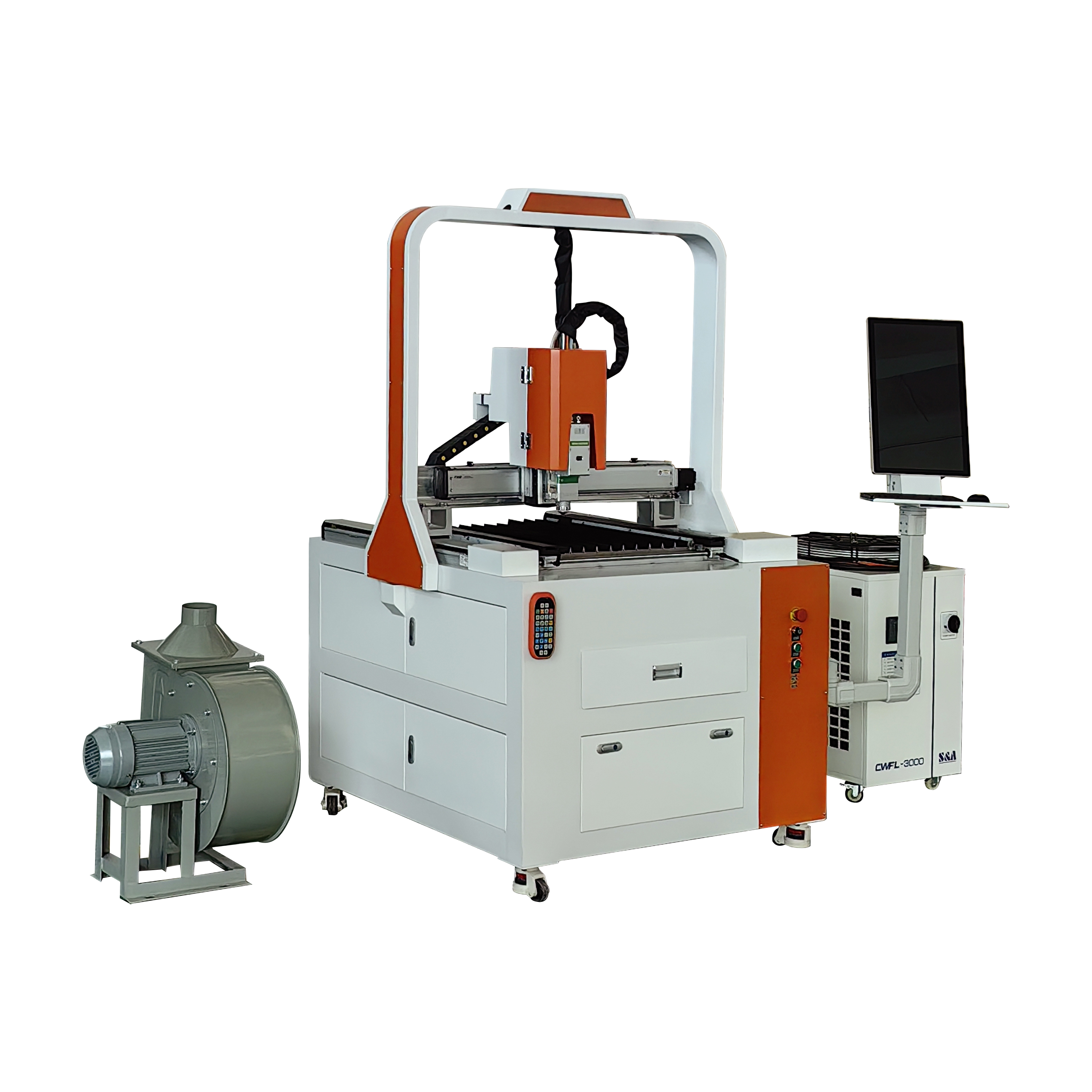
We must move away from inflated, lab-condition spec sheets. Instead, let us look at verified, real-world production expectations. When you evaluate a fiber laser cutting machine, focus strictly on features-to-outcomes. Everyday operators care about consistent throughput, not theoretical maximums.
Here are the hard data and capability baselines for a 2kW system.
Material Type | Maximum Rated Limit | Optimal Production Thickness | Expected Real-World Speed |
|---|---|---|---|
Carbon Steel | 12-14mm | ≤10mm | 1.5–2 m/min (at 10mm). Up to 35 m/min for 3mm. |
Stainless Steel | 8mm | <6mm | Excellent daily throughput. Dross-free clean edges. |
Aluminum / Brass | 6-8mm | <6mm | Fast piercing without oscillator back-reflection damage. |
Carbon steel offers a great example. The maximum rated limit sits around 12-14mm. However, your optimal production thickness is ≤10mm. At this thickness, you yield reliable speeds of 1.5 to 2 m/min. If you cut thin carbon steel around 3mm using oxygen assist, speeds skyrocket. You can hit up to an incredible 35 m/min.
Reflective metals present another specific challenge. Aluminum and brass are optimal at <6mm. A 2kW system provides enough power density to slice them quickly. It completely prevents back-reflection damage to the laser source.
Precision metrics also matter immensely for your final assembly. A quality 2kW unit delivers +/- 0.1mm cutting accuracy. It also provides +/- 0.05mm repeatability. This proves its absolute suitability for tight-tolerance OEM parts. You can trust it for your most demanding manufacturing requirements.
Implementation realities dictate your long-term success. The operating cost is just as critical as your initial purchase price. You must analyze your daily workflow to find compounding savings.
Gas optimization strategies offer huge cost reductions. High-purity Nitrogen (99.95%+) acts as a brilliant assist gas. It guarantees oxide-free edges on stainless steel and aluminum. This effectively eliminates secondary grinding. It saves hundreds of labor hours annually. Conversely, use Oxygen-assist exothermic reactions for mild steel. It efficiently slices thicker plates by fueling the burning process.
Operators often underestimate gas flow dynamics. Proper nozzle standoff remains crucial. Keep it strictly between 0.5mm and 1.5mm. This ensures perfect gas delivery. This careful spacing pushes molten slag out smoothly.
We also need to consider your energy and ESG impact. Contrast the energy draw against legacy plasma or CO2 lasers. The 2kW fiber delivery system is incredible. It is 200% more efficient at beam generation than older CO2 units. This electrical efficiency heavily reduces your overall carbon footprint. It effortlessly supports modern corporate sustainability goals.
Consumables and maintenance represent another major win. Legacy systems require complex optical mirror cleaning. They also demand frustrating daily beam alignments. A modern 2kW fiber system completely eliminates these chores. The beam travels securely through a flexible fiber optic cable. You experience far less downtime. Your routine maintenance budget shrinks dramatically.
Common Mistake: Do not use low-purity nitrogen. It introduces oxygen directly into the cut zone. This creates a yellow or brown oxidized edge. You will then waste hours buffing it out manually. Always invest in proper gas infrastructure.
Output quality acts as a massive competitive advantage for job shops. Risk mitigation and strict quality control win better contracts. A fiber laser helps you achieve both effortlessly.
Traditional methods like punching or shearing apply heavy mechanical force. They warp materials and create hidden micro-fractures. The laser process is completely different. It uses an 11,000°C focal melt zone. This zone is entirely contactless. Zero mechanical force touches your sensitive parts during production.
Thermal management sets fiber tech apart. The kerf is incredibly narrow, often reaching down to 0.1mm. It generates a drastically minimized Heat-Affected Zone (HAZ). The surrounding metal remains completely stable. It does not warp, buckle, or lose its core metallurgical properties.
Specific industry applications demand this exact precision daily. Consider miniature fan blades. They require perfect aerodynamic balance. Computer drive brackets need exact hole placements. Electronic enclosures demand clean, burr-free edges. In these scenarios, protecting sensitive components is critical. The contactless nature of the laser beam makes it possible.
Scalability matters immensely. Before you purchase, you must evaluate equipment vendors carefully. We provide a localized buyer's checklist to guide your next-step actions. Do not just look at the machine's external chassis.
Verify Core Components: You must look under the hood. Check the origins of the laser source. A trusted brand like IPG guarantees stability. Check the cutting head. A reputable brand like Precitec dictates your uptime. These parts determine your long-term success.
Assess Automation Readiness: Evaluate if the machine supports future integrations. Can it accept coil-fed systems for continuous running? Can you add automated material handling later? Labor shortages cripple many job shops today. Automated loaders pick raw sheets and place them directly onto the cutting bed. "Lights-out" shifts dramatically increase your profitability. Your machine should grow alongside your business.
Review Service Level Agreements (SLAs): Warn your procurement team against cheap vendors. Avoid those lacking localized technical support. The first 90 days of machine onboarding are crucial. You need immediate help if operator training gaps emerge. Strong SLAs protect your daily operations.
Test Your Own Materials: Never buy based on generic, pre-cut samples. Send your specific 6mm stainless or 8mm carbon steel parts. Request a live video of the cut. This proves the machine handles your actual workflow flawlessly.
The final verdict is clear. Choosing the 2kW fiber laser is never a compromise. It is the most mathematically sound investment for high-mix, medium-thickness metal fabrication. It bridges the gap perfectly between entry-level limits and excessive enterprise costs.
Keep these concise takeaways in mind:
Stop paying massive premiums for peak thicknesses you rarely cut.
Leverage high-pressure nitrogen assist to eliminate secondary grinding labor.
Use the contactless 11,000°C melt zone to protect sensitive parts.
Always verify core components like the laser source and cutting head prior to purchase.
Now is the time to take action. Request a custom sample cut of your specific 6mm or 8mm parts from a trusted vendor. Calculate your exact cost-per-part using your local gas and power rates. Schedule a deep-dive consultation today. Map out your exact ROI timeline based on your existing workflow and daily material volumes.
A: Yes. The 2kW power density safely overcomes material reflectivity. It easily handles thicknesses up to 4-5mm without causing back-reflection damage to the oscillator. You gain excellent flexibility across various reflective materials.
A: It consumes roughly 30-50% less electricity. It requires zero laser-gas (helium/nitrogen mix for the resonator). It also lacks consumable mirrors. These factors significantly lower your hourly run rate compared to legacy CO2 machines.
A: No. For stainless steel under 6mm, 2kW paired with a precise nozzle standoff (0.5mm - 1.5mm) and high-pressure nitrogen guarantees a dross-free, weld-ready edge. Higher power only dictates the speed of the cut, not the edge quality.


