
Please Choose Your Language
Views: 0 Author: Site Editor Publish Time: 2026-05-26 Origin: Site


Metal fabrication shops constantly face escalating outsourcing costs and unpredictable lead times. You lose control over your production schedule when relying completely on external vendors. Bringing laser cutting capabilities in-house demands high upfront capital. This creates a stressful financial dilemma for many business owners.
The market overflows with entry-level systems lacking real power. You also see high-end industrial behemoths eating up massive budgets. Finding the exact middle ground is critical for high-mix job shops. You need a system powerful enough for rapid production but economical enough to justify the initial investment.
The 2kW power tier represents this industry "sweet spot" for medium-duty metal cutting. In this article, we provide a skeptical, data-backed breakdown of what these machines can process efficiently. You will discover material physics, ideal operational parameters, and hidden deployment risks you must carefully consider before making a purchase.
The 2kW Capability Baseline: Efficiently processes carbon steel up to 12mm, aluminum up to 10mm, and stainless steel up to 6mm.
ROI vs. Out-sourcing: Transitioning to an in-house setup can drastically reduce per-part costs, but requires accounting for TCO (Total Cost of Ownership) including assist gases and filtration.
Procurement Logic: Evaluate a CNC cutting machine based on your shop’s most difficult-to-cut material (e.g., highly reflective aluminum), not just basic carbon steel benchmarks.
Safety is Non-Negotiable: 1.06µm wavelength lasers require strict Class 4 enclosures and HEPA filtration to mitigate severe optical and respiratory hazards.
The 2kW power tier dominates mid-range fabrication for very practical reasons. It fills the performance gap perfectly. You get a 40-70% speed increase over traditional 1kW systems. You also avoid the exponential investment of 3kW or 4kW systems. Heavy-duty systems waste energy if you primarily cut thin stock. Most small-to-medium job shops process materials under 10mm thick. Buying a massive 6kW machine simply drains your capital without delivering proportional daily value.
We see clear operational advantages when evaluating daily economics. A 2kW system runs on a 30-50% lower energy footprint compared to legacy CO2 systems. Solid-state technology converts electricity to light highly efficiently. Your main consumables include assist gas, protective lenses, and copper nozzles. We notice a massive drop in utility bills when replacing older cutting technologies. The simplified beam delivery system removes the need for costly internal mirrors and alignment procedures.
This power tier directly impacts your post-processing labor. The beam creates a incredibly precise 0.1mm narrow kerf. You achieve clean, slag-free cuts at 2kW. This precision drastically reduces downstream production bottlenecks. Welders do not have to grind or deburr finished parts. Post-weld cleaning becomes much easier and faster. Parts move instantly from the cutting bed to the press brake or welding station.
To illustrate the efficiency gap, consider this performance comparison table for standard carbon steel processing:
Laser Power | Max Cutting Thickness (Carbon Steel) | Speed Advantage (3mm Stock) | Ideal Shop Profile |
|---|---|---|---|
1kW | 6mm | Baseline speed | Light prototyping, thin HVAC sheets |
2kW | 12mm | 40-70% faster than 1kW | High-mix job shops, medium fabrication |
4kW+ | 20mm+ | 150% faster than 1kW | Heavy industrial, thick plate continuous production |
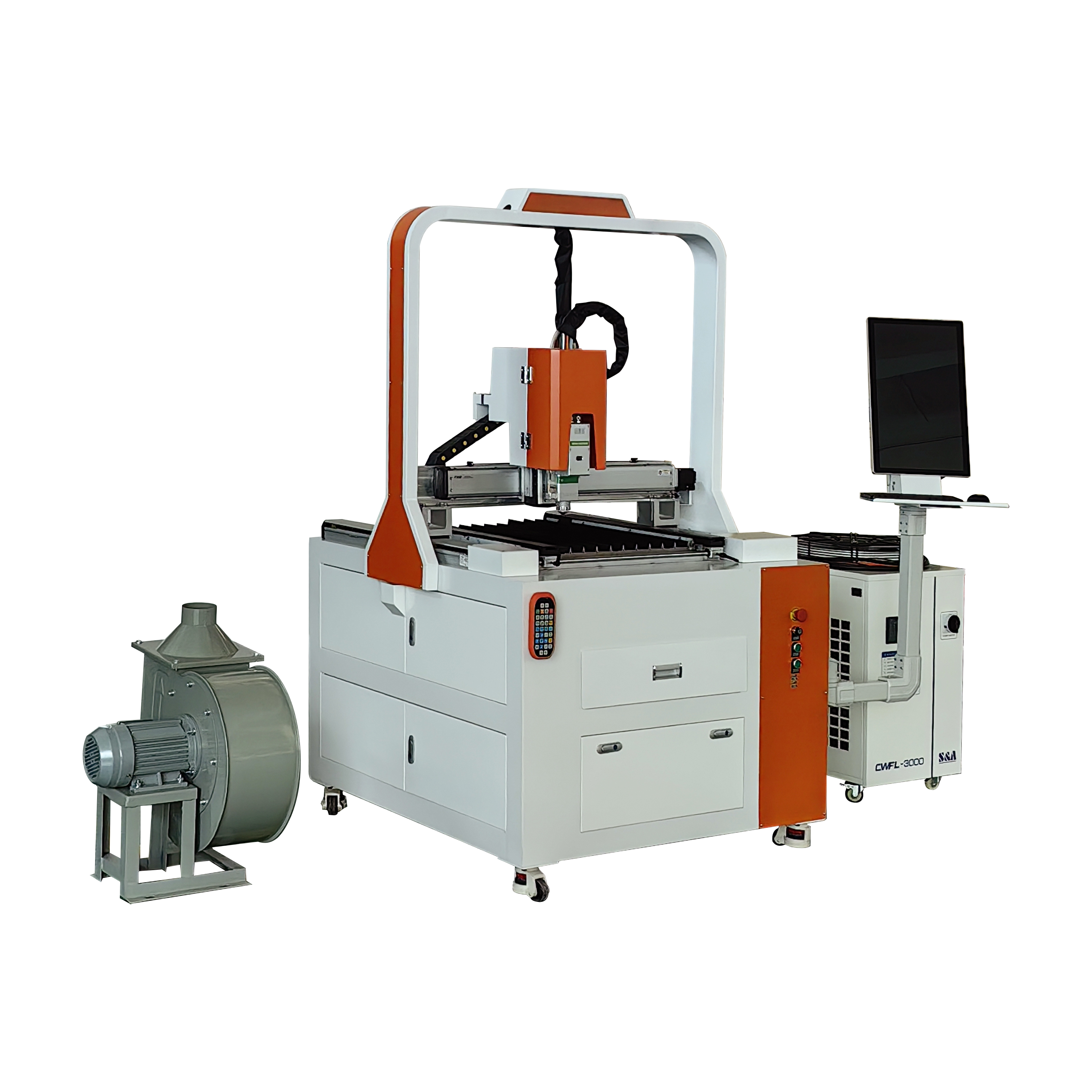
Carbon steel serves as the baseline metric for any cutting operation. Maximum thickness caps strictly around 12 to 13mm (about 1/2 inch) for reliable edge quality. You can push it slightly thicker, but the edge taper becomes severe. Speed metrics vary dramatically based on material thickness. On thin 3mm stock, you can easily exceed 35 meters per minute. When cutting 10mm stock, speed drops significantly to 1.5 or 2 meters per minute.
The cutting strategy relies heavily on chemistry. You must use oxygen assist gas. The exothermic reaction of oxygen provides 40-60% of the required thermal energy. The laser essentially heats the metal to its ignition point. The oxygen stream then literally burns the material away while blowing out the molten slag.
Stainless steel presents a different set of physical challenges. Reliable production cutting happens up to 6mm (1/4 inch). Pushing past this limit often results in excessive dross and rough edges.
The strategy shifts entirely from burning to melting. Stainless requires high-pressure, ultra-pure nitrogen gas. The purity level must reach 99.95% or higher. The gas forcefully blows away the molten material. This inert environment prevents edge oxidation. You avoid the ugly brown or blue discoloration common in poor setups. Clean edges mean you can weld the parts immediately.
You can reliably cut aluminum up to 10mm (3/8 inch). Copper and brass capacities remain strictly limited at 2kW. These specific metals possess high thermal conductivity. They quickly pull heat away from the cutting zone. They also reflect light highly, which used to destroy older laser technologies.
A modern 2kw fiber laser cutting machine emits a 1.06µm wavelength beam. Reflective metals absorb this short wavelength much better than they absorb CO2 beams. Operators must maintain high cutting speeds. Power percentages need to stay locked between 60-80%. This aggressive parameter strategy prevents slag accumulation on the bottom edge and stops back-reflection damage.
You cannot cut everything. Non-metals pose severe safety risks. We compiled a quick reference chart for materials you must strictly avoid.
Material Type | Physical Reaction | Industry Recommendation |
|---|---|---|
Wood / Plywood | Burns instantly, chars edges, causes severe fire risk. | Never cut. Use CO2 lasers or CNC routers. |
PVC / Vinyl | Emits highly toxic, corrosive chlorine gas. | Never cut. Destroys machine optics and lungs. |
Polycarbonate / Acrylic | Melts unpredictably, leaves sticky residue, poor edge finish. | Avoid. Use CO2 lasers for clean, flame-polished acrylic edges. |
Gas management dictates your daily operational costs. Many fabrication shops eventually shift away from high-pressure gas cylinders. Moving to liquid nitrogen dewars provides much better volume pricing. High-volume shops often install localized PSA nitrogen generators. This infrastructure controls long-term consumable expenses effectively. You stop paying for endless bottle deliveries and eliminate the downtime caused by swapping out empty cylinders.
Tuning power, speed, and frequency requires patience and a scientific approach. These variables interact constantly. Thin materials require high speed and high frequency settings. Thick materials need much slower speeds. You must also adjust the focal point deeper into the cut zone for thick steel.
Consider a practical example setup. Cutting reflective stainless steel often demands precise frequency control. You might throttle your frequency down to 1000 Hz. This specific setting controls the Heat-Affected Zone (HAZ). It prevents thermal distortion on delicate, intricate parts. The right frequency stabilizes the plasma cloud inside the kerf.
Defect diagnostics help buyers troubleshoot harsh realities. You will eventually encounter imperfect edge quality. Learning to read the dross saves hours of frustration.
Soft dross: This defect implies excess heat input. You can easily scrape it off with a fingernail. Fix this by programming higher speeds or lowering the gas pressure.
Hard dross: This defect indicates a severe energy deficit. It welds itself to the bottom edge. Fix this by slowing down your cut speed. You should also carefully inspect your protective lens for dust contamination.
Safety implementation goes far beyond wearing simple safety glasses. The specific 1064nm wavelength of a solid-state laser poses extreme optical hazards. This invisible beam completely bypasses the human cornea. It instantly burns the retina before your blink reflex even triggers. You must mandate OD6+ certified safety glasses for anyone near the machine.
We strongly recommend avoiding open-bed designs for high-power cutting. You absolutely need a fully enclosed Class 4 machine housing. These enclosures feature specialized viewing windows designed to block harmful radiation. They contain errant reflections safely inside the cutting envelope.
Respiratory and combustible dust compliance represents another critical deployment hurdle. High-speed metal cutting generates extremely hazardous airborne particulate matter. You must understand the chemical breakdown happening in your shop.
Cutting galvanized steel produces zinc oxide clouds. Breathing this smoke directly causes metal fume fever, leading to severe flu-like symptoms.
Cutting stainless steel releases Hexavalent Chromium (Cr-VI) into the air. This compound acts as a known, highly dangerous carcinogen.
Processing aluminum generates highly combustible dust. It requires specialized wet-type dust collection to prevent explosions.
You must frame industrial HEPA fume extractors as mandatory capital expenses. Downdraft tables and side-extraction vacuum systems are not optional add-ons. They protect your workforce from chronic respiratory illness and keep your facility compliant with industrial safety regulations.
Procurement requires strategic thinking. We advise buyers against the "Short Board" procurement theory. Do not size a machine based on your easiest material. Evaluate your shop's hardest, most challenging metal. If your shop processes 16mm carbon steel and 10mm aluminum, you must upgrade your power tiers to accommodate the aluminum. A 2kW system will struggle heavily with thick aluminum. Always buy equipment tailored to your worst-case production scenario.
Supply chain transparency matters more than brand labels. You must educate yourself on validating core OEM components. Many companies simply assemble parts from various manufacturers. Look for industry-standard laser sources like IPG or Max Photonics. Demand autofocusing cutting heads from reputable engineering firms like Raytools or Precitec. Ensure the system utilizes robust, operator-friendly control software like Cypcut. A high-quality fiber laser cutting machine relies entirely on the integration of these premium internal components.
Finally, consider the automation potential of your chosen setup. Think carefully about future business growth. Weigh the lower cost of a standalone sheet machine against upgraded options.
Pallet changers: These exchange tables allow continuous processing. You load raw material on one bed while the machine cuts on the other bed.
Rotary attachments: Tube-cutting rotaries handle mixed fabrication jobs. They let you process square, round, and rectangular tubing on the same machine.
Automated loading: Tower storage systems automatically feed sheets onto the bed. They reduce operator fatigue and allow for lights-out manufacturing.
A 2kW system represents an inherently pragmatic investment for small-to-medium metal fabrication. It avoids the massive financial strain of ultra-high-power units while delivering substantial production improvements. It excels specifically in the high-speed processing of thin-to-medium metals, providing clean edges and fast turnarounds.
We encourage buyers to take action logically. Request a custom time-study from your shortlisted vendors. Have them run sample cuts using your specific CAD files. Always demand they test your hardest-to-process material.
Base your purchase on your thickest, most reflective metal requirement.
Demand transparent OEM component lists before signing contracts.
Prioritize Class 4 safety enclosures and certified HEPA dust extraction.
Calculate your daily gas consumption rates to optimize long-term expenses.
A: No. The specific 1.06µm wavelength is designed strictly for metal absorption. Non-metals will char immediately, melt unpredictably, or release highly toxic fumes. You should always use traditional CO2 lasers when processing organic materials or plastics.
A: A 2kW machine provides a strict operational contrast. It allows for processing significantly thicker materials, handling up to 12mm carbon steel compared to a 1kW's maximum 6mm limit. It also cuts thin materials nearly twice as fast.
A: The solid-state laser source itself requires minimal maintenance. However, operators must regularly replace consumable parts like copper nozzles and protective optics. You must also perform routine service on the water chiller and clean the dust collection systems.


