
Please Choose Your Language
Views: 0 Author: Site Editor Publish Time: 2026-03-20 Origin: Site


A production system is only as strong as its weakest process, and welding is often where inconsistency first appears. Many manufacturers exploring automation are asking a very practical question: can a laser welding machine in the 1500W range truly support robotic production without compromising speed, quality, or stability? Liaocheng Easy Automation Equipment Co., Ltd., known as Easy Laser, has helped customers across more than 120 countries transition from manual welding to automated solutions. In many real production environments, a 1500W laser system proves to be not just sufficient—but strategically optimal—for robotic integration.
Manual welding has long been valued for flexibility, but flexibility becomes a limitation when consistency is required. As production volume increases, even small variations in welding technique begin to accumulate. Over time, this leads to measurable differences in weld penetration, seam appearance, and structural strength.
In high-output environments, these variations create operational problems:
Inconsistent product quality
Increased inspection time
Frequent rework or rejection
As a result, manual welding often becomes the limiting factor in otherwise efficient production lines.
In automated manufacturing, repeatability defines productivity. A process that delivers identical results across thousands of cycles is far more valuable than one that occasionally achieves higher speeds.
Laser welding provides:
Stable energy delivery
Controlled weld depth
Uniform seam geometry
When combined with robotics, this consistency ensures that every weld meets the same standard, reducing variability across production batches.
Once welding is integrated into a robotic system, production shifts from operator skill to process control. Operators no longer need to manually adjust every weld. Instead, they oversee system performance, manage workflow, and ensure quality consistency.
This transformation leads to:
Predictable cycle times
Lower dependency on skilled labor
Improved production planning
A 1500W laser welding machine is widely used in applications such as:
Stainless steel sheet welding
Carbon steel assemblies
Precision metal fabrication
In robotic environments, these applications represent a large portion of industrial welding needs. For these tasks, 1500W provides sufficient energy for reliable penetration and stable weld formation.
Power alone does not determine welding performance. The effectiveness of a system depends on how well it matches the application. Key factors include:
Material thickness
Joint configuration
Production speed requirements
A properly optimized 1500W system can deliver excellent results without introducing excessive heat or distortion.
Higher power systems are not always the best solution. They often come with:
Increased capital investment
Higher operating costs
Greater process complexity
For many manufacturers, a 1500W system provides the ideal balance between performance and efficiency. It allows them to achieve consistent results while maintaining control over costs and system complexity.
Laser welding concentrates energy in a small area, minimizing heat spread. This reduces thermal distortion, which is critical for maintaining dimensional accuracy in robotic production.
Laser welds are typically smoother and more uniform than those produced by traditional methods. This reduces the need for grinding and finishing, saving both time and labor.
Robotic systems rely on precise motion control. Laser welding complements this by ensuring consistent weld quality along programmed paths.
Modern production increasingly relies on data and digital control. Laser welding systems can be integrated with monitoring and control systems, allowing manufacturers to track performance, optimize parameters, and improve efficiency over time.
Because laser welding is precise and controlled, it reduces the likelihood of defects. This leads to higher production yield and less material waste, which is especially important in cost-sensitive industries.
Parameter | Manual Welding | 1500W Laser Welding Machine | Robotic Laser Welding Cell |
Consistency | Low | High | Very High |
Operator Dependency | High | Medium | Low |
Heat Distortion | High | Low | Very Low |
Post-processing Required | Significant | Minimal | Minimal |
Scalability | Limited | Moderate | High |
Energy Efficiency | Moderate | High | High |
Production Stability | Variable | Stable | Highly Stable |
Labor Requirement | High | Medium | Low |
Thin materials are highly sensitive to heat. Laser welding minimizes heat input, reducing the risk of burn-through and distortion.
These components are often produced in large quantities with similar geometries. Robotic laser welding ensures consistent quality across all units.
Not all manufacturers require full automation. A 1500W system supports flexible production setups, allowing gradual transition toward automation.
In industries where appearance matters, such as consumer products or electronics enclosures, laser welding delivers clean, high-quality seams.
Laser welding can handle complex geometries and multi-material joints more effectively than traditional welding, especially when integrated with robotics.
Successful robotic welding requires precise coordination between the robot and the welding system. Proper fixture design ensures consistent positioning, while optimized programming ensures repeatable weld paths.
Laser welding is sensitive to variations in joint conditions. Maintaining consistent material thickness and gap size is essential for stable results.
Automated systems must include proper safety measures. Enclosures, ventilation systems, and workflow design all contribute to safe and efficient operation.
Laser welding systems generally require less maintenance than traditional equipment, but regular inspection and calibration are still important to ensure consistent performance.
Even automated systems require knowledgeable operators. Training ensures that personnel can monitor performance, adjust parameters, and respond to issues effectively.
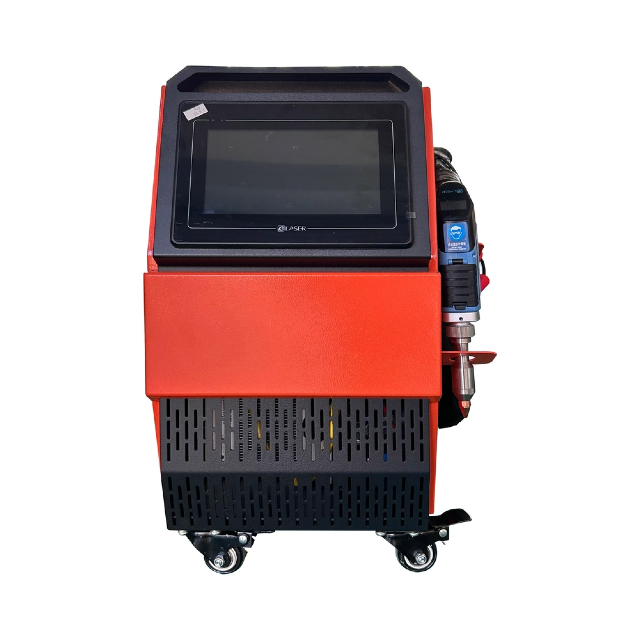
Easy Laser offers 1500W laser welding machines designed for stability, efficiency, and adaptability. These systems are suitable for both standalone operation and robotic integration.
Easy Laser provides flexible configurations, including air-cooled systems, to meet the needs of different production environments. This flexibility allows customers to choose solutions that match their specific requirements.
Automation is often implemented in stages. Easy Laser systems support this approach, allowing manufacturers to expand their capabilities without replacing existing equipment.
With installations in more than 120 countries, Easy Laser has extensive experience across various industries. This global perspective helps ensure that solutions are practical, reliable, and adaptable.
Whether a company is just starting with automation or expanding an existing robotic system, Easy Laser provides solutions that support different stages of growth.
For manufacturers moving toward automation, the goal is not simply to increase power but to achieve stable, repeatable production. A 1500W laser welding solution offers a balanced combination of precision, efficiency, and scalability that aligns well with robotic welding requirements. Liaocheng Easy Automation Equipment Co., Ltd. continues to provide practical solutions that help businesses improve consistency, reduce rework, and scale production with confidence. If you are planning to upgrade your welding process or integrate robotics into your production line, contact Easy Laser today to find the right solution for your needs.
1. Is a 1500W laser welding machine suitable for robotic production lines?
Yes, for many applications such as sheet metal and medium-thickness materials, 1500W provides sufficient power and excellent stability.
2. What advantages does laser welding offer over traditional welding?
Laser welding provides higher precision, lower heat distortion, and cleaner welds, reducing the need for post-processing.
3. Can laser welding improve production efficiency in automated systems?
Yes, its consistency and repeatability make it ideal for robotic welding, improving overall production efficiency.
4. Why choose Easy Laser for robotic welding solutions?
Easy Laser offers flexible, scalable systems with global experience, making it easier for manufacturers to transition into automated welding.


