
Please Choose Your Language
Views: 0 Author: Site Editor Publish Time: 2026-05-16 Origin: Site


Welding bottlenecks are rarely just welding problems. Often, they stem directly from poor material preparation upstream. Fabrication shop managers quickly realize this reality when skilled welders spend hours fixing bad cuts. You cannot build a fast assembly line on top of inaccurate metal parts.
Legacy cutting methods frequently create terrible edge quality. Plasma systems, mechanical shears, and older CO2 lasers introduce thermal distortion. They create unpredictable fit-up gaps across your production floor. This forces your highly paid professionals to waste valuable time. They must grind, bevel, and manually align parts before striking an arc.
Upgrading to a modern CNC cutting machine shifts this paradigm entirely. You move away from a slow "cut and prep" workflow. You step into a streamlined "cut and weld" process instead. Adopting a sheet fiber laser drastically improves downstream throughput. It elevates your overall fabrication ROI by keeping welders focused purely on joining metal.
Zero-Gap Fit-Ups: Micrometer-level cutting precision (0.05mm) eliminates the need for manual edge grinding and joint filling during welding.
Minimal Thermal Distortion: Reduced Heat-Affected Zones (HAZ) preserve material flatness, preventing warp-related welding defects.
Matched Production Paces: High-speed processing ensures welding stations are continuously fed without idle time.
Traditional fabrication floors face a hidden enemy daily. It looks exactly like a welding delay. However, it usually originates right at the cutting station. The true cost of edge preparation drains profits quietly. Older plasma cutters and mechanical shears leave nasty edges behind. They create sharp burrs, hardened dross, and severe micro-fractures in the steel. Welders simply cannot strike an arc on these contaminated surfaces safely. They must pick up angle grinders to clean the metal first. Manual grinding eats up expensive labor hours rapidly. It inflates your operational costs while slowing down the entire shop.
You must also consider kerf variability. Older machines cut wider, sloppier paths through metal. They struggle to maintain consistent dimensions across a single sheet. This produces unpredictable fit-up gaps during final assembly. Fit-up gaps destroy automated robotic welding cycles completely. Robots cannot dynamically adjust to varying gaps easily. They will simply burn through the material if gaps are too wide. Human welders must perform multiple filler passes to bridge these gaps. This destroys cycle times entirely and creates ugly welds.
Finally, look at the mechanical stress factor. Shearing metal introduces massive physical stress into the material. Mechanical punching does the exact same thing. This kinetic stress remains hidden inside the steel plates. When high welding heat hits the part later, unpredictable warping occurs. The metal remembers the trauma of the shear. Warping forces you to scrap expensive subassemblies. You lose both the material cost and the labor invested up to that point.
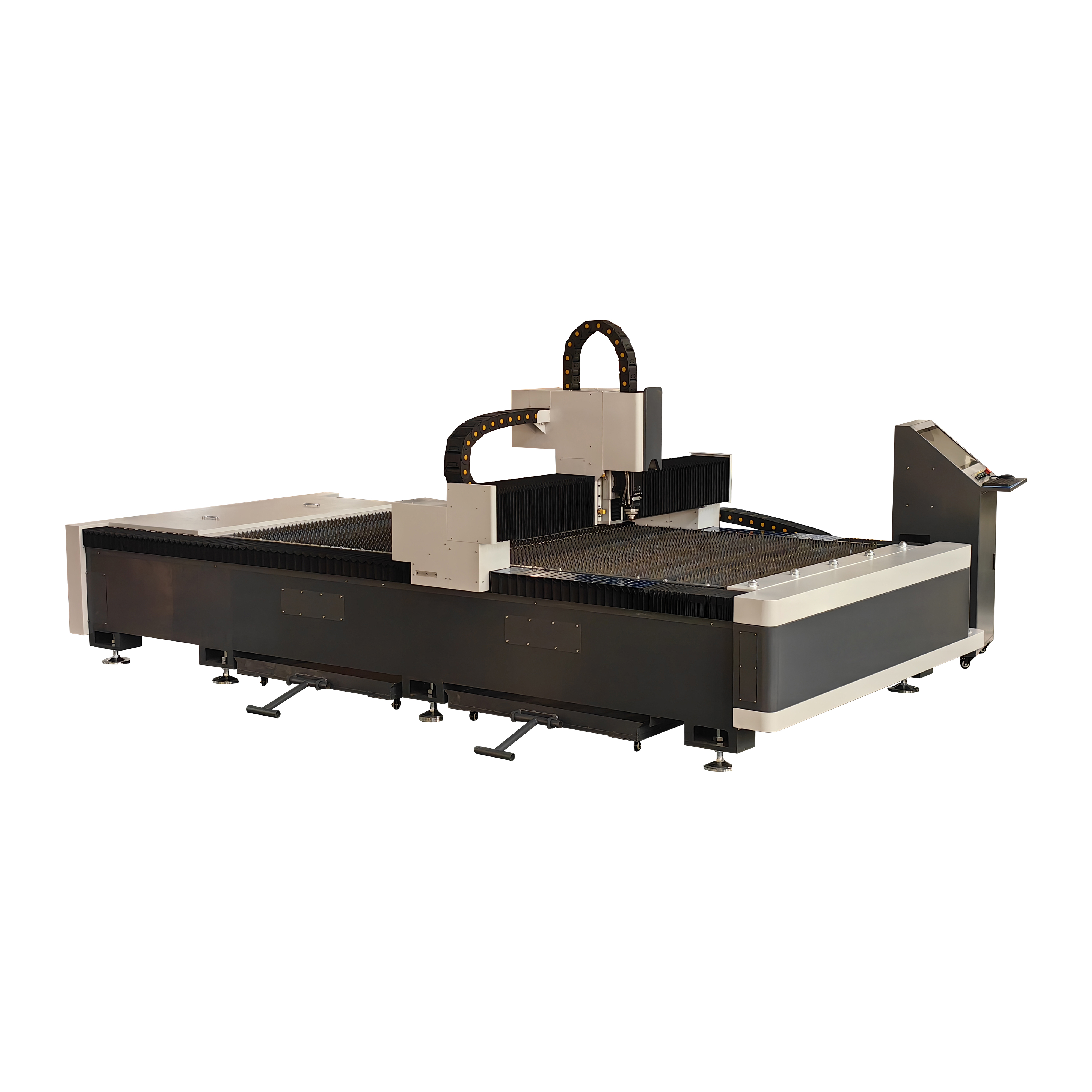
When you install a modern sheet fiber laser cutting machine, you eliminate mechanical variables completely. The cutting precision is truly staggering. These machines routinely achieve a positioning accuracy of 0.05mm. You get seamless joint alignment every single time you cut a part. This micron-level perfection is critical for autogenous welding. It is equally vital for automated robotic welding cells. Perfect alignment means zero-gap fit-ups on your tables. You stop relying on excess filler metal to bridge sloppy cuts.
Let us discuss the Heat-Affected Zone (HAZ). Fiber lasers utilize immense power density at the focal point. The beam spot remains incredibly fine during operation. The travel speed across the metal plate is extremely rapid. This rapid processing speed minimizes the HAZ drastically. A smaller HAZ preserves the metallurgical properties of the original plate. You reduce pre-weld thermal stress substantially. You also lower the risk of post-weld cracking in high-strength alloys.
We also must tackle highly reflective metals. Older CO2 technologies struggle here constantly. The beam reflects off the metal and damages the machine mirrors. Solid-state fiber lasers handle reflective metals beautifully. You can easily process complex materials without beam-bounce risks. This enables the efficient fabrication of complex, multi-metal subassemblies.
Aluminum fabrication: Cut 6061 or 5052 grades cleanly without porous oxide layers forming on the edge.
Copper processing: Maintain high cutting speeds on electrical busbars without dangerous reflections.
Brass components: Achieve complex geometric cuts for decorative or industrial multi-metal assemblies smoothly.
A fabrication shop can only weld as fast as it cuts. This is the ultimate upstream bottleneck in heavy manufacturing. You must feed your welding stations consistently to maintain profitability. Solid-state lasers solve this throughput dilemma easily. They cut thin-to-medium sheet metals incredibly fast. In fact, they operate up to three times faster than equivalent CO2 machines. You break the bottleneck by overwhelming your welders with perfect parts.
You must evaluate your power needs realistically before buying. Not every shop needs identical equipment configurations. Applying a realistic evaluation lens prevents overspending. Here is a practical framework to guide your power evaluation:
Laser Power Tier | Ideal Plate Thickness | Primary Production Application |
|---|---|---|
1kW – 3kW | ≤5mm | Maximizes speed for thin sheets, HVAC ducts, and electronics enclosures. |
3kW – 6kW | 5mm – 12mm | The sweet spot for medium-thickness structural steel and automotive brackets. |
6000W and above | 12mm+ | Heavy-duty applications demanding high speed alongside pristine edge quality. |
Heavy fabricators often require serious industrial capability. A High Power 6000w Fiber Laser Cutting Machine handles thick-plate cutting effortlessly. It rivals traditional plasma speeds but retains exacting laser precision. You get the best of both worlds for heavy structural welding.
Do not ignore the software side of throughput. Automated CAD/CAM nesting is a revolutionary step. Smart nesting software organizes your part production intelligently. It minimizes scrap material significantly by packing parts tightly. More importantly, it groups related parts together for assembly. Subassemblies arrive at your welding bay as complete, ready-to-weld kits. Your welders stop hunting for missing pieces. They simply receive a complete package and start striking arcs immediately.
We must evaluate capital expenditure against operational savings realistically. The transparent OpEx advantages of solid-state technology become clear quickly. You will see massive energy consumption reductions on your utility bills. Solid-state lasers boast an electro-optical conversion rate approaching 30%. They consume a mere fraction of the electricity used by older CO2 lasers.
Next, evaluate your consumables and component lifespan. The solid-state design eliminates costly laser gas cylinders entirely. You never perform tedious, time-consuming mirror alignments again. The diodes powering the resonator are incredibly robust. Their lifespans frequently exceed 100,000 hours under normal shop conditions. You achieve maximum machine uptime while spending less on routine maintenance.
Let us look at labor reallocation next. This technology changes how you deploy your shop floor workforce.
One single operator manages multiple automated cutting centers efficiently.
You eliminate manual deburring and abrasive edge grinding completely.
You move skilled labor out of basic part preparation roles.
You reassign these valuable workers into high-value active welding positions.
We must acknowledge the skeptical viewpoint regarding investment risk. The upfront capital expenditure is undeniably high. You only achieve optimal ROI under specific operational conditions. Your downstream welding and assembly teams must adapt quickly. They must be prepared to handle a sudden, massive influx of cut parts. If your welders cannot keep pace, you simply move the bottleneck from cutting to welding. You must organize and scale your assembly operations to match your new cutting speed.
How do you specify the right machine for your shop? You must start your journey by understanding assist gas selection. Assist gases directly impact the final weldability of your parts. Cutting carbon steel requires careful thought regarding oxidation. If you use Oxygen (O2), it leaves a thin oxide layer on the edge. You must grind this layer off before welding to prevent porosity. Conversely, cutting stainless steel requires high-pressure Nitrogen (N2). Nitrogen prevents edge oxidation entirely. This process renders the cut part immediately weldable straight off the machine.
Consider your machine format and automation needs next. A standard flatbed works exceptionally well for dedicated plate cutting. However, a plate-and-tube integrated machine saves valuable floor space. It handles flat sheets and structural profiles simultaneously on one chassis. You might also consider adding auto-loading material towers. These towers allow you to run highly profitable lights-out shifts safely.
Finally, you must vet the core components rigorously. Shortlist machines based on the reliability of the internal resonator. Brands like IPG hold strong, proven industry reputations. Examine the durability of the cutting head closely. Check the responsiveness of local after-sales support networks. The initial 90-day onboarding window is crucial for your operators. You need responsive experts available during this critical learning period.
Best Practices: Standardize your assist gas parameters early in the integration process. Document these settings carefully for your operators. This ensures consistent edge quality across different shifts.
Common Mistakes: Never buy a low-tier cutting head to save upfront capital. Poor cutting heads cause thermal focus drift rapidly. This ruins edge quality and forces your welders back to manual grinding.
Investing in modern fiber laser technology optimizes your entire fabrication pipeline. It is never just about cutting metal faster. It is a strategic move to reduce manual welding costs directly. You shrink overall cycle times drastically by eliminating upstream errors. You transition from unpredictable manual preparation to highly engineered precision.
Stop accepting poor edge quality from legacy cutting tools.
Eliminate manual grinding to keep welders focused on joining metal.
Match your cutting capabilities to your actual welding capacity.
Reallocate your saved labor hours into profitable assembly tasks.
Take an action-oriented next step today. Ask your production manager to conduct a formal time-study. Measure exactly how much time your team spends on pre-weld grinding. Request a sample cut from a leading equipment manufacturer. Test the actual weldability of these laser-cut edges on your own shop floor.
A: Generally, no. If you use the correct assist gas, such as Nitrogen for stainless steel, the edge remains entirely unoxidized. You achieve a completely dross-free finish. Optimal cutting parameters preserve the metal's integrity. This allows your team to perform direct MIG or TIG welding without any secondary grinding steps.
A: It depends entirely on your material mix. If your shop strictly welds thin-gauge sheet metal under 5mm, a 3000w model proves highly efficient. However, if you frequently process structural plates up to 15mm, you need more capability. A 6000w system provides the necessary processing speed and pristine edge quality required for heavy structural welding.
A: High-definition plasma remains cost-effective for extremely thick plates. However, fiber lasers dominate in precision. They offer significantly tighter dimensional tolerances. They produce much narrower kerfs and induce smaller thermal distortion. These traits make laser technology far superior for creating precision fit-ups, especially in robotic or automated welding scenarios.


