
Please Choose Your Language
Views: 0 Author: Site Editor Publish Time: 2026-05-19 Origin: Site


Purchasing industrial laser equipment represents a major capital expenditure for any fabrication shop. It directly impacts your production bottlenecks, facility footprint, and long-term profitability. You cannot afford to make this procurement decision lightly. Many buyers focus purely on stated laser power and the upfront sticker price. They often ignore the mechanical limits of the frame, ongoing operating costs, and software integration capabilities. This narrow focus frequently leads to buyer's remorse and severely restricted production output.
We designed this guide to bypass common marketing claims. It provides a strict, evidence-based evaluation framework for prospective buyers. You will learn how to match technical specifications—like wattage, acceleration, and precision—to your actual business outcomes. We will outline actionable steps to help you evaluate real-world performance. By following these guidelines, you can avoid costly procurement mistakes and confidently optimize your manufacturing floor.
High laser wattage is effectively useless if the machine’s structural acceleration (G-force) cannot match the cutting speed on complex geometries.
Automated material handling can increase initial CapEx but has the potential to reduce the ROI timeline from 5 years to 12–18 months by enabling continuous operation.
True machine quality is verified through specific tolerances: aim for a beam quality of M⊃2; ≤ 1.2, power fluctuation of ±5%, and a reliable ±0.03 mm positioning accuracy.
Total Cost of Ownership (TCO) must factor in software efficiency, auxiliary gas consumption (nitrogen/oxygen/air), and post-warranty service response times.
Manufacturers often list impressive maximum thickness capacities on their spec sheets. You must differentiate between a machine's "severing thickness" and its "production thickness." Severing capability refers to the absolute maximum limit the laser can pierce. These cuts are typically extremely slow. They often leave heavy dross and rough edges on the bottom of the plate. You cannot use these parts immediately without secondary grinding or finishing.
Production thickness indicates the maximum material you can cut efficiently while maintaining clean edges. This metric determines your actual daily throughput. A 6000W CNC Fiber Laser Cutting Machine is often the sweet spot for many job shops. It provides rapid, high-quality production on mid-thickness mild and stainless steel. You achieve this excellent cut quality without over-investing in ultra-high wattage systems you rarely utilize fully. Always base your purchasing decision on your most common daily material gauge, not occasional edge cases.
Upgrading your laser power primarily increases straight-line cutting speed. However, most real-world parts feature complex geometries, tight corners, and intricate internal holes. Cutting these shapes requires the cutting head to constantly decelerate and accelerate. This mechanical reality introduces the "acceleration trap."
If you pair a high-power laser with a slow, lightweight frame, you create a severe bottleneck. A machine rated under 1.5G acceleration cannot physically move fast enough into corners to utilize high wattage. The laser will dwell too long on sharp angles. This causes excessive heat buildup, melting the corners, and ruining the Heat Affected Zone (HAZ). We advise buyers to verify the machine's G-force rating rigorously. Prioritize structural dynamics to ensure the gantry speed perfectly complements the laser source power.
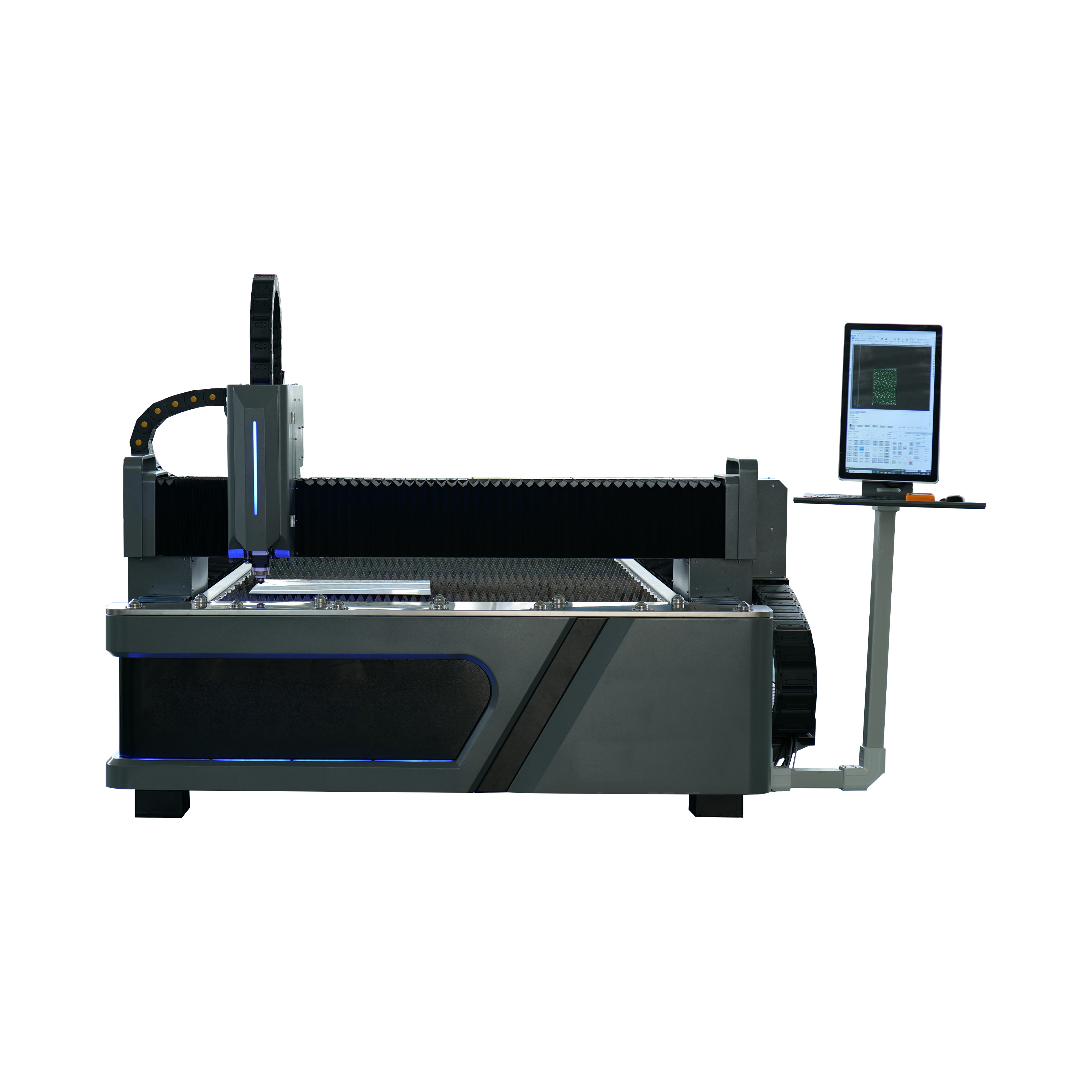
The laser generator acts as the beating heart of your equipment. Premium fiber laser sources offer profound reliability advantages over older technologies. They deliver high plug-in efficiency, converting 50% to 70% of electrical input directly into cutting power. They also require minimal optical maintenance. Fiber systems lack the moving mirrors and internal gas resonance chambers found in legacy units.
You should demand hard metrics when evaluating the laser source. Do not settle for brand names alone. Require verified documentation of the beam quality. You should look for an M⊃2; rating of ≤ 1.2. This ensures a highly focused, dense cutting spot. It translates directly to narrower kerfs, smoother edges, and faster piercing times. Additionally, check the stability ratings across varying ambient temperatures to guarantee consistent performance during seasonal shifts.
An industrial CNC cutting machine relies heavily on its structural skeleton. The gantry and bed stability dictate whether the machine can maintain tight tolerances over a 10-to-15-year lifespan. Thermal stress and continuous vibration can warp a poorly welded bed within months. Seek out machines featuring heavily braced, stress-relieved steel or cast iron beds.
The motion components mounted to this frame are equally critical. Premium servo motors are non-negotiable for high-speed contouring. Paired with precise rack-and-pinion drive systems, they manage the heavy dynamic loads of cutting. You should demand a repetitive positioning accuracy of ±0.03 mm/m or better. This tolerance ensures your batch-produced parts are identical, eliminating downstream assembly issues during welding or forming operations.
Astute buyers move far beyond the initial sticker price. You must outline and project your ongoing operating expenses to gauge true profitability. Factor in energy consumption, preventative maintenance schedules, and the regular replacement of consumable parts. Consumables include nozzles, protective lenses, and ceramic rings. They degrade constantly during operation and directly affect your bottom line.
Auxiliary assist gases often represent the largest recurring expense. Nitrogen, oxygen, and compressed air blow molten metal from the cut zone. High-pressure nitrogen cutting yields clean, oxide-free edges on stainless steel, but it consumes massive gas volumes. However, modern fiber systems mitigate some costs elsewhere. They reduce overall energy consumption by up to 70% compared to legacy CO2 lasers. You must balance these energy savings against your specific gas consumption rates to project true hourly running costs.
You face a significant operational bottleneck when relying on manual labor for material handling. A modern sheet fiber laser cutting machine slices through metal astonishingly fast. Manual loading and unloading processes simply cannot keep pace. Operators must clear heavy skeletal scrap and load fresh plates carefully. This leaves the laser idle for unacceptably large portions of the shift.
You can overcome this by embracing material handling automation. Adding a sheet loader, unloader, or a complete tower storage system increases your upfront capital expenditure. This addition often raises the equipment price by 50%. Yet, the financial case for automation remains incredibly strong. It enables a "lights-out" manufacturing environment. Running a three-shift, continuous operation drastically accelerates your payback period. It transforms idle waiting time into billable production output.
Software capabilities dictate how efficiently you utilize raw materials and track shop floor performance. Advanced nesting software uses complex algorithms to pack parts tightly onto a sheet. This minimizes scrap metal and maximizes yield. Even a modest 2% increase in material yield across thousands of sheets alters your yearly profitability significantly.
Integration extends beyond just nesting parts. Overall Equipment Effectiveness (OEE) is a critical manufacturing metric. Integrating your machine with shop-floor monitoring software exposes hidden inefficiencies. It reveals true utilization rates, highlighting micro-stops and operator delays.
Best practices for software integration:
Choose nesting software compatible with your existing ERP systems.
Automate remnant tracking to reuse partial sheets effectively.
Monitor cutting head sensor data to predict lens failures before they ruin a part.
Use real-time dashboards to give operators instant feedback on their load/unload cycle times.
Buyers often default to standard table sizes, primarily 5'x10' formats. We challenge this default assumption. You should analyze your raw material supply chain carefully before finalizing bed dimensions. Larger formats often present distinct economic advantages.
Upgrading to a 6'x12' format allows you to purchase larger, cheaper bulk sheet metal. It also provides more continuous cutting time before requiring a sheet change. We have provided a comparison chart below to illustrate how table size impacts overall shop floor economics.
Feature / Metric | Standard Table (5' x 10') | Large Format (6' x 12') |
|---|---|---|
Floor Space Requirement | Moderate footprint; fits easily in standard bays. | Requires significantly larger safety zones and foundations. |
Material Purchasing | Standard sheet pricing applies. | Potential discounts on bulk/oversized steel purchases. |
Nesting Efficiency | Good for smaller parts. | Excellent; larger canvas reduces overall web scrap. |
Operator Intervention | More frequent sheet changeovers required. | Longer unattended cutting cycles between loads. |
Preparation determines how quickly your new equipment generates revenue. You cannot place high-precision industrial lasers on uneven or thin floors. They require specialized concrete foundations. Thick, reinforced concrete pads isolate the heavy bed from external factory vibrations. You must also prepare high-voltage electrical drops. Most modern lasers require dedicated transformers to ensure stable power delivery.
Environmental and safety mandates represent another critical facility requirement. Vaporized metal dust is highly toxic. You must install high-efficiency fume extraction and filtration systems to protect your workforce. Furthermore, strict regulations mandate enclosed interlocking safety cabinets. These cabinets contain hazardous scattered laser radiation. Never attempt to bypass these safety enclosures to save floor space or upfront costs.
Procurement carries hidden risks, particularly regarding supplier transparency. Some vendors utilize "white-label" components. They mask sub-tier, low-quality parts under their own generic brand names. You must insist on a detailed bill of materials. Know exactly who manufactures the servo motors, gearboxes, and laser source inside the cabinet.
We recommend using a rigorous audit process before signing a purchase order. Follow this checklist to protect your investment:
Verify Component Origins: Request official documentation proving the brand and model of the laser source, cutting head, and CNC controller.
Conduct a Real-World Test Drive: Do not rely on the supplier's optimized demonstration files. Provide your own nested CAD files featuring complex geometries. Use your own standard material to verify edge quality.
Measure Cycle Speeds: Time the exact cycle length of your test file to expose machines with poor acceleration limits.
Assess the Service SLA: Post-installation support dictates your machine uptime. A massive global brand with a 3-week service backlog may cost you more downtime than a specialized regional distributor offering a strict 24-hour dispatch guarantee.
Inspect Safety Certifications: Ensure the complete system carries legitimate CE or FDA safety compliance marks relevant to your region.
Choosing the right industrial laser requires a disciplined, comprehensive evaluation strategy. You must prioritize mechanical stability and G-force acceleration to match high laser power accurately. Evaluate the equipment based on long-term operating expenses and efficiency rather than just the initial sticker price. Look closely at automation possibilities to slash your payback timeline. Finally, strictly evaluate the supplier's post-installation support infrastructure and service level agreements.
Your next step is to formalize your operational data. Finalize your specific production requirements, including your average material thickness, daily sheet volume, and floor space limits. Create a weighted evaluation matrix using the criteria outlined in this guide. Use this matrix to score potential vendors objectively before you ever request a live machine demonstration. This proactive approach guarantees you invest in equipment that genuinely elevates your manufacturing capabilities.
A: While a 3kW handles thin sheet metal well, a 6000W system dramatically increases the cutting speed for mid-thickness materials (e.g., 10-15mm). It allows for a clean, dross-free edge on thicker plates. This power boost directly increases your daily throughput and expands the types of jobs your shop can accept.
A: Do not rely solely on printed spec sheets. Provide the vendor with a complex test file featuring sharp corners and micro-holes. Measure the physical sample's tolerances with digital calipers upon completion. Additionally, check the edges for minimal Heat Affected Zones (HAZ) and consistent kerf widths.
A: It is not strictly necessary, but we highly recommend it if labor shortages are an issue. It is also vital if the laser's cutting speed outpaces your operators' ability to manually clear the bed. You should calculate whether the daily machine idle time justifies the upfront automation cost.


