
Please Choose Your Language
Views: 0 Author: Site Editor Publish Time: 2026-11-25 Origin: Site


How exactly does concentrated light remove heavy rust? At the core of this process is a physical phenomenon known as laser ablation. When a high-intensity beam strikes a contaminated surface, the target material absorbs the energy instantaneously. Rust typically features a dark, highly textured surface. This specific characteristic gives it a massive absorption rate for the wavelengths emitted by modern fiber lasers, usually targeted around 1064 nanometers.
Specifically, as the oxidation layer absorbs this intense energy, its temperature spikes in a fraction of a second. This rapid thermal reaction triggers sublimation. The rust transitions directly from a solid state into a gas or micro-plasma. Because this vaporization occurs so rapidly, the heat lacks sufficient time to penetrate or diffuse into the core metal. The underlying substrate remains completely cool and structurally intact.
Engineers often ask how the system distinguishes between decay and clean metal. The secret lies in the ablation threshold. Rust, grease, and paint possess a low energy threshold, meaning they vaporize easily. Conversely, bare metal surfaces are highly reflective. Once the laser clears the oxidation, the beam strikes the clean metal, reflecting the majority of the light energy away. Consequently, the base material remains untouched, proving this method is as safe as it is powerful.
Looking at the broader manufacturing landscape, the shift toward non-abrasive surface preparation is accelerating rapidly. Stricter global environmental regulations regarding airborne particulates and hazardous chemical runoff are forcing heavy industries to rethink their maintenance protocols. Furthermore, as automation becomes the standard in automotive and aerospace sectors, the demand for precise, repeatable, and dry cleaning methods has skyrocketed. Facilities are actively moving away from messy media blasting, favoring light-based systems that integrate seamlessly into robotic assembly lines without introducing secondary waste.
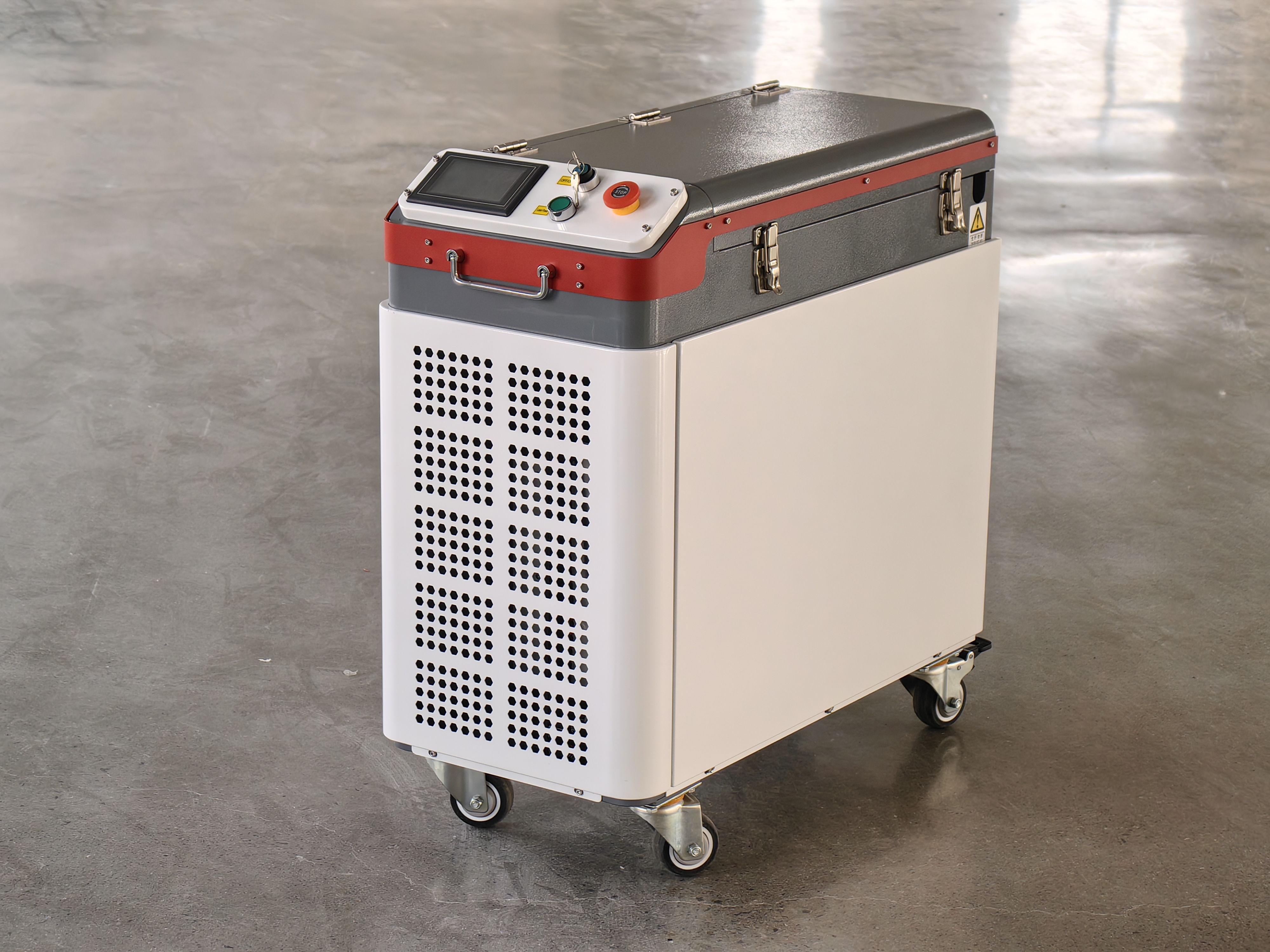
For decades, industrial maintenance crews have relied on heavy abrasive blasting and chemical baths. While effective at brute-force material removal, these methods carry immense operational burdens. Sandblasting requires propelling media like silica or glass beads at extreme velocities. This physically strips away microscopic layers of the healthy metal along with the rust. Moreover, the massive volume of spent media creates a secondary waste crisis. Crews often spend as much time sweeping up contaminated grit as they do actively cleaning.
In stark contrast, laser technology functions as a closed loop regarding waste. Since it uses pure light to vaporize contaminants, there is zero physical media to collect or dispose of. The only byproduct is a minimal amount of vaporized dust. Operators capture this easily at the source using an integrated fume extraction unit. This shift eliminates the need for expensive hazardous waste disposal and allows for a much cleaner workshop environment.
To illustrate the stark differences in industrial application, consider the operational breakdown below:
| Feature | Laser Cleaning | Traditional Sandblasting | Chemical Cleaning |
|---|---|---|---|
| Base Material Damage | Zero | High | Low |
| Consumables Required | Electricity only | Abrasive media, nozzles | Solvents, neutralizers |
| Secondary Waste | Minimal captured dust | Massive contaminated grit | Toxic liquid runoff |
| Precision Level | Surgical | Low | Low |
| Setup & Cleanup Time | Minutes | Hours | Hours |
Transitioning to photonic technology is more than a simple tool upgrade. It represents a strategic shift toward quality control and operational efficiency. One of the most compelling advantages of metal surface cleaning via laser is its non-destructive nature. In high-precision sectors like aerospace manufacturing or classic car restoration, maintaining the exact tolerances of a machined component is absolutely vital.
Unlike mechanical grinding, which can inadvertently round off sharp edges or thin out delicate threads, lasers provide surgical accuracy. Operators can dial in the beam width and power to target a single microscopic weld seam. You can clean intricate geometries without ever compromising the surrounding structural integrity.
Beyond precision, the ergonomic benefits are profound. Instead of wearing heavy, restrictive blast suits hooked up to external air supplies, an operator works in standard shop attire with basic protective eyewear. This reduced physical strain improves long-term workplace safety. It also consistently leads to higher productivity during demanding maintenance shifts.
A common misconception assumes these systems only handle basic steel projects. In reality, the adjustable parameters of modern hardware make them highly effective across a wide spectrum of industrial materials. Carbon steel and cast iron suffer from deep, flaky oxidation. They respond exceptionally well to this method. The intense light strips away years of decay, leaving the surface perfectly weld-ready in seconds.
Non-ferrous materials like aluminum and copper present a different challenge due to their high reflectivity and rapid heat conductivity. However, by fine-tuning the pulse duration and frequency, the system gently strips away aluminum oxides or copper tarnish without any risk of thermal distortion.
Furthermore, this versatility extends well beyond rust. The exact same ablation principle applies to stripping aged polyurethane paint, removing heavy industrial grease, or cleaning carbon soot from fire-damaged engine blocks. This makes the equipment a true multi-tool for comprehensive surface preparation.
When evaluating your options, you will encounter two primary categories of laser delivery: Pulsed and Continuous Wave. Choosing the correct architecture is critical to matching the machine capabilities to your specific daily workload. Let us break down the exact engineering standards for selection.
Pulsed systems release energy in extremely short, high-peak-power bursts. This is the absolute gold standard for delicate tasks where zero heat input is mandated. For historical restoration, injection mold maintenance, or aerospace parts, a laser rust removal system using pulsed technology is the safest route. If your maintenance teams are highly mobile, an air-cooled pulsed unit in the 200W to 300W range offers a fantastic balance of portability and raw stripping power without the need for bulky water chillers.
Alternatively, Continuous Wave systems emit a steady, uninterrupted beam of energy. These are the undisputed workhorses of heavy industry. If your primary objective involves stripping thick, persistent rust from large structural steel I-beams, shipping containers, or maritime hulls, a laser cleaning machine utilizing continuous wave technology is the most cost-effective solution. These high-power units trade a microscopic fraction of precision for high-speed, high-volume raw cleaning speed, often ranging from 1000W up to 3000W.
Before finalizing a purchase, conduct an honest assessment of your facility infrastructure and throughput requirements. Wattage remains the primary driver of both performance speed and initial price. Low-power units under 100W excel at small, intricate tasks. Medium-power systems around 300W provide the versatility needed for general automotive and manufacturing job shops. For large-scale maritime or heavy structural maintenance, high-power systems exceeding 1000W are simply non-negotiable.
Additionally, consider your thermal management needs. While air-cooled machines are easier to transport and maintain, high-power continuous systems require a robust water-cooling chiller to operate reliably during long, demanding shifts. Ultimately, while the initial capital expenditure exceeds that of a traditional sandblaster, the long-term return on investment is undeniable. You achieve a near-total elimination of abrasive consumables, slash hazardous waste disposal costs, and drastically reduce the labor hours previously wasted on setup and cleanup.
Photonic surface preparation has evolved into a highly effective, clean, and modern standard for industrial maintenance. By harnessing the basic physics of light, these machines protect the fundamental integrity of your metal parts while effortlessly stripping away years of decay. As regulatory environmental pressures grow and the demand for manufacturing efficiency rises, adopting this technology is no longer a luxury. It is a strict competitive necessity.
Whether you manage an aerospace facility, an automotive restoration shop, or a heavy construction fleet, investing in the right equipment is a smart, forward-thinking move. Ready to eliminate abrasive mess and upgrade your maintenance capabilities? Explore the full range of professional-grade solutions at EasyCNC Laser to find the exact wattage and configuration tailored to your operational needs.
Compared to traditional methods, light-based cleaning is significantly safer. It completely eliminates operator exposure to toxic chemical fumes and the severe inhalation risks associated with airborne silica dust from sandblasting. The primary safety requirement is that all personnel in the vicinity must wear specialized optical safety glasses to prevent eye damage from scattered light reflections.
One of the greatest operational benefits is the inherently clean nature of the process. Because the contaminant converts directly into microscopic dust and gas, it does not scatter across the shop floor like spent abrasive media. When paired with a standard industrial fume extractor, the immediate workspace remains spotless and professional.
Absolutely. The underlying ablation principle is incredibly versatile. By adjusting the software parameters for power and scanning speed, operators can effectively strip thick layers of epoxy paint, heavy industrial grease, carbon soot, and organic grime from nearly any metallic substrate.
While the entry-level capital expenditure is higher than purchasing a standard sandblasting pot, the daily operational costs are remarkably low. The process requires only standard electrical power. By eliminating the recurring costs of purchasing blasting grit, replacing worn nozzles, and paying for hazardous waste disposal, facilities realize a much faster long-term return on investment.
Pulsed lasers emit light in rapid, high-energy bursts, which prevents heat from building up in the base metal. This makes them ideal for delicate molds, aerospace parts, and precise restorations. Continuous wave lasers provide a steady stream of energy, generating more heat but delivering significantly faster cleaning speeds for heavy structural steel and thick rust removal.
No, provided the correct parameters are used. The technology relies on an ablation threshold. Rust and paint vaporize at a much lower energy level than solid metal. Once the contaminants are removed, the clean, reflective metal bounces the remaining light away, ensuring the underlying substrate is neither melted nor scratched.


