
Please Choose Your Language
Views: 0 Author: Site Editor Publish Time: 2026-04-03 Origin: Site


A hole in glass might look simple, but in optical applications, it becomes a critical feature that defines whether a component performs correctly or fails entirely. When working with high-spec transparent materials, every micron matters. A Laser Glass Drilling Machine is no longer just a processing tool—it is part of the quality control system itself. Liaocheng Easy Automation Equipment Co., Ltd., known as Easy Laser, has worked with manufacturers who understand that precision in glass drilling is not about convenience. It is about maintaining dimensional integrity, preventing micro-defects, and ensuring that every part fits and functions as designed. In high-performance environments, even small improvements in drilling precision can lead to measurable gains in system reliability and long-term product stability.
Optical glass is engineered for clarity, uniformity, and performance. Unlike general-purpose glass, it must maintain strict dimensional accuracy and surface integrity.
Even minor issues such as:
Edge chipping
Micro-cracks
Slight dimensional drift
can compromise the entire component. These defects may not always be visible to the naked eye, but they can significantly affect performance in optical systems. Over time, such imperfections may also propagate under stress, leading to delayed failures that are difficult to trace back to the original drilling process.
Optical components are rarely used alone. They are part of assemblies that require precise alignment. Hole position, diameter, and geometry all influence how components fit together.
If a hole is even slightly misaligned, it can lead to:
Assembly misfit
Stress concentration during installation
Deviation in optical alignment
This makes drilling accuracy directly linked to system performance. In precision assemblies, even a small positional error can require additional adjustment steps, increasing both assembly time and production cost.
Optical glass materials are often expensive, and processing them requires careful control. A single defective hole can result in the rejection of an entire part.
Scrap costs include:
Material loss
Processing time
Delayed production schedules
Reducing these risks is a key reason why precision drilling methods are essential. In some high-end applications, the cost of a rejected component may include not only raw material but also multiple prior processing steps, further increasing the financial impact.
Consistency is critical. A high-precision glass drilling system must ensure that every hole meets exact specifications, regardless of batch size.
This includes:
Accurate positioning within tight tolerances
Consistent hole diameter
Uniform depth and shape
Repeatability ensures that production remains stable over time. It also allows manufacturers to maintain confidence when scaling from prototype to full production.
Defects such as cracks and chips weaken the material and reduce its usability. Taper, where the hole diameter changes along its depth, can also affect functionality.
A precision system must control:
Edge integrity
Internal stress
Hole geometry
Achieving low taper is especially important in applications where components must fit precisely with connectors or alignment systems.
Batch-to-batch consistency is essential for maintaining quality. Variations can lead to assembly issues and inconsistent performance.
A reliable system provides:
Stable output
Predictable results
Reduced variability
This consistency is particularly valuable for long-term production contracts where quality must remain uniform over extended periods.
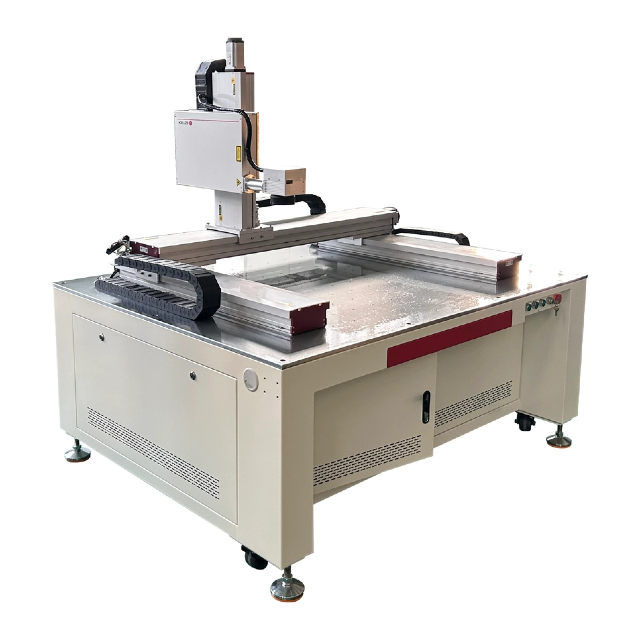
Traditional drilling methods apply force directly to the material, introducing stress that can cause cracks or defects.
Laser drilling eliminates contact, reducing:
Mechanical stress
Risk of cracking
Surface damage
This is especially important for fragile or thin optical components that cannot tolerate mechanical pressure.
Precision applications often require micro holes or complex geometries. Mechanical methods struggle to achieve this level of detail.
Laser drilling supports:
Micro-scale features
High accuracy
Complex designs
This capability opens up new possibilities for advanced optical components that require intricate internal structures.
In precision manufacturing, consistency is more important than speed. A process that delivers stable results is more valuable than one that is faster but less reliable.
Laser systems allow for:
Fine parameter control
Stable energy delivery
Repeatable outcomes
This level of control ensures that each part meets the required specifications without compromise.
Laser drilling allows energy to be applied exactly where needed. This reduces heat spread and minimizes thermal distortion, which is critical for maintaining material integrity. Controlled thermal input also helps preserve the internal structure of the glass, reducing the likelihood of stress-induced defects.
Lens assemblies require precise alignment. Hole accuracy directly affects how these components are mounted and function.
Many electronic systems rely on optical components. Accurate drilling ensures proper integration and performance.
Research projects often involve custom designs and small batches. Precision ensures that prototypes meet design requirements and can transition smoothly into production.
Industries such as aerospace, medical devices, and advanced electronics demand high-quality glass components with strict tolerances. In these sectors, reliability is directly linked to product safety and performance.
Different materials respond differently to laser energy. Transparency, thickness, and coatings all influence processing behavior. Understanding these variables allows for better parameter optimization.
The relationship between hole size and depth affects drilling performance. High aspect ratio holes require precise control to maintain consistent geometry.
Stable parameters are essential for consistent results. Managing heat accumulation prevents defects and ensures quality. This is particularly important in continuous production environments.
External conditions such as temperature and vibration can influence results. Proper calibration and stable environments are necessary for precision work.
Understanding how energy interacts with the material helps optimize the process and improve outcomes. This interaction is key to achieving both efficiency and precision.
Factor | Impact on Quality | Laser Drilling Advantage |
Hole Position Accuracy | Affects assembly alignment | High precision positioning |
Edge Integrity | Impacts structural strength | Minimal chipping |
Micro-Crack Formation | Reduces durability | Lower risk due to non-contact |
Hole Taper | Affects functional fit | Controlled geometry |
Surface Quality | Influences optical performance | Smooth inner walls |
Repeatability | Ensures batch consistency | Stable processing |
Heat Control | Prevents deformation | Localized energy input |
Micro Feature Capability | Enables advanced designs | High precision processing |
Easy Laser systems go beyond basic processing. They provide the level of control needed for precision manufacturing.
Reducing stress during processing helps protect material integrity and reduce waste, which is critical for high-value components.
Reliable equipment allows manufacturers to achieve consistent results, building confidence in both the process and the final product.
Easy Laser solutions are adaptable, supporting both small-scale development and larger production needs.
With installations in over 120 countries, Easy Laser has demonstrated its ability to deliver practical and reliable solutions.
Precision in optical glass drilling is not defined by a single number—it is defined by the ability to consistently meet strict quality requirements under real production conditions. A high-precision laser drilling system for glass provides the control and reliability needed to achieve this level of performance. Liaocheng Easy Automation Equipment Co., Ltd. continues to support manufacturers with advanced solutions that improve both quality and efficiency. If you are looking to achieve higher standards in optical glass processing, contact Easy Laser today to explore solutions designed for precision applications.
1. How precise does optical glass drilling need to be?
It depends on the application, but high-precision requirements often demand extremely tight tolerances and consistent results.
2. Why is laser drilling preferred for precision glass?
Because it reduces mechanical stress, improves accuracy, and minimizes defects such as cracks and chipping.
3. Can laser drilling produce micro holes in optical glass?
Yes, it is highly suitable for micro-hole processing and complex geometries.
4. How does laser drilling improve production consistency?
It provides stable parameter control and repeatable results, ensuring consistent quality across batches.


